Category: Housing

For blogs that talk about Housing

  • Who can afford to live in Houston?

    Who can afford to live in Houston?

    Houston has long been celebrated for its affordability, attracting individuals and families seeking economic opportunities and a reasonable cost of living. Indeed, according to the Greater Houston Partnership, the Houston Metropolitan Area has the third-lowest living costs among the 20 most populous U.S. metropolitan areas.

    However, data reveals a growing housing affordability crisis that challenges this perception. As of 2023, approximately 830,000 households in Houston’s three-county region—Harris, Fort Bend, and Montgomery—are in living situations where their housing is not considered affordable.

    This troubling statistic raises critical questions: When one out of three households are burdened by housing costs, who can afford to live in Houston today?

    Why is access to affordable housing essential?

    Housing is universally recognized as a basic human need essential for health, stability, and well-being. Research shows that housing affordability impacts broader economic mobility, with cost-burdened households—those spending more than 30% of their income on housing— having less capacity to invest in education, healthcare, or savings. According to a report from the National Low Income Housing Coalition, over 8.1 million extremely low-income renter households in the U.S. are severely housing-cost burdened, spending more than 50% of their income on rent, which compromises their ability to cover other critical expenses. Furthermore, stable and affordable housing can significantly reduce stress and improve mental health outcomes, particularly for children and adolescents.

    So how many people in our region can actually afford to live here, and what is driving this level of unaffordability?

    Households are increasingly burdened by housing costs, especially renters.

    The rate of households that are cost-burdened is a critical indicator of a location’s affordability, offering insights into how well housing costs align with residents’ incomes. A household is considered cost burdened if it spends more than 30% of its income on housing. A high percentage of cost-burdened households suggest that housing costs are disproportionately high relative to income, indicating a lack of affordable housing options.

    The rate of housing-cost burdened households in our region is higher than it has been for at least the last decade, with renters disproportionately impacted.

    In 2023, over half (52%) of renters in the three-county region—Fort Bend, Harris, and Montgomery counties—were housing cost burdened. For comparison, 24% of homeowners in the three-county region are housing cost burdened. The percentage of cost-burdened renters has increased by four points since 2010, compared to a decline of four points for homeowners. Among the three counties, Fort Bend currently has the highest rate of housing cost burdened renters in the region at 57%, up 14 percentage points from 2010.

    Households that are severely cost burdened spend 50% or more of their income on housing. Households where rent accounts for half of total income are more likely than others to sacrifice necessities like utilities,  fresh nutritious food, and health care to pay the rent and they are more likely to experience unstable housing situations and evictions. These are the most vulnerable among vulnerable households, and housing costs for this group have only become more burdensome.

    Renters are also far more likely to experience severe housing cost burdens with 27% of Houston-area renters spending over 50% of their income on housing compared to just 11% of homeowners. As of 2023, over 30% of Fort Bend County renters spend at least half their income on housing—this is eight percentage points higher than two years prior in 2021. These statistics represent the 830,000 households in the Houston three-county region that are housing-cost burdened—400,000 of which are severely housing-cost burdened.

    The affordability issue is even more pronounced for lower-income households which face much tighter budgets— meaning, if their limited income is consumed by housing costs, there are significantly fewer resources to cover other basic needs which increases the risk of debt, eviction, and financial instability.

    In the three-county Houston region, 77% of very low-income households (i.e., less than or equal to 30% of HUD Area Median Family Income–HAMFI) are burdened by housing costs compared to 6% of median-income households. We see the same pattern among households that are severely cost burdened with two out of three extremely low-income households spending at least 50% of their income on housing compared to less than 1% of median-income households.

    Rents are increasing while incomes are stagnating.

    To understand one factor contributing to the rise of cost-burdened households in our region, we can examine the relationship between rising housing costs and stagnant income growth. When housing costs outpace inflation-adjusted income growth, residents face increased financial strain, often leading to higher rates of cost burdened households. By analyzing this relationship, we can gain critical insights into local affordability.
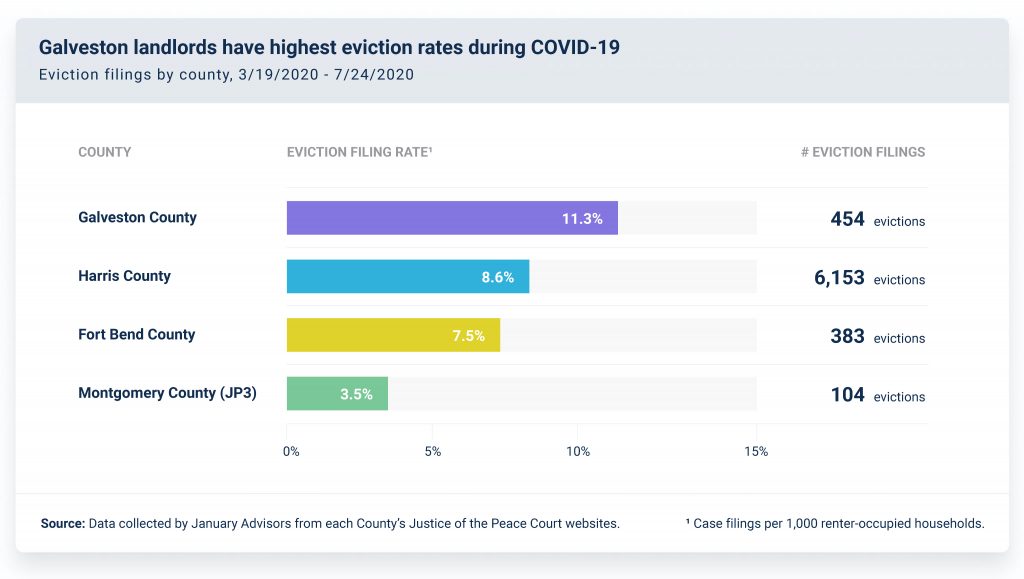
    In Fort Bend and Montgomery counties, median household incomes between 2010 and 2023 were stagnant and increased by 3% in Harris County. However, incomes increased 11% across the state of Texas and 12% nationally. The Houston area’s sluggish income growth underscores a widening gap as rents continue to climb leaving many households struggling to keep up.

    Median gross rents in Houston’s three-county region have risen significantly since 2010, outpacing income growth. Fort Bend County has the highest median rent at $1,839, a 21% increase since 2010. Median rent increased 28% in Montgomery County—the highest in the region—and 20% in Harris County during the same period. Conversely, median monthly costs for homeowners either decreased or remained flat in all regions.

    Median monthly housing costs for a homeowner in Houston’s three-county region was lower in 2023 than it was in 2010. Median monthly housing costs for homeowners decreased between 2010 and 2023 by 10% in Fort Bend County, 12% in Harris County, and remained flat in Montgomery County.

    Homeownership is becoming increasingly out of reach for many.

    Homeownership, often viewed as a cornerstone of the American Dream, is becoming increasingly out of reach for many first-time homebuyers and owning a home can be particularly critical to wealth creation and upward mobility, especially for most low-income and non-white households since that wealth can be passed to future generations. According to the Federal Reserve, in 2022 the median net worth among homeowners across the U.S. was $396,200 and $10,400 for renters.

    Historically, most households in all three counties owned their home with Fort Bend and Montgomery counties having the highest rates of homeownership at 77% and 69%, respectively, compared to Harris County at 55%. However, recent trends point towards a decrease in homeownership.

    Between 2010 and 2019, homeownership rates declined across all three counties in the Houston region. In 2021, this trend reversed briefly, spurred by historically low interest rates and a rising wave of individuals relocating from urban, high-cost areas. However, by 2023, this momentum stalled in most areas with homeownership rates either decreasing or remaining flat compared to 2010 levels. Homeownership rates in Montgomery County declined five percentage points between 2021 and 2023 alone.

    Overall, between 2010 and 2023, the number of households that rent increased faster than households that own, which contributed to the decline in overall homeownership rates over the last decade. Between 2010 and 2023, renter-occupied households increased by 71% in Fort Bend, 25% in Harris, and 93% in Montgomery counties while owner-occupied housing increased by 63% in Fort Bend County, 24% in Harris County, and 51% in Montgomery County.

    The vanishing dream of affordability in Houston.

    Houston has long been a symbol of opportunity, offering affordable living and pathways to homeownership. However, this reputation is being challenged.

    Despite most Harris County residents viewing homeownership as both a critical milestone and a key to building wealth, our region is trending toward a majority-renter population, likely due to homeownership becoming increasingly unaffordable for many. The financial burden on renters has reached unprecedented levels, with over half spending more than 30% of their income on housing and over a quarter exceeding 50%. Stagnant wages coupled with escalating rents have created an unsustainable environment where many households are forced to sacrifice essential needs like health care, education, and savings just to keep a roof over their heads. For low-income renters, this often means a constant struggle to avoid eviction or homelessness.

    Houston’s reputation for affordability is increasingly at odds with the realities of its housing market. As the gap between incomes and housing costs continues to widen, homeownership has become a pipe dream for many and renting, a seemingly reasonable alternative to homeownership, has become increasingly unsustainable for countless households.

  • Fort Bend County Health and Human Services’ Journey toward a Community Health Assessment

    Fort Bend County Health and Human Services’ Journey toward a Community Health Assessment

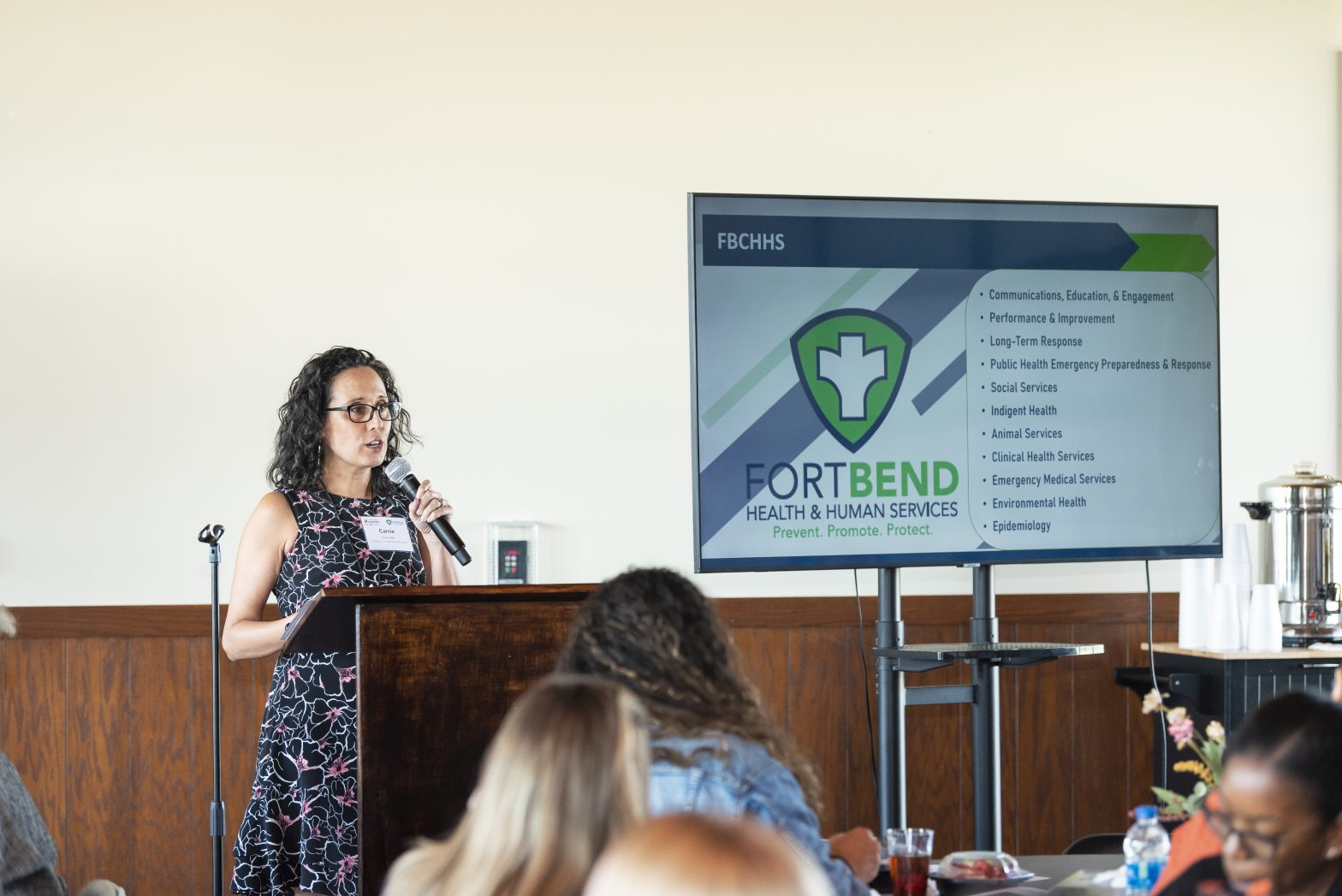
    Banner photo: Carrie Rai, FBCHHS Performance and Innovation Specialist

    This article is the first of a two-part series that describes the community engagement plan and process to create Fort Bend County’s first Community Health Assessment and Health Improvement Plan since 2007.

    In the summer of 2022, Fort Bend County Health & Human Services (FBCHHS) completed its first Community Health Assessment (CHA) in 15 years. The Centers for Diseases Control and Prevention (CDC) defines a CHA as “an assessment that identifies key health needs and issues through systematic, comprehensive data collection and analysis. The ultimate goal of a community health assessment is to develop strategies to address the community’s health needs and identified issues.”  

    The Process

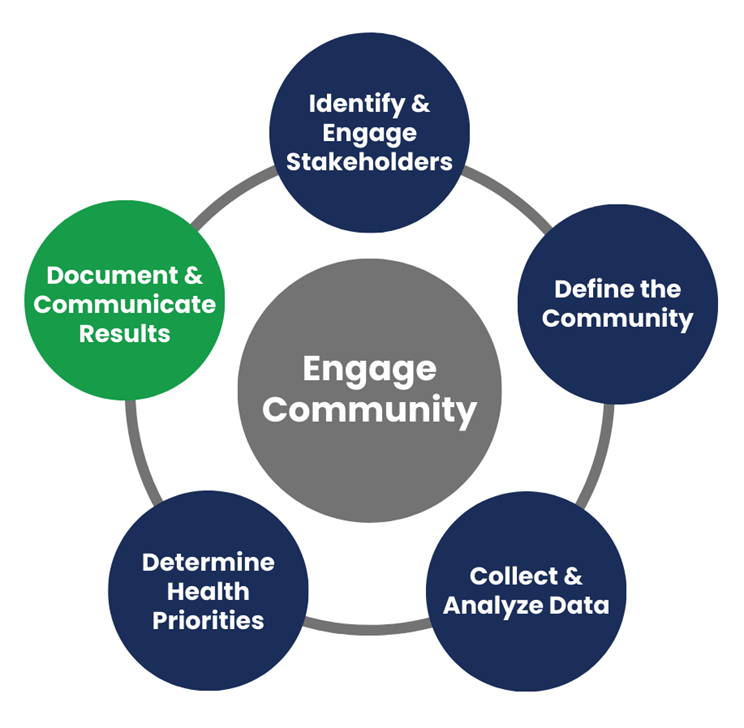
    FBCHHS followed the Association for Community Health Improvement Community Health Assessment Toolkit to guide the CHA process.

    The CHA process was a collaborative effort, led by FBCHHS. The process of collaboration and community engagement began with identifying stakeholders from a variety of sectors within the community and the creation of the CHA Committee.

    The committee was comprised of FBCHHS divisions and leadership and division representatives alongside community stakeholders representing primary health care, mental health, hospitals, private philanthropy, local government, non-profits, the faith community, academia, transportation, and public safety.

    The committee was integral in guiding the process of the CHA, providing input for and reviewing the methodology, data, analysis, as well as determining the types of secondary data to collect, and what questions to ask in the survey and the key informant interviews. The CHA committee also made suggestions about who to interview and how to administer the survey.

    More than 150 Fort Bend County leaders, residents, stakeholders and health champions and over 70 organizations attended the community input sessions throughout the CHA and community health improvement planning process. Additionally, FBCHHS conducted 25 key informant interviews and administered 845 surveys. These activities provided a platform for diverse agencies, community members and perspectives to be shared to generate inclusive, cohesive and attainable health improvement goals.

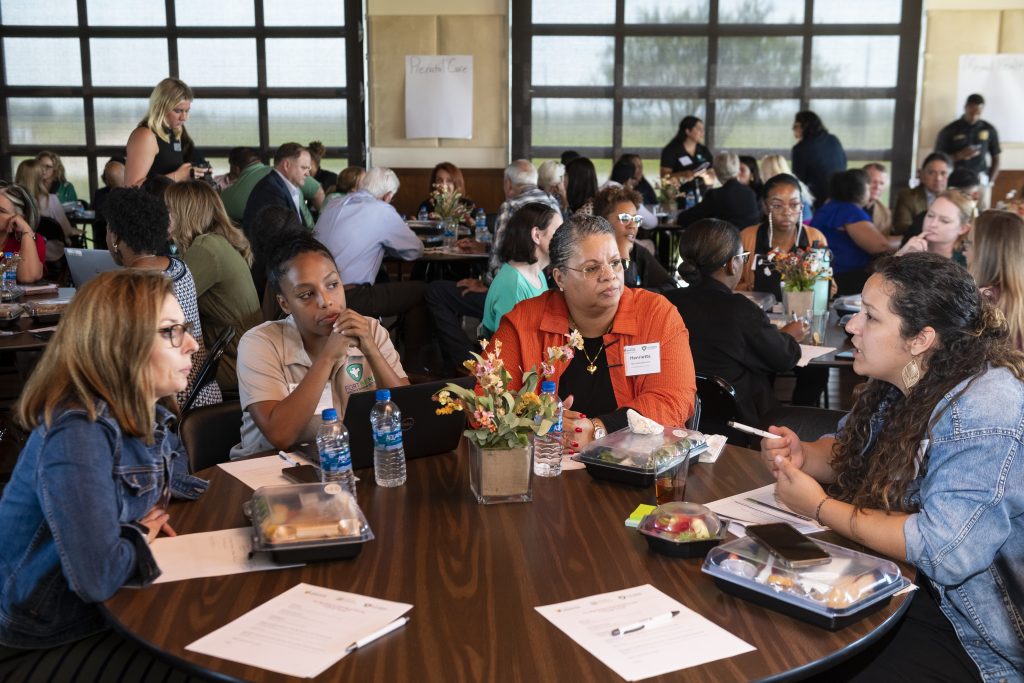
    Image of a room with people around circular tables. The table in focus has four women engaged in conversation.
    Event photo from The Big Picture – Fort Bend County

    Community Health Priorities 

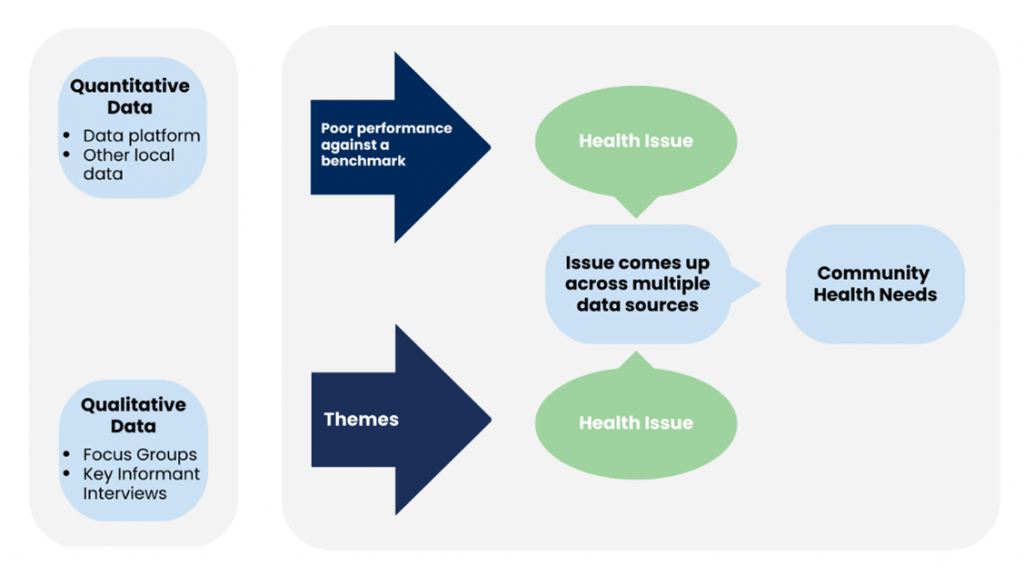
    FBCHHS used the Kaiser Permanente National Community Benefit decision-making criteria for the identification and prioritization of health needs. Quantitative data was compared against the following benchmarks: the state of Texas, U.S. as a whole or the top 10% performing U.S. counties. A health issue was identified when there was poor performance across the comparative benchmarks. Health issues were also identified through thematic analysis of qualitative data from input sessions and Key Informant interviews. Community health need priorities were determined when the same health issue was identified in both the quantitative and qualitative data.

    According to the 2022 County Health Rankings, Fort Bend County ranks fourth in the state for best overall health outcomes. However, the CHA data illustrates areas for improvement among vulnerable populations that have disproportionate health outcomes. Black and Hispanic populations, people without health insurance, and people with low-income have poorer health outcomes. These groups struggle to access services, contributing to health disparities.

    Source: Kaiser Permanente National Community Benefit, August 2015

    While there are several areas where Fort Bend County could see improvement, residents, community leaders and stakeholders identified five top community health priorities.

    Mental Health

    Like physical health, mental health is critical to our overall well-being. Good mental health affects our thoughts and behaviors, helps us maintain fulfilling relationships, enables us to cope with change and adversity, and ultimately supports our contributions to society. Mental health is also closely connected with physical health. Poor mental health may lead to behaviors that harm physical health (e.g., alcohol and other substance use, lack of exercise, etc.), and having poor physical health can negatively affect our mental health. About one in four survey respondents stated that their mental health was not good for one to five days out of the past 30, and 46% said mental health has been a problem in their household.

    About one in seven survey respondents stated that there was a time in the past year that someone in their family needed mental health services but couldn’t receive them — either because they couldn’t afford to pay (34%) or the wait times were too long (27%). Overall, one-third indicated that mental health services are missing in the community. The data from surveys reflect mental health access challenges we see in Fort Bend, specifically. Within Houston’s three-county region, Fort Bend has the highest ratio of residents to mental health care providers, though there has been improvement since 2017.

    Housing

    Affordable, safe, and stable housing is a basic need, and unsafe or unstable housing threatens our health, well-being, and economic security. At the same time, the cost of housing is the single largest expense for most households, and it has become increasingly unaffordable in recent years. The U.S. Department of Housing and Urban Development considers affordable housing as not more than 30% of income. If a household spends 30% or more of their income on housing costs, they are “housing cost burdened.” Households that spend 50% or more of their income on housing costs are “severely cost-burdened.”

    Renters are much more likely to be burdened by housing costs than homeowners. In 2021, more than 45% of renters were cost-burdened compared to 25% of homeowners; and 22% of renters were severely cost-burdened compared to 11% of homeowners. While the share of homeowners who are cost burdened has fallen since 2010, renters are more likely to be cost burdened now than a decade ago. Additionally, a person would need to work 3.2 full-time jobs at minimum wage to afford a two-bedroom rental property at Fair Market Rent in Fort Bend County. Fort Bend County’s population has already increased 41% over the last decade and is expected to increase an additional 15% to nearly 1 million by 2030, according to the Texas Demographic Center’s recent projections. Given these data, it is not surprising that one-third of survey respondents indicated affordable housing is missing in Fort Bend and more than half of Key Informant interviewees cited the issue as their top concern.

    Obesity

    Obesity, defined as having a body mass index (BMI) of 30 or more, is a complex health condition affecting both adults and children. Obesity increases the risk for health conditions such as coronary heart disease, type 2 diabetes, cancer, hypertension, and more. Obesity is found to take more years of life than diabetes, tobacco use, hypertension, or high cholesterol.

    Nearly 30% of adults in Fort Bend County are classified as obese, according to County Health Rankings, and the disease was the top health issue identified among survey respondents. While not the only related triggers, poor eating habits and lack of exercise can contribute to obesity. About 40% of survey respondents are concerned with poor eating habits and 39% are concerned with a lack of exercise.

    Cardiovascular Diseases

    Heart disease was the fifth most-cited health issue by survey respondents and Key Informants with more than one in seven identifying the diseases as a health concern. White and Black residents of Fort Bend die from heart disease at significantly higher rates than Asian and Hispanic residents, according to the Centers for Disease Control and Prevention’s WONDER data tool.

    The National Center for Health Statistics shows that three out of 10 deaths in Fort Bend County are attributed to heart disease and stroke. However, we know that many patients with heart disease also suffer from other chronic conditions, including lower respiratory diseases, diabetes, and kidney diseases, which comprised an additional 6% of deaths in 2020.

    Maternal Health/Prenatal Care

    Babies who are born in good health and who continue to thrive with positive experiences, tend to grow into healthy and productive adults who sustain our population and contribute to our economic vitality. Of course, a newborn’s health depends not only on the mother’s health during gestation but also her state of health before pregnancy. Early prenatal care is defined as pregnancy-related care beginning in the first trimester (1-3 months) and has been viewed as a strategy to improve pregnancy outcomes for more than a century.
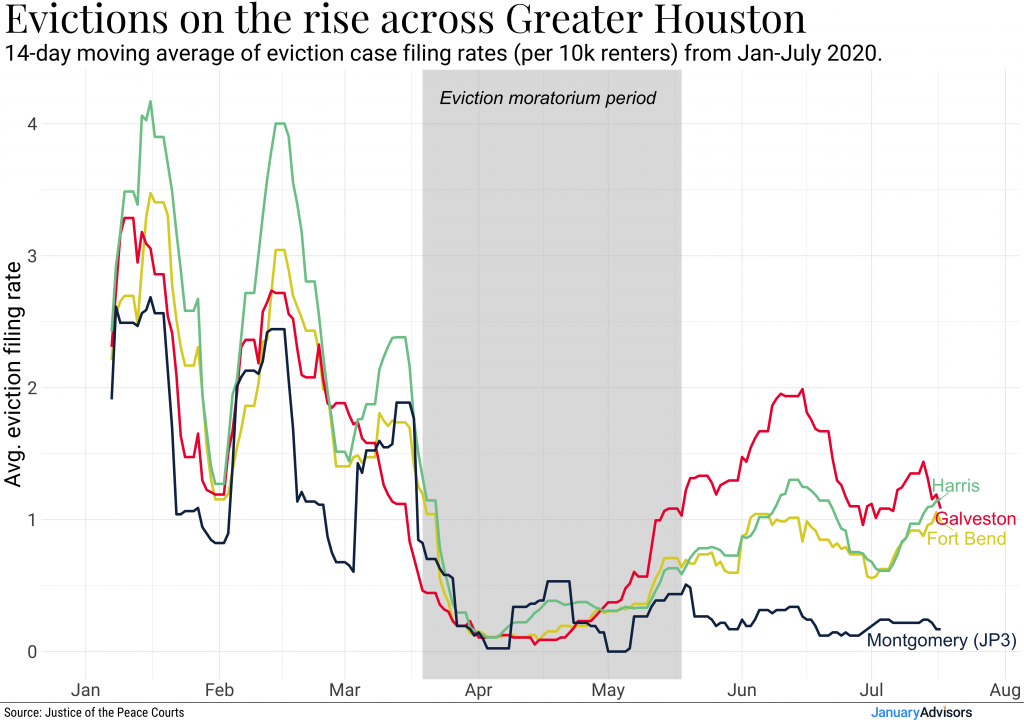
    In 2020, the rate of women who receive late (after the first trimester) or no prenatal care in Fort Bend County (30%) is three times that in Texas (10%) and five times the rate in the U.S. overall (6%). Between 2019 and 2020, Fort Bend saw an unprecedented 10-percentage-point decline in the proportion of women who received early prenatal care — a drop we didn’t see in neighboring counties despite the pandemic. Black and Latino women in Fort Bend had the lowest rates of early prenatal care, which is not surprising because a lack of health insurance is the largest contributor to women delaying or not accessing prenatal care, and women in those groups have the lowest rates of health insurance coverage.

    Community Mobilization for Change

    Through the CHA organizations, community members, and other stakeholders are able to evaluate the health of communities, factors that contribute to health challenges in Fort Bend County, existing community assets and resources to improve the community’s health can also be identified. The Community Health Improvement Plan (CHIP) contributes to the advancing of strategies to shorten the gap to accessing services, resources, and disparities faced with the top five community health priorities. The CHIP brings focus to the health issues identified in the CHA and allows communities, municipalities, jurisdictions, and community partners to actively collaborate and create a united plan to improve the health of Fort Bend County.

    Healthy communities do not happen on their own, but through the efforts of community mobilization, local government support and key stakeholder contributions. Key stakeholders include local elected officials, hospital partners, FQHCs, foundations, non-profits, religious organizations, school districts, HOAs and many others. The shared goal is always to increase the quality of health across Fort Bend County. 

    We invite you to join us in reducing the gap for accessing services and or providing resources for the community members to meet the needs identified from the top five health priorities. FBCHHS Office of Communications, Education and Engagement is available to present to your organization or business about the CHIP to bring further awareness on how your organization or business can aid the community members of Fort Bend County.

    Please email hhsoutreach@fbctx.gov to request a presentation.

    Please access the full Community Health Assessment and Community Health Improvement Plan at http://www.fbctx.gov/cha!

  • Key Insights from The Big Picture | Fort Bend County

    Key Insights from The Big Picture | Fort Bend County

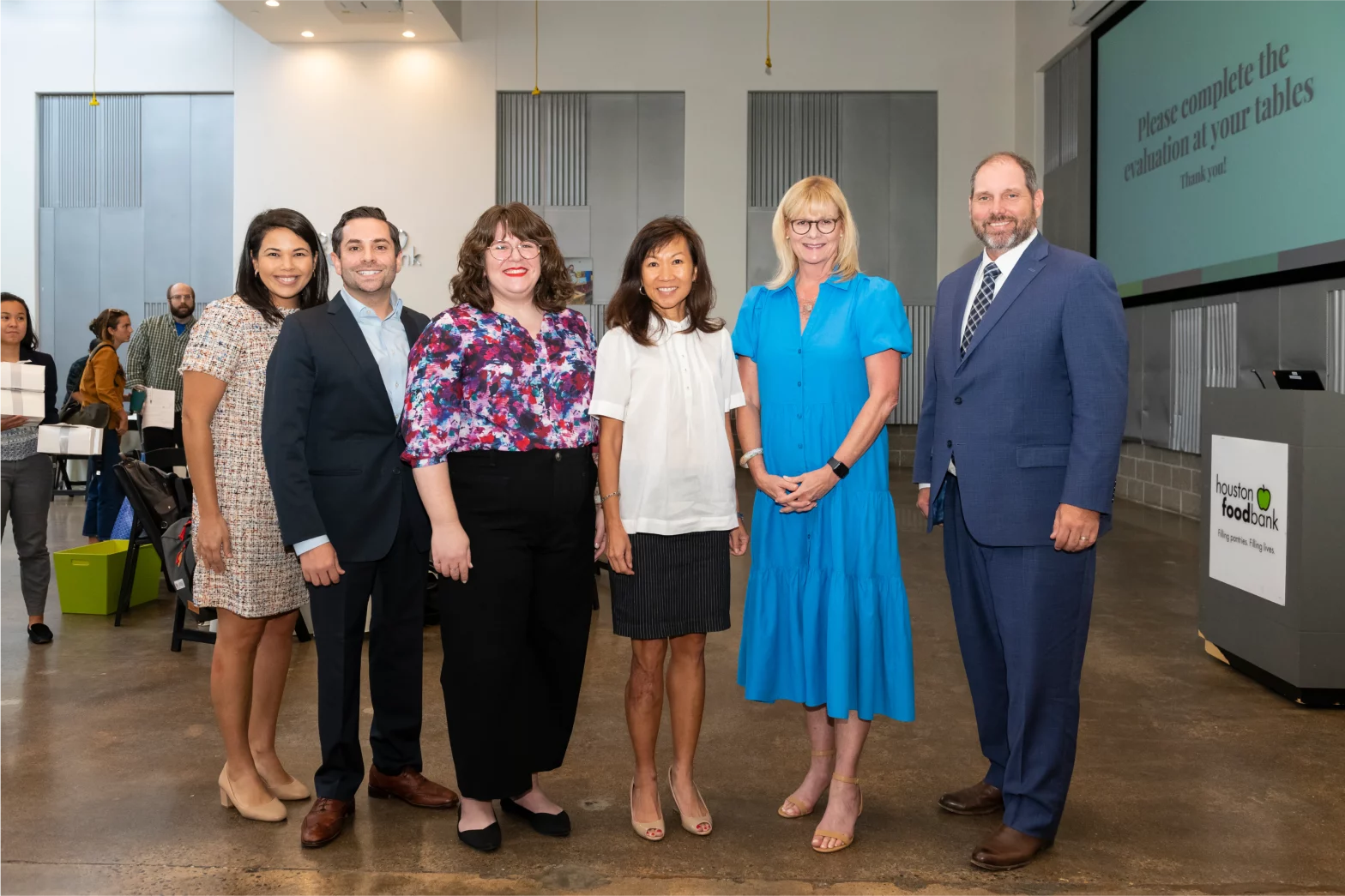
    On October 6, 2022, Fort Bend County residents convened at Long Acres Ranch in Richmond, TX, to learn, engage, and explore ways to solve some of the county’s most significant challenges. At this event, Understanding Houston shared key data highlighting Fort Bend County’s strengths and challenges. Guests also heard from representatives from Fort Bend County Health & Human Services (FBCHHS) about significant findings from their recent Community Health Assessment. This event was unique as it was the first time Understanding Houston partnered with a county department for a presentation.

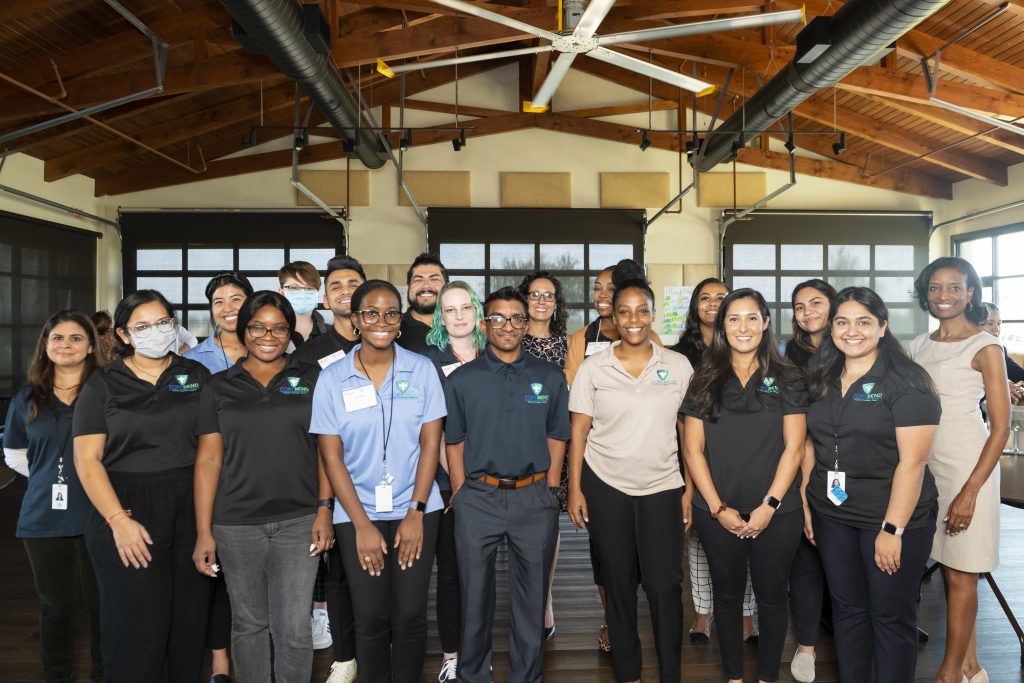
    Fort Bend County Health & Human Services Team

    Painting the Picture

    The program began with Steve Maislin, President and CEO of Greater Houston Community Foundation, who shared an overview of the Foundation’s work and how it was established in 1995 to inspire and create meaningful change with our donors and for our community. In addition to being the Houston region’s hub for all charitable solutions, the Foundation is well-positioned to help its donors identify and invest in a validated network of agency partners throughout the Greater Houston region.

    The next speaker was Dr. Jacquelyn Johnson-Minter, Director of FBCHHS. Dr. Minter shared how FBCHHS is the principal agency for protecting the health of Fort Bend County residents and providing essential human services. Dr. Minter emphasized the importance of the cross-collaboration needed for their ongoing response in addition to the emergency relief they provide during times of disaster. She conveyed that no one person or entity can solve the problems outlined in the forthcoming presentation alone, and this event was designed to help share the data needed to ignite cross-sector collaboration to address significant regional challenges.

    Guests also heard from Rocaille Roberts, Program Officer at The George Foundation, where she helps to oversee how The George Foundation partners with the community to impact Fort Bend County and its residents positively. She encouraged everyone in the room, in their professional and personal life, to be open-minded about what resources we can all leverage to make an impact, as we all need to collectively think outside the box. She also shared how data helps their foundation make strategic choices about what issue areas to prioritize.

    Sharing the Data

    Population Growth

    This leads us to the data shared by representatives from Understanding Houston. First, Nadia Valliani, Director of Community Philanthropy, began by grounding the conversation in the county’s population growth and change over time. Fort Bend County’s population has grown over 500% in the last 40 years.

    Fort Bend County’s population has grown over 500% in the last 40 years.

    Along with large population growth, there has also been a dramatic change in who makes up Fort Bend’s population. International migration is a large contributor to Fort Bend’s population growth, with one out of three residents being foreign-born in 2021, the highest rate in the three-county region, which includes Harris and Montgomery counties. Additionally, Fort Bend’s population has shifted from majority-white to an almost completely equal distribution of each major racial/ethnic group. Valliani shared how population growth is a significant strength as it helps to expand the economy and workforce. However, if not planned for properly, population growth can put stress on our infrastructure and environment. While the region’s diversity is a point of pride as it is an asset and opportunity to lead the country, diversity does not automatically mean inclusivity.

    Fort Bend’s population has shifted from majority-white to an almost completely equal distribution of each major racial/ethnic group

    The data shows that economic opportunity and prosperity are not shared among all residents in Fort Bend County. While the median household income in Fort Bend County, at $97,210, is higher than in Texas and the U.S., Fort Bend has larger income disparities by race/ethnicity. The income gap between white and Hispanic households in Fort Bend County was nearly $42,000 in 2019, according to data from the Federal Reserve. In Fort Bend County, income has grown by about 7% in the past decade compared to 15% for the nation and 21% for Texas. Fortunately, fewer people are living in poverty, but there are racial/ethnic disparities here as well. About one in 10 Black and one in 14 Hispanic residents in Fort Bend live in poverty compared to one in 20 white residents, according to data from the 2019 American Community Survey.

    Fort Bend County is one of the most diverse and wealthy counties in the nation, but wealth has not grown meaningfully for all. This has wide-ranging implications contributing to gaps in housing affordability and health outcomes.

    Residential Infrastructure and Health

    Next, we heard from Chelsea Cheung, Senior Data and Learning Analyst. Cheung shared how the rising cost of housing has disproportionately impacted renters. She revealed how homeownership can be critical to wealth creation and upward mobility, as that wealth can be passed on to future generations. A higher percentage of Fort Bend County residents are homeowners compared to the state and nation; and while homeownership disparities exist by race and ethnicity in Fort Bend County, the disparities are smaller when compared to Texas and the U.S. However, median home values rose 62% between 2010 and 2019 in Fort Bend County, nearly double the national increase of 34%. For the same time period, the median monthly costs for homeowners with a mortgage increased by 4% compared to a 21% increase for renters. In Fort Bend County, nearly one in five renters spend more than half of their income on housing alone. For Fort Bend renters with stagnant wages who face soaring rents, the cost of achieving the American dream has increasingly become practically unachievable.

    In Fort Bend County, nearly one in five renters spend more than half of their income on housing alone.

    Cheung then addressed how where we live affects our environment and, by extension, our health and the health services available. Unfortunately, Texas has had the highest percentage of residents without health insurance in the United States for the last decade. In 2019, about 41,000 residents between the ages of 19 and 64 in Fort Bend County were uninsured, with one-third of Hispanic adults younger than 65 in Fort Bend being uninsured. In 2020, half of all deaths in Fort Bend were caused by heart disease, cancer, and COVID-19. In addition, in 2019, over 25% of Fort Bend County residents 18 and older reported no leisure-time physical activity in the past month, and over 15% rated their health as poor or fair. With more than a quarter of adult residents in Fort Bend County living with obesity, it is time to look at increasing access to and uptake of healthier options for residents.

    Cheung then spoke about mental health and prenatal care. In Fort Bend County, the number of pregnant women who received early prenatal care declined 10 percentage points in just one year between 2020 and 2019, a decline not seen in Harris or Montgomery counties. In addition, Fort Bend County has the highest ratio of residents to mental health care providers in our three-county region and compared to the state and nation. This shortage of mental health providers is especially problematic because over one in 10 Fort Bend residents reported experiencing at least two weeks of poor mental health within a one-month period in 2019. 

    Identifying Community Priorities

    The final speaker was Carrie Rai, Performance and Innovation Specialist from FBCHHS, who shared an overview of their recent Community Health Assessment. This Community Health Assessment is the first in Fort Bend County in 15 years. In addition to using data from various sources like Understanding Houston and local hospitals, they also collected their own data by conducting 25 key informant interviews and distributing 845 surveys to community residents.  

    Through their research, FBCHHS collected data on health outcomes related to health care, health behavior, social and community factors, and the physical and built environment. While they learned that Fort Bend County performs well in several areas, there were a few areas that were flagged as community priorities, including mental health, obesity, heart disease, housing affordability, and prenatal care access.

    Mental Health 

    Rai shared that 37% of survey respondents had at least one day of poor mental health in the past month, and 46% indicated that mental health had been a problem within their households this past year. She also shared that suicide rates in Fort Bend County vary by race and ethnicity, with the highest rates of suicide being in the white population. These high rates of poor mental health are complicated by the shortage of mental health providers in Fort Bend County, as there is only one mental health provider for every 1,210 residents compared to a ratio of one mental health provider for every 760 Texans. Their data also showed that 14% of respondents needed mental health services but did not receive them. When asked why they did not receive mental health services, 34% said they could not afford to, and 27% said it took too long to receive services.  

    Obesity

    While Fort Bend County has lower obesity rates than other counties in the region, it is still a top health issue, as nearly 30% of Fort Bend County residents are obese. In addition, results from the Community Health Assessment indicated that 40% of survey respondents were concerned with poor eating habits while 39% were concerned with lack of exercise. Only 8% of survey respondents are consuming enough fruits and vegetables, and 60% are not getting enough exercise. 

    Heart Disease

    Heart disease is the leading cause of death in Fort Bend County. Breaking it down by race/ethnicity, according to CDC WONDER, the Black or African American and white populations in Fort Bend County had the highest rates of deaths related to heart disease in 2020. Heart Disease was the fifth most cited health issue by survey respondents and key informants.  

    Housing Affordability

    Housing in Fort Bend County is another area of focus due to affordability challenges. In 2022, County Health Rankings found that the Fair Market Rent (FMR) is $1,208 in Fort Bend County, whereas, across Texas, the average FMR is $1,172. In addition, 32% of survey respondents and 55% of key informants said that affordable housing is a resource/service that is missing in Fort Bend County. 

    Prenatal Care Access 

    The last priority issue Rai shared was about prenatal care, which has been viewed as a strategy to improve pregnancy outcomes for more than a century. Fort Bend County has higher rates of low birthweights than the national goals set by Healthy People 2020. In addition, in Fort Bend County, there has been a 10-percentage point drop in women who receive prenatal care from 2019 to 2020, and in that same time period, the percentage of pregnant women receiving no prenatal care in Fort Bend County increased more significantly compared to the state and the nation.  

    Paving a Path Forward 

    In closing, Rai shared how the data collected by FBCHHS reflects similar data to what was presented by Understanding Houston. She shared that as a health department, they share this information to get feedback on how the community should work together to address these priority issues.  

    Attendees then broke into smaller groups where members of the FBCHHS staff facilitated discussions. Each group picked one of the five priority topics to brainstorm solutions around. All discussions and data shared within each group were logged by an FBCHHS staff member. Information was also shared about ways different people or organizations can participate in addressing these priorities.  

    If you are interested in learning more about the data presented or attending an upcoming program, please contact understandinghouston@ghcf.org.  

  • Key Insights from our Ending Homelessness in Houston Event

    Key Insights from our Ending Homelessness in Houston Event

    On September 21, 2022, Greater Houston Community Foundation hosted a program to celebrate the progress made in reducing homelessness in the Houston three-county area and explore how we can continue to work together to end homelessness in Houston.  

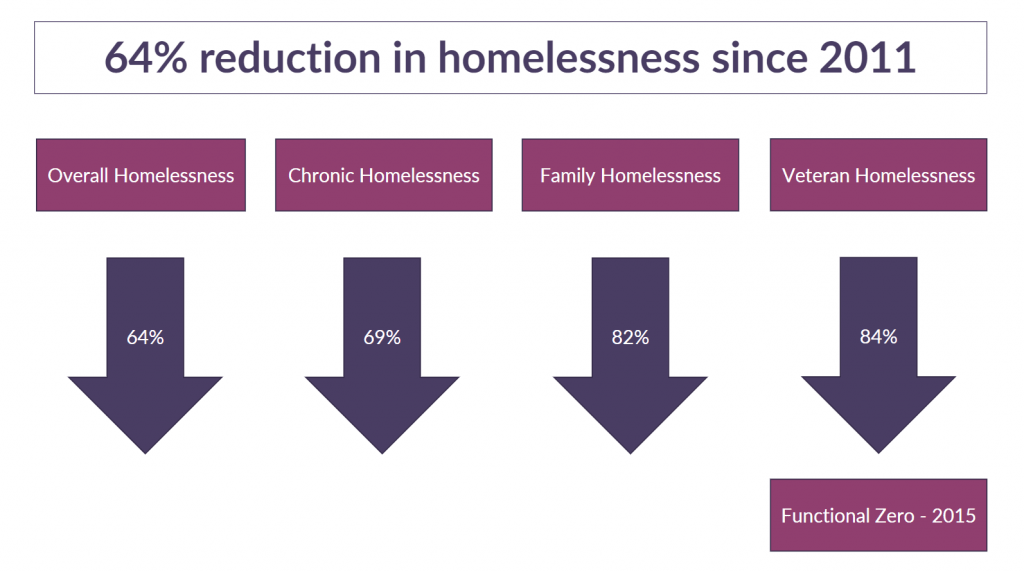
    Source: Coalition for the Homeless of Houston, Harris County, 2022 Homeless Count & Survey Results

    Results from the 2022 Homeless Count Survey done by the Coalition for the Homeless of Houston, indicate that since 2011, there has been a 64% reduction in the number of people experiencing homelessness in the Houston region, and in June 2015, homelessness among veterans was effectively ended. The Houston region’s successful collaborative approach to tackling this issue has received national recognition. It is a model for other cities as mayors and leaders from cities like Los Angeles and Denver want to learn from leaders in Houston.  

    Much of the region’s success can be attributed to The Way Home Houston, a collective effort to prevent and end homelessness in Houston and throughout Harris, Fort Bend, and Montgomery counties. With over 100 partners from all areas of the community, The Way Home Houston has created synergy to help the region achieve this transformation.  

    The event kicked off with Charmet Findley, a Houston native who serves as co-chair of the Youth Action Board of The Way Home Youth Homeless Demonstration Program. Findley faced many hardships while growing up in the foster care and juvenile criminal legal systems. He shared with us how he did not know how to secure housing or employment that would lay a solid foundation for stability and a career. Fortunately, Findley was resilient and found his way, but not everyone is this lucky. Findley uses his experiences to help bridge this gap and to serve as a mentor to youth currently involved in systems. 

    Curating a Coalition

    We then heard from Sara Martinez, Vice President of Development at the Coalition for the Homeless of Houston/Harris County. Martinez described the progress that our region has made in reducing homelessness by increasing collaboration among service providers and simplifying the path out of homelessness. Since July 2022, there has been a $165 million investment in the Community COVID Houston Program (CCHP), which focuses on providing permanent housing Houston with robust client support. As of August 2022, more than 10,000 people have been served by CCHP funding.

    Source: Sara Martinez, Coalition for the Homeless presentation on September 21, 2022

    Martinez also shared data on the strategy of moving people from encampments only if they had a place to go. Since this strategy was adopted, The Way Home partners have decommissioned 57 encampments, engaged 343 individuals, and housed 90% of the individuals they engaged. As the work continues to end homelessness in Houston, the Coalition will continue to prioritize increasing permanent housing, strengthening relationships with other systems to expand resources and keep people stably housed, and increasing advocacy around homelessness and related issues to improve the system’s impact.

    Housing Affordability and Homelessness

    Next, Luis Guajardo, Urban Policy Research Manager at Rice University’s Kinder Institute for Urban Research, who presented data on housing affordability in Houston. Guajardo explained that home ownership offers more than just refuge from the outside world. It also shapes our access to healthcare and career prospects and is the most relevant asset for wealth generation. Guajardo shared three themes that are clear through his research.

    Source: Luis Guajardo, Kinder Institute for Urban Research presentation on September 21, 2022

    Renters and homeowners face varying obstacles. From 2011 to 2021, there was a $100,000 increase in the gap between the price renters could afford and actual home prices. In addition, people who rent increasingly pay more of their income on housing. According to the U.S. Census Bureau, in 2019, 20% of homeowners spent 30% or more of their annual income on housing, while 51% of renters spent 30% or more of their annual income on housing.

    Source: Luis Guajardo, Kinder Institute for Urban Research presentation on September 21, 2022

    The real estate market is not meeting the needs of low-income Houstonians, and public sector efforts are insufficient. Today, 500,000 households in Harris County have difficulty affording their homes. The public sector has not been able to offer enough support to offset market failures as there is a shortage of affordable homes available to lower-income households. In addition, according to Eviction Lab, Harris County is a national leader in evictions, with 36,448 eviction filings this year as of September 21. That equates to 1 in every 22 rental households in Harris County being faced with eviction filings.

    Because of our region’s strong population and job growth, we are going to continue to need affordable housing, particularly for housing under 60% of Area Median Income (AMI). We already have massive supply shortages, and without significant investment and action, Houston’s affordable housing needs will worsen in the next 10 years if the market is not responsive.

    Guajardo ended with recommendations to advance housing affordability. Harris County’s Housing Department aims to build more affordable housing over the next 10 years. Because of limited funding, it will take collaboration from all sectors (i.e., public, private, philanthropic, nonprofit, etc.). We need to plan for lasting housing affordability and availability to ensure we are not in the same predicament in three decades.

    Panelist Discussion

    The next portion of the program was a panel discussion moderated by Sara Martinez, where the audience was invited to submit specific questions for the panel. Below is a sample of the questions and the responses of our panelists. Responses have been edited for clarity. 

    Martinez: Considering the work that each of you do that intersects with homelessness, what is the biggest challenge that you see right now, at this moment?

    Thao Costis: Funding is something that we all struggle with on the nonprofit side. Particularly because we work with people experiencing homelessness, we focus on housing and getting people off the streets with support, and they need the support for a long time. So sustainable funding is something that we continue to struggle with.

    Leslie Bourne: One issue that my staff and I have the most concerns about is mental health. We used to say, about six years ago, we would say about 35% to 40% of our youth suffer from mental health issues. That’s more than double now. It is one of the main challenges we see among youth who experience homelessness.

    Martinez: We know that a lot of adults experiencing homelessness cite an economic trigger as the precipitating event for their homelessness. What do you [Bourne] see with youth experiencing homelessness, what are their triggers?

    Bourne: We see young adults subjected to human trafficking, who were in the foster care system, and are involved in the juvenile justice system, which tends to follow them throughout their life. At Covenant House, about 36% of our clients self-report involvement in the justice system. So, we work with youth coming out of the foster care system, the trauma of that, the trauma coming out of the justice system, and a lot of times that plays into being homeless.

    Martinez: The 2022 Point-in-Time Count found that half of people who experience homelessness self-report serious mental illness and/or a substance abuse disorder. A national study states that people who have been incarcerated are 13 times more likely than the general public to experience homelessness. Can you elaborate on the intersection of these issues and what that looks like here in our region?

    Wayne Young: There is this concept where people often accent mental illness in relation to where they see people in the homelessness system. They see these individuals in encampments and are homeless, and think “of course, they have a mental illness.”

    There is the other population whose mental illness is what creates that spiral. They don’t recognize that they have a mental illness. Half of the people in this country who have a mental illness receive treatment in a given year. So, when you think about all the complexity that comes with being able to access mental health services, or not engaging in treatment — or treatment is not effective – the result is that people who experience homelessness and mental health challenges – but don’t get treatment – can tend to engage in advert behaviors that tend to cause them to lose jobs, get evicted, and lose their social support.

    Martinez: We face so many challenges, how do you stay positive and maintain optimism?

    Marc Eichenbaum: At the end of the day, it is the ethos of Houston. When we look at our city and how we rise to challenges. The reality is other cities don’t do this. Houston has the chutzpah to really dream big and turn dreams into reality.

    The organizations up here aren’t saying “we are going to end homelessness” because it is a platitude or slogan, they say it because they really believe it. It is something I believe in because we have shown so much progress, and we are on the right path. We have this collective system with all the tools. We have this engine, and all that engine needs is a little gas — the resources — to really make sure that it [engine] goes.

    Click here to watch highlights of the event. If you are interested in learning more about the data presented or attending an upcoming program, please contact understandinghouston@ghcf.org.

  • Is Houston really that affordable?

    Is Houston really that affordable?

    Over the years, the greater Houston region has gained a reputation for affordability. Historically, Greater Houston is the rare major metro in which the cost of living is low and overall opportunity is high, especially relative to its size as the fifth largest metropolitan area and the fourth largest city in the nation. 

    Our region’s affordability is one of the main reasons the Houston population (the nine-county Houston metropolitan area) grew at the fastest rate in the last decade (18.8% between 2010 and 2019) among the 20 most populous metros in the nation. That reputation for affordability may be threatened by the hot real estate market, soaring gas and energy prices, and 40-year high inflation rates, begging the question: is Houston affordable, still?

    Continue reading about Houston’s population growth

    Rising home and transportation costs and the widening affordability gap

    Prices and sales have soared in the Greater Houston housing market, like much of the country, to a level that many experts believe is untenable. According to research from Greater Houston Partnership, the median price of a single-family home in the nine-county Houston Metropolitan Area has increased nearly 45% over the past four years and 14.5% in just the first six months of this year alone. If folks can’t purchase homes, they need to rent, but that option has offered little relief as rent prices are up nearly 20% since 2020, according to the Partnership’s analysis of Apartment Data Services data.

    The median price of a single-family home has increased by nearly 45% over the past four years.

    Harvard’s Joint Center for Housing Studies estimates that some four million renters nationwide were effectively priced out of buying a home due to rising interest rates from April 2021 to April 2022.

    According to the 2022 State of Housing in Harris County and Houston report, the affordability gap for renters in Harris County in 2011 was $35,000. The affordability gap is the difference between what median-income households can afford and the median house price and an indication of how much housing has gone up relative to earnings. Ten years later, the affordability gap for renters has nearly quadrupled to $135,500, with 38% of that growth from 2020 to 2021 alone. According to the report, current homeowners in Harris County do not face an affordability gap — they were able to purchase a home at the median sales price with their median household income. However, homeownership may remain only a dream for would-be-first-time buyers due to increasing costs and the widening affordability gap.

    There is more to housing affordability than how much mortgage or rent you pay. Typically, families would move out to the suburbs for relatively less expensive housing, but, in a region like ours where people have historically commuted into the city, that usually means their transportation costs go up.

    The Location Affordability Index estimates the percentage of a household’s income spent on housing and transportation costs in a given location. According to the latest data from 2017, households in Harris County spent about 27% of their income on housing and an additional 21% on transportation, comprising nearly half of a family’s income. Comparatively, residents of Fort Bend and Montgomery counties spend more of their income on transportation than residents of Harris County.

    In 2017, households in Harris County spent about 27% of their income on housing and an additional 21% on transportation.

    This is due in part to the fact that we commute alone to work in our private vehicles at higher rates than other metro areas and spend more time in traffic. Despite the COVID-19 pandemic, Houstonians spent an average of 49 extra hours in traffic in 2020 — the third worst in the country. These delays cost each of us about $1,100 a year in fuel costs and lost time, according to the 2021 Urban Mobility report from Texas A&M Transportation Institute.

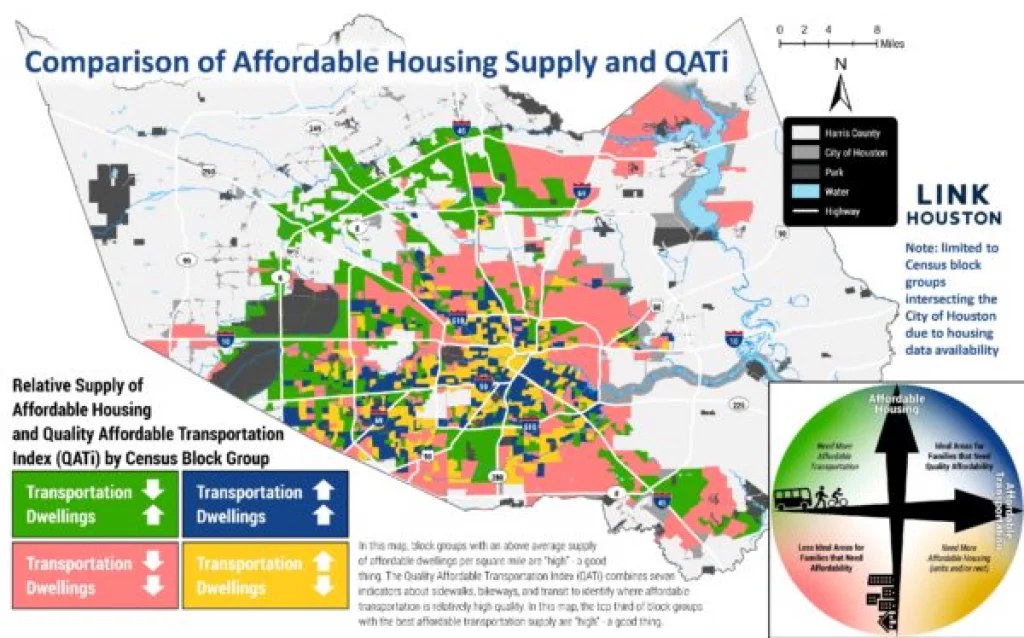
    Ideally, instead of treating them as two independent issues, affordable housing and access to transportation should be aligned. LINK Houston and Rice University’s Kinder Institute for Urban Research developed the Quality Affordable Transportation Index (QATi) to map areas of quality, affordable transportation and housing. LINK Houston’s Where Affordable Housing and Transportation Meet in Houston report found that 44% of rental units in Houston are affordable to moderate-income households (defined as a family of four spending no more than $1,907 per month on housing plus utilities), and only one-third of these rental units are near high-quality, affordable transportation.

    LINK Houston, Affordable Housing and Transportation Data
    Source: LINK Houston, Affordable Housing and Transportation Data

    Disparities in housing affordability

    Of course, the decision to buy a home depends on more than its purchase price. There are additional costs to consider like mortgage terms (including interest rates), insurance and taxes. Part of the reason homeownership remains out of reach for many marginalized communities is because of historic and current discriminatory policies and practices.

    Banks deny home loans from Houston-area Hispanic and Black applicants at about four times the rate of white applicants. In 2020, banks denied home loans to 25% of Black and 23% of Hispanic applicants compared with 8% of white applicants, according to the Kinder Institute’s 2022 State of Housing report.

    Further, among those who were approved for a home loan, Hispanic and Black applicants were given higher interest rates, higher loan-to-value ratios, longer loan terms and were far more likely to be heavily debt-burdened borrowers.

    In 2020, banks denied Houston-area home loans to 25% of Black and 23% of Hispanic applicants compared with 8% of white applicants.

    Despite declining homeownership rates and the challenges they face in the housing market, Hispanic homeowners were the only racial/ethnic group with a growing homeownership rate both in the U.S. and Houston between 2020 and 2021. Hispanic residents will soon become the largest share of homebuyers in the country.

    We observe disparities in the housing market not only in loan denials or predatory mortgages for lower-value properties, but also in foreclosures. According to the Kinder Institute’s 2022 State of Housing report, foreclosures in the three-county area were disproportionately higher in suburban communities of color. Within Harris County, each of the 10 census tracts with the highest foreclosure rates consisted mostly of communities that have been historically underrepresented. The report states that these particularly high foreclosure rates are likely correlated with the unfavorable mortgage terms banks typically offer these communities.

    Continue reading about housing issues such as evictions and homelessness in Houston

    Energy costs in Houston are rising, but remain lower than national averages

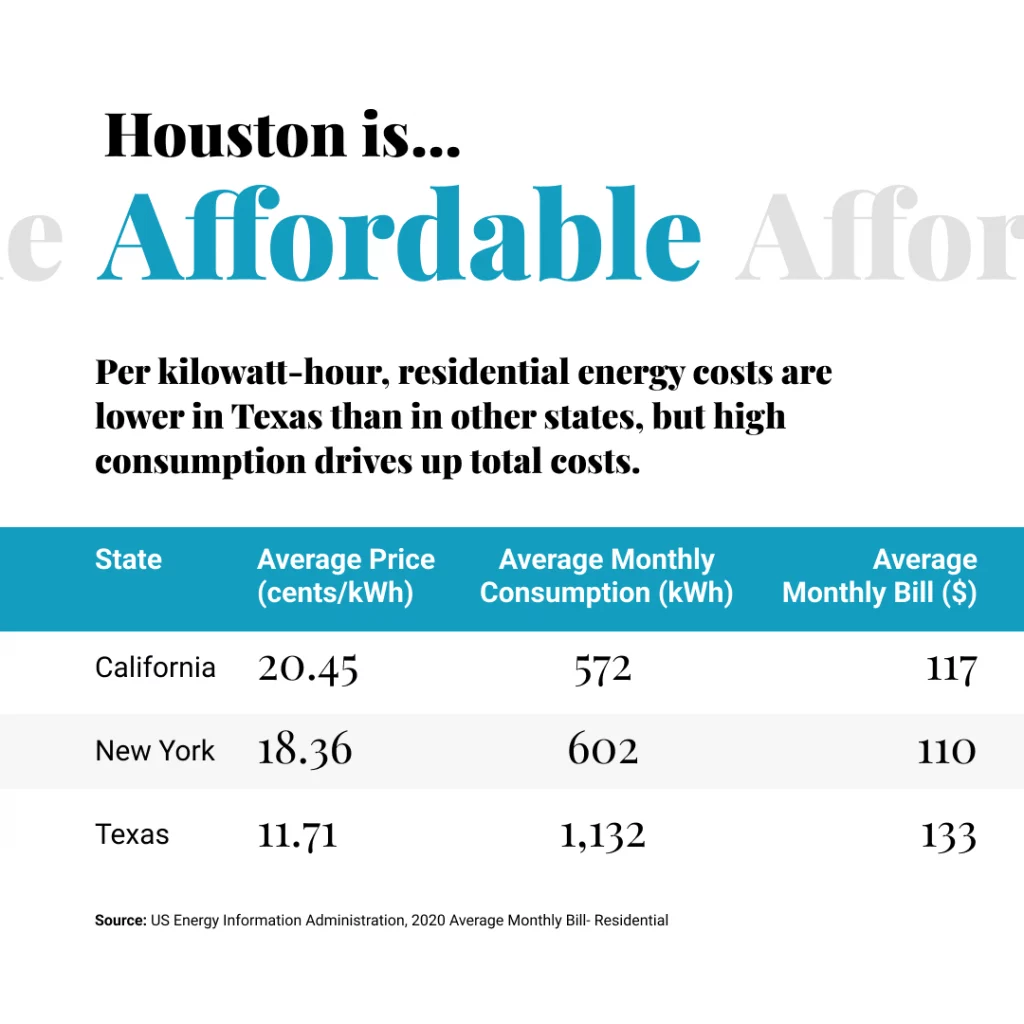
    In Houston, housing costs immediately come to mind when discussing our region’s affordability; the cost of energy likely follows. While Texans pay some of the lowest rates in the country per kilowatt hour for energy, consumption drives electric bills high. 

    Those of us who have experienced the sweltering Houston heat, and surprisingly cold Texas winters, know that most Texans keep their climate control pumping year-round. Average monthly consumption in Texas is consistently among the highest in the country — in 2020, energy bills in Texas were the sixth-highest in the nation, despite paying less per kilowatt hour than 31 other states, according to the U.S. Energy Information Administration.

    In keeping with the reasonable prices for energy in the region, gas prices in Houston are also relatively low — averaging about 7% lower than the national rate over the last decade. In 2021 the average price for retail gas in the country was $2.91 per gallon, compared to $2.66 in Texas, representing an 8% price break. Despite the recent surge in prices, gas in Texas is consistently cheaper than the national average. At its peak this year in June 2022 the average retail price for a gallon of gasoline in Texas was $4.58, 4% lower than the national average, according to the U.S. Energy Information Administration.

    Inflation’s impact on the Houston economy

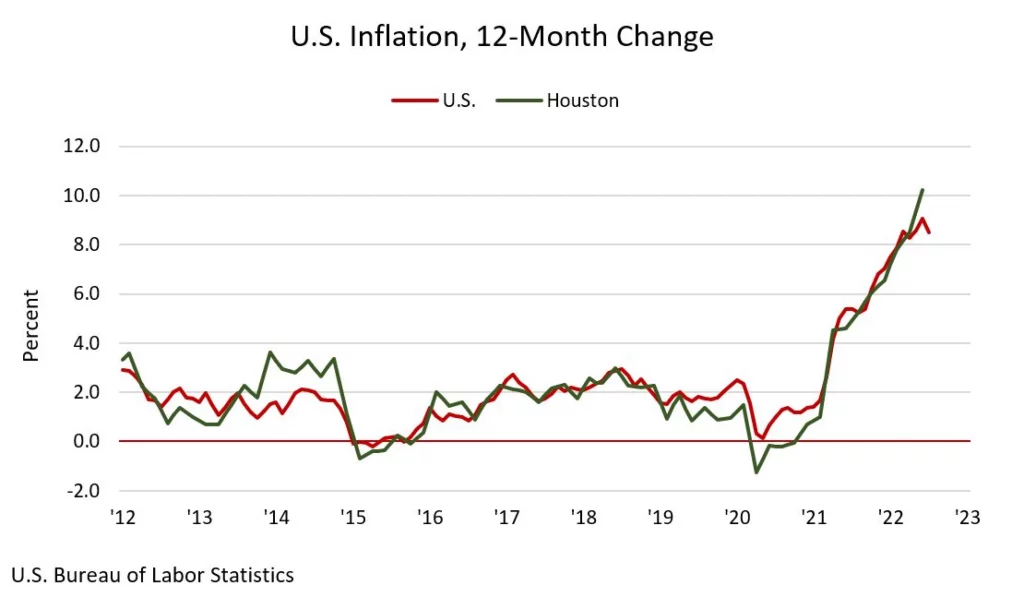
    Inflation is on the mind for many in the country right now, and for good reason. Inflation rates in the U.S. and in Houston are at their highest since December 1981

    Inflation rose to 9.1% nationwide, according to the Consumer Price Index for all Urban Consumers (CPI-U), in the twelve months ending June 2022. But the inflation rate for the Houston Metropolitan Area rose even more during that time, 10.2%. Houston’s higher rate suggests stronger demand and a hotter economy compared to the nation as a whole, according to Greater Houston Partnership analysis.

    Living costs in Houston are 8.3% below the national average, and 36.2% lower than the average of the 20 most populous U.S. metros.

    The most recent report from the U.S. Bureau of Labor Statistics showed only moderate increases in housing costs in the region, suggesting that the true increase in Houston’s housing costs has yet to be fully reflected in the Consumer Price Index, and the real rise in inflation could be higher than what has been reported.

    Retrieved from Greater Houston Partnership, Monthly Update: Inflation, June 2022

    So, is Houston a low cost of living city? Despite inflation increasing at a slightly faster rate than the national average, the cost of living in Houston is still the second-lowest among the 20 most populous metropolitan areas in the United States, according to the Council for Community and Economic Research’s Cost of Living Index from Q1 of 2022. Living costs in Houston are 8.3% below the national average, and 36.2% lower than the average of the 20 most populous U.S. metros.

    Houston’s affordability is being redefined

    As the entire country becomes less affordable, so does Greater Houston. However, even as inflation continues to rise, the region’s cost of living remains relatively low when compared to other major metros and the quality of life Houstonians enjoy, including the arts and cultural amenities of a world-class city. However, historic disparities and recent events have threatened this reputation, and the region will never truly be affordable for all until our region’s prosperity provides opportunity for all.

    Helpful Articles by Understanding Houston:

  • Exploring the Legacy of Redlining in Houston

    Exploring the Legacy of Redlining in Houston

    In the Houston area, there are neighborhoods fewer than 15 miles apart in which the average life expectancy differs by 21 years and future income differs by $50,000 for low-income children. The disparities may exist in the present, but their roots run deep through our region’s history.

    More than 90 years of discriminatory federal, state, and local policies aimed at maintaining racial segregation significantly harmed resident wealth, health and well-being across generations and, by extension, entire neighborhoods. Today, these communities often lack adequate access to healthcare, healthy foods, equitable transportation, other basic needs, and even experience higher temperatures as a result of public and private disinvestment, the denial of public services, and the presence of industrial and waste facilities — just some of the many consequences of a practice known as redlining.

    What is redlining?

    Redlining maps were used by the federal government in the early-to-mid 20th century to legally prevent Black Americans from accessing homeownership — one of the most effective ways to support economic mobility and build wealth.

    As a result, Black residents who live in these formerly-redlined neighborhoods still tend to have lower homeownership rates, higher levels of poverty, lower future earnings, worse health outcomes and lower average life expectancies today. Though the practice of redlining was outlawed in 1968, its effects can still be seen and felt today through a staggering wealth gap in which Black Americans hold only 13% of the median net worth of white families

    These problems are complex and run deep. Correcting these injustices will require, among other things, intentional, philanthropic investment to support organizations that work to improve the historic, long-term disparities Black residents face. As Understanding Houston observes Black History Month, we will do so with a holistic perspective that celebrates the heritage and contributions of Black communities, scrutinizes the past and present, and looks ahead to a brighter future. Here, we examine the legacy of redlining in Houston. 

    A brief background of redlining in America

    What was the purpose of redlining, and how did it come to be? The Home Owners’ Loan Corporation (HOLC) was created in 1933 in the midst of the Great Depression to protect homeowners from losing their homes. The agency purchased mortgages that were facing imminent foreclosure and issued new mortgages with longer repayment timelines and, for the first time, offered an amortized schedule so buyers could gain equity as they paid off the loan.

    To depict the level of risk in making home loans in various communities, HOLC created a series of multi-colored residential maps for 239 cities across the nation, including major cities in Texas. HOLC assigned communities a rating from A through D to designate the level of “risk” in investment.

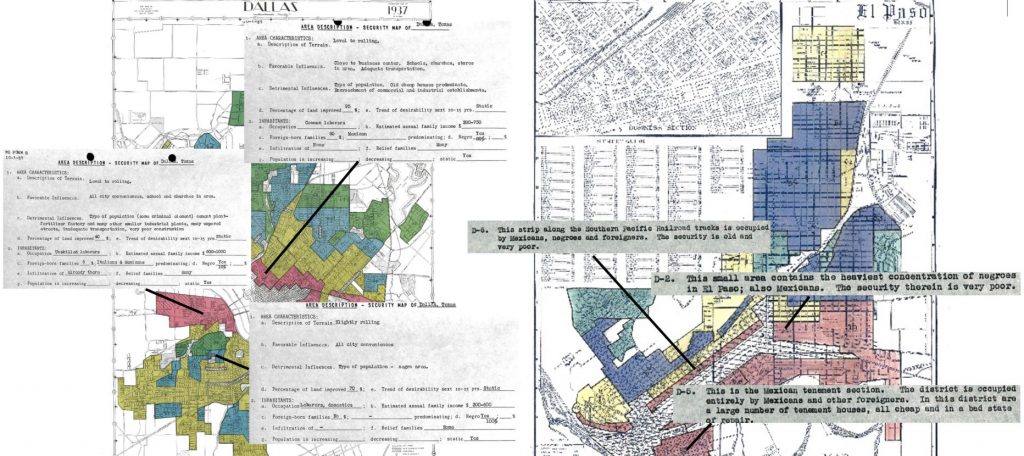
    Neighborhoods that were all-white were given an “A” rating, colored green, and denoted as a “best” area for investment. Meanwhile, if a single Black family lived in an area (regardless of neighborhood income level), it was automatically assigned “D” to indicate a “hazardous” investment and colored in red — hence the term “redlining.” Neighborhoods assigned D and C (categorized as “definitely declining” in yellow) ratings were also communities where immigrants or their children lived, as detailed in the redlining maps from Dallas and El Paso below. Read the area descriptions that informed the ratings for Dallas and El Paso (warning: the area descriptions contain overtly offensive comments).1

    Residential Security Maps of El Paso and Dallas. 

    Source: Mapping Inequality: Redlining In New Deal America

    Shortly after, in 1934, the Federal Housing Administration (FHA) was established to provide federally backed insurance for mortgage loans. The FHA dramatically changed mortgage lending and made homeownership much more attainable and affordable — for a very specific segment of the population.

    To guide the work of private real estate agents who conducted most property appraisals, the FHA created an Underwriting Manual in 1938, which relied on HOLC’s maps. This manual explicitly outlined the requirement of creating and maintaining “racially homogenous” neighborhoods and identified eligibility criteria which automatically denied Black applicants.

    Since FHA-backed loans bear less risk to the lender, banks would not provide mortgages that the FHA would not insure — meaning, mortgages to Black applicants. As a result, between 1930 and 1950, only 2% of FHA mortgages went to non-white families

    The practice of redlining and other discriminatory housing policies legally excluded Black families from receiving fair housing mortgages for over 30 years. Major government investments aimed at making homeownership more accessible to low- and middle-income families largely benefited white families only — the effects of this injustice were then compounded from generation to generation and persist to this day. 

    Though redlining was deemed unconstitutional in 1968 with the passage of the Fair Housing Act, efforts to prevent Black homeownership and integration did not end there. The policies of these federal agencies provided the systemic infrastructure for the perpetuation of discriminatory housing practices. Even after 1968, the federal government did not enforce the Equal Protection Clause of the 14th Amendment and regularly supported restrictive covenants that excluded Black families from homeownership and policies that continued to segregate Black residents.

    “…much of today’s racial disparities in housing, health, and education can be traced to our legacy of redlining and segregationist policies. This is a foundational issue that set a course for wealth disparity and racial injustice.” 

    – Luis Guajardo, Urban Policy Research Manager at Rice University’s Kinder Institute for Urban Research

    How racial discrimination unfolds in the modern housing market

    Compounding historical injustices, Black families still face housing discrimination (racial discrimination in the housing market) in countless forms:

    • A national study found that Black applicants are denied mortgages at disproportionately higher rates than whites. 
    • As recently as 2016, the Consumer Financial Protection Bureau and Department of Justice have required lending institutions to pay out millions of dollars for illegal redlining and discriminatory mortgage lending practices.
    • Studies have found that housing discrimination is still widespread through more covert means like racial steering, a practice in which real estate agents deliberately steer Black potential homebuyers to areas with larger concentrations of people of color, higher poverty levels and lower housing quality. 
    • Agents tend to show white homebuyers more homes than they do in the case of equally qualified Black homebuyers. 
    • Homes in neighborhoods where there is a large concentration of Black families are appraised at lower market values (an average of 23% less, or $48,000), even among households of similar size and condition.
    • Lenders disproportionately market risky loans to Black families. In 2000, Black homeowners were significantly more likely to hold subprime loans than white borrowers at each income level. Higher-income Black households held subprime mortgages at four times the rate of higher-income white households.2 Not surprisingly, Black homeowners were the most harmed in the 2008 housing crisis, and between 2010 and 2017, the homeownership rate among Black households in Houston’s three-county region declined by five percentage points while white homeownership rates remained flat.
    “The biggest issues have been lending institutions and appraisers and realtors not wanting to show properties [to Black individuals] in certain areas.” 

    – Shadrick Bogany, Past Chairman of Houston Association of Realtors and Columnist for the Houston Chronicle

    The impact of discriminatory housing policies today on Black Houstonians and communities

    The negative impact of discriminatory federal housing policies cannot be overstated. The practice of redlining, combined with other housing policies intent on racial exclusion, led to two major inequities we see today:

    1) The systematic exclusion of Black households from homeownership, which limited their ability to build and grow wealth across generations, resulting in extreme racial wealth disparities.

    2) The isolation and deterioration of predominantly Black neighborhoods which created concentrated areas of poverty characterized by greater environmental risks, poor health outcomes, reduced life expectancy and little-to-no access to essential resources such as safe and affordable housing, high-quality schools, equitable transportation, green space and fresh and affordable food options. 

    How redlining affects homeownership in Houston

    It is impossible to separate present-day homeownership rates from decades of discriminatory housing policies that prevented Black families from owning homes in the past. Across the Houston three-county area, 72% of white residents are homeowners compared to 41% of Black residents and 52% of Hispanic residents. 

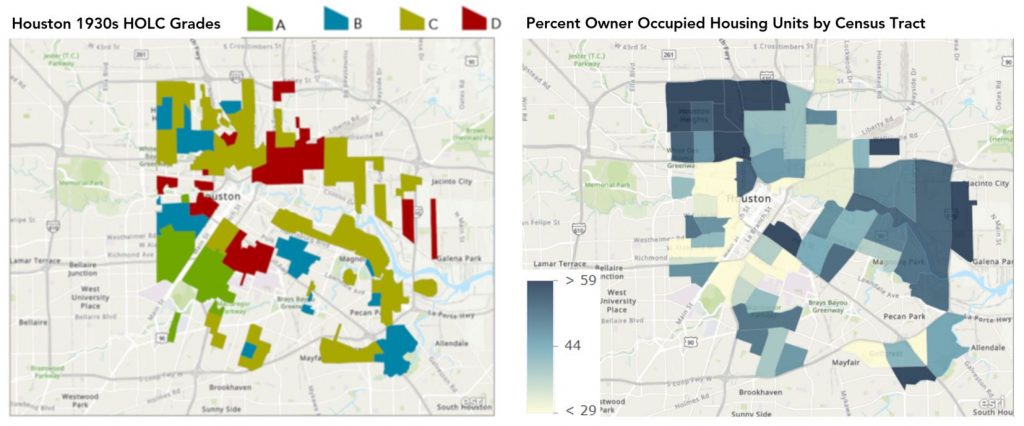
    Source: Mapping Inequality; Understanding Houston analysis of U.S. Census Bureau, American Community Survey, 2019 5-year estimates data

    Communities that were rated either “D” or “C”  in the 1930s tend to have lower homeownership rates compared to communities that were given “A” HOLC grades. For example, 31.2% of residents in Fifth Ward (previously redlined) are homeowners compared to 48.1% of residents in the Museum District and 65.6% of residents in the Heights (rated “A”). These disparities show the persistent obstacles that families in Houston’s redlined neighborhoods face in accessing homeownership. 

    How redlining affects wealth and poverty in Houston 

    Homeownership is the most common pathway toward economic security, social mobility, and wealth creation and particularly critical to upward mobility for the majority of low-income and non-white households since that wealth can be passed to future generations, according to a study from the Joint Center for Housing Studies at Harvard University. In 2019, the median net worth among homeowners was $255,000, while that of renters was $6,300, according to the Federal Reserve

    However, the practice of redlining prevented Black Americans from accessing the same homeownership opportunities that were afforded to white families. This would negatively impact Black families for generations and is a significant factor in the extreme racial wealth gap that exists today. The median net worth of white families in 2019 was $188,200 compared to $24,100 among Black families — despite a 33% increase in wealth for Black families between 2016–19. 

    The impact of that level of lost wealth cannot be underestimated — not only in net worth but also in the lost opportunities that wealth allows in terms of investments in education, businesses, and other revenue-generating endeavors.

    – Tanweer Kaleemullah, Public Health Policy Analyst at Harris County Public Health

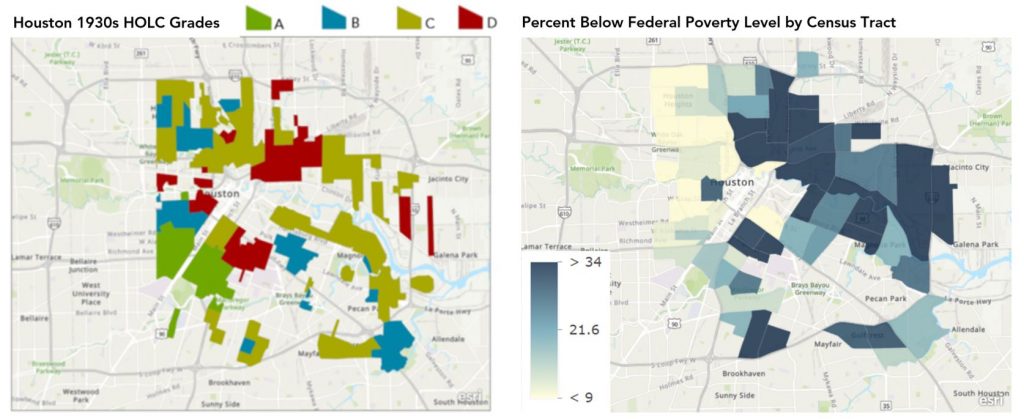
    Source: Mapping Inequality; Understanding Houston analysis of U.S. Census Bureau, American Community Survey, 2019 5-year estimates data

    Therefore, it is not surprising that poverty rates are higher in redlined communities than in greenlined ones and higher among Black households than white ones. There is a cluster of communities around the east side of Houston (redlined) in which a higher percentage of individuals live in poverty compared to the west side (greenlined).  For example, the poverty rate in Fifth Ward is 32.6% compared to 7.3% in Montrose. And across Houston’s three-county region, 20% of Black residents live in poverty compared to 7% of white residents. 

    How redlining affects future income and earnings in Houston

    Where we grow up profoundly affects our future. Neighborhoods give us resources, networks and opportunities. Or, they don’t. The lack of wealth accumulation among families across generations, compounded with perpetual disinvestment, created concentrated areas of poverty. Notable ripple effects include low property values resulting in lost tax revenue for schools, limiting access to high quality education and little private sector investment, which stifles business growth and employment opportunities. This matters because children who are raised in neighborhoods with lower poverty rates, less measured discrimination and higher levels of educational attainment tend to have better outcomes as adults (e.g., lower incarceration rates, higher household incomes, higher educational attainment and higher levels of employment). And, places that produce good outcomes in the past tend to produce good outcomes in the future. Homeownership has been identified as an effective way to create that neighborhood stability

    Opportunity Atlas, an interactive tool from the Census Bureau and researchers from Harvard and Brown University, measures the extent to which groups move up (or down) the economic ladder by looking at various outcomes of adults and back-mapping where they grew up (read more about the methods and peer-reviewed paper here). The data reveals staggering differences in earnings for adults who grew up in low-income households that were located in wealthier neighborhoods versus lower-income neighborhoods. Being in an environment with access to the resources typically available in higher-income neighborhoods allows a child from a low-income household a greater chance to prosper in the future. 

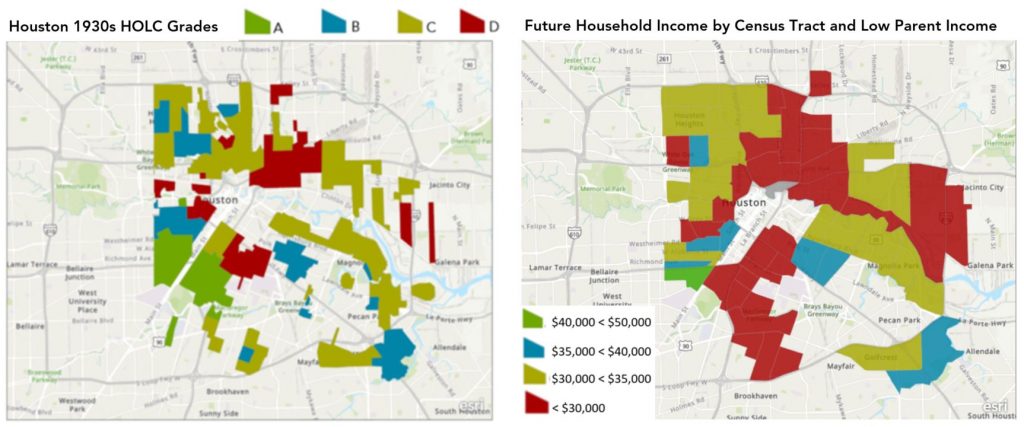
    Source: Mapping Inequality; Opportunity Atlas

    Neighborhoods that were previously redlined generally produce low future earnings for adults raised in low-income households. Among the neighborhoods rated by HOLC, only one community produced high future earnings for individuals who grew up in low-income households — the Museum District — which received an A rating by HOLC in the 1930s.

    How redlining affects social vulnerability in Houston

    Communities that were redlined 90 years ago are also more vulnerable to impacts from economic and environmental threats today, including being disproportionately impacted by COVID-19 in Houston. Job and income loss from economic recessions are higher among residents who live in previously redlined neighborhoods that are currently distressed, residents tend to have worse health outcomes as redlined communities are more likely to be exposed to environmental hazards, and most residents lack savings which acts as a safety net during difficult times.

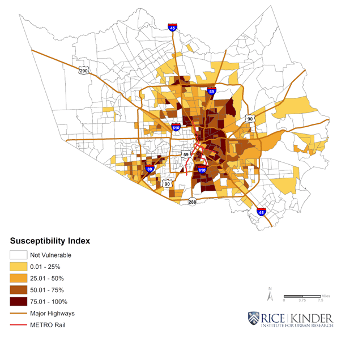
    The Centers for Disease Control and Prevention’s Social Vulnerability Index (SVI) ranks each census tract on 15 demographic and social factors, including poverty, unemployment, family structure, lack of vehicle access, non-white population, disability and housing. Used together, this index helps identify communities that are more vulnerable to being negatively affected by hazardous events such as natural disasters like hurricanes and disease outbreaks like COVID-19.

    Continue reading about the Social Vulnerability Index, and risks associated with disasters and flooding in Houston

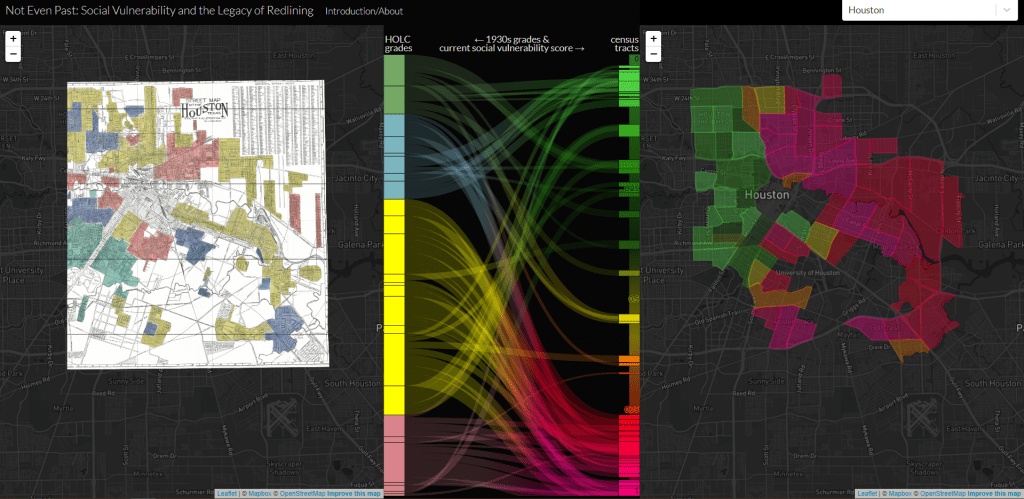
    Source: Not Even Past: Social Vulnerability and the Legacy of Redlining

    What were the redlined neighborhoods in Houston, and what does the Social Vulnerability Index tell us about them? Houston’s redlined neighborhoods — Sunnyside, Third Ward and Fifth Ward — are located on the east side of the city and have SVI ratings of 0.84 or higher, making them more vulnerable than upwards of 80% of communities across the U.S, according to Not Even Past: Social Vulnerability and the Legacy of Redlining, an interactive tool that compares communities from the redlining maps to their current SVI. Areas that were given a grade of “A” — the Heights, West University Place and Montrose — have SVI ratings of 0.24 or lower, making them more vulnerable than, at most, 24% of communities across the U.S. and tend to be located on the west side.

    Environmental hazards, health outcomes and life expectancy

    Industrial and toxic-waste facilities in Houston are disproportionately found in Black neighborhoods — or in neighborhoods with a high concentration of non-white or low-income residents — due in part to redlining. This has consequences because the environment is a major determinant of health. A recent report from the Texas Department of State Health Services found that children in Fifth Ward and Kashmere Gardens were diagnosed with leukemia at nearly five times the expected rate of the Houston population, and cancer rates for children who live in the 100 homes located above a “toxic plume” were even worse. This isn’t the first cancer cluster in the region.

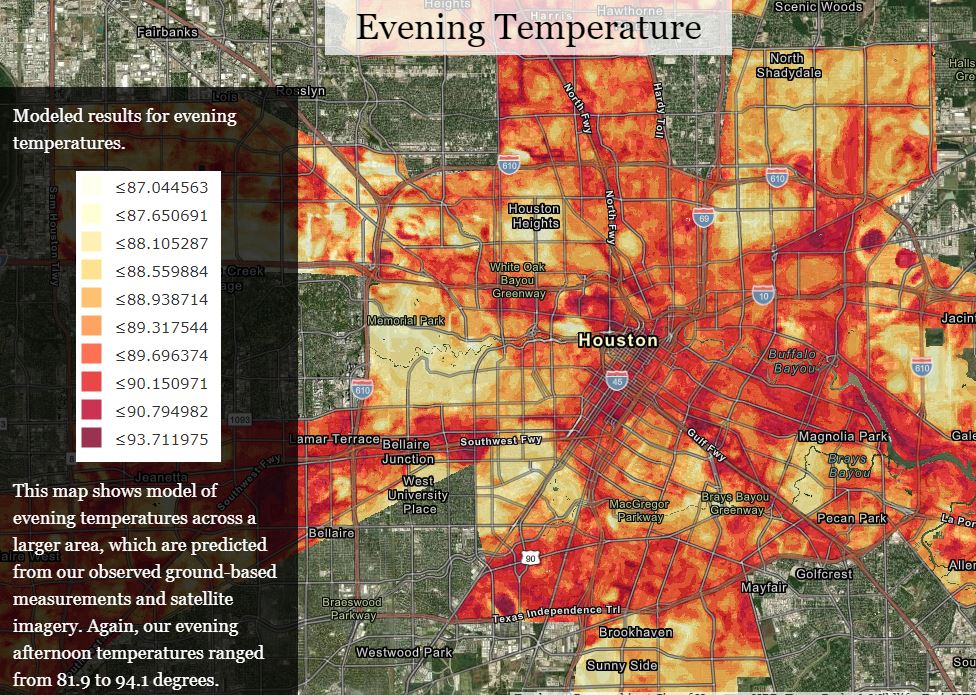
    Additionally, formerly redlined communities overwhelmingly experience hotter temperatures than communities that were given better HOLC grades. Some neighborhoods in the same city differed by nearly 13 degrees. 

    We see this phenomenon in Houston. Neighborhoods that have the highest nighttime temperatures in Houston — the greatest driver of heat-related health issues — are concentrated in areas that were redlined, according to maps created by Houston Harris Heat Action Team.

    These dramatic differences in temperature have dire health consequences. FEMA warns that extreme heat kills more Americans than other weather-related disasters, and the World Health Organization states that temperature extremes can exacerbate chronic cardiovascular, respiratory and diabetes-related conditions. This is especially problematic since there is a higher prevalence of diseases and poor health conditions such as diabetes, kidney disease, pulmonary disease and obesity in neighborhoods that were previously redlined — due, in part, to the unsafe environment in these communities.

    Environmental conditions account for nearly 25% of all deaths and likely comprise 70-90% of the total risk in the development of chronic diseases, according to research from Harris County Public Health, which means the neighborhood we live in ultimately shapes how long we will live. 

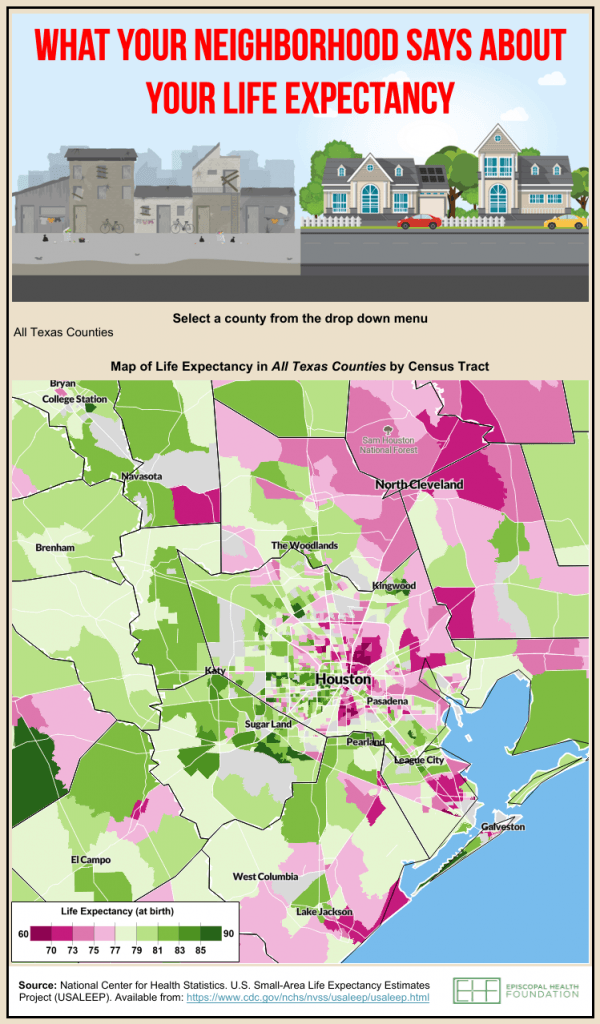
    Redlined communities on the east side of Houston overwhelmingly have lower average life expectancies than those on the west side. For example, the average life expectancy in previously-redlined Fifth Ward is 70 years compared to 80 years in Montrose, according to analysis from the Episcopal Health Foundation

    …primary challenges as a result of redlining [include] an increased health risk as a result of toxic exposures and poverty-related stress that causes a large gap in life expectancy, [and] the inability to recover from climate crises on a neighborhood and household level” 

    – Zoe Middleton, Houston and Southeast Texas Co-Director at Texas Housers

    What we can do to support historically marginalized communities

    The past never stays in the past. Without the acknowledgment and repair of historical injustices, the past will continue to haunt our present. The challenges many Black residents face in building homeownership, wealth and good health is inextricably linked to the discriminatory housing policies created and enforced by our federal government 90 years ago. And while we also see incredible resilience, perseverance and power in communities that have been historically marginalized in Houston, our region’s collective progress depends on our ability to better understand the root causes that have contributed to the disparities we see today. 

    “Individuals should…advocate for earnest reckoning with previous wrongs…showing a willingness to sacrifice a modicum of the privilege and comfort they may have in order to see resources go to other communities than their own.” 

    – Kyle Shelton, Deputy Director at Rice University’s Kinder Institute for Urban Research

    Here are some things we can do:

    • Engage with residents and community leaders: Meet with individuals and organizations in these communities and seek to understand their needs and challenges. Offer to volunteer with organizations and work with them to identify ways that you can support ongoing work. 
    • Support CDFIs in your community: Community Development Financial Institutions (CDFIs) promote economic revitalization with financial assistance to under-resourced neighborhoods and populations.
    • Donate in these neighborhoods: Find Black-led Organizations through GHCF’s Giving Guide or, if you are a Greater Houston Community Foundation donor, talk to your relationship manager about how you can be most impactful with your grants in these areas. 
    • Support Houston’s Complete Communities Initiative: The City of Houston’s Complete Communities Initiative works in partnership with Houston’s historically most under-resourced neighborhoods so that all of Houston’s residents and business owners can have access to quality services and amenities. Watch our interview with Shannon Buggs, Director of Complete Communities, highlighting the need in our region and the opportunities they are providing.
    • Reach out: As Greater Houston Community Foundation explores what more it can do as a partner to address economic disparities in Houston, we are listening and learning from readers like you. Sign-up to receive our monthly newsletter and contact us to get involved. 
    “I am hopeful with cautious optimism for seeing more evidence-based justice, promoting the general welfare, liberty, and posterity for all. I hope we see our lofty ideals in practice for the common good.”

    Theophilus Herrington, Rutherford B. H. Yates Museum

    Resources for Further Learning

    Helpful Articles by Understanding Houston:

    1 “Still Desirable” neighborhoods were graded “B” and colored blue. “Definitely Declining” neighborhoods were graded “C” and colored yellow.
    2 Rothstein, R. (2017). The Color of Law: A Forgotten History of How Our Government Segregated America (Reprint ed.). Liveright.

  • Key insights from our webinar on housing disparities

    Key insights from our webinar on housing disparities

    Housing in Houston has become less affordable, and low-income households bear the greatest burden

    In partnership with Rice University’s Kinder Institute for Urban Research, Greater Houston Community Foundation hosted a Housing Inequities program on October 20 to educate and engage donors and community partners on inequities in housing affordability, supply, and vulnerability in Greater Houston. 

    The webinar featured Maria Aguirre-Borrero, Avenue; Jonathan Brooks, LINK Houston; Paul Charles, Neighborhood Recovery CDC; Anne Gatling Hayne, Houston Land Bank; Zoe Middleton, Texas Housers; and Kyle Shelton, Kinder Institute.

    During this informative session, we explored a variety of crucial data and valuable perspectives; these are the three core insights driving the conversation on Housing in Greater Houston. 

    We invite you to watch the full presentation here.

    Houston housing is not as affordable as we’ve been told

    Houston’s “legendary” reputation for affordability has fueled the region’s record-setting population growth over the past few decades. However, Greater Houston has become more expensive in recent years, primarily because of housing costs. Home prices and rent have grown much faster than wages and income, and there is a lack of affordable and healthy housing for low- and moderate-income families.

    Home values in each of Greater Houston’s three most populous counties have increased at a faster rate than in the nation overall. Between 2010 and 2017, median home values rose 33% in Fort Bend County, 31% in Montgomery County and 17% in Harris County, compared to 7% nationally. 

    Rent is rising for renters, too. Median rents climbed faster in both Fort Bend and Montgomery counties than in Harris County, Texas, and the nation in that same time period.

    Renters and homeowners in Greater Houston have been facing increased housing costs for the last several years. 

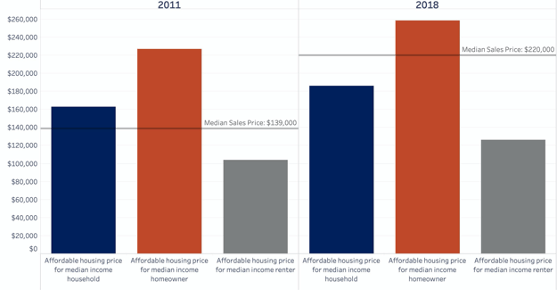
    The housing affordability gap measures the difference between the price of an affordable home for a median-income household (i.e., no more than 30% of income) and the median sales price for a home in the area. The affordability gap in Harris County widened between 2011 and 2018, according to the 2020 State of Housing in Harris County and Houston from the Kinder Institute. 

    Source: U.S. Census Bureau, American Community Survey 5-Year Estimates, 2011 and 2018, and Houston Association of Realtors

    In 2018, a household with median income of $60,146 could afford a $186,300 home in Harris County. But the median home price was $220,000. This $33,700 gap is the difference between what households at the middle income level can afford and what is available. Among renters, the affordability gap stretches to $93,500.

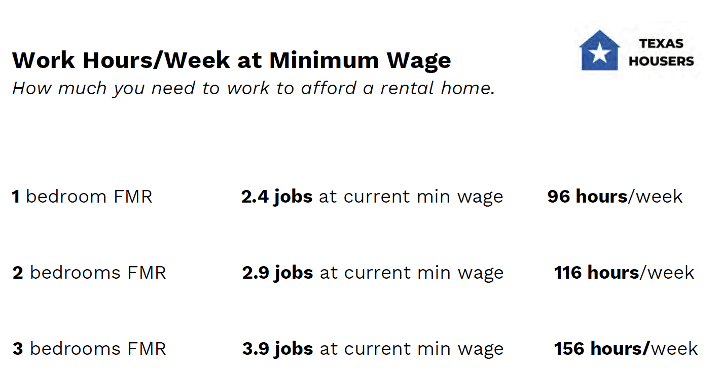
    Zoe Middleton from Texas Housers illustrated how low-income households are constrained by both rising rents and stagnant wages. Citing data from the National Low Income Housing Coalition, Zoe explained that a person earning minimum wage would need to work 96 hours per week to afford a fair market rate (FMR) one-bedroom apartment in Harris County, 116 hours per week to afford a two-bedroom, and 156 hours per week for a three-bedroom.

    As home prices push more families out of the market, the number of renters in the region has grown. This trend has significant implications because renters are more likely to be cost burdened than homeowners due to their lower median incomes compared to homeowners. In the three-county Houston area, 46% of renters spend at least 30% of their income on housing compared to 21% of homeowners. Renters are three times as likely to spend at least half their income on housing as homeowners. 

    Cost-Burdened Renter Households by Income Level, Harris County, 2018

    Source: U.S. Census Bureau, American Community Survey 5-Year Estimates, 2010 and 2018

    The burden weighs heavier for those with low incomes. Households with incomes less than $50,000 in Harris County are significantly cost burdened. This disparity is most striking for households that earn less than $30,000. The overwhelming majority (93%) of households that earn between $10,000 and $20,000 in Harris County spend at least 30% of their income on housing compared to 18% of households with incomes between $50,000 and $75,000.

    “In the three-county Houston area, renters are three times more likely than homeowners to spend at least half their income on housing.”

    Lack of affordable and safe housing in Houston is costly

    Houston, like many other large metros, does not have sufficient supply of affordable, safe and healthy housing — particularly for households with low incomes — but even for median-income earners. “The stock is skewed towards single family or very large multifamily,” Kyle Shelton from the Kinder Institute explains. “Houston struggles to provide the missing middle — smaller multifamily units that are typically more affordable.” 

    New housing construction trends indicate a growing supply of future multi-family units, but those tend to be higher-priced. Meanwhile, existing affordable units are in decline.

    Renter-occupied Housing Units by Gross Rent, Harris County, 2010 and 2018

    Source: U.S. Census Bureau, American Community Survey 5-Year Estimates, 2010 and 2018

    In 2010 in Harris County, there was more availability among units with lower rent. However, in 2018, the supply of units with lower rent fell while units with rent above $1,500 per month surged. 

    Houston struggles to provide the missing middle — smaller multifamily units that are typically more affordable.” 

    Greater Houston’s housing crisis “has been going on for a while, but has hit an inflection point,” Anne Gatling Hayne from the Texas Land Bank states. 

    We already see the consequences. 

    About 3,600 individuals experienced homelessness in 2019, according to the Coalition for the Homeless. While that number is half of what it was in 2011, progress has plateaued recently.

    Harris County has led the nation in evictions over the past two decades, and the number of evictions in the region remains higher compared to other metros since COVID-19’s onset — another consequence of the region’s housing crisis.  “[Evictions] destabilize households and the overall housing system in the region,” Shelton warns.

    Homeownership is still the most significant way to build wealth — the kind that can be transferred to future generations and compounded. Barriers to homeownership not only rob families of current and future wealth, but also they weaken communities through decades of disinvestment. 

    The fact that the majority of predominantly Black and Brown neighborhoods in the region are located in areas characterized by older, lower-quality housing is the legacy of racial segregation in Houston. Twentieth century legal federal housing policies and banks denied mortgage and maintenance loans for homes located in predominantly Black and Brown neighborhoods. This trend of devaluing Black property continues today, Paul Charles from Neighborhood Recovery CDC clarified, which accelerates disrepair, sharing a powerful story and concluding: “So does redlining still exist?… Yes. Redlining still occurs. Redlining shows up in mortgage loans, appraisals, and insurance…which leads to devaluation of personal and community wealth.”

    For these reasons and more, combined with slower recovery after the Great Recession and recent natural disasters, Black homeownership rates are the lowest in the region, and fell to 41% in 2017 from 46% in 2010. For comparison, the homeownership rate for White households is 71%.

    The intersection of rising home prices/rents and stagnant incomes for low-income households makes neighborhoods more vulnerable to gentrification. This can lead to the displacement of long-term residents and even threaten homeownership. Black communities in Harris County are among the most susceptible to gentrification, according to the State of Housing report.

    Environmental and climate change is crucial to consider as insufficient healthy and safe housing negatively impacts resident health. Majority-Black neighborhoods report worse air and water quality, higher temperatures, and increased susceptibility to flooding.

    Higher housing costs increase transportation costs

    Jonathan Brooks from LINK Houston emphasizes that transportation is the ultimate “shared interest” of housing. It literally connects us to opportunities, people, and places, which is why transportation equity and affordability is crucial to housing. A community’s transportation infrastructure, or built environment, should include high quality, safe, accessible sidewalks, bikeways, streets, transit stops, and drainage.

    Because housing is taking up a larger share of incomes, many “choose” to live farther from the traditional center of the region’s economic hub, the city of Houston proper in Harris County. Given Houston’s geographic reach, this results in substantial transportation costs.


    Fort Bend residents spend 60% of their income on housing and transportation alone. That’s a larger chunk than what families in Los Angeles County — notorious for its expensive housing market and lengthy commutes — spend.

    How we can work together to solve Houston’s housing issues 

    It’s easy to get lost in the numbers. Maria Aguirre-Borrero from Avenue grounded the conversation in why housing matters. She shared a story about a 31-year old man whose greatest hope is to live in the same community in which he was raised. But, that dream seems intangible given his low income and college expenses. Reluctantly, he and his family are thinking of moving somewhere else more affordable or living together in overcrowded living conditions–another housing issue where the three-county region trends more poorly than Texas and the nation.

    Housing is inherently about community. When diverse and rich communities are displaced, or when people have less money for essentials like education, food, healthcare or savings because housing and transportation costs cannibalize incomes, we will continue to see more housing vulnerability. The good news is, many smart and dedicated people and organizations are working to reverse negative trends.

    Here are some of the steps we can all take to help improve access to housing in Greater Houston: 

    Continue to learn and explore housing in Houston and how it intersects with other issues like transportation. Our panelists recommend the following (not exhaustive or in any particular order):

  • Evictions during COVID-19 across Greater Houston

    Evictions during COVID-19 across Greater Houston

    Evictions are on the rise in Houston. As the Covid-19 pandemic and economic downturn continues to batter Texas and the Greater Houston region, millions of families are wondering how they’re going to be able to pay the bills. According to a recent Census Bureau survey, 37% of adults in the Houston metropolitan area either missed last month’s rent or mortgage payment, or have slight or no confidence that their household can pay next month’s rent or mortgage on time.

    Back in March, the Texas Supreme Court provided some initial relief to renters with a statewide moratorium halting all evictions. That moratorium expired in late May, however, and eviction filings are ramping back up, even at properties with federally backed mortgages covered by the CARES Act’s eviction moratorium, which ended on Friday. Public and philanthropic dollars are trying to fill in the gaps but the need is big and time is running out. 

    Data can help us better understand and respond to this looming eviction crisis. January Advisors has been collecting data on eviction cases in Harris County for some time. We recently partnered with Princeton University’s Eviction Lab to collect data on eviction case filings each week in cities across the country for their COVID-19 Eviction Tracking System

    In this post, I track eviction filings since January 2020 across Harris, Fort Bend, Galveston and Montgomery (partial data) counties to uncover how many evictions have been filed, where they’ve been filed, and which communities are bearing the brunt of eviction during COVID-19.

    How many evictions have been filed?

    Since March 19, 2020, when the Texas Supreme Court’s eviction moratorium went into effect, landlords have filed over 6,500 evictions across Greater Houston (Harris, Fort Bend, Galveston and Montgomery counties). This data comes from public court records collected by January Advisors through public-facing websites in each county. In Montgomery County, data is only made available for the Justice of the Peace Court Precinct 3 (Judge Matt Beasley).

    The bulk of COVID-19 evictions have been filed in Harris County — 6,153 evictions — followed by Galveston (454) and Fort Bend (383) counties. Adjusted for the number of renters, however, Galveston County landlords emerge as the top evictors during this period: Since April, there have been 11.3 eviction cases filed for every 1,000 renter-occupied households in Galveston County compared with 8.6 in Harris County, 7.5 in Fort Bend County, and 3.5 in Montgomery County JP3.

    Adjusted for the number of renters, Galveston has the highest rate of evictions in the Greater Houston region.

    A higher eviction filing rate in Galveston reflects, in part, the differences in housing patterns and costs. Compared with Harris County, Galveston County is less urbanized, has fewer renters, and more homeowners. Residents who do rent in Galveston are more economically vulnerable and pay more of their incomes on rent, according to the latest American Community Survey estimates

    Looking over time, the impact of the Texas Supreme Court’s eviction moratorium is striking. The chart below shows the eviction filing rate for each county since January 2020. Starting in late March, when the moratorium went into effect, the number of eviction cases dropped to near zero across the region within a week. 

    The moratorium, however, did not prevent landlords from filing evictions — it only prevented courts from hearing these cases and kicking families out of their homes. In fact, many landlords continued to file eviction cases during April and May. During the two-month moratorium period, there were 1,650 eviction cases filed across the region.

    Eviction filings have picked back up since the moratorium was lifted on May 18, although they remain below where they were before the pandemic. Across Greater Houston, over 5,400 eviction cases have been filed by landlords since the moratorium ended. For more information on the top evictors in Harris County, check out this daily eviction tracker.

    Where are evictions being filed?

    In Texas, eviction cases are heard by the Justice of the Peace Courts (JP Courts) in each county. These local judges have the power and discretion to postpone eviction cases if they choose. In Dallas, for example, JPs have agreed to halt evictions through the summer as families and businesses try to make ends meet. Harris County Judge Lina Hidalgo and Houston Mayor Sylvester Turner have urged Harris County JPs to do the same, and some have followed suit, but so far there is no countywide or regional agreement among Justices of the Peace. 

    To get a better sense of the geography of eviction filings and the growing case load, the map below breaks down eviction case filing rates by JP precincts in all four counties (note: each precinct in Harris County has two judges). To overlay the unadjusted filing counts, click the box in the top right corner.

    Overall, the top three JP precincts with the highest rate of eviction case filings are Harris County JP 4 and 7 (10.3 and 10 filings per 1,000 renter households), and Galveston County JP 1 (9.6), followed by JP 3 in Harris County (9.1) and JP 2 in Fort Bend (9/1). 

    In Harris County, JP 5 has the highest raw number of eviction filings of any precinct – but it also has the highest number of renters (over 230,000). Still, housing advocates tracking hearings have noted that Judge Russ Ridgway and Judge Jeff Williams are also hearing more eviction cases than any other JP in Harris County — at the same time, some of their colleagues are suspending hearings. Precinct #5 — which covers neighborhoods in Southwest Houston — is also being hit hard by Covid-19

    Who is at risk of eviction in Greater Houston?

    Black/African American renters in Greater Houston have been more likely to receive an eviction than other race-ethnic groups during this period. Since March 19, more than a third (36%) of eviction cases are estimated to be filed against Black leaseholders, despite the fact that Black householders only make up 28% of all renter households in the region.

    By contrast, White renters make up an estimated 29% of eviction cases (on par with their share of renter households) while Latino/Hispanic and Asian-American leaseholders are underrepresented in eviction filings relative to their share of renter households.

    Race-ethnicity estimates of leaseholders were generated using a statistical model that takes into account the leaseholders’ last name (comparing it to the Census Bureau’s surname list) and the race-ethnicity of their census tract of residence (Read more about the methodology here). 

    Higher rate of evictions among Black residents is not unique to Houston nor to the current crisis. This pattern reflects a long history of discriminatory housing and employment policies in the United States that have left many Black residents with substandard housing in segregated neighborhoods, less wealth and access to financial resources, and greater economic vulnerability during economic downturns (See here, here, and here for more in-depth discussions). 

    It is also important to remember that these data only reflect eviction cases that have been filed in court. An unknown number of informal evictions are likely taking place during this period in which landlords are threatening eviction and renters leave. Foreign-born and undocumented residents, who are more likely to be from Latino and Asian American communities, may be more vulnerable to these types of evictions.

    In fact, recent data collected by the Census Bureau finds that Hispanic/Latino renters in Houston are twice as likely to report slight or no confidence in their ability to pay next month’s rent — 67% among Hispanic/Latino renters compared with 34% and 33% among White and Black renters.

    What can be done to limit evictions?

    If we hope to contain the spread of the virus and keep our community healthy, throwing families who cannot pay rent out on the street will only make things worse. Moreover, the high levels of eviction filings we see in Houston are not inevitable: Harris and Galveston counties saw more evictions the week of July 12–18 than Austin, Boston, Cleveland, Jacksonville, Kansas City, St. Louis, Milwaukee and Richmond combined.

    Although evictions are just one of the many pressing concerns Houston faces at this moment, it is one that is preventable if local, state, and federal officials act quickly. Here are just a few ideas about what can be done:

    • Extend (and enforce) the CARES Act moratorium: There is mounting evidence that the CARES Act eviction moratorium, which prevented landlords with federally backed mortgages from filing evictions, helped reduce the number of evictions filed, even if some landlords, out of ignorance or indifference, violated the ban. The federal moratorium ended on Friday (7/24), however, paving the way for a flood of evictions in the coming weeks. Congress needs to renew the moratorium, expand it to cover ALL renters, and ensure there are consequences for landlords who violate the eviction ban.
    • Delay eviction proceedings: Local city councils and county Justices of the Peace can enact their own ordinances and agreements to delay eviction hearings and prevent tenants from being evicted. Dallas JP’s are refusing to hear eviction cases. Austin’s city council decided to extend its eviction moratorium. Why can’t local officials in the Houston area do the same thing?
    • Give tenants more time: Even if some judges refuse to hear cases during this period, these cases do not simply go away. Landlords can and will continue to file eviction cases through the summer, and renters who are behind on rent will be at risk of eviction. Given the scale of job losses, it is unlikely that most renters will be able to catch up on back rent in the near future. Austin and Dallas passed grace period ordinances, which give renters more time to catch up on late rent payments before being evicted. Counties in the Houston region should follow suit.
    • Tenant’s right to counsel: Most tenants, if they attend their eviction trials at all, do not have legal representation. In Harris County, tenants were assisted by attorneys in only 4% of eviction cases since March 19, 2020. A right to counsel would ensure that renters are better protected from predatory landlords, especially those who are openly violating the CARES Act eviction ban (and its possible extension).
    • More income and rental assistance is needed: As Congress debates the details of the next pandemic bill, the millions of families at risk of eviction should be at top of mind. Bans and delays in eviction cases do not solve the larger problem: If tenants can’t make rent, many landlords can’t pay their mortgages or their employees. If we do not do more to support renters, the entire housing system is at risk of collapse. 

  • Houston native and community activist for the temporarily homeless

    Houston native and community activist for the temporarily homeless

    Sharon Johnson: Aspiring — temporarily homeless — graphic designer

    There are 3,938 homeless men, women and children in the Harris, Montgomery and Fort Bend counties, combined, according to the 2019 homeless count by the Coalition for the Homeless. And as of now, Houston-native Sharon Johnson is one of them.

    Johnson, 57, was born and raised in Houston and grew up in the Westbury area. As an adult, she continued to live in Houston, but moved often in order to find affordable, safe housing. As a graphic and website designer, Johnson was able to “make it work for her and her family.” 

    Though, in the fall of 2018, Johnson wasn’t paid for three months by her primary client. After depleting her savings, she was served eviction papers in December. By January 1, 2019, Johnson was homeless. 

    “I used to be one of the people that went to the food kitchens to help out,” Johnson said. “And all of the sudden, now I find myself on the flip side of that, where, you know, it’s like I can’t survive.” 

    For more than two weeks, Johnson crashed at whoever’s house she was welcomed and slept in her car when she had nowhere to go. But on January 14, Johnson fell in a “friend of a friend’s home,” which resulted in a broken wrist and a concussion. 

    She felt she had finally hit rock bottom, and she reached out to the Mission of Yahweh, a homeless shelter for women and children operating in Houston since 1961, for help. 

    Because Johnson had been in contact with the shelter since December, the mission gave Johnson a bed, despite not admitting walk-ins. So on January 14, Johnson joined the more than 130 individuals — 62 of which are children — at the shelter. 

    “Most of the people that I’m around are people who got knocked around by some catastrophe and now all of a sudden are scrambling to try to survive,” Johnson said. “And this is an avenue where there’s some place to live, there’s a roof over your head and they feed you. In exchange [at the Mission of Yahweh], you do chores. You don’t live there for free.” 

    Since being admitted, Johnson has been able to get the medical help she needed, has gone through a professional development boot camp with nonprofit WorkFaith Connection, and has gotten grants to go back to school to get her associate’s degree from Houston Community College. 

    “Right now, I’m living the dream,” Johnson said. “You know, there are so many ‘isms’ that are attached to homelessness, and somebody being homeless and their situation and where they live and how they live. But I have gotten the most amazing support — I found so much non-judgmental spiritual support here. I haven’t been able to breathe for a lot of years, I haven’t really been able to just breathe and feel safe and feel cared for and feel like everything was going to be okay,” Johnson said. 

    All across the Houston area, thousands of people just like Johnson are searching for the chance to break free from the cycle of homelessness. Visit the links below to learn more about homelessness and unemployment in our communities.

    Additional Resources: