The ongoing COVID-19 pandemic has impacted Houston’s business community so drastically that no company is too big — or too small — to feel its effects. Even the healthiest businesses have found themselves in need of emergency assistance to stave off layoffs or permanent closure as a result of plummeting levels of consumer spending, stay-home orders, and fear of catching and spreading the virus to loved ones. And while programs like the Small Business Administration’s (SBA) Paycheck Protection Program (PPP) have provided valuable assistance to a number of employers, many of Houston’s small business entrepreneurs who most need these funds to survive have been unable to access them — particularly female entrepreneurs and entrepreneurs of color.
The state of minority and female-owned small businesses in Houston
Houston is nationally recognized for its racial/ethnic diversity as people of color make up two-thirds of residents living in Houston’s three most populous counties. This reputation carries over to our small business community. According to a national analysis, Houston ranks first in the United States for minority entrepreneurs, based on criteria such as startup density, rate of new entrepreneurs, percentage of companies owned by minorities, and access to financial resources.
Despite Houston ranking first in the U.S. for minority entrepreneurs, business owners of color are still underrepresented in the Houston area and face unique challenges.
These businesses reflect the entrepreneurial spirit of Houstonians — forging their own economic path with talent and persistence — sometimes as a necessity to overcome employment barriers, challenges in building personal wealth, and discrimination.
The importance of small businesses and Paycheck Protection Program loans
Both in Houston and across the nation, small businesses are vital to the financial and economic health of our communities. About 63% (68,500) of firms in the Houston Metro area are small businesses with fewer than 10 employees, according to the 2018 Annual Business Survey from the Census Bureau. Across the three-county region, 559,000 establishments with no paid employees (representing self-employed entrepreneurs) — generated $28 billion in receipts in 2017, according to the Census Bureau’s Nonemployer Statistics.
As a means of helping these businesses weather the economic storm accompanying the COVID-19 pandemic, the federal Paycheck Protection Program (PPP) loan began to deploy $349 billion to provide “small businesses” with up to $10 million in forgivable loans as long as certain requirements are met. The program allowed all businesses — including nonprofits, veterans organizations, tribal businesses, sole proprietorships, self-employed individuals and independent contractors — with 500 or fewer employees to apply.1
Issues with the Paycheck Protection Program loans
While the broad eligibility criteria allowed many small businesses to apply for relief, the exceedingly fast process and unclear guidance for borrowers and lenders had a narrowing effect, as businesses with significant capacity and legal/financial expertise were best positioned to apply. Furthermore, the 7(a) loan was quickly administered by banks that were existing SBA-certified lenders, a pool of lenders that has been criticized as having an insufficient track record of providing access to capital to underserved businesses owned by women and people of color.
In less than 14 days, all PPP funds were exhausted due to high demand, with more than 1.6 million loans processed by about 5,000 lenders.2 It’s estimated that as of April 17, approximately 80% of small businesses that applied for a loan were still waiting for answers the day after the program ran out of funds.
Why minority- and woman-owned businesses in Houston are struggling
Even before COVID-19, many Houston-area small businesses, microbusinesses, and sole proprietorships led by historically marginalized communities and women faced financial challenges at disproportionate levels relative to White small business owners in our region. On average, minority-owned businesses in Houston are denied loans at three times the rate of non-minority-owned firms. The COVID-19 pandemic has only exacerbated these challenges in Houston. Many small businesses owned by minorities historically have lacked access to established accounting infrastructure and banking relationships that would allow them to access substantive capital such as the federal PPP loan.
Some issues that prevent small businesses from accessing capital through PPP loans include:
Low employee count: The financial incentives associated with PPP loans encouraged lenders to serve clients with larger loan sizes, meaning larger “small businesses” were more likely to have their requests approved than those with fewer employees. For context, 90% of businesses owned by a woman or minority in Metro Houston have fewer than 100 employees, according to the Annual Survey of Entrepreneurs. In response, some large banks have donated their fees totalling millions of dollars to nonprofit organizations.
Smaller operations: Given that microbusinesses, sole proprietors, and contractors often have very low fixed costs (e.g., payroll, rent, utilities), the PPP loan rules and forgiveness conditions often do not truly apply to many small/micro minority- and/or woman-owned businesses as they are more likely than other groups to not have employees and significant overhead costs.
Major local efforts in Houston to support small businesses have faced challenges, despite good intentions. For example, a $10 million loan fund in Harris County was depleted in less than 48 hours, with broad eligibility criteria and credit requirements that made it difficult for small/microbusinesses led by people of color to access these funds.
Understanding Houston’s needs on the long road to recovery
Small businesses are critical to our region’s economic success. When small/micro-business owners and self-employed entrepreneurs are unable to provide for themselves, their employees and their families, entire communities suffer. And when the safety nets in place are unable to accommodate the needs of the most vulnerable small business owners, the economic inequalities affecting our region will only intensify.
As our region continues to work toward a long recovery process, thoughtful and direct action on behalf of minority- and woman-owned businesses will be needed to help these valuable institutions survive. Access to the right information is vital to making these important decisions. As we research and work toward a plan for our region, we invite you to explore the data, get involved and use Understanding Houston to learn more about what matters in our communities.
End Notes:
1 Businesses in certain industries can have more than 500 employees if they meet applicable SBA employee-based size standards for those industries. 2 “The SBA has processed more than 14 years’ worth of loans in less than 14 days,” said U.S. Treasury Secretary Steven T. Mnuchin and SBA Administrator Jovita Carranza in a joint statement.
The strength and substance of our communities
at their best are defined by what we do during
times of turmoil. Houston is a do
community. In times of peace and crisis, we work together and strive to make
Houston a more vibrant place.
Our strength is also defined by the words and
perspectives we offer to help those around us find unity in the face of
adversity. Challenges like Hurricane Harvey and the ongoing COVID-19 pandemic
have showcased our region’s undeniable ability to help and inspire one another
in crises. And now as we collectively mourn and reflect upon the death of
Houstonian George Floyd while in police custody, and others who have died
senselessly in recent months, we once again turn to the voices that aim to
inspire and heal our communities in this time of meaningful action.
While no quote can repair the wounds left and exposed by George Floyd’s death, these words from community leaders across the private and public sectors have helped to drive the conversation and shape progress — in the Greater Houston region and beyond.
“Texas has a legacy of success, whether it be the Timothy Cole Act, the Sandra Bland Act, and now maybe the George Floyd Act to make sure that we prevent police brutality like this from happening in the future in Texas…George Floyd is going to change the arc of the future of the United States. George Floyd has not died in vain. His life will be a living legacy about the way that America and Texas responds to this tragedy.”
George W. Bush, Former Governor of Texas and
Former President of the United States
“It is time for America to examine our
tragic failures — and as we do, we will also see some of our redeeming
strengths … America’s greatest challenge has long been to unite people of very
different backgrounds into a single nation of justice and opportunity. The
doctrine and habits of racial superiority, which once nearly split our country,
still threaten our Union. The answers to American problems are found by living
up to American ideals — to the fundamental truth that all human beings are
created equal and endowed by God with certain rights.“
“It is perfectly OK to be angry. As a matter of fact, if you’re not
angry something is not right. You should be angry. You should be infuriated by
what we have seen. Experience the anger. Process that anger so it can move to
positive action so we can make sure that something changes. It’s how we channel
our anger, so it does not become vengeful but at the same time it has to be an
anger that leads to difference, leads to change. Until we change that notion
and understand that we’re all God’s children, we’re one family, we’re one
future.”
“The solutions we need right now — both to
protect our safety and to rescue our democracy — are ones that meet the scale
of the problem. To respond to George Floyd’s killing, or Breonna Taylor’s
killing, we must replace the questions about how to reform policing with
questions about what role a discriminatory system of mass incarceration should
play in a broader vision for safety and justice in America.
As elected leaders, we can do better — and our
communities deserve better. As your Commissioner, I pledge to do my part. In
doing so, we will all be safer and healthier. Change is long overdue, but
transformation is possible.”
“As we mourn the loss of George Floyd, we must
remember that the problems exhibited in that horrendous video are a reflection
of the societal problems that still exist in our country today. George’s family
needs to know that their loss will not be in vain. Loss of life by police
action, no matter how it happened, is something that creates a tear in the
fabric of our society. I believe we have the capacity to come together to
address the prejudices, misunderstanding and lack of respect that may have led
to George’s death… We can and must do better, because when tragedy has knocked
on our doors, we have responded as a united community. We are known around the
world for our capacity to unite under the most difficult times and the nation
needs our example more than ever today. The Floyd family needs us to unite around
them and lift them up in this darkest hour.”
“I am not here today as a Democrat. We are not
here as Republicans. We are not here today because we are rich or poor and we
are not here because we are conservative or liberal. We are here because… we
have no expendables in our community. George Floyd was not expendable… we are
going to make sure that those who look through time, that they will know that
he made a difference in his time because he changed not only this country, not
only the United States — he changed the world. George Floyd changed the world.”
Bob Harvey, President and CEO of Greater
Houston Partnership
“While the issues of racial inequity and
systemic racism are not unique to Houston, we have an opportunity as
Houstonians to lead the way in reforming broken systems, building up
communities, offering support and removing barriers. We often speak with pride
of Houston being ‘America’s most diverse city.’ This is our moment to make
Houston ‘America’s most inclusive and open city’, one that does truly offer
‘opportunity for all.’”
“We must never forget the name George Floyd or
the global movement he has inspired. George Floyd’s death, and the deaths of
Breonna Taylor, Sandra Bland, Tamir Rice, Ahmaud Arbery, and too many others
have sparked a national conversation about race and police brutality. It has
taken far too long for us to get here, but we must lean forward and work to
make meaningful change in our nation. No family should lose another loved one
in such a senseless way. Systemic racism has no place in Harris County.”
“No more senseless killings of human beings. No more
seeing people of color as less than human. We can no longer look away. George
is all of our family and humanity. He is our family because he is a fellow
American… justice is far from being achieved. Continue to pray for peace and
compassion and healing for our country.”
Dr. Ruth J. Simmons, President, Prairie View
A&M on the launch of the Center for Race and Justice
“Today’s events call upon us to take action. Not one-time
action but action that can have an impact on our community over time. For too
long, we have been content to have others dictate the limits of our ability to
act: individuals who call for a different course of action, those who are
concerned about controversy, those who advocate “staying in our lane.”…
Fighting racism and discrimination and upholding justice must always be among
our highest callings.”
“We recognize in this city that there are many
communities and neighborhoods that have been underserved and under-resourced
for decades…. We see you and we choose not to ignore you and we want to do
everything we can to treat you with the respect and the decency that you
rightfully deserve…We are taking an internal look in our own city to improve
those inequities to make things better. We recognize our diversity, and we
recognize that we must constantly assess and evaluate the things that we are
doing such that our city works for everyone at every level of operation.”
Frances
Valdez, with Houston in Action partners
Avenue, BakerRipley, Children’s Defense Fund-Texas, Emgage, Empowering Communities Initiative, Grassroots Leadership, Houston Endowment, Houston Justice, Jolt, Korean American Voters League, League of Women Voters Houston, Mi Familia Vota Education Fund, MOVE Texas Action Fund, Movement Voter Project, OCA-Greater Houston, Texans Against Gerrymandering, Texas Advocates for Justice, The Montrose Center, Workers Defense Project, Young Invincibles in an email to Houston in Action members and partners dated June 12, 2020.
“What recent protests have shown is that there is a role for each of us to play in ending violence against the Black community… it’s incumbent upon us to know this history, to do our part to reverse its effects on the people of our communities, and to break-down the barriers, especially those rooted in a history of oppression, that have been put in the path of marginalized communities…. Marching in the streets, protests at institutions of power, speaking out against racism, fighting for justice, organizing community members, giving of one’s time, contributing financially, educating others, volunteering, making art, caring for one’s self, caring for loved ones, caring for community, donating your expertise, getting everyone counted in the Census, voting, registering others to vote, living with dignity, and speaking truth to power are all ways in which Houston-area residents participate in shaping systems that govern and work for the change in their community—and [we] will never stop working for their ability to do so.”
JJ Watt, Community Activist, Houston Texans
Defensive End
“I have never had to feel that fear for
my life. I have never had to experience a situation where I felt threatened
because of the color of my skin. I can’t sit here and pretend to know what that
feels like. But I can understand and acknowledge that it’s wrong and that
nobody should ever feel discriminated against because of the color of their
skin. Racism is a problem and silence won’t solve it. I certainly don’t have
the answers, nor do I pretend to. But I do intend to listen, learn, understand
and ask how I can help.”
“The Declaration of Independence proclaimed: ‘We hold these truths to be self-evident,
that all Men are created equal, that they are endowed by their Creator with
certain unalienable Rights, that among these are Life, Liberty and the Pursuit
of Happiness.’ Unfortunately, none of those words applied to Black people
when they were written. Though the journey was never easy, our communities have
united throughout American history to effectuate change and give those words
purpose, effect and meaning.
We are at another historical inflection point,
our communities are uniting and we are again marching toward change. We are
united by an undeniable fact that racism exists. Some people will never
appreciate the effects of racism; the fear, the stigma, and the oppression that
it creates… The 100 Black Men of Metropolitan Houston will always fight racism
and racial inequality. We will always support peaceful protests. We will always
seek to be the change our community seeks. We will never forget the sacrifices
of Breonna Taylor, Ahmaud Arbery, George Floyd or the countless other Black
lives that have been wrongfully taken. And we celebrate the 60,000 Houstonians
from all ethnicities and backgrounds who peacefully protested and paid homage
to Mr. Floyd’s memory.”
Inspired
by the cause, driven by the facts
As our region works to enact meaningful change in our communities, seeing the full picture and working with accurate and meaningful data will be critical in directing future philanthropy and activism. Understanding Houston is committed to making such vital data and information accessible to illuminate where our region’s challenges lie, so that our communities can take action to do the work that matters most, where it matters most.
Help us spread the knowledge by exploring the data, getting involved and using Understanding
Houston to learn more about what matters in our communities.
Back in October when the world was blissfully ignorant of something called “COVID-19,” Understanding Houston featured a blog on the importance of the 2020 Census from Frances Valdez, Executive Director of Houston in Action. In her blog, Ms. Valdez highlights the importance of counting each individual living in the region and explains the challenges associated with this endeavor.
But since then, much has changed. Ensuring a complete population count, an elaborate process under the best of circumstances, is made even more challenging by the ongoing global pandemic. At the same time, the emergence of COVID-19 is itself a bold reminder of the importance of the census.
In no uncertain terms, when we undercount our population in the census, we leave much-needed money on the table. Learn how these missing funds could impact our region, why some groups are more difficult to count than others, and find out what you can do to be counted and support others working to ensure we all count.
The impact of the census in Houston
The U.S. Constitution mandates a count of its citizens every decade, the results of which determine the number of seats states get in the House of Representatives, inform the division of congressional and state legislative districts, and allocate hundreds of billions of federal dollars every year to states and municipalities for schools, hospitals, roads, and more.
About 300 federal programs like Head Start, Medicaid, Community Development Block Grants, and Supplemental Nutrition Assistance Program (SNAP) use census-derived figures to allocate more than $800 billion a year to states.1
$101.6 billion toward federally funded programs to Texas governments (state and local), businesses, nonprofits, hospitals, and households.
More than $346 million (nearly 25% of all census-guided education funds to Texas) to the Greater Houston region.
More than 25% of the state’s share of funds from the Workforce Innovation and Opportunity Act (WIOA) to the Gulf Coast region. WIOA is designed to help job seekers access employment, education, training and support services to find jobs, and to match employers with trained workers.
Census data also play a crucial role in emergency response and recovery efforts in times of disaster, such as Hurricane Harvey and the COVID-19 pandemic. The data helps planners prepare for possible risk scenarios and informs where the federal government should allocate resources in an emergency.
Given that billions of dollars are allocated based on statistics from the census, an undercount leaves millions of critical dollars on the table. The George Washington Institute of Public Policy found that a one percent undercount would cost Texas $292 million in one year alone — more than any other state.2 Over the course of a decade, that totals nearly $3 trillion dollars that Texas could have used for critical services like Medicaid, the Children’s Health Insurance Program (CHIP), Title IV-E Foster Care, Title IV-E Adoption Assistance, and the Child Care and Development Fund. Three trillion dollars is most certainly a low-ball estimate as funds devoted to these five programs typically make up half of the total amount states get from the federal government.
Hard-to-count Houston-area populations in the 2020 census
Correctly counting 330 million people over 3.5 million square miles is no small feat.3 The Census Bureau employs special methods to evaluate the accuracy of the final census figures which reveal some groups are harder to count than others. For example, the Bureau estimates a 4.88% undercount for American Indian and Alaskan Native populations living on reservations, a 2.03% undercount among African Americans/Blacks, and 1.54% undercount among Hispanics/Latinos.
Historically, populations hardest to count include individuals from diverse backgrounds, immigrants and refugees, children under the age of five, people experiencing homelessness, college students, the LGBTQ+ community, renters, and those living in complex households (e.g., multiple families or unrelated individuals living together).
States and communities with a larger presence of hard-to-count groups are more likely to experience a larger undercount in general, particularly when groups intersect (for example, young children of immigrant families of color).
Both Texas and Houston have a larger share of young people, immigrants and non-Whites than the nation. Most notably, Fort Bend County’s population under five years old has doubled — significantly higher than growth in any other county, the state and the nation. Nearly one out of four residents was born outside the U.S. Two-thirds of our region is non-White compared to 40% of the U.S.
The Center for Urban Research estimates that one in four Texans belongs to a hard-to-count population, and approximately 21% of the population in Houston’s three largest counties (1.2 million people) lives in hard-to-count neighborhoods (defined as areas where the self-response rate was less than 74% in 2010).
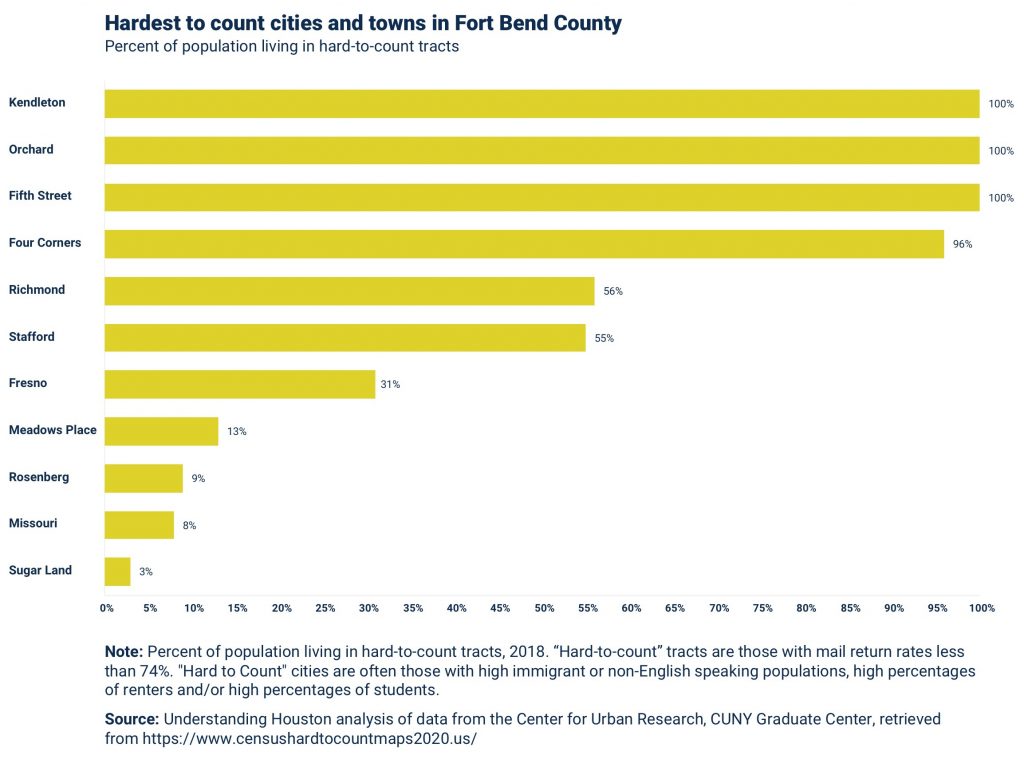
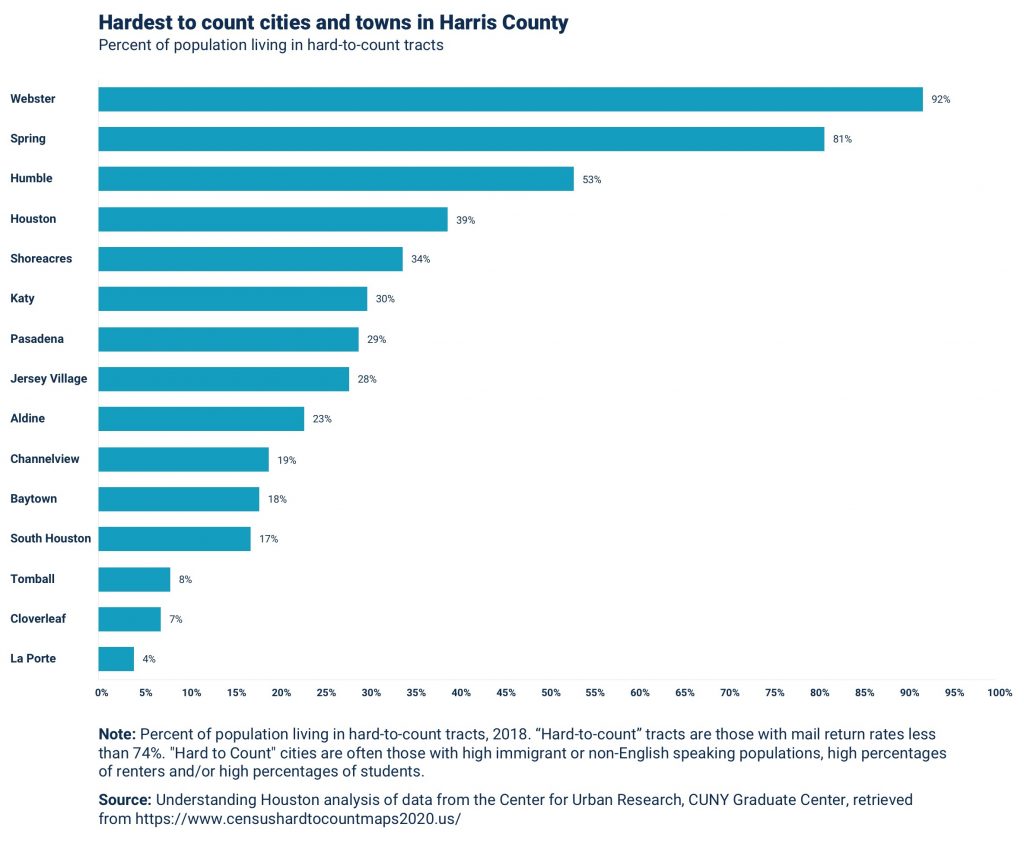
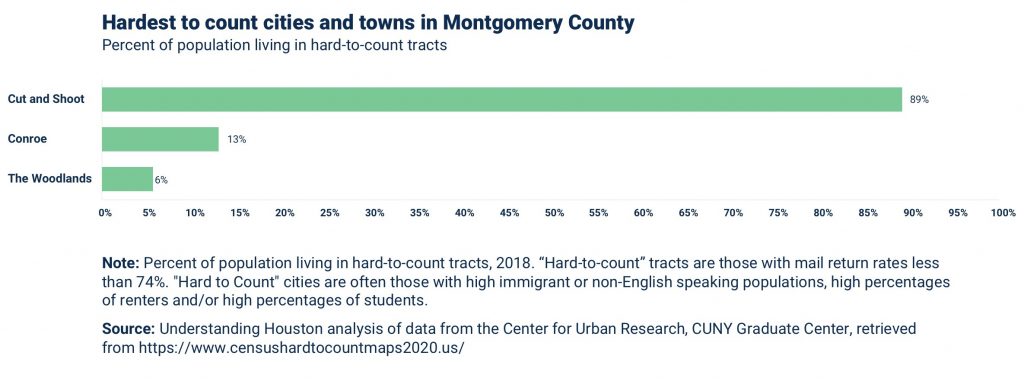
The graphs below show the hardest-to-count cities and towns in the three-county Greater Houston area.
Percent of population living in hard-to-count tracts
In Fort Bend County, 100% of residents of Kendleton, Orchard, and Fifth Street live in census tracts with sub-standard response rates. Webster and Spring are hard-to-count communities in Harris County, and 89% of residents live in hard-to-count tracts in rural Cut and Shoot, Montgomery County. Explore the hardest-to-count communities using this interactive map from the Center for Urban Research at City University of New York.
Accurately counting these hard-to-count communities requires additional investment. During the 2019 legislative session, Texas policy makers neglected to dedicate funds toward an accurate census count, in contrast with states like California, which has invested $187 million in ensuring a complete count. Instead, Harris County and the City of Houston have spent $5.1 million from their own budgets toward local census outreach and communication efforts. Houston In Action has been leading community-level outreach with an eye toward “cultural competency,” attempting to meet hard-to-count groups where they live, work, and play. Since the emergence of COVID-19 has required most of us to live, work, and play at home, outreach efforts have been delayed and redesigned, exacerbating challenges to a complete count, especially among historically hard-to-count groups.
Texas and the Houston region’s census self-response rates
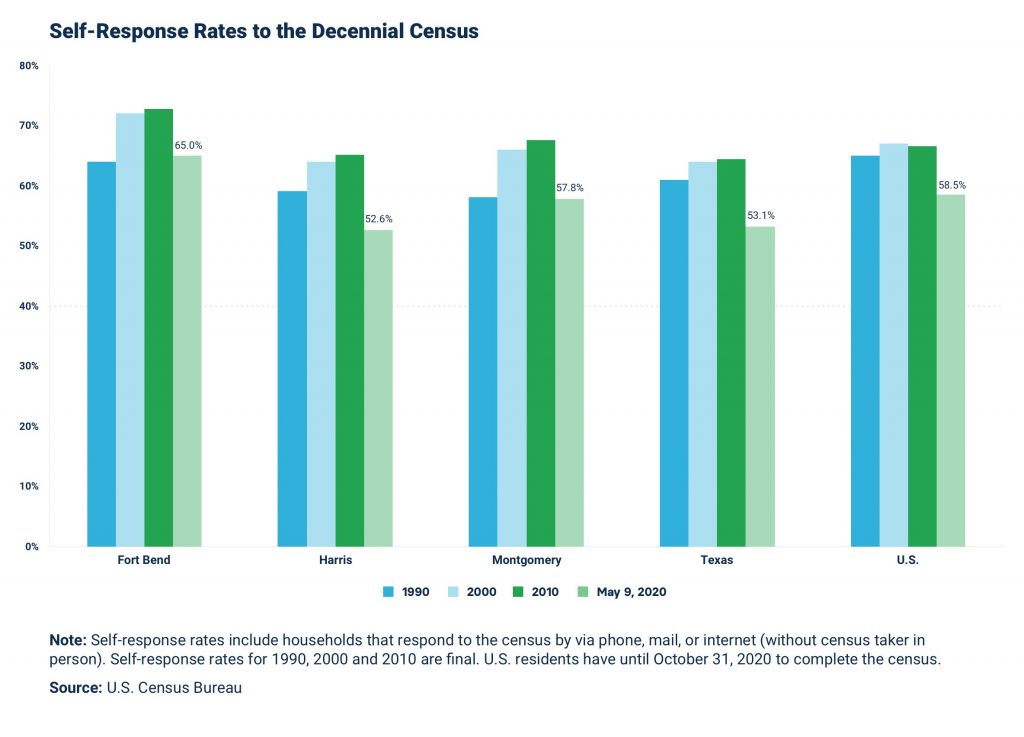
Given the number of hard-to-count populations in our region, coupled with the state’s lack of investment in census outreach, it’s not surprising that Texas historically trails the country in taking initiative to respond to the census.4 In the 2010 census, the national self-response rate was 66.5%, compared to 64.4% among Texans. Texas, the second most populous state, ranked 34th among states on this measure.
Harris County — the third most populous county in the nation — doesn’t do much better than the state. Not quite two-thirds of households in Harris County responded to the 2010 census, placing Harris 15th among the 25 most populous counties in the nation in census response rates. Conversely, Fort Bend and Montgomery Counties are high performers. In 2010, Fort Bend County had the second-highest response rate in the state at 72.1%. Montgomery County ranked 17th at 67.5%. For comparison, Harris County was 38th in Texas.
History is repeating itself as Texas continues to lag behind the overall national response to the ongoing 2020 census, ranking 38 among states at time of publication. As of May 9, the national response rate was 58.5% while Texas lags at 53.1%. Among the three-county Greater Houston area, Harris County trails with a response rate of only 52.6% while 65.0% of Fort Bend households have completed the census.
How you can help Houston count
An accurate census count is incredibly important for our communities, and being counted can be surprisingly simple. Help by completing the census if you have not already. For most, the process takes about 10 minutes and can be completed online, by phone, or through the mail. Details below. Also, please consider supporting Houston in Action’s census outreach efforts in a variety of ways.
Online: Visit my2020census.gov to fill out the census questionnaire.This is the only website you should use to answer census questions.
By phone: For English speakers, dial 844-330-2020, and for Spanish speakers, dial 844-468-2020. The Bureau also offers 11 other languages. For a full list of phone numbers by language, visit www.2020census.gov/en/ways-to-respond/responding-by-phone. The phone lines are open every day from 6 a.m. to 1 a.m. Central Time.
By mail: Most households should have received their invitation to respond to the 2020 Census as of March 20. The invitation contains information on how to respond and a Census ID for completing the census online. Homes in areas that are less likely to respond online will eventually receive a paper questionnaire.
The Census Bureau will never ask for a Social Security number, bank or credit card account numbers, money or donations, or anything on behalf of a political party. In 2020, it also will not ask for citizenship status; all U.S. residents regardless of immigration status may fill out the census.
Deadline: While the deadline to complete the census has been extended to October 31, 2020, why wait? Do it now. April 1 is considered Census Day, as this is the day for which we complete the survey for all people living at your residence on that day.
If you’ve already completed the Census, there are still ways you can help the Houston region be counted.
Houston in Action has assembled a Census Toolkit featuring a suite of free resources designed to connect vulnerable and hard-to-count populations with the information they need to complete the 2020 census.
The City of Houston offers a variety of free-to-share materials you can use to help educate friends, neighbors, and loved ones about the importance of the census — including email templates, social media graphics, children’s materials, and more — in six of our region’s most common languages.
The months and years following the COVID-19 pandemic will bring many new and unique challenges to our region. Don’t let Houston leave critically-needed money on the table. Be counted. Spread the word to your friends and neighbors. Let’s count all of Houston together.
End Notes:
1 Learn more about how the federal government distributes funds here. 2 An analysis of five major programs administered by the U.S. Department of Health and Human Services that comprise about 48% of funds states receive from the federal government. Visit GWIPP for more details on methodology. 3 First, households complete the census on their own (either online, by phone, or via mail). If, after multiple reminders, the household has not responded, a census taker makes a house call to collect responses in-person. As a last resort, the Bureau derives estimates using administrative records from the Internal Revenue Service or Social Security. Learn more about how the Census Bureau counts difficult-to-reach populations here. 4 Self-response rates are different from final response rates. Self-response includes those who respond on their own initiative online, by phone, or via mail. Final response rates include responses received in-person as a result of households being unresponsive.
Neighborhoods matter. Where we live has a profound impact on our lives in ways we don’t always understand.
Maps and dashboards that provide quality-of-life data at the neighborhood-level are a key piece to the puzzle of understanding communities. Understanding Houston focuses on county-level data to measure how the region performs overall and across time, but we know that place matters when it comes to moving the needle for the whole region. That’s why we have curated a list of special tools that help you understand Houston’s neighborhoods a little better.
Houston Community Data Connections (HCDC) from Rice University’s Kinder Institute for Urban Research
The tool
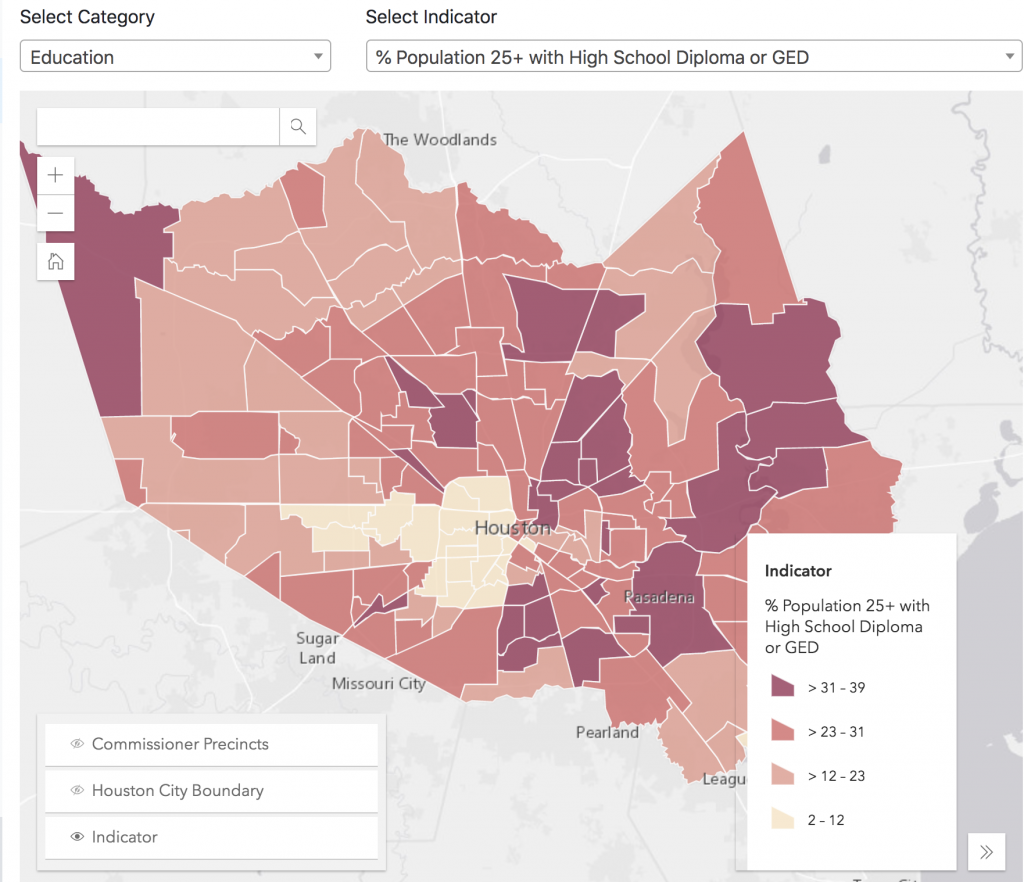
HCDC launched in 2017 to arm community leaders with data to inform planning and decision-making. The site contains a robust online dashboard that provides neighborhood-level indicators for Harris County and a research gallery of interactive data stories on a variety of topics related to demographics, housing, poverty/income and more. The dashboard allows users to overlay various indicators on a map, view detailed community profiles, and compare neighborhoods to one another and over time.
This tool is excellent if you want to create maps to include in your presentations and want a quick profile of a particular neighborhood. We also love how the interactive data stories present a variety of data in context with analysis on fascinating topics. Be sure to view the FAQs and training guide before beginning to get the most from this tool.
Opportunity 360 from Enterprise Community Partners
The tool
Opportunity360 Community Dashboard offers a comprehensive view of any neighborhood in the country by measuring five foundational criteria shown to have the greatest impact on how we live: housing stability, education, health and well-being, mobility, and economic security.
Why we love it
The Opportunity360 Community Dashboard offers more than 150 indicators from 27 sources and can compare up to three census tracts at one time. Users request dashboards by entering a location or address and then receive the dashboard via email. The interactive dashboard allows users to export data, filter visuals, print, and hyperlink to specific sections. Be sure to check out Opportunity360’s list of resources, FAQs, and methods. Opportunity360 also offers additional tools, resources, and reports on how other organizations used the data to inform their decision-making and planning, so be sure to explore the website.
Opportunity Atlas, a collaboration among researchers at the Census Bureau, Harvard University, and Brown University
The tool
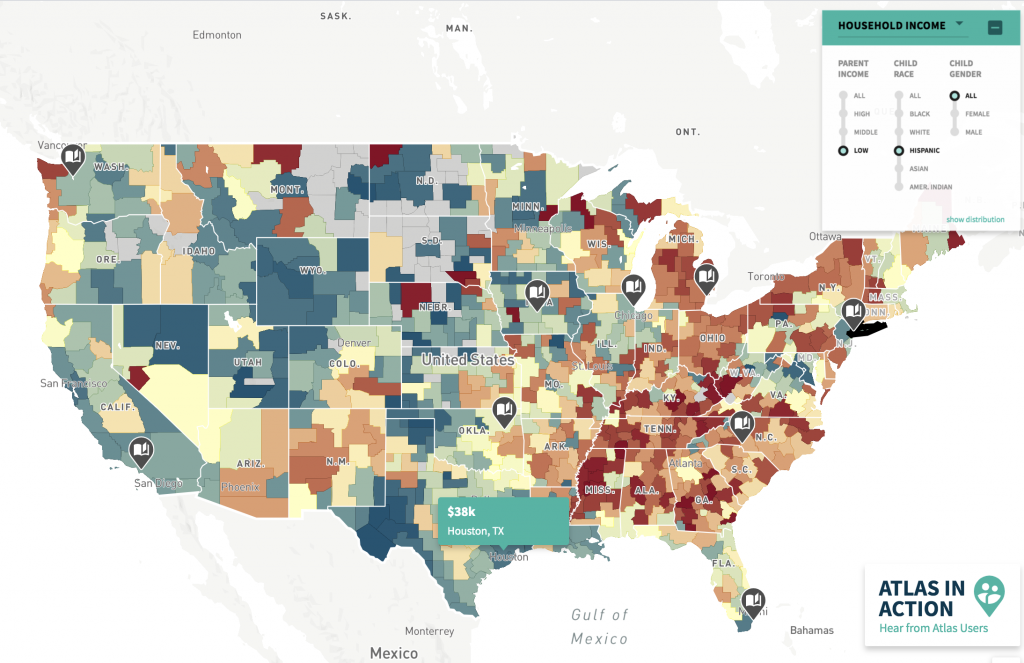
Opportunity Atlas is an interactive tool that measures the extent to which groups move up (or down) the economic ladder by looking at various outcomes of adults and back-mapping where they grew up. Users can select which adult outcomes they want to explore (e.g., household income) for a demographic group (e.g., low-income Asian women) by various neighborhood characteristics (e.g., poverty rate).
Why we love it
The census tract-level data reveal insights about communities most likely to produce adults with promising or poor outcomes. The mapping feature allows you to see how neighborhoods in close proximity can produce adults with vastly dissimilar outcomes, or how different groups in the same neighborhood have contrasting outcomes.
Use interactive maps to explore outcomes in health, education, income and more by census tract.
You can download maps as images to include in presentations, download the data itself, and overlay your own data onto the map. Don’t forget to explore interactive stories on the site that are not only insightful, but also give you ideas on how to begin. And, as always, familiarize yourself with the user guide, methods, and FAQs before you begin.
Child Opportunity Index from Diversity Data Kids
The tool
The Child Opportunity Index (COI) measures and maps the quality of resources and conditions that matter for children to develop in a healthy way. It combines data from 29 neighborhood-level indicators into a single composite measure.
Why we love it
Users select a metropolitan area to view census tracts. You can also see where children of different racial/ethnic groups live, compare metro areas, download datasets, and view data stories for greater insights. If you have questions after reading the report, reviewing the technical document, and looking over the FAQs, be sure to contact them.
Houston-Galveston Area Council
The tool
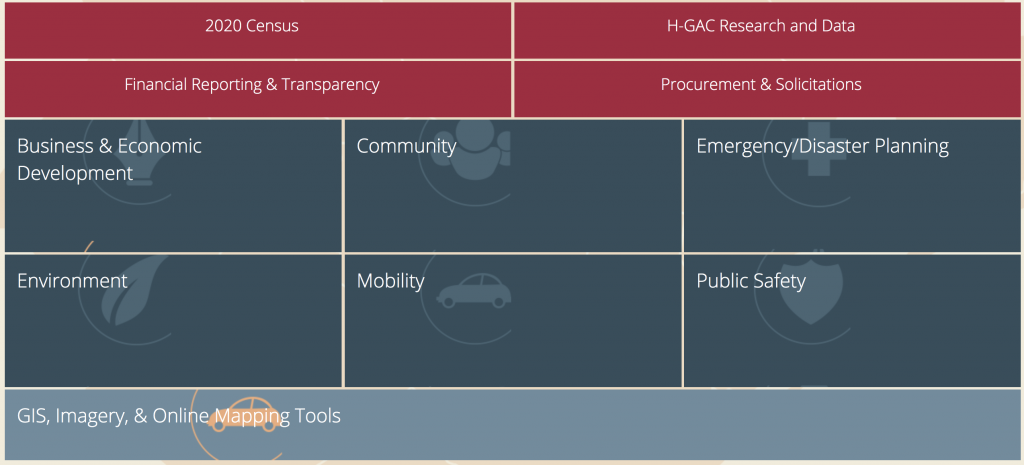
Houston-Galveston Area Council (H-GAC) is a regional organization through which local governments consider issues and collaborate to solve region-wide problems. H-GAC provides extensive research and data to the public through online visual and mapping tools to inform local and regional planning, programming, policy-making, and decision-making.
There is a ton of information here. Depending on availability, data are provided at various geographic levels, including census tracts. Find data and analysis on several topics ranging from employment, environment, land use/planning, transportation including commuting flows and mobility, and population.
Data.census.gov from the Census Bureau
The tool
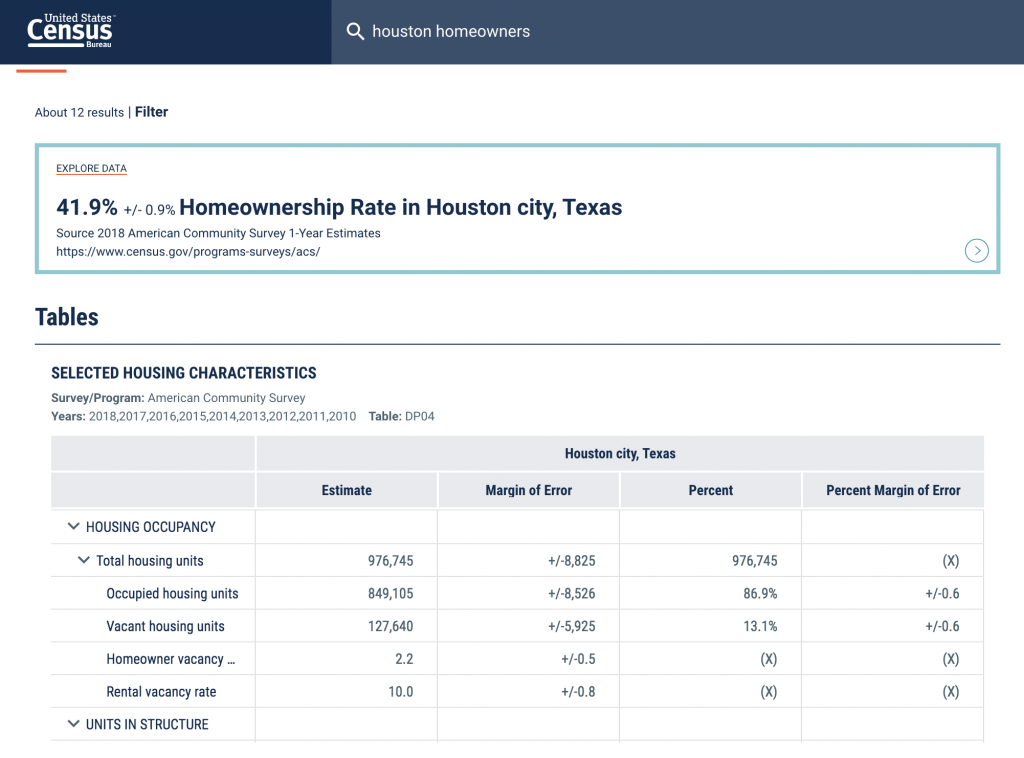
The Census Bureau is the nation’s leading provider of quality data about its people and economy. The best way to access data collected and prepared by the Census Bureau is through data.census.gov, the Bureau’s new data platform designed for all users – not just researchers. The Census Bureau conducts the decennial census, economic census, demographic surveys, economic surveys, housing surveys, provides population estimates and counts, and produces original research.
You can access demographic data at the zip code, census block, block group, and tract level. Users are able to create maps and manipulate data tables for efficiency. The Census Bureau has provided several resources to help users learn this new platform and hone data skills with their Census Academy. Learning tools include data gem videos, online courses, previously-recorded webinars and upcoming webinars.
Location Efficiency Tools from the Center for Neighborhood Technology
The tool
Location Efficiency Tools are a suite of web-based tools, comparison maps, downloadable data, research reports, and more that can help communities become more convenient and livable. The Center for Neighborhood Technology (CNT) works to improve cities’ economic and environmental sustainability, resilience, and quality of life.
Why we love it
The Housing and Transportation (H+T) Affordability Index, one of the tools, provides a comprehensive view of affordability that includes both the cost of housing and the cost of transportation at the neighborhood level. The website contains four tools (H+T Index map, H+T Fact Sheets, Total Driving Costs tool, and Comparison Maps). There’s a lot of info here too, so be sure to check out the about section to learn more about the data available, read the user guide, and find FAQs.
Making a difference starts with the right information
Whether you’re conducting research for a new proposal or looking for data that can help you better direct your own community efforts, using the right tools to find the best information is always a good first step. And, Understanding Houston is a great place to start. Featuring over 200 indicators on key quality of life issues, Understanding Houston aggregates and analyzes county-level data over time with state and national comparisons.
COVID-19 has upended lives around the globe, and Houston is no exception. We continue to hear the worst is yet to come, but it’s difficult to fully comprehend what that means or take proper action without context. To mitigate the effects of this global public health crisis in our region, we must understand the scope of vulnerability in the Greater Houston area.
While we can’t predict the future of COVID-19, we can use local data to better understand what may be in store for our region so we can take collective action to reduce the risk to the most vulnerable communities.
Want to give back and get involved? Visit greaterhoustonrecovery.org to learn more about the Greater Houston COVID-19 Recovery Fund, and how your support can help our neighbors who need it the most.
The “current” state of affairs
It’s challenging to stay fully informed of the crisis as the number of cases, deaths and recoveries varies depending on when and where you look. Officially, the Centers for Disease Control (CDC) reports more than 304,800 cases in the nation, while the Johns Hopkins Coronavirus Resource Center reports 339,000. The Texas Department of Health and Human Services is tracking more than 7,200 cases in the state as does the Houston Chronicle. What we do know is that the virus has been quietly spreading across the country for several weeks, and these figures are just the beginning.
Following the number of cases and fatalities is a good place to start in understanding the magnitude of the crisis, but it fails to account for the deeper ramifications COVID-19 may have for different people in our region. As with other disasters, the most vulnerable populations will be disproportionately affected. In this brief, we aim to identify and quantify vulnerable groups in our region that COVID-19 will impact in a variety of ways. While this is by no means an exhaustive list, we hope it informs our collective response in assisting those who need it most.
COVID-19 and health risks in the Houston area
At publication time, more than 72,000 people around the world have died from COVID-19 — nearly 15% of whom were Americans. While hospitalization figures are inconsistent among states, the COVID Tracking Project reports more than 41,500 cumulative hospitalizations across the nation. Of course, the novel coronavirus poses significant public health risks, but for some, the risks are much higher.
Older adults
CDC researchers found that COVID-19 fatality rates increase with age, particularly for those over the age of 65. Death rates for Americans 85 years and older range from 10% to 27%, followed by 3% to 11% among persons aged 65–84 years, 1% to 3% among persons aged 55–64 years, and less than 1% among persons younger than 20. These findings are consistent with data from the first two months of 2020 in China.1
More than 660,000 adults over the age of 65 live in Fort Bend, Harris, and Montgomery counties. Worse, more than 134,000 (about one in five) live alone, with particularly high concentrations in Fort Bend County. Given their heightened vulnerability to the effects of COVID-19, older residents who live alone may face additional challenges safely obtaining the supplies and resources they need in order to practice social distancing. We also know that 134,000 seniors live below 150% of the poverty level, further hindering their ability to weather this crisis.
People with chronic health conditions
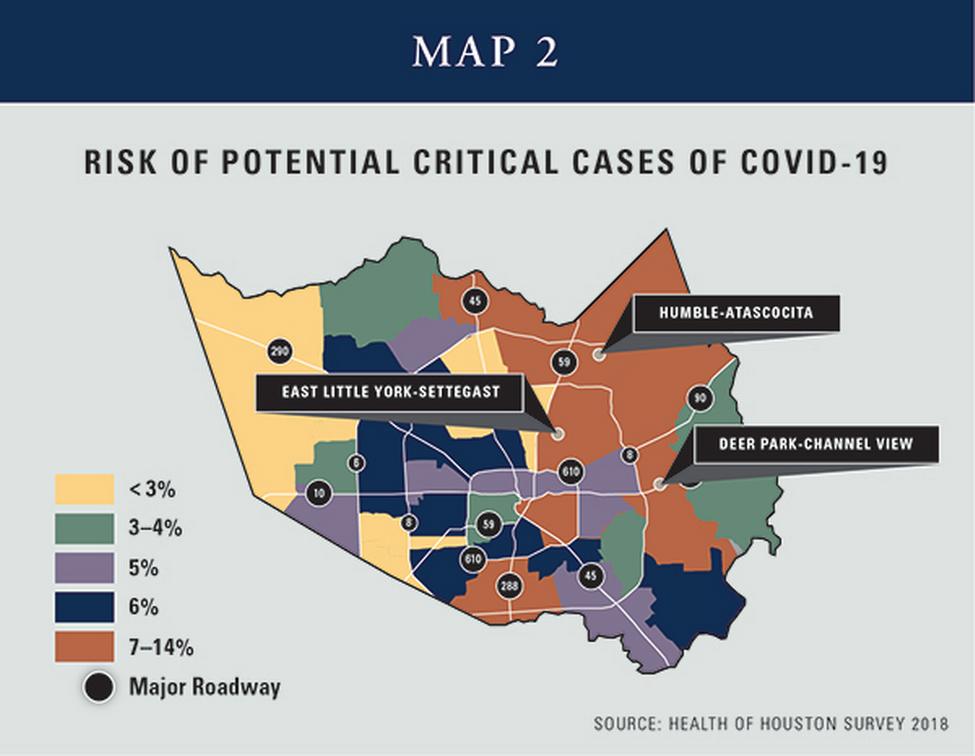
People with chronic health conditions like diabetes, compromised immune systems, heart disease, and asthma are also at higher risk of contracting and succumbing to COVID-19. The Institute for Health Policy at UT Health Science Center of Houston conducted an analysis of Census data in Harris County to map individuals with the highest risk for hospitalization and critical care needs. UTHealth researchers found that areas with the largest proportions of residents at high risk of critical illness from COVID-19 include Deer Park-Channel View, East Little York-Settegast, and Humble-Atascocita.
The areas of Harris County where residents are mostly likely to need critical care for COVID-19 are shown in orange. (Photo by Heath of Houston/UTHealth)
Take a deeper look: Explore this interactive map to see how these and other risk factors correspond to confirmed COVID-19 cases in Harris County.
Uninsured
No one wants to get sick, but for those without health insurance, the stakes are even higher. The Houston Metropolitan Area is home to the largest number of uninsured in Texas, which has the largest number and rate of uninsured in the country. Workers without health insurance are most likely to be part-time, gig economy, or low-wage employees, which means they likely do not have paid sick leave, compounding risks.2
President Trump signed the “Phase 2 Stimulus Package” (the Families First Coronavirus Response Act) on March 18 which provides free testing, but individuals will still be responsible for paying their treatment costs. This could affect some of the more than 1.1 million people, including 184,300 children, in the three-county region who are uninsured.
Mental Health
Harris County issued the first stay-home order effective March 17, but many of us are into our third or fourth week of staying home. The mental and emotional toll of COVID-19, for even the least vulnerable among us, will only continue as the pandemic wears on. Anxiety about the health of loved ones and ourselves, isolation, loneliness, and joblessness can all wear down our sense of well-being as the outbreak’s severity increases.
Coronavirus-related stress likely exacerbates pre-existing mental health conditions and mental health care access challenges in our region. As of 2018, the percentage of adults experiencing frequent mental distress (14 or more days of poor mental health within a month) in Houston’s three largest counties ranged from 9% in Fort Bend County to 12% in Harris County, where more than half of confirmed Houston-area cases of COVID-19 have been reported.
While those who have access to mental health care may be able to continue treatment through remote appointments, many in the Greater Houston region lack access to care altogether. As of 2018, Houston’s three largest counties average one mental health care provider for every 988 residents, lower than the state average and less than half the national average.
Economic risks of COVID-19 in the Houston area
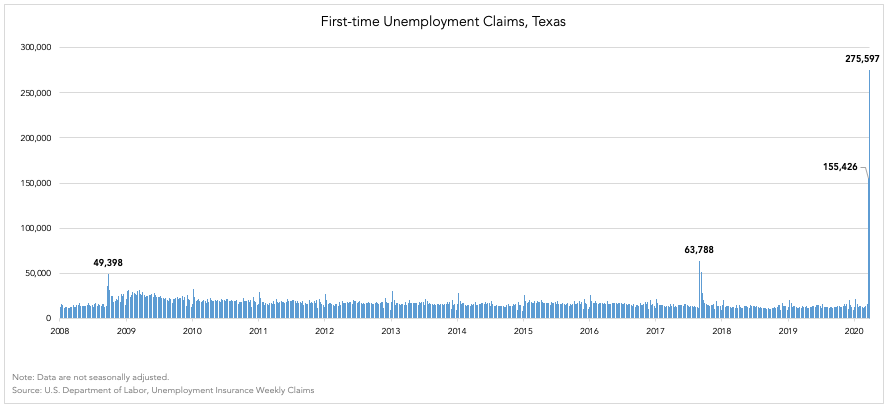
Layoffs due to COVID-19 have begun throughout the Houston area, adding to challenges in healthcare access, mental health and more. Nearly 10 million Americans have filed for unemployment for the first time in the past two weeks, more than 431,000 of whom are from Texas. For the first time, the CARES Act expanded unemployment benefits and loans to these workers, but the process to connect people to these resources in a timely manner will be challenging.
As the graph below shows, these figures are unprecedented. Patrick Jankowski, senior vice president of research at the Greater Houston Partnership estimates mid-March job losses are nearly 38,000 in Metro Houston, though those figures can’t be confirmed until jobs data come out in early May.
High-risk industries
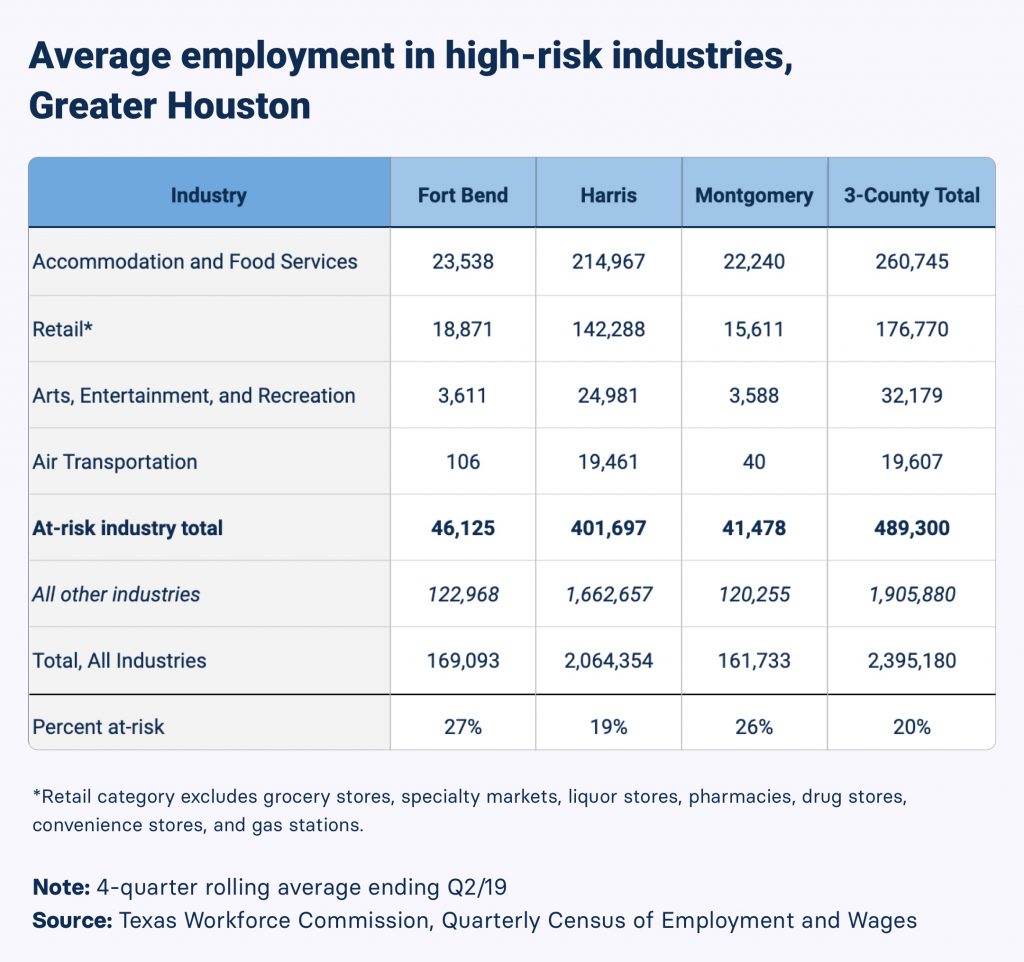
The majority of unemployment claims are from workers in the service industry — hotels, bars, restaurants, entertainment, leisure — as well as retail and travel. One out of every five workers in the three-county region is employed in a sector at high-risk for job loss, totaling about half a million people. Houstonians in these high-risk industries earned nearly $4 billion in wages in the second quarter of 2019.
While these industries are at immediate risk from the economic effects of COVID-19, the steep decline in oil prices will have longer-lasting and wide-ranging implications for businesses and workers in the oil and gas industry. Houston, as the energy capital of the world, will certainly be disproportionately affected.
Low-wage workers
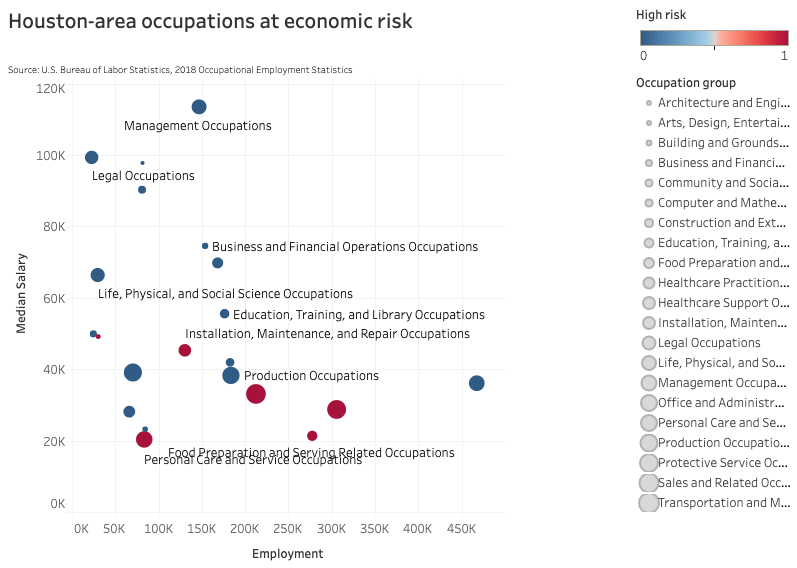
Not all occupations in the aforementioned industries are at risk for layoffs. National data show that low-wage, part-time, and hourly workers in specific sectors have been hit the hardest with job and wage losses. The graph below shows the number of jobs and median annual salaries for workers grouped by job function. Occupations that are most at risk (in red) have the lowest salaries. Traditionally, that also suggests workers are paid hourly, don’t have health insurance, and don’t receive paid sick leave. Many groups will be eligible for paid sick leave and unemployment benefits offered by the federal government’s response to COVID-19, but not all, and workers will still have to make the difficult choice between protecting their health or earning an income. The stakes are high as 40% of Houstonians don’t have $400 in savings to deal with an unexpected emergency.
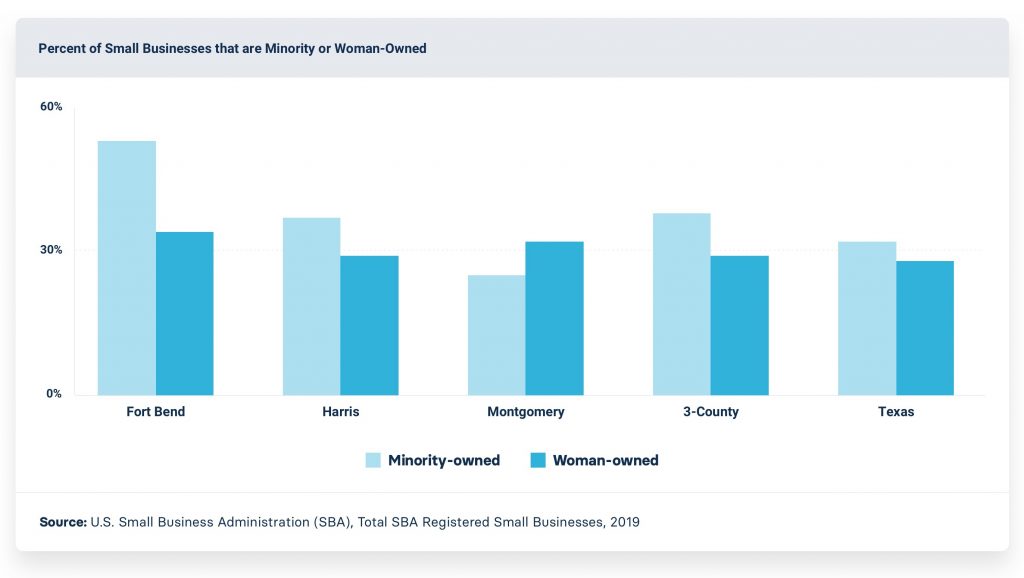
Small businesses in particular are struggling as everyone is told to stay home, and revenue has plummeted as a result. Nearly 127,000 small businesses employ fewer than 500 people in our region and comprise half of Houston-area businesses—most of these (89,500) employ fewer than 10, according to U.S. Census Bureau County Business Patterns. About 38 percent of small businesses in our region are minority-owned, putting livelihoods at risk and compounding challenges minorities have historically faced.
A survey by the Greater Houston Partnership shows that 91% of its small business members (defined as 500 or fewer employees) have lost revenue, about half are not able to pay staff during the shut-down, and more than one-third have laid off workers. There is hope that recent federal legislation will slow some of the job losses as small businesses take advantage of the Paycheck Protection Program (PPP), which requires companies to use the majority of funds to continue to pay staff.
Vulnerable populations in the Houston area
In addition to the groups identified above, immigrants, those who experience homelessness, and school-aged children are especially vulnerable to the hardships caused by COVID-19. In general, residents who were struggling prior to the pandemic will face compounded economic hardship during the crisis. This includes individuals and families living in poverty and low-income working households, also called Asset-Limited, Income-Constrained, and Employed (ALICE). Again, what follows is not a complete list, but we hope to call out examples of people in our community who will need the most help.
Immigrants
Immigrants, especially those who are undocumented, are particularly vulnerable to crises like disasters and pandemics. Immigrants tend to have less access to information and services since they may not be as familiar with credible sources, or with knowing how to navigate the system, and are more likely to encounter language barriers.
More than 1.5 million Houstonians were born outside the U.S. but call the three-county region home—that’s one out of every four people. The Migration Population Institute estimates 473,000 undocumented immigrants live in Greater Houston. According to the Census Bureau, more than half of immigrants in the region speak English less than “very well.” A recent report from ProPublica highlights the obstacles limited English proficient speakers encounter trying to advocate for their medical care. Given there are more than 145 languages spoken in the region, the need for interpreters and translators right now is critical. To view a map of where immigrants live in Houston, click here.
Immigrants also tend to have less access to forms of federal and state assistance (even though most pay taxes) because they are typically excluded from government programs and they are less likely to take advantage of aid for which they are eligible. Compounding their vulnerability, immigrants are more likely to be uninsured and work low-paying jobs. They are also over-represented in sectors immediately affected by layoffs. Ironically, an analysis by the Migration Policy Institute found that six million immigrant workers are at the front lines of keeping Americans healthy and fed during the pandemic by working in hospitals, as care-givers, or on farms.
Immigrants without legal status will have an even harder time weathering this pandemic as they are not eligible to benefit from the trillions of dollars in aid the federal government is releasing. In fact, the CARES Act, the $2.2 trillion stimulus package signed by President Trump on March 27, explicitly excludes them. Even mixed-status tax-paying households where American-born children have at least one parent without legal status will be ineligible for benefits.
Those who are homeless
People experiencing homelessness are particularly vulnerable during this pandemic. Homeless individuals tend to be older, and are more likely to suffer from mental illness and chronic conditions, making them more susceptible to the virus. Additionally, it is nearly impossible to follow CDC guidelines regarding social distancing, staying home, and regular hand hygiene without a permanent residence.
A marginalized population in the best of times, the unique needs of these individuals are often deprioritized in times of crisis. According to 2019 data from the Coalition for the Homeless, nearly 4,000 sheltered and unsheltered people live in Fort Bend, Harris, and Montgomery counties. Houston Mayor Sylvester Turner announced on April 1 that the city will rent hotel rooms to shelter Houston’s homeless individuals, but this population will require much more support as this crisis continues.
School-aged children
While school districts in Texas are officially closed through May 4, many parents are preparing for schools to remain shuttered for the remainder of the academic year. Several organizations, districts, teachers, and parents have stepped up to ensure that children continue to learn, but with parents working from home and the general chaos COVID-19 has created, maintaining a high-quality education at home is challenging, particularly for low-income working parents and those without internet access or computers. For example, recent data from Los Angeles Unified (LAUSD), the second-largest school district in the country, show that about 15,000 high school students are absent online and have failed to do any schoolwork, and more than 40,000 (about one-third of all high schoolers) have not been in daily contact with their teachers since mid-March, suggesting that distance-learning is not reaching everyone.
Moreover, when students spend time away from school during the summer, they sometimes lose what they learned over the academic year, a concept known as “summer slide.” One study found that students lost between 25% and 30% of what they learned during the school year, with lower income students at a greater disadvantage than their wealthier peers. About 691,500 public school students (62% of students enrolled) in the three-county region are identified as economically disadvantaged, meaning they qualify for free or reduced-price lunch. For many children, these free or reduced-price school meals are their primary source of daily nutrition. And, for the 98,000 students with disabilities and special needs in our region, the consequences of being out of school for a prolonged amount of time could be even more serious.
Understanding challenges to help Houston move forward
COVID-19 may be the first pandemic any of us have lived through, but this is far from the first time Houstonians have dealt with adversity. We’ve seen how this community comes together — neighbor helping neighbor, stranger helping stranger. For the good of this region that we all call home, please stay home if you are able. The more we reduce our physical contact with each other, the more neighbors we can save. That, if anything, is clear.
There are still plenty of ways to help from home. The United Way of Greater Houston and the Greater Houston Community Foundation have established the Greater Houston COVID-19 Recovery Fund, endorsed by Mayor Sylvester Turner and Harris County Judge Lina Hidalgo, to support local nonprofits that help those we identified here and more. Visit greaterhoustonrecovery.org today to see how you can get involved.
Smart Parents, an informational hub for Texas families and regional nonprofits
End Notes:
1 The same CDC study found that while fatality rates might be very low for young people, they are not entirely immune to the effects of COVID-19 — nearly 40% of those hospitalized for coronavirus from mid-February to mid-March were between the age of 20 and 54. 2 Recent federal legislation allows for paid sick leave.
From political leaders and activists to landscape-shifting scientists, musicians and astronauts, the contributions of Black changemakers are embedded in Houston’s identity. And looking forward, there’s no sign of that changing any time soon.
More Houstonians have access to health care, more is being done to protect our air quality, and more of our most vulnerable children are being reached thanks to the remarkable efforts of Black-led organizations in the Houston area.
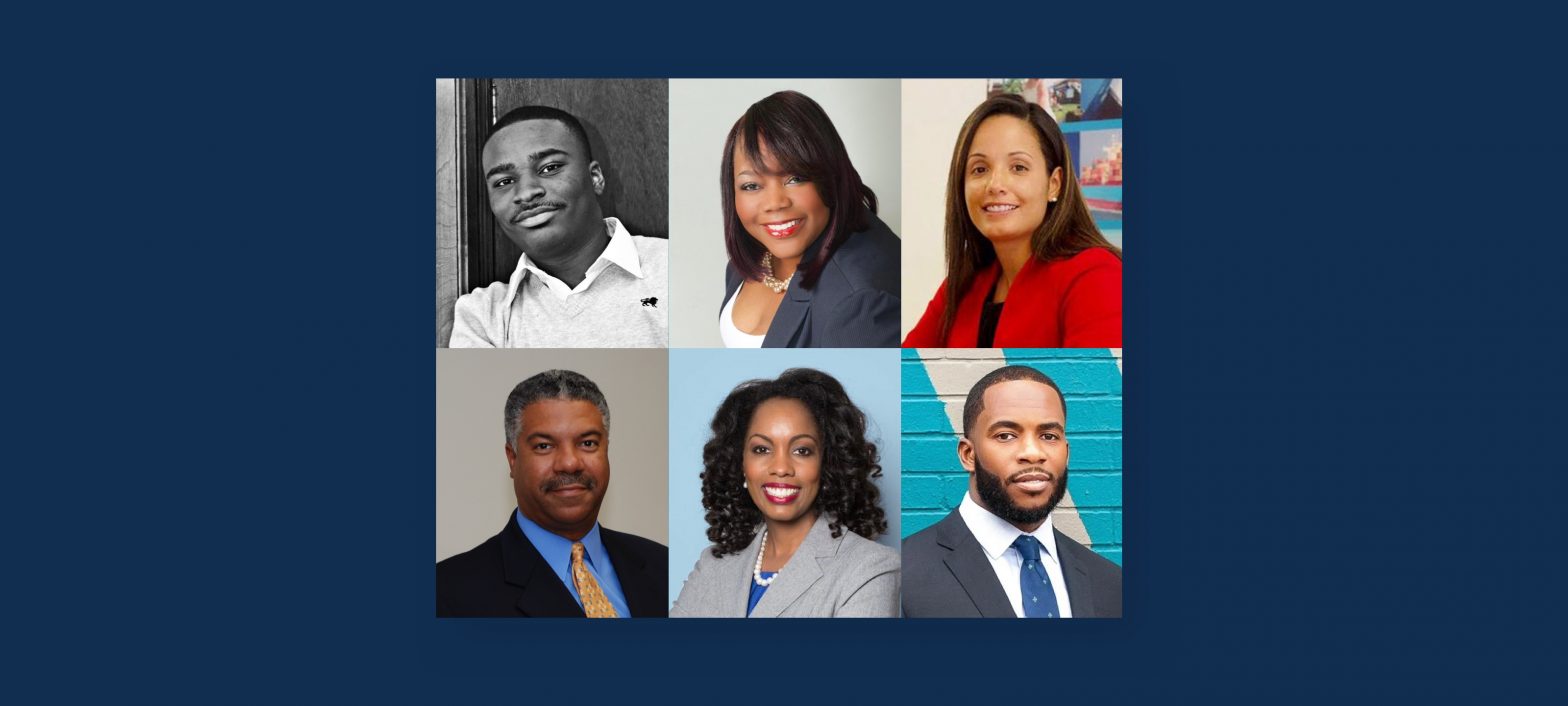
We’re proud to spotlight just some of the many exceptional Black leaders who help make Houston a better place to live, work and play — both now and in the future.
An important note: We recognize that this list is far from exhaustive. We have plans to cover many more community leaders in the coming months. If you know of a leader or organization that we should cover, please let us know!
Kathy Flanagan Payton
Fifth Ward Community Redevelopment Corporation
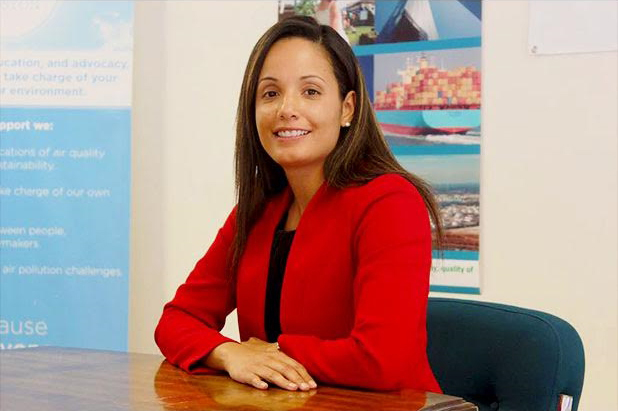
Kathy Flanagan Payton, President and CEO of the Fifth Ward Community Redevelopment Corporation
A stronger Houston region is one where all communities can provide their residents with safe, opportunity-rich places to live. That includes neighborhoods like Houston’s Fifth Ward. And as President and CEO of the Fifth Ward Community Redevelopment Corporation (Fifth Ward CRC), Kathy Flanagan Payton is dedicated to making the Fifth Ward a community of choice for those who call it home.
“We catalyze resources to build and preserve an inclusive Fifth Ward by developing places and creating opportunities for people to live, work and play,” Flanagan Payton says of her work with Fifth Ward CRC. “My vision for a better Houston includes opportunities for all people to excel and neighborhoods to present themselves as a community of choice — a place where people want to be and not a place where they’ve been left behind.”
Kathy and her team at the Fifth Ward CRC recognize the importance of resident pride and visual appeal when it comes to building a more opportunity-rich community. That’s why they’re spearheading The Lyons Avenue Renaissance, a multi-million dollar revitalization initiative designed to refresh and redesign the Lyons Avenue corridor in a way that honors the community’s history and positions it for a brighter future.
Kathy’s work is inspired not only by the future of the Fifth Ward, but also by the remarkable people who’ve called it home both now and in the past. “As a native ofFifth Ward, the native sons and daughters of this community like the late Barbara Jordan and Mickey Leland have both been great inspirations. And while not famous, my grandmother instilled in me a desire to help people. Her motto was, ‘If I can help somebody, as I pass this way, then my living shall not be in vain.’ From each of them, my desire to make a difference has been further encouraged.”
Looking forward, Kathy and the Fifth Ward CRC hope to build on the momentum of The Lyons Avenue Renaissance, extending their work into a new paradigm that focuses “less on poverty and more on opportunity” in this ever-changing environment.
Dr. Charlene Flash
Avenue 360 Health and Wellness
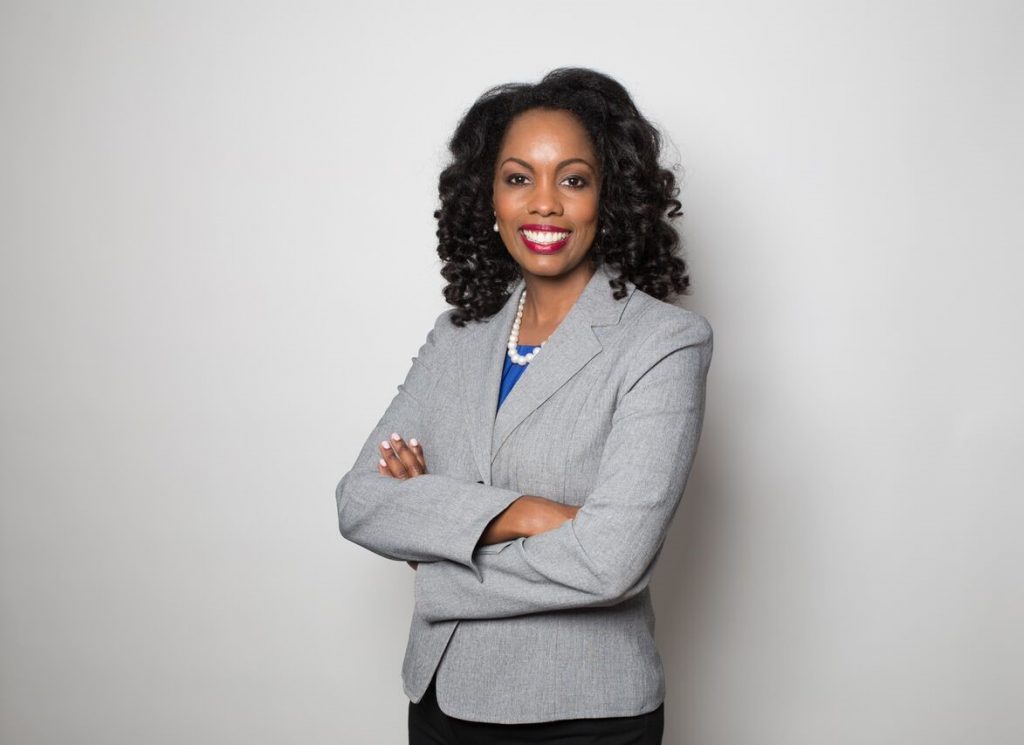
Dr. Charlene Flash, M.D., M.P.H., President and CEO of Avenue 360 Health and Wellness
Despite our reputation as a global leader in health care, Houston-area residents lack health insurance at significantly higher rates than the national average. In fact, the uninsured rate among non-elderly residents grew by 1.3 percentage points from 2016 to 2017 — the first uptick since the Affordable Care Act went into effect. This lack of coverage contributes to an increasing burden from several chronic health conditions, including HIV/AIDS.
“At a time when our HIV testing platforms can provide test results in minutes, we still have nearly 1 in 4 people not being diagnosed until they have progressed to an AIDS diagnosis,” says Dr. Charlene Flash, President and CEO of Avenue 360 Health and Wellness.
Fortunately, Dr. Flash and the team at Avenue 360 are continuing their 30-year legacy of providing quality mental, physical and oral health care services to many different communities in the Houston-area including those living with HIV/AIDS, equipping them with the knowledge and resources they need to lead full, healthy lives.
The name Avenue 360 refers both to the unique paths individuals take through life and the whole care options they can receive at the clinic. “We strive to meet patients at their time and location of greatest need… helping them access housing, mental health services and physical health care,” says Flash.
Looking forward, Dr. Flash hopes to strengthen Avenue 360’s holistic approach to community health and extend equitable health care into spaces that promote physical, social and mental well-being beyond pure treatment.
Terence Narcisse
East Harris County Empowerment Council
Terence Narcisse, Executive Director of the East Harris County Empowerment Council
While the Houston region’s massive size creates a variety of opportunities for residents, it can also make some communities — like the unincorporated communities of East Harris County — feel forgotten. But together with his team at the East Harris County Empowerment Council (EHCEC), Terence Narcisse is working to fix that.
Through a variety of community partnerships, education programs and outreach initiatives, Terence and EHCEC work collaboratively to improve quality of life, create new opportunities and form new connections for residents in low-opportunity communities like Channelview, Crosby, Galena Park, North Shore and Sheldon.
“My vision is that opportunity reaches every zip code in the Greater Houston/Harris County area, and that every person has access to opportunity in their community and zip codes where they live, work and play,” says Terence of his vision for East Harris County. And with the help of his fellow Houstonians, Terence has faith that he can see that vision through.
Dr. Bakeyah Nelson
Air Alliance Houston
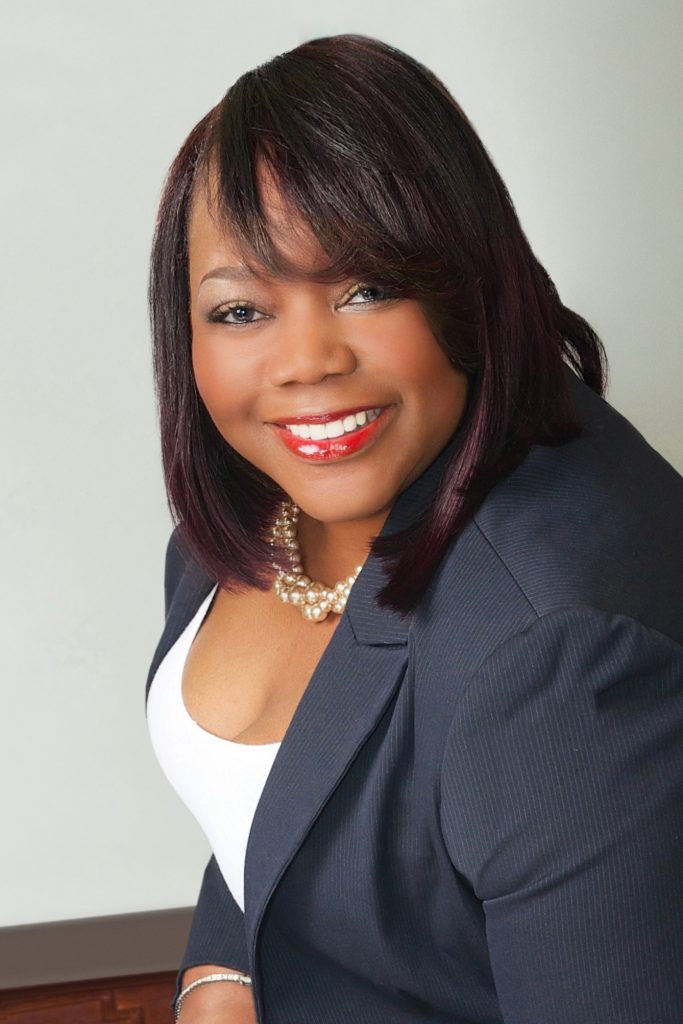
Dr. Bakeyah Nelson, Ph.D., Executive Director of Air Alliance Houston
And while Dr. Bakeyah Nelson sees Houston taking steps toward improvement, to her and Air Alliance Houston, they aren’t nearly enough.
“It is not enough to parade Houston’s diversity without taking direct steps to address disparities,” says Dr. Nelson. “My vision for Houston is one that holds on to the pieces of our past that make this city great, such as our willingness to do things differently. However, we also need to work collectively to let go of the decision-making that has destroyed the health and well-being of so many communities, particularly those historically marginalized.”
As Executive Director of Air Alliance Houston, Dr. Nelson directs community-based research projects, educates the public about environmental disparities, and engages in collaborative advocacy with multiple organizations toward improving air quality and advancing environmental justice in Houston-area communities. Recently, she and her organization helped win two hard-fought battles against planned concrete batch plants in two predominately lower-income neighborhoods. “That was very exciting for us and a relief for the residents whose health and safety were being threatened by facilities potentially being imposed on them.” Dr. Nelson said of the grassroots efforts, adding that “sometimes we win and sometimes we lose but we keep a laser-focus on our mission and we keep on going.”
But no matter how hard the battles may get, Dr. Nelson and Air Alliance Houston remain inspired by the determined community leaders who help them keep their mission alive. “While I find it shameful that we have to fight so hard for basic human rights, I find it inspiring to work with many great local leaders who have a similar vision for Houston, one that is more equitable and just.”
Marvin Pierre
8 Million Stories
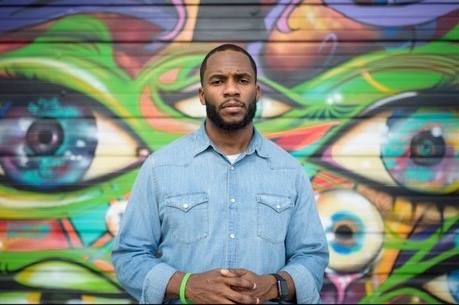
Marvin Pierre, Co-founder and Executive Director of 8 Million Stories
It’s estimated that 65% of all American jobs require education past high school. But for the 110,000 disengaged youth throughout the Houston area who are not enrolled in school and are not participating in the labor force, the barriers created by poverty can potentially put these and other employment opportunities out of reach. Marvin Pierre wants to change that.
With his organization 8 Million Stories, Marvin Pierre is working to redirect Houston’s disengaged and at-risk youth through education, skills training and authentic relationships with their communities.
“My vision is to really work to create more equitable opportunities for our youth, to break cycles of poverty,” says Pierre of his work with 8 Million Stories.
Across all three counties, Black youth are referred to the juvenile justice system at more than two-to-three times the rate of White youth. Working directly with youth who have found themselves involved in the criminal justice system, removed from school or otherwise disadvantaged, Marvin and his team provide a variety of programs designed to help these young people reach self-sufficiency including career training, education credits and mental health support.
“I’m inspired by the level of resilience that Houstonians have. In my experience with young people and working with Houstonians and learning about their stories and what made them successful, I’m inspired by how they’ve overcome challenges,” says Pierre. “Houston is a great city to do this work. We welcome organizations that seek to learn more and how they can be engaged.”
Judson Robinson
Houston Area Urban League
Judson Robinson III, President and CEO of the Houston Area Urban League
Despite Houston’s reputation as a highly diverse, economically empowered region, striking disparities in income, education, housing and health still disproportionately affect Black residents. Judson Robinson III and his team at the Houston Area Urban League are working to reverse these trends and empower disadvantaged Houston-area residents and their communities.
Affiliated with the United Way and National Urban League, the Houston Area Urban League (HAUL) provides social services and programs to more than 10,000 economically disadvantaged residents including housing, workforce training, youth development, health and wellness initiatives and their entrepreneurship center.
In providing these services to those who need them most, Robinson hopes to inspire greater unity in the Houston area. “One of the things we’ve worked on is closing the equality gap… Certain communities, certain individuals and organizations, need more support than others to be on par,” says Robinson of his work with HAUL. “If we can start to look at the greater good and be more helpful to others, it would be good for all of us in the long run.”
Moving forward, Robinson hopes to spread awareness and connect more residents with vital services and programs including housing assistance, job placement, foreclosure avoidance, tax filing and even civic engagement. “We hope to serve 12,000 clients, because it’s important to the people, it gives them a chance to get back on track or to keep from heading down the wrong path.”
Underscoring HAUL’s work is the incredible inspiration provided by Houston-area residents. “They will help,” says Robinson of his fellow Houstonians. “We’ve seen that when we’ve faced emergencies in the city, and we take a lot of pride in being Houstonians. There’s something about that. In closing, we hope to meet those interested in our work at the upcoming National Urban League Conference this coming August in Houston.”
Understanding Houston,
GHCF’s new regional community indicators initiative, is designed to promote
informed, collaborative action for our community.
Understanding Houston
provides an open, easily-accessible website that aggregates independent data
from 70 data sources on quality-of-life issues across the Houston region’s
three most populous counties—Fort Bend, Harris, and Montgomery. It aims to
equip community members with the knowledge they need to make informed giving
decisions to help create a more vibrant Houston with opportunity for all.
Understanding Houston covers eight main topics: arts & culture, civic engagement, community context, education, economic opportunity, environment, health, and housing. The topics encompass more than 200 community indicators that provide factual insight into our community’s strengths and challenges across the three counties.
“At the end of the day, this initiative is about connecting people and inspiring them to take action. As the Foundation continues to grow with and for our community, Understanding Houston will be a vital resource for our donors, allowing them to work even closer together and with others to create positive change.”
– Stephen Maislin, President & CEO of the Greater Houston Community Foundation
On November 21, more than 370 leaders from the philanthropic, business, and nonprofit sectors gathered at the Briar Club for the sold out launch event. Click here to view event photos.
The Greater Houston Community
Foundation is grateful to Host Committee Chairs Sheila and Ron Hulme, Laura
Jaramillo, and Randa and K. C.
Weiner, as well as the entire Host Committee, Indicator Advisory Committee,
and the GHCF Governing Board for their support in planning a successful launch.
Before the event, guests were asked to participate by voting on “What Matters to You.” Everyone had an opportunity to cast their vote and become a part of this revolving installation. The commonalities in passions sparked lively conversations about quality of life in Houston.
During the luncheon, emceed by Domnique Sachse, KPRC Channel 2 News Anchor, guests heard from passionate leaders about the topics that mattered most to them. Winell Herron, Group Vice President of Public Affairs, Diversity and Environmental Affairs for H-E-B, shared H-E-B’s focused efforts in improving access to quality education, particularly supporting successful teachers who make a difference in the classroom. Julie Martineau, Executive Director for the Montgomery County Community Foundation, spoke about housing affordability in Montgomery County and the importance of living where you work, play, and pray. Quynh-Anh McMahan, Senior Program Officer for The George Foundation, spoke about her deep personal connection to Fort Bend County, mental health, and previewed The George Foundation’s exciting new plans. Finally, Frost Murphy, GHCF Governing Board Member and entrepreneur, shared his journey spearheading new efforts at HeartGift to help more children across the world, his new work with others to address child poverty, and the support Community Foundation provided him on his philanthropic journey. Together, speakers informed how impactful data can be in making significant change, how these specific topics genuinely affect them on a personal level, and about the commitment to be a part of that change.
“So…whether your passion is reducing childhood poverty, training heart surgeons around the world, or whatever is important to you – Greater Houston Community Foundation can help get you the data you need to make a bigger difference.”
– Frost Murphy
Thank you to the many individuals, community-based organizations, philanthropic funders, data partners, and civic and corporate leaders who have supported this effort.
Why those who need the census most may also be those it threatens.
As a Latina whose family comes from the western border of Texas with Mexico, I have always felt the tug of two identities.
The calling to civic duty runs generations deep in my family, so when the 2010 census questionnaire landed in my mailbox, I was determined to be counted. However, the answers to my questionnaire were complicated by my present and historical position as a queer woman of color living in Texas.
With relative certainty, I was able to check the box next to “Yes. Mexican, Mexican Am., Chicano”, but when it came to the subsequent (required) question of “race”, I didn’t feel like I matched any of the options presented to me.
Had I had the right to legally marry, I probably would have designated my long-term, live-in partner as my “wife”, but since we were also required to include our “sex”, checking that box felt like outing ourselves to the same government that declined to legally acknowledge our partnership. So instead, we talked around our truth and settled on “roommate”.
Socially, a lot can change in ten years; and it has.
Changing dynamics and growing threats on the path to the 2020 Census
In 2011, Don’t Ask, Don’t Tell was repealed. In 2015, it became legal for me to marry.
Since 2017, however, even more has changed. While life for vulnerable communities has always come with its challenges, we’ve see new threats in laws, repeals of protections, bans, and acts of violence that have emboldened discrimination and incidents of hostility toward immigrants, people from historically marginalized communities, the Muslim community and other religious minorities, as well as trans and gender non-binary folks. This has, and will continue to have, a chilling effect as communities look to protect themselves and their families.
And this is just the beginning when it comes to the challenges our region faces in our efforts to count everyone in the 2020 Census. For many people, talking about your country of origin, race and/or ethnicity can be complicated.
“The way you identify may seem excluded from the census questionnaire or may feel too risky to disclose on a government form.”
And while we’ve made great strides in the LGBTQ community, characterizing or implying one’s sexuality or gender for government documents might not be possible or feel safe for everyone in our community.
Beyond this, the census faces other challenges like under-resourcing; some estimate that regional field offices have been reduced by half and that there will be 200,000 fewer census workers to knock on doors. The census can reconfigure political power, congressional districts and representation of states in the Electoral College. And with this, the risks associated with putting the questionnaire online for the first time are significant. Between online security issues and malicious campaigns designed to confuse or profit from vulnerable users, moving the census online comes with its challenges.
The growing risk of underrepresentation
The impact of these challenges for the census itself is increased risk of undercount in our communities. In our region, the groups who have historically been undercounted are not too dissimilar from other regions. According to early research from January Advisors, these are renters, non-white communities, households with children under five years old, those in crowded housing units, people living in poverty, as well as at-risk groups like the LGBTQ community, people experiencing homelessness, religious and ethnic minorities, and residents impacted by Hurricane Harvey. However, for the Houston region, the difference is that, as the near-third largest metropolitan area in the country, these groups and risk-factors are highly represented in our community, and are in some cases, the same groups who stand to lose the most.
“The census affects how billions of our tax dollars will come back into our communities through federal budgeting allocations over the next decade.”
If people are undercounted in the census, we see smaller budgets for services and programs like: public transit, highway planning and construction grants; billions of dollars in community development block grants; billions in housing related dollars, including Section 8 Housing Choice Vouchers and other housing assistance programs; teachers, textbooks, and other educational expenses; Title I grants that help local educational agencies serve low-income families and communities; special education grants; funds for the national school lunch program; Head Start; grants for improving teacher quality; and Community Health Centers serving low-income community members.
Since 2010, Houston has rapidly grown and shifted at a well-documented rate. The 2020 Census is our chance to recalibrate and keep up with the demands associated with our growing population.
It is no accident that Houston in Action, with its mission to increase access and breakdown systemic barriers to civic participation, began planning for the 2020 Census during its formation in mid-2018. The members of Houston in Action reflect the multiplicity and abundance of our region’s populace and understand first-hand what’s at stake for their communities and the region at-large if we don’t all put in the hard work of counting each and every one of our friends, families and neighbors.
Houston in Action facilitates a first of its kind, regional Complete Count Committee, in partnership with the City of Houston and Harris County, engaging dozens of community groups and leaders to educate and energize our city toward a complete count.
Houston in Action members are front and center in our collective effort to reach a complete count for the 2020 Census: members like BakerRipley and the hundreds they serve at their Head Start centers; community members in the care of Hope Clinic, young people of color organizing their communities with the support of organizations like United We Dream, Mi Familia Vota, and Jolt; the Houstonians affected by Harvey and served through the housing work of groups like Avenue CDC and Texas Housers, those whose communities are represented in the work of coalitions like Empowering Communities Initiative, TFN-Texas Rising, and the Houston Area Urban League; and Houston area residents who rely on our public libraries, community centers, and public schools for education and access to the internet, to name only a few of those involved in the Houston in Action 50+ member network.
It is this on-the-ground experience that has shaped our coordination around the 2020 Census. Our work is grounded in the fundamental belief that when we create a culture of organizing ourselves for the empowerment of marginalized communities, we are better prepared to identify opportunities to engage civically, influence the systems and structures that affect our lives, and improve quality of life throughout our region.
“When we create a culture of organized empowerment, we are better prepared to influence and engage with the systems that affect our quality of life.”
The 2020 Census presents a great opportunity in this effort. For over a year, we’ve been able to build important connections, have conversations and coordinate in ways that did not previously exist. Together, we have shaped common strategies, shared resources, and built foundational systems for sharing critical impact data. We’ve developed infrastructure to grow our collective capacity and unite our efforts like never before — all necessary elements in our work to shift systems and culture, and create fair access to civic participation for residents of the Houston region.
However, we know that we can’t do this without great partners and support, and that we can’t do this overnight. While our sights are set in the near-term on the decennial census and work just ahead, we are working for true systems change for generations to come. It’s the kind of change that will be incremental — but long-lasting.
Because we know a lot can change in ten years; and it will. Together we can make it happen.
Frances Valdez is the Executive Director of Houston in Action after practicing immigration law for 13 years. Houston in Action is an initiative made up of people and organizations who have come together to advance our community forward through our respective and collective work to build a stronger Houston through a culture of civic engagement.
How research reinforces the importance of high-quality early childhood education.
The vitality of Houston depends, in part, on the aptitude of the next generation to achieve success. Houston needs a capable workforce that can handle the challenges of an ever-changing global economy, and the factors that shape the capacity of our future workforce depend on the decisions we make now as a region.
Decades of science demonstrate that the ability of an individual to achieve success is strongly influenced by how the brain develops during the first few years of life. From birth to age three, the brain makes over one million neuronal connections per second. These neuronal connections are vital to building a strong, healthy brain structure. The brain is responsible for every human function, from breathing to executive function, and how the brain develops during the first few years of life influences a person’s potential for learning, problem-solving, motor skills, emotional and behavioral function, and essentially every other aspect of human life. Yet, not all children have the same opportunities for the experiences and interactions necessary for healthy brain development.
An unequal start for too many children
While the biological process of one neuron connecting to another is driven partly by genetics, environmental factors play a significant role in the quantity and quality of those connections. Whether connections are maintained, wither, or die depends on the input a child’s brain receives from his or her environment and relationships with caregivers. “Serve and return” is a phrase coined by the Center on the Developing Child at Harvard University that describes the types of interactions necessary for optimal brain development.
Serve and return interactions are those that occur between caretaker and child and involve responding to a child’s non-verbal and verbal cues with kindness, affection, physical touch, language and other forms of communication. While this seems fairly simple, the brain requires consistent, frequent serve and return interactions, which can be difficult for many working families, especially the working poor who often have multiple jobs. Moreover, many children spend the majority of their time in childcare centers where engagement with young children is limited to diaper changes and feeding.
Most caregivers want to give their children as many opportunities as possible, yet there are many social, economic, political and environmental factors that create barriers to caregivers’ ability to optimize brain development. For example, poverty, food insecurity, and neighborhood violence significantly increases the risk of parental stress and depression, which impedes caregiver-child interactions. Poor housing conditions, such as the presence of lead paint, can directly impact the brain development of a child, as lead deposits can cause neuronal cell death in the brain. Lastly, adverse childhood experiences and unrelenting, sustained stress have substantial and lasting impacts on both caregiver and child.
Click here to explore funding recommendations that maximize impact.
An investment gap that must be filled
The complex and large-scale nature of all the factors that can influence brain development during childhood has led to a gap in investment from birth to age three because the task can seem insurmountable. Also, access to families with children age three and younger can be difficult if they are not in a childcare system. Thus, philanthropy and advocacy organizations often steer their efforts to a more manageable goal of increasing access to pre-kindergarten. Increasing opportunities for early learning is very important and research has shown improved academic and economic gains from pre-K, especially for children from low-income families. However, these outcomes depend on how aligned the pre-K program is with developmental science.
The part of the brain primarily responsible for learning and memory is called the hippocampus, which unlike most of the other parts of the brain, continuously forms new neuronal connections throughout a lifetime. That is why adults can be life-long learners. However, the critical window of brain development during the first three years of life occurs in the cerebral cortex, which is responsible for intelligence, personality, “soft skills,” and many other vital human functions. Optimal cerebral function is required for individuals to be successful in the workplace and have healthy relationships. Yet, the cerebral cortex is not adequately stimulated by all pre-K programs. Moreover, most pre-K programs begin at age four, which is after the majority of brain architecture has already been developed.
Two-generational, whole family approaches hold tremendous promise
Early Head Start (EHS) is an excellent example of how policymakers developed a two-generation intervention based on science. EHS provides parental support to improve caregiver brain-building skills, and services start during pregnancy and continue through age three. EHS intentionally goes beyond a traditional “educational” framework to include components that stimulate the intellectual, social, and emotional aspects of a child’s development. This creates neuronal connections in other parts of a child’s brain, not just the hippocampus. EHS also addresses the social and economic needs of the parents, which, as described above, can be barriers to optimal caregiver-child interactions. This “two-generation” approach is an important aspect of the EHS program and is worthy of emulation.
National efforts are well underway to catalyze a resurgence of this approach. Simply put, two-generational approaches acknowledge an obvious truth: different children’s outcomes are largely dependent on the vitality of the families and neighborhoods in which they live. Hence, two-generation approaches intentionally focus on addressing the needs of the whole family and the factors that keep them from prospering, with the goal of optimizing conditions for both parents and their children.
In Houston, we have several opportunities to support or create holistic, two-generation interventions that facilitate early childhood development. The Mayor’s Complete Communities initiative provides an opportunity to leverage current neighborhood investments to reduce many adverse factors that affect families and create a caregiver educational program that increases caregiver brain-building skills. In partnership with the Children’s Museum of Houston, the City of Houston Health Department has launched Houston Basics, which is a public health campaign designed to increase caregiver serve and return with young children. Houston Basics can be leveraged to launch more intensive brain-building training for caregivers, as well as connect families to social support resources. Other cities, such as St. Paul, Minnesota, have increased the brain-building skills of childcare workers, and have standardized and improved childcare centers while also providing education and job training to help parents move out of poverty.
The opportunity for a focused, data-driven investment strategy
If we want improved outcomes for Houston’s children, we have to align our priorities, policies, and investments with science. Rather than divide our funding priorities and advocacy efforts in early childhood into education, childcare, and parenting program silos, we need to have a comprehensive and integrated approach that provides support for children and their families from pregnancy through Kindergarten. We should follow the child, rather than the sector. We also need to develop multi-sector interventions that can address some of the economic and social challenges many families experience, while also building their capacity to be brain builders despite these challenges. Lastly, we need to understand there are significant opportunity costs when we do not prioritize solutions that focus on the first few years of life. As we wait longer to intervene, the cost of intervention increases and the return on investment decreases.
Understanding Houston is a great step towards using data and science to inform decision-making. It also provides a platform for a variety of stakeholders to receive information, which hopefully will spur dialogue and challenge beliefs amongst a variety of interested parties. Houston is a strong, resilient region. The task of ensuring every child has the same opportunity for optimal brain development is large, but if we allow developmental science to shape our policies, practices and investments, we can ensure a bright, prosperous future for Houston’s children and prospective workforce.
Quianta Moore, M.D., J.D., is the Fellow in Child Health Policy at the Baker Institute for Public Policy. Her research focuses on developing empirically informed policies to advance the health and equitable future of children and their communities. Read more.
As the keeper of Houston’s citywide education vision, Good Reason Houston is committed to making sure that happens.
Good Reason Houston exists for a very simple purpose — to ensure that every child, in every Houston neighborhood, excels in a world-class public school and thrives in the Houston of tomorrow. That means that we must transform our schools today. This is a citywide challenge and we need a citywide solution. Good Reason Houston will partner with those districts that are ready and willing to take bold and courageous action to transform their schools now, not five years from now. We began this work two years ago, and as we built the foundation for our strategy it became clear that the families most directly served and impacted by public education did not play an active role in critical education decisions impacting their children. As a community, we haven’t spent enough time trying to understand what families need and want for their children. In order to create the kind of citywide changes Houston needs, Good Reason Houston immediately began thinking about opportunities to bridge the gap between families and the schools and districts that serve them.
The first step required more and better information about parent attitudes toward the schools they have access to today, and what they hope for in the schools of tomorrow. Collecting that kind of information — across districts, across systems, across geography and demography — is no small task, so we engaged a best-in-class research partner to lead the work — Wakefield Research Partners.
Research objectives
Good Reason Houston partnered with Wakefield Research Partners to interview more than 1,500 families across Houston to understand how those families feel about the schools their children currently have access to and what they’d like to see for their children in the future. We then asked parents about the kind of information they wanted and needed to make decisions about their child’s education, and finally, we talked to them about their willingness to become advocates at the school and district level for education transformation.
Our methodology
Wakefield Research completed phase two quantitative research through a survey conducted between February 20, 2019, and March 28, 2019. 1,540 Houston parents across nine independent school districts and local charter schools completed the survey. Districts represented in the survey include Aldine, Alief, Channelview, Galena Park, Houston, Pasadena, Sheldon, Spring and Spring Branch. 216 of the total respondents have children who attend a charter school. The margin of error for this study among all Houston parents is +/- 2.5 percentage points at the 95% confidence level.
These findings are illuminating and we hope that others will learn as much from them as we have. To that end, we are releasing this research on our website: goodreasonhouston.org/parentresearch.
For Good Reason Houston, this data tells us parents are ready and willing to be a part of this discussion. We believe the TEA A-F ratings are a critical first step. We will work closely with parents and districts to make sure that parents not only have information, but have the ability to do something about it — whether that means improving their existing school, choosing to attend a different school, or joining with the district to create entirely new school options.
We’ve included some highlights below, and we hope this is just the beginning of a new citywide conversation about what parents want and expect for their children and how we — city and district leaders, educators, policymakers, education stakeholders, and the public — can ensure that our schools provide that for every family.
Key findings
Parents overwhelmingly support a common accountability system for schools and find that information valuable. The Texas Education Agency’s new A-F system was very popular with the vast majority of parents. They found it to be a credible source of objective information that allowed them to make more informed decisions. Percent Who Feel the A-F Rating System is Very or Extremely Valuable
Parents think there is more to be done to improve the quality of schools. Parents are not satisfied with the quality of their own child’s school or the system as a whole. Parents in this city want and need more schools rated A and B. Acceptable Ratings for Child’s School
Parents clearly want more diverse public school options for their students. Parents across districts and systems felt very positively about a variety of school types and want both better access to different kinds of schools, and more information about what is available for their students. How Interested Are You in Enrolling Your Child(ren) in Each of the Following School Types?
Parents desire easier access to quality school options. Parents need better access to information, transportation and enrollment opportunities to feel like they have access to quality choices. For many parents, it’s not enough to make sure good schools exist; we must also make sure they are realistic options for more students.Top Reasons Why Parents Don’t Feel They Have Access to Multiple Public Neighborhood Schools Options
Parents will take action and advocate for their children’s education. Parents want changes and they’re willing to work for them if we as a city can give them the resources and support to become advocates for not only their own child, but for all children. Parents’ Level of Confidence in Reaching Out to Each Person or Group to Address School Quality
Parents are not concerned with the political infighting in education, they just want good schools. Despite the political debates about testing and accountability and divisive rhetoric about charter schools, parent opinion has not been impacted. This is clear in the discussion of the A-F system. Similarly, fewer than 1-in-10 parents feel negatively about charter schools, the majority feel positive and want to learn more, and more than 70% of parents believe quality is far more important than how a school is governed.% Who Agree Academic Achievement is More Important Than School
Good Reason Houston is on a mission to increase the number of students succeeding in high-quality schools today and thriving in the workforce tomorrow.
Alexandra “Alex” Hales Elizondo is the founding CEO of Good Reason Houston. Prior to launching Good Reason Houston, Alex served as the Executive Director of Teach For America Dallas-Fort Worth, leading a team of 50 staff members and a network of 1,200 educators.