Accessibility issues and misinformation have created rollout challenges throughout the region. Here’s what you need to know.
Where can I get the vaccine?
Vaccines are available at pharmacies, grocery stores and ad-hoc vaccination centers set up at major locations throughout the region, including NRG Stadium in Harris County.
Each county has different resources and distribution patterns for getting residents vaccinated. Check this map and this tool to explore your vaccination options throughout the state.
Who can get the vaccine?
As of now, there are three categories of vaccine eligibility (1A, 1B and 1C), determined by various factors including age, occupation and underlying health conditions.
1A) Front-line healthcare workers and residents at long-term care facilities
1B) People 65+ or people 16+ with a health condition that increases risk of severe COVID‑19 illness
1C) All residents age 50 and older
In some counties where there is a surplus of vaccine supply, individuals who do not meet the current criteria may still be able to obtain the vaccine.
Who should get the vaccine?
It is essential that as many people as possible get the COVID-19 vaccine. The vaccine has proven safe and effective through many clinical trials, and all currently available options are shown to safely protect recipients against severe effects from COVID-19 and reduce the likelihood of infection/transmission.
However, the vaccine may not be safe for some, including:
Children 16 and younger
People who have received a different vaccine within the last 14 days
More than 90 years of discriminatory federal, state, and local policies aimed at maintaining racial segregation significantly harmed resident wealth, health and well-being across generations and, by extension, entire neighborhoods. Today, these communities often lack adequate access to healthcare, healthy foods, equitable transportation, other basic needs, and even experience higher temperatures as a result of public and private disinvestment, the denial of public services, and the presence of industrial and waste facilities — just some of the many consequences of a practice known as redlining.
What is redlining?
Redlining maps were used by the federal government in the early-to-mid 20th century to legally prevent Black Americans from accessing homeownership — one of the most effective ways to support economic mobility and build wealth.
As a result, Black residents who live in these formerly-redlined neighborhoods still tend to have lower homeownership rates, higher levels of poverty, lower future earnings, worse health outcomes and lower average life expectancies today. Though the practice of redlining was outlawed in 1968, its effects can still be seen and felt today through a staggering wealth gap in which Black Americans hold only 13% of the median net worth of white families.
These problems are complex and run deep. Correcting these injustices will require, among other things, intentional, philanthropic investment to support organizations that work to improve the historic, long-term disparities Black residents face. As Understanding Houston observes Black History Month, we will do so with a holistic perspective that celebrates the heritage and contributions of Black communities, scrutinizes the past and present, and looks ahead to a brighter future. Here, we examine the legacy of redlining in Houston.
A brief background of redlining in America
What was the purpose of redlining, and how did it come to be? The Home Owners’ Loan Corporation (HOLC) was created in 1933 in the midst of the Great Depression to protect homeowners from losing their homes. The agency purchased mortgages that were facing imminent foreclosure and issued new mortgages with longer repayment timelines and, for the first time, offered an amortized schedule so buyers could gain equity as they paid off the loan.
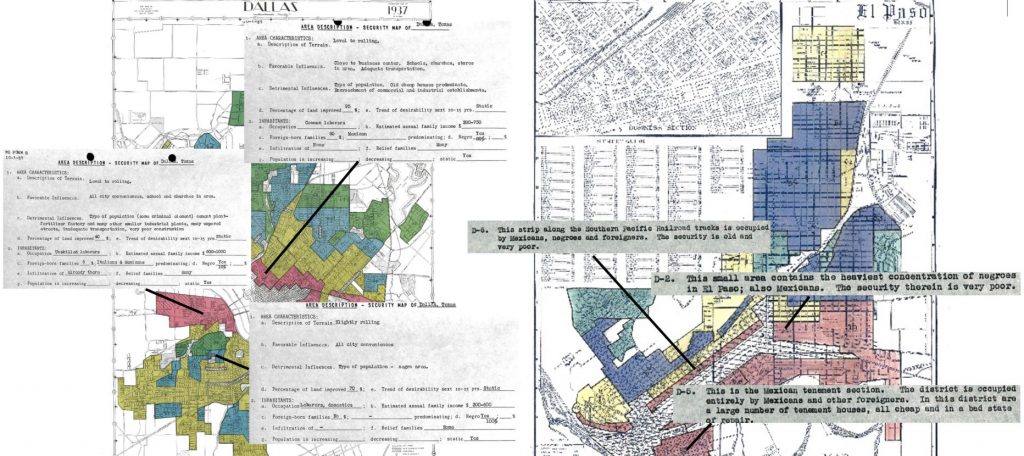
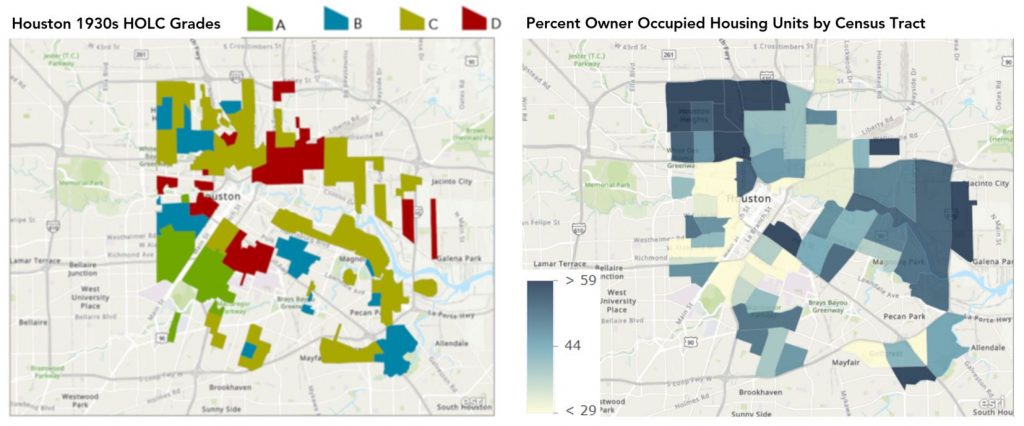
To depict the level of risk in making home loans in various communities, HOLC created a series of multi-colored residential maps for 239 cities across the nation, including major cities in Texas. HOLC assigned communities a rating from A through D to designate the level of “risk” in investment.
Neighborhoods that were all-white were given an “A” rating, colored green, and denoted as a “best” area for investment. Meanwhile, if a single Black family lived in an area (regardless of neighborhood income level), it was automatically assigned “D” to indicate a “hazardous” investment and colored in red — hence the term “redlining.” Neighborhoods assigned D and C (categorized as “definitely declining” in yellow) ratings were also communities where immigrants or their children lived, as detailed in the redlining maps from Dallas and El Paso below. Read the area descriptions that informed the ratings for Dallas and El Paso (warning: the area descriptions contain overtly offensive comments).1
Shortly after, in 1934, the Federal Housing Administration (FHA) was established to provide federally backed insurance for mortgage loans. The FHA dramatically changed mortgage lending and made homeownership much more attainable and affordable — for a very specific segment of the population.
To guide the work of private real estate agents who conducted most property appraisals, the FHA created an Underwriting Manual in 1938, which relied on HOLC’s maps. This manual explicitly outlined the requirement of creating and maintaining “racially homogenous” neighborhoods and identified eligibility criteria which automatically denied Black applicants.
Since FHA-backed loans bear less risk to the lender, banks would not provide mortgages that the FHA would not insure — meaning, mortgages to Black applicants. As a result, between 1930 and 1950,only 2% of FHA mortgages went to non-white families.
The practice of redlining and other discriminatory housing policies legally excluded Black families from receiving fair housing mortgages for over 30 years. Major government investments aimed at making homeownership more accessible to low- and middle-income families largely benefited white families only — the effects of this injustice were then compounded from generation to generation and persist to this day.
Though redlining was deemed unconstitutional in 1968 with the passage of the Fair Housing Act, efforts to prevent Black homeownership and integration did not end there. The policies of these federal agencies provided the systemic infrastructure for the perpetuation of discriminatory housing practices. Even after 1968, the federal government did not enforce the Equal Protection Clause of the 14th Amendment and regularly supported restrictive covenants that excluded Black families from homeownership and policies that continued to segregate Black residents.
“…much of today’s racial disparities in housing, health, and education can be traced to our legacy of redlining and segregationist policies. This is a foundational issue that set a course for wealth disparity and racial injustice.”
– Luis Guajardo, Urban Policy Research Manager at Rice University’s Kinder Institute for Urban Research
How racial discrimination unfolds in the modern housing market
Compounding historical injustices, Black families still face housing discrimination (racial discrimination in the housing market) in countless forms:
As recently as 2016, the Consumer Financial Protection Bureau and Department of Justice have required lending institutions to pay out millions of dollars for illegal redlining and discriminatory mortgage lending practices.
Studies have found that housing discrimination is still widespread through more covert means like racial steering, a practice in which real estate agents deliberately steer Black potential homebuyers to areas with larger concentrations of people of color, higher poverty levels and lower housing quality.
Agents tend to show white homebuyers more homes than they do in the case of equally qualified Black homebuyers.
Homes in neighborhoods where there is a large concentration of Black families are appraised at lower market values (an average of 23% less, or $48,000), even among households of similar size and condition.
Lenders disproportionately market risky loans to Black families. In 2000, Black homeowners were significantly more likely to hold subprime loans than white borrowers at each income level. Higher-income Black households held subprime mortgages at four times the rate of higher-income white households.2 Not surprisingly, Black homeowners were the most harmed in the 2008 housing crisis, and between 2010 and 2017, the homeownership rate among Black households in Houston’s three-county region declined by five percentage points while white homeownership rates remained flat.
“The biggest issues have been lending institutions and appraisers and realtors not wanting to show properties [to Black individuals] in certain areas.”
– Shadrick Bogany, Past Chairman of Houston Association of Realtors and Columnist for the Houston Chronicle
The impact of discriminatory housing policies today on Black Houstonians and communities
The negative impact of discriminatory federal housing policies cannot be overstated. The practice of redlining, combined with other housing policies intent on racial exclusion, led to two major inequities we see today:
1) The systematic exclusion of Black households from homeownership, which limited their ability to build and grow wealth across generations, resulting in extreme racial wealth disparities.
2) The isolation and deterioration of predominantly Black neighborhoods which created concentrated areas of poverty characterized by greater environmental risks, poor health outcomes, reduced life expectancy and little-to-no access to essential resources such as safe and affordable housing, high-quality schools, equitable transportation, green space and fresh and affordable food options.
How redlining affects homeownership in Houston
It is impossible to separate present-day homeownership rates from decades of discriminatory housing policies that prevented Black families from owning homes in the past. Across the Houston three-county area, 72% of white residents are homeowners compared to 41% of Black residents and 52% of Hispanic residents.
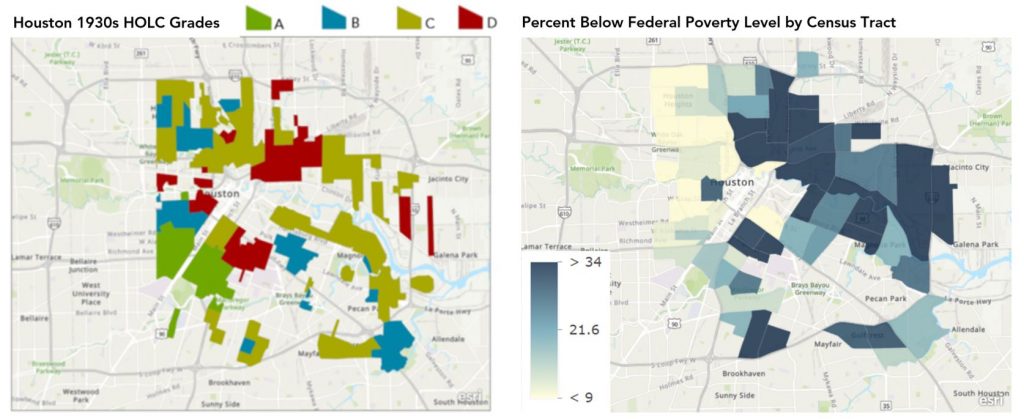
Source: Mapping Inequality; Understanding Houston analysis of U.S. Census Bureau, American Community Survey, 2019 5-year estimates data
Communities that were rated either “D” or “C” in the 1930s tend to have lower homeownership rates compared to communities that were given “A” HOLC grades. For example, 31.2% of residents in Fifth Ward (previously redlined) are homeowners compared to 48.1% of residents in the Museum District and 65.6% of residents in the Heights (rated “A”). These disparities show the persistent obstacles that families in Houston’s redlined neighborhoods face in accessing homeownership.
How redlining affects wealth and poverty in Houston
Homeownership is the most common pathway toward economic security, social mobility, and wealth creation and particularly critical to upward mobility for the majority of low-income and non-white households since that wealth can be passed to future generations, according to a study from the Joint Center for Housing Studies at Harvard University. In 2019, the median net worth among homeowners was $255,000, while that of renters was $6,300, according to the Federal Reserve.
However, the practice of redlining prevented Black Americans from accessing the same homeownership opportunities that were afforded to white families. This would negatively impact Black families for generations and is a significant factor in the extreme racial wealth gap that exists today. The median net worth of white families in 2019 was $188,200 compared to $24,100 among Black families — despite a 33% increase in wealth for Black families between 2016–19.
“The impact of that level of lost wealth cannot be underestimated — not only in net worth but also in the lost opportunities that wealth allows in terms of investments in education, businesses, and other revenue-generating endeavors.“
– Tanweer Kaleemullah, Public Health Policy Analyst at Harris County Public Health
Source: Mapping Inequality; Understanding Houston analysis of U.S. Census Bureau, American Community Survey, 2019 5-year estimates data
Therefore, it is not surprising that poverty rates are higher in redlined communities than in greenlined ones and higher among Black households than white ones. There is a cluster of communities around the east side of Houston (redlined) in which a higher percentage of individuals live in poverty compared to the west side (greenlined). For example, the poverty rate in Fifth Ward is 32.6% compared to 7.3% in Montrose. And across Houston’s three-county region, 20% of Black residents live in poverty compared to 7% of white residents.
How redlining affects future income and earnings in Houston
Where we grow up profoundly affects our future. Neighborhoods give us resources, networks and opportunities. Or, they don’t. The lack of wealth accumulation among families across generations, compounded with perpetual disinvestment, created concentrated areas of poverty. Notable ripple effects include low property values resulting in lost tax revenue for schools, limiting access to high quality education and little private sector investment, which stifles business growth and employment opportunities. This matters because children who are raised in neighborhoods with lower poverty rates, less measured discrimination and higher levels of educational attainment tend to have better outcomes as adults (e.g., lower incarceration rates, higher household incomes, higher educational attainment and higher levels of employment). And, places that produce good outcomes in the past tend to produce good outcomes in the future. Homeownership has been identified as an effective way to create that neighborhood stability.
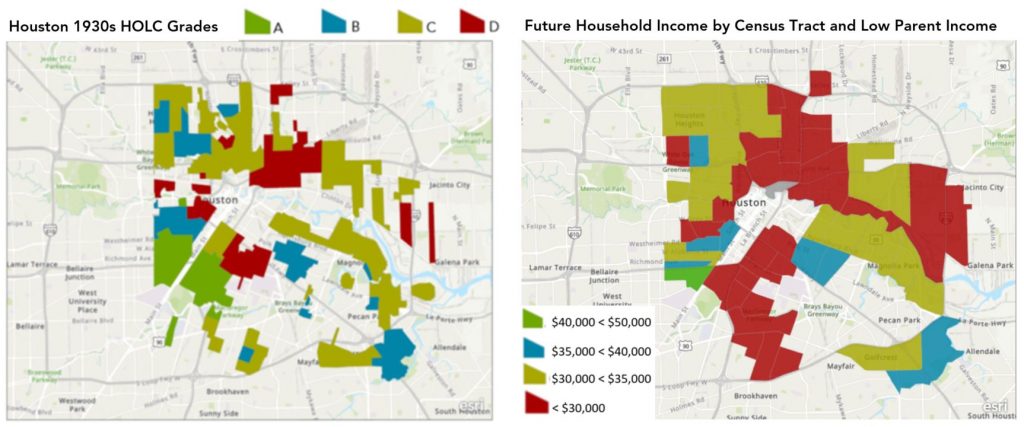
Opportunity Atlas, an interactive tool from the Census Bureau and researchers from Harvard and Brown University, measures the extent to which groups move up (or down) the economic ladder by looking at various outcomes of adults and back-mapping where they grew up (read more about the methods and peer-reviewed paper here). The data reveals staggering differences in earnings for adults who grew up in low-income households that were located in wealthier neighborhoods versus lower-income neighborhoods. Being in an environment with access to the resources typically available in higher-income neighborhoods allows a child from a low-income household a greater chance to prosper in the future.
Neighborhoods that were previously redlined generally produce low future earnings for adults raised in low-income households. Among the neighborhoods rated by HOLC, only one community produced high future earnings for individuals who grew up in low-income households — the Museum District — which received an A rating by HOLC in the 1930s.
How redlining affects social vulnerability in Houston
Communities that were redlined 90 years ago are also more vulnerable to impacts from economic and environmental threats today, including being disproportionately impacted by COVID-19 in Houston. Job and income loss from economic recessions are higher among residents who live in previously redlined neighborhoods that are currently distressed, residents tend to have worse health outcomes as redlined communities are more likely to be exposed to environmental hazards, and most residents lack savings which acts as a safety net during difficult times.
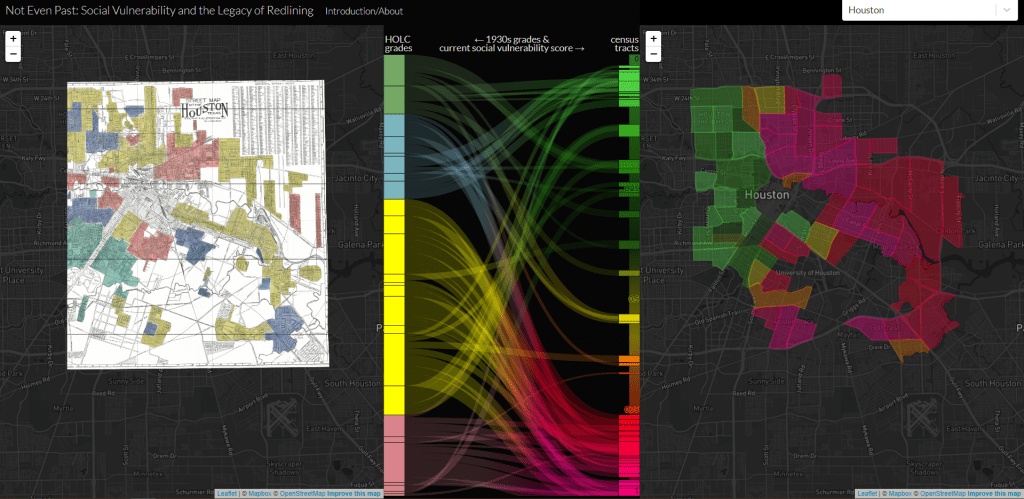
The Centers for Disease Control and Prevention’s Social Vulnerability Index (SVI) ranks each census tract on 15 demographic and social factors, including poverty, unemployment, family structure, lack of vehicle access, non-white population, disability and housing. Used together, this index helps identify communities that are more vulnerable to being negatively affected by hazardous events such as natural disasters like hurricanes and disease outbreaks like COVID-19.
What were the redlined neighborhoods in Houston, and what does the Social Vulnerability Index tell us about them? Houston’s redlined neighborhoods — Sunnyside, Third Ward and Fifth Ward — are located on the east side of the city and have SVI ratings of 0.84 or higher, making them more vulnerable than upwards of 80% of communities across the U.S, according to Not Even Past: Social Vulnerability and the Legacy of Redlining, an interactive tool that compares communities from the redlining maps to their current SVI. Areas that were given a grade of “A” — the Heights, West University Place and Montrose — have SVI ratings of 0.24 or lower, making them more vulnerable than, at most, 24% of communities across the U.S. and tend to be located on the west side.
Environmental hazards, health outcomes and life expectancy
Industrial and toxic-waste facilities in Houston are disproportionately found in Black neighborhoods — or in neighborhoods with a high concentration of non-white or low-income residents — due in part to redlining. This has consequences because the environment is a major determinant of health. A recent report from the Texas Department of State Health Services found that children in Fifth Ward and Kashmere Gardens were diagnosed with leukemia at nearly five times the expected rate of the Houston population, and cancer rates for children who live in the 100 homes located above a “toxic plume” were even worse. This isn’t the first cancer cluster in the region.
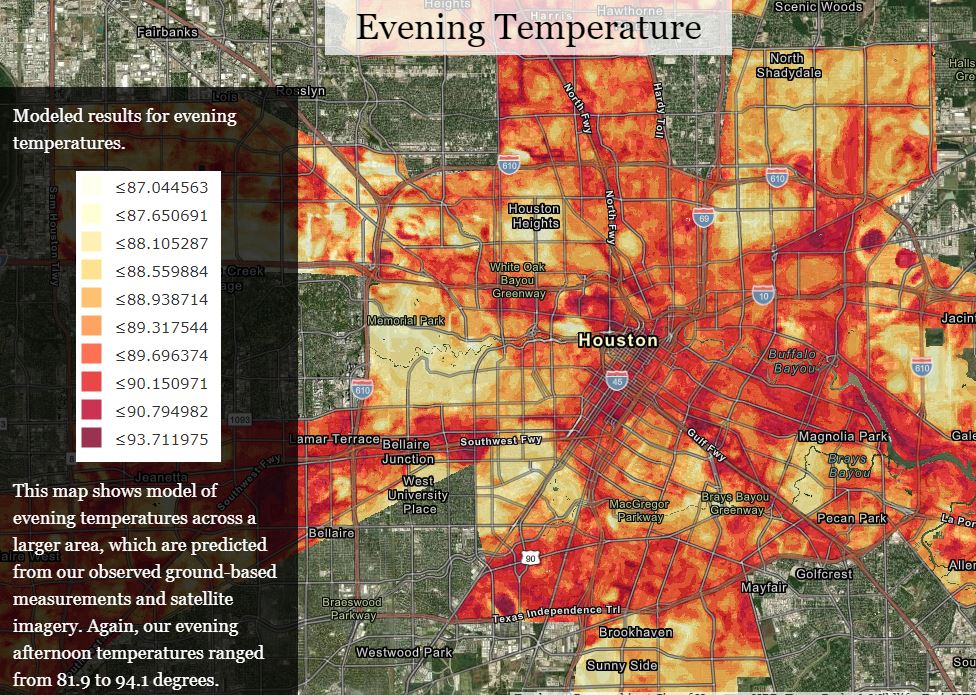
Additionally, formerly redlined communities overwhelmingly experience hotter temperatures than communities that were given better HOLC grades. Some neighborhoods in the same city differed by nearly 13 degrees.
We see this phenomenon in Houston. Neighborhoods that have the highest nighttime temperatures in Houston — the greatest driver of heat-related health issues — are concentrated in areas that were redlined, according to maps created by Houston Harris Heat Action Team.
These dramatic differences in temperature have dire health consequences. FEMA warns that extreme heat kills more Americans than other weather-related disasters, and the World Health Organization states that temperature extremes can exacerbate chronic cardiovascular, respiratory and diabetes-related conditions. This is especially problematic since there is a higher prevalence of diseases and poor health conditions such as diabetes, kidney disease, pulmonary disease and obesity in neighborhoods that were previously redlined — due, in part, to the unsafe environment in these communities.
Environmental conditions account for nearly 25% of all deaths and likely comprise 70-90% of the total risk in the development of chronic diseases, according to research from Harris County Public Health, which means the neighborhood we live in ultimately shapes how long we will live.
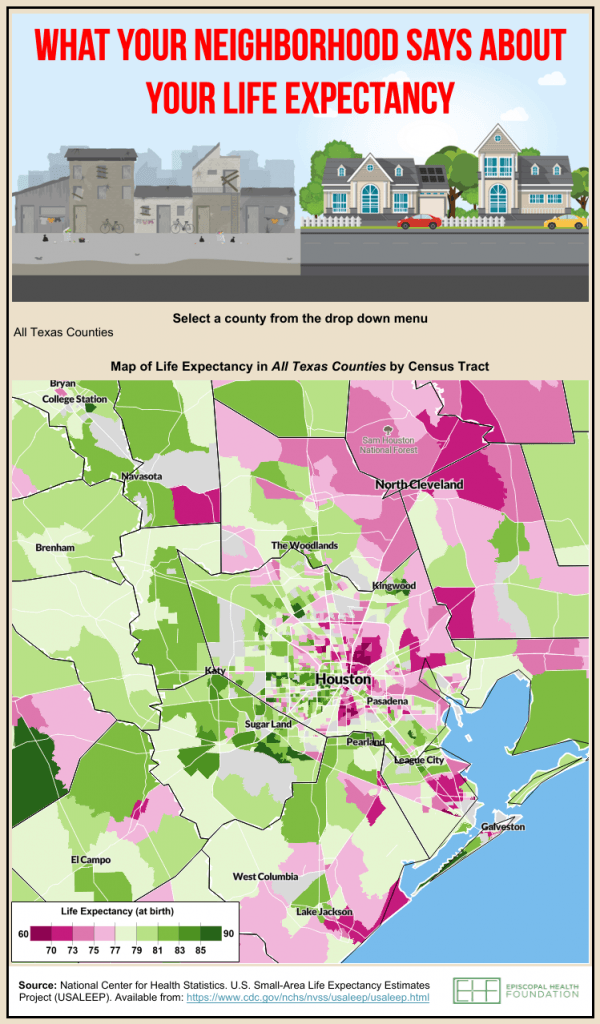
Redlined communities on the east side of Houston overwhelmingly have lower average life expectancies than those on the west side. For example, the average life expectancy in previously-redlined Fifth Ward is 70 years compared to 80 years in Montrose, according to analysis from the Episcopal Health Foundation.
“…primary challenges as a result of redlining [include] an increased health risk as a result of toxic exposures and poverty-related stress that causes a large gap in life expectancy, [and] the inability to recover from climate crises on a neighborhood and household level”
– Zoe Middleton, Houston and Southeast Texas Co-Director at Texas Housers
What we can do to support historically marginalized communities
The past never stays in the past. Without the acknowledgment and repair of historical injustices, the past will continue to haunt our present. The challenges many Black residents face in building homeownership, wealth and good health is inextricably linked to the discriminatory housing policies created and enforced by our federal government 90 years ago. And while we also see incredible resilience, perseverance and power in communities that have been historically marginalized in Houston, our region’s collective progress depends on our ability to better understand the root causes that have contributed to the disparities we see today.
“Individuals should…advocate for earnest reckoning with previous wrongs…showing a willingness to sacrifice a modicum of the privilege and comfort they may have in order to see resources go to other communities than their own.”
– Kyle Shelton, Deputy Director at Rice University’s Kinder Institute for Urban Research
Here are some things we can do:
Engage with residents and community leaders: Meet with individuals and organizations in these communities and seek to understand their needs and challenges. Offer to volunteer with organizations and work with them to identify ways that you can support ongoing work.
Support CDFIs in your community: Community Development Financial Institutions (CDFIs) promote economic revitalization with financial assistance to under-resourced neighborhoods and populations.
Donate in these neighborhoods: Find Black-led Organizations through GHCF’s Giving Guide or, if you are a Greater Houston Community Foundation donor, talk to your relationship manager about how you can be most impactful with your grants in these areas.
Support Houston’s Complete Communities Initiative: The City of Houston’s Complete Communities Initiative works in partnership with Houston’s historically most under-resourced neighborhoods so that all of Houston’s residents and business owners can have access to quality services and amenities. Watch our interview with Shannon Buggs, Director of Complete Communities, highlighting the need in our region and the opportunities they are providing.
Reach out: As Greater Houston Community Foundation explores what more it can do as a partner to address economic disparities in Houston, we are listening and learning from readers like you. Sign-up to receive our monthly newsletter and contact us to get involved.
“I am hopeful with cautious optimism for seeing more evidence-based justice, promoting the general welfare, liberty, and posterity for all. I hope we see our lofty ideals in practice for the common good.”
– Theophilus Herrington, Rutherford B. H. Yates Museum
Listen to In The Thick: The Legacy of Redlining where they discuss discrimination, housing segregation, and how redlining still shapes our cities today with Richard Rothstein, author of the book The Color of Law, and Emmanuel Martinez, data reporter for Reveal.
1 “Still Desirable” neighborhoods were graded “B” and colored blue. “Definitely Declining” neighborhoods were graded “C” and colored yellow. 2 Rothstein, R. (2017). The Color of Law: A Forgotten History of How Our Government Segregated America (Reprint ed.). Liveright.
We would like to acknowledge and thank Janis Scott for her unceasing commitment to improving and preserving public transit access for all Houston-area residents.
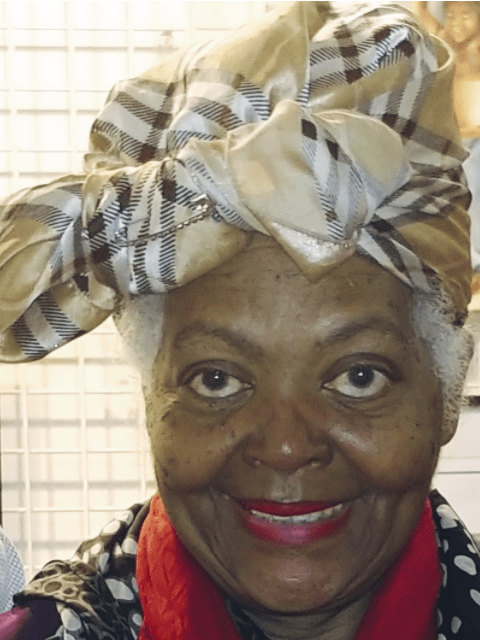
Janis Scott, LINK Houston Board Member
A Rice University graduate and a native Houstonian, Janis has been riding the bus all her life. She knows the lines, the drivers and the riders; she also knows the board members and executives who keep them moving. And when some of those crucial lines faced cuts, Janis knew exactly where to go to help riders’ voices be heard.
“We want comfortable, dignified waiting areas for our buses. We should not continuously have to ask and beg and plead for basic amenities,” said Janis of Houston’s underserved public transit users. “My vision is crossing ‘boundaries,’ not feeling like I’m imposing, taking a chance on rejection. Not answering if asked what part of town I live in, and if I live in a bad neighborhood.”
As Janis’ voice for Houston’s underserved transit users grew louder, her profile rose, eventually earning her the nickname “The Bus Lady” and a seat on the board of LINK Houston, where she fights for more fair access to public transportation.
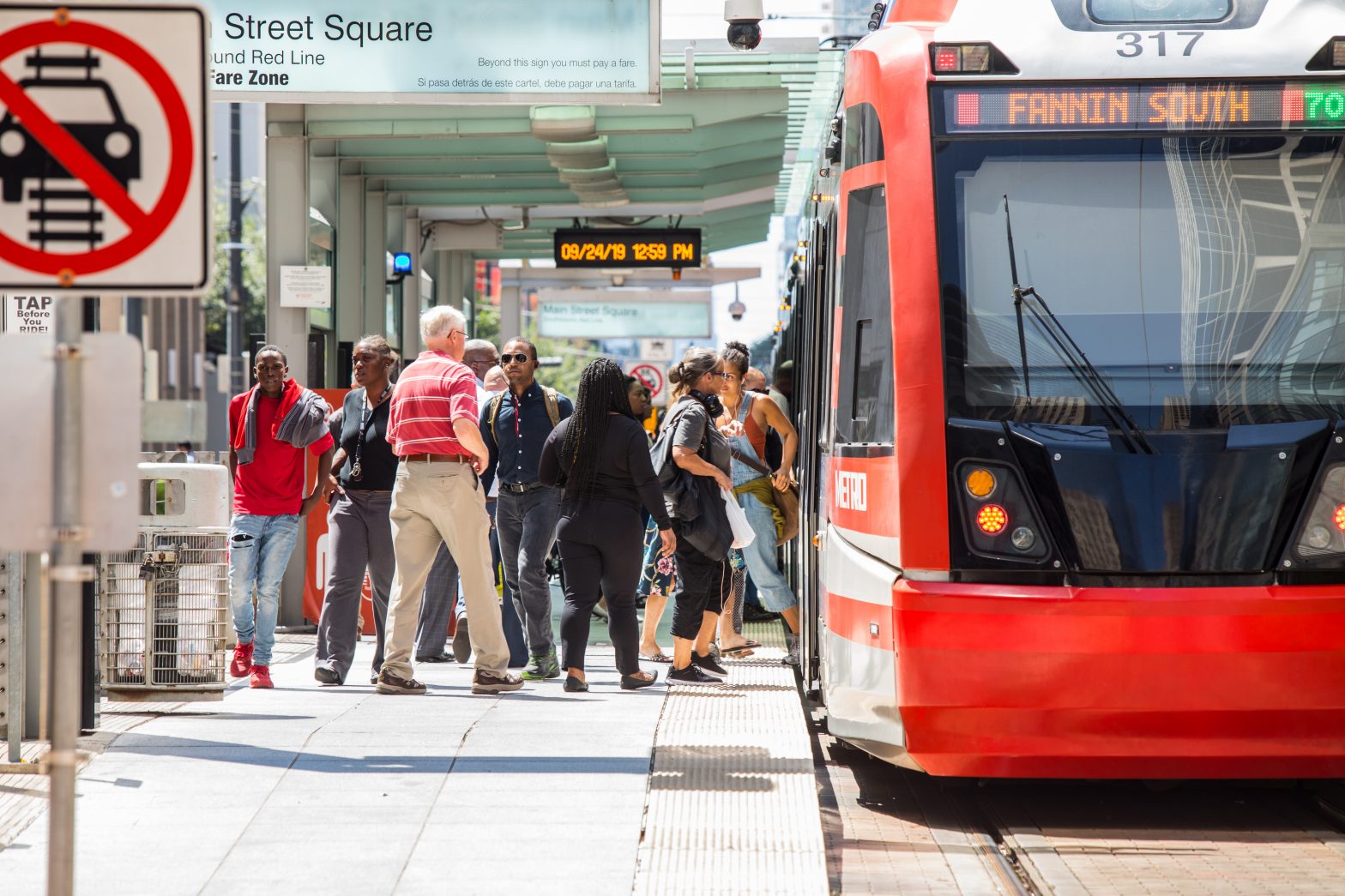
Fewer than 5% of households in Fort Bend and Montgomery counties are located within a quarter mile of a public transit stop. In Harris County, that rate climbs to 38%. In LINK’s 2020 report, the three high-demand areas for more transit investments include east and southeast Houston, southwest Houston and the Greater Greenspoint area. These communities have higher levels of poverty and lower rates of vehicle ownership compared to the overall county. The report calls for four main recommendations: 1) Increase frequency of routes; 2) extend service hours; 3) improve reliability and on-time arrivals; and 4) pursue accessibility and other transit stop upgrades.
As for the nickname “Bus Lady,” Janis is proud of the reputation she’s built: “The nickname ‘Bus Lady’ started as a quick way to identify me when my name could not be quickly recalled. There have been some METRO folks who have asked for my advice on what is being done, since I tend to have a non-conformist view on what ‘everybody else’ thinks and does. Some have in fact put their phones down and relied on me to be ‘their Google’ transit app! I am honored to be a go-to source when someone is stuck, confused, and needs assistance. I’m happy to help!”
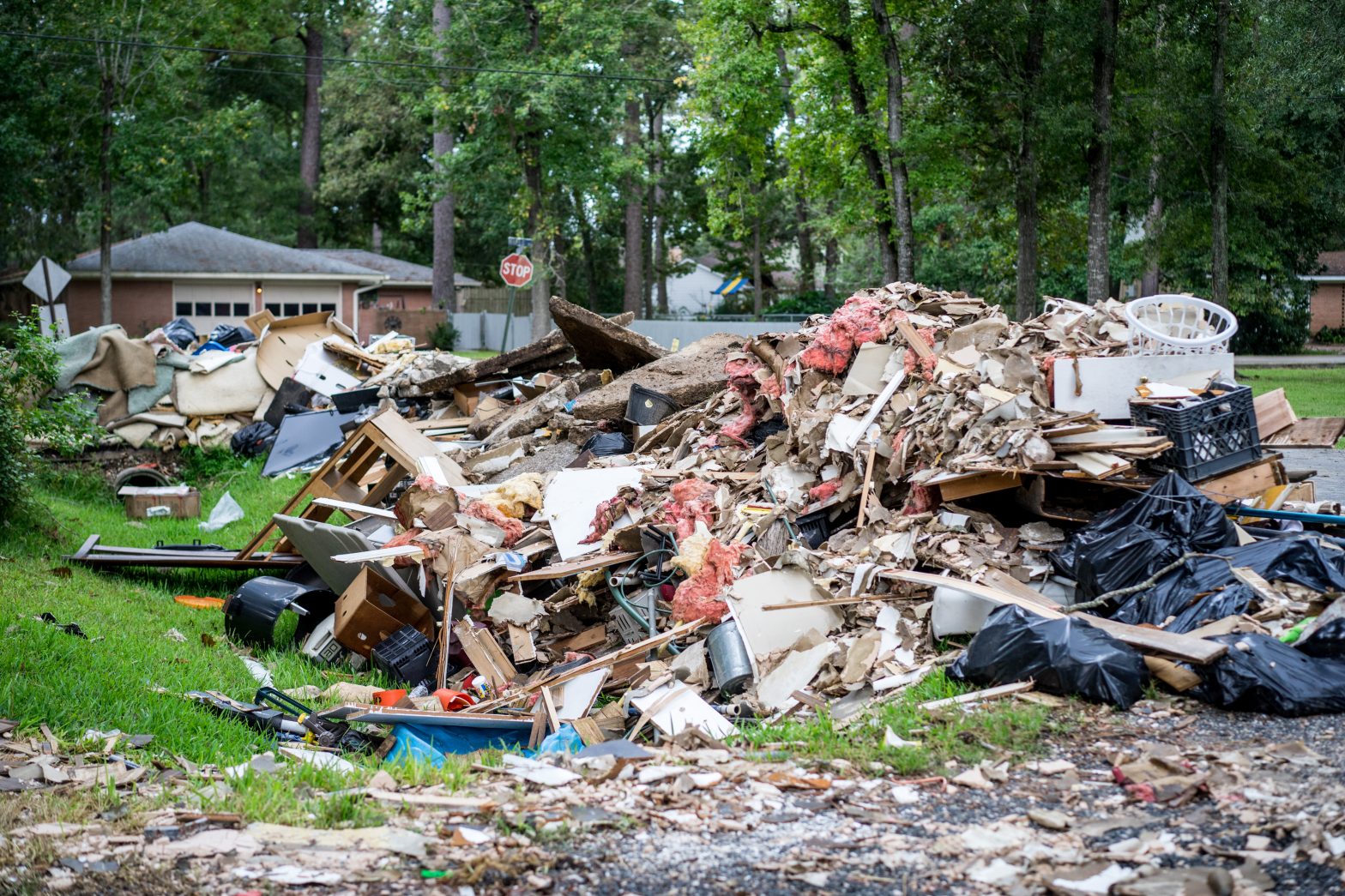
Unfortunately, natural disasters in Houston are nothing new. Whether you’re a lifelong Houstonian or a recent transplant, chances are you’ve either experienced a natural disaster firsthand or experienced some extremely close calls like those from the very busy 2020 storm season. And as the data has made clear, these disruptive weather events aren’t expected to let up any time soon.
Whatever your experience may be, the increased frequency and severity of natural disasters in Houston isn’t something our region can afford to overlook. In our recently published Disaster topic and subtopic pages, we examine the ongoing risks, vulnerabilities and response patterns affecting natural disasters in Houston across more than 50 unique data points. Below are the core points that every Houston-area resident should be aware of.
1) Houston’s flooding risk is high (and getting higher)
When it comes to natural disasters like hurricanes, extreme precipitation and resultant flooding, Houston’s risk level has always been high and is only projected to grow. As of January 2021, Greater Houston has been the site of 25 federally declared disasters in just 40 years, nearly one-third of which have occurred since 2015. All but one of these seven recent disasters (COVID-19 in Houston) have involved flooding and/or hurricanes.
Why are there so many natural disasters in Houston? While much of Houston’s elevated natural disaster risk level can be attributed to its geography and proximity to the Gulf of Mexico, the ongoing effects of climate change and decades of ill-informed planning also play a significant role. When developing properties and planning communities, builders and developers consult FEMA Flood Zone maps in order to avoid building properties in areas at significant risk of flooding. However, these maps have been imperfect; about 75% of Houston-area flood damage between 1999 and 2009 occurred on properties built outside of FEMA-designated flood plains. Similarly, around 75% of homes flooded during Hurricane Harvey were outside Houston flood zones, as were 55% of the homes flooded during 2016’s Tax Day flood.
“Seven federally declared disasters have occurred in Houston since 2015.”
All-in-all, 322,000 residential properties are at some risk of flooding in Houston’s three-county area. That’s more than one-in-five. While the issue of increased flood risk may be widespread in Greater Houston, the severity of risk disproportionately impacts Black, Hispanic and low-income residents. Decades of discriminatory housing policies have seen many low-income communities placed in low-lying lands that subsequently receive insufficient investment toward flood mitigation.
With the dangers posed by extreme weather events projected to increase in coming decades, the number of properties at substantial risk of flooding in Houston is also poised to grow.
By 2050, one in sevenproperties (286,036) in the three-county area will be at substantial risk of flooding. By pure volume, Harris County is projected to bear most of the burden. Fort Bend County is projected to have the highest proportion of properties at substantial risk of flooding at nearly 20%.
2) Houston’s population is particularly vulnerable to the impacts of natural disasters
Houstons’ geographic placement is one of the driving factors behind Houston’s high natural disaster risk levels, but the extent to which these disasters impact our region is a different story. Beyond our inherent risk levels, socioeconomic inequalities and man-made environmental factors increase our region’s vulnerability to negative effects of natural disasters — impacting our ability to withstand and recover from natural disasters when they happen.
Socioeconomic vulnerabilities
One of the most valuable tools we have in evaluating vulnerability is The Centers for Disease Control and Prevention’s Social Vulnerability Index (SVI). SVI measures the social vulnerability of counties and census tracts on a scale from 0 (indicating the lowest vulnerability) to 1 (highest vulnerability). Counties and census tracts with high SVI scores often face higher levels of human and economic suffering/loss in the wake of natural disasters. Factors that contribute to higher rates of social vulnerability include lower income levels, higher proportions of non-Whites, language barriers, housing segregation and other elements of discrimination and inequality.
Harris County has an SVI of 0.72, meaning Harris County is more vulnerable to the negative effects of disasters than 72% of counties in the country.
Communities with an SVI of 0.5 or higher are deemed to have medium-high vulnerability to the negative shocks disasters cause. In total, 3.4 million residents in Houston’s three-county region live in a medium-high risk census tract — that’s 58% of the Greater Houston population.
“58% of Greater Houston residents live in a census tract with medium-high vulnerability to the negative effects of disasters.”
As established earlier, Black, Hispanic and low-income populations are disproportionately impacted when disasters strike. These vulnerable populations are more likely to experience food insecurity, job/income loss, housing insecurity, transportation challenges, reduced access to healthcare, and more. Compounding these issues, many in Houston’s most vulnerable communities never receive the federal assistance they need to properly recover. About 50% of FEMA claims made in the three-county region since 2005 have been declined, and renters — who are more likely to be in a highly vulnerable group — were less likely to be approved for assistance than homeowners in seven of the last nine disasters.
All-in-all, these and other environmental factors negatively impact our physical health. After Hurricane Harvey, 63% of respondents to the Texas Flood Registry reported experiencing at least one negative health symptom such as runny nose, headaches/migraines, problems concentrating, shortness of breath, or skin rash.
3) Houston’s ability to recover from natural disasters is highly uneven
On their own, natural disasters do not discriminate. They can affect anyone in their path, and the immediate consequences of a hurricane or flood can ripple throughout all corners of the region, even if some groups bear more risk and vulnerability than others. The long-term effects of these disasters are ultimately determined by our region’s ability to recover, and the response we receive from the public and private sector. And while Greater Houston is often recognized for its generosity — especially in the wake of Hurricane Harvey — the response often leaves Houston’s more vulnerable populations without the assistance they need to fully recover.
The Federal Emergency Management Administration (FEMA) addresses urgent basic needs after disasters through the Individual and Household Program (IHP). When federally declared disasters strike, residents may apply for financial assistance from FEMA to help with essentials. However, those who may need the most financial assistance don’t always get it.
With the exception of Hurricane Rita, homeowners have consistently received more federal assistance than renters, especially in the aftermath of Hurricane Harvey. Following Hurricane Harvey, renters received an average of $2,018 in IHP assistance compared to an average of $6,586 for homeowners. While homeowners are liable for more costs associated with storm damage, nearly half of Houston-area renters are significantly cost-burdened which limits their ability to pay for damages out-of-pocket. This disparity in financial relief can contribute to slower disaster recovery times and the exacerbation of pre-existing wealth and income inequalities.
Federal programs aren’t the only resource available to aid natural disaster recovery and mitigation. Local government also plays an important role, although many are dissatisfied with their performance.
In the three-county area, 74% of residents rate local government efforts to protect homes from flooding in Houston as poor-to-fair, with only 5% of surveyed residents rating protection efforts as “excellent.”
All-in-all, these barriers to disaster recovery ultimately burden economically vulnerable and disadvantaged residents the most, and widen pre-existing inequities and wealth gaps. A recent study found that the wealth gap between Black and White residents in Harris County grew by $87,000 as a result of impacts from natural disasters. Similarly, 31% of Black Houston-area residents surveyed reported worse quality of life one year after Hurricane Harvey compared to 18% of White residents.
Understanding natural disasters in Houston can strengthen us for the future
The existence of natural disasters may be beyond our control, but that doesn’t mean that we are powerless against them. By taking the time to understand their risk to and impact on our region, we can be better equipped to prepare for and address the consequences of disasters before they strike, ultimately enabling a smoother recovery toward an opportunity-rich region for all.
This new Disaster content is just the first stage in an ongoing expansion of the Understanding Houston platform. As a community-driven nonprofit, our mission to connect Houston leaders with the data they need to make informed decisions relies on the action and generosity of people like you. Consider exploring how you can get involved with Understanding Houston, and stay tuned to our social media for new data, insights and program updates.
In no uncertain terms, 2020 has been one of the most memorable years in our country’s history. And while this year brought challenges that many of us would rather soon forget, we can’t dismiss 2020 in Houston without acknowledging some of the galvanizing moments that both defined our region’s year and served as indicators of its future — both good and bad.
In 2020, Greater Houston was at the center of a historic call for racial justice in America; it was a potential target in a record-setting hurricane season; it broke other records in a closely watched election; it continued to evolve and develop new resources for residents, all amidst the terrifying uncertainties of the COVID-19 pandemic.
Before we all move on to our plans and ambitions for a (hopefully) brighter 2021, let’s take stock of what 2020 meant to Greater Houston.
How COVID-19 impacted Houston, by the numbers
For many, the year 2020 is and always will be inextricably linked to the COVID-19 pandemic. Like every city across the globe, the greater Houston region has had to contend with this deadly virus in its own ways, as myriad consequences continue to impact our region as the year draws to a close.
COVID-19’s spread in Greater Houston
Despite early signs of success in battling the spread of COVID-19, the greater Houston region emerged as a virus hotspot as the year went on. While mask wearing and social distancing efforts have helped us avoid some worst case scenarios, the virus has still taken an unmistakable toll on our region in the form of deaths, business closures, job losses, worsened mental health, evictions, and much more.
Here’s how the virus has hit our region:
Measuring COVID-19’s impact in Greater Houston
While the many effects of the pandemic will likely take years to fully make themselves known, Greater Houston has already felt severe impacts throughout the region. Between changes in consumer habits, stay-home orders, and shifts in demand, many residents in Greater Houston have lost their jobs, with those who work in restaurants,bars and construction hit hardest. After six months of the COVID-19 pandemic, nearly 45% of surveyed Harris County residents reported losing income/employment, according to the Episcopal Health Foundation. As with infections, Black and Hispanic residents in Harris County have been disproportionately impacted by job losses in the wake of COVID-19.
Unsurprisingly, all of this has had a negative impact on residents’ mental health, young and old alike. About 44% of surveyed Harris County residents reported worse mental health six months after the pandemic began.
While multiple vaccines are currently on their way to market, the ramifications of these impacts — in addition to consequences that have yet to emerge — will likely be felt throughout our region well into 2021 and beyond.
A historic partnership to enable quick response
In the face of this public health and economic crisis, we have seen leaders, partners and individuals from all walks of life step up to assist. For the first time, Greater Houston Community Foundation and United Way of Greater Houston joined forces in March 2020 to establish the Greater Houston COVID-19 Recovery Fund, raising $17 million, to help support those in our community impacted by COVID-19 and the resulting economic conditions, with a focus on disproportionately impacted communities and vulnerable populations.
$17 million to 87 unique nonprofit partners, serving more than 240,000 people so far.
As of October, nonprofit partners reported serving more than 84,576 households and 245,339 individuals in need with access to food, emergency financial assistance for basic needs and housing, services to prevent homelessness due to evictions and foreclosures, financial and housing counseling, legal assistance, and services for the homeless to help fill public funding gaps. The data show that 87% of households served are very low-income, earning 60% of Area Median Income or less.
The renewed movement for racial justice
No social movement brought more attention to the region or inspired more activism in 2020 than the renewed calls for racial justice. Following the death of native Houstonian George Floyd, in police custody and the similarly unjust deaths of Breonna Taylor, and Ahmaud Arbery, people across the nation joined arms, hosted demonstrations and called for our nation to address racist policies and practices in our police and criminal justice systems. More broadly, this renewed movement inspired a broader call to action to move toward racial justice in all aspects of life to right wrongs past and present.
But it wasn’t the death of George Floyd and others alone that inspired residents to take action. Despite its reputation for diversity, the greater Houston region has many long-standing issues that contribute to racial injustice and inequality in our own communities.
The following disparities illustrate only some of the inequalities Black Houstonians have to contend with in Greater Houston:
Income inequality: The median income for a Black household in Greater Houston is $47,376, 44% lower than the median income for white households ($85,981). Research shows that Black people are paid less even when we control for education and occupation.
Inspired by these long-standing inequities and the brutal deaths by police that laid them bare this year, Houstonians took to the streets in a moment of collective awakening to speak out against the legacy of racial injustice in our communities.
60,000 people gathered in Houston to demonstrate against racial injustice.
People throughout Houston including politicians, rappers, athletes and police officers gathered in Houston’s downtown to march in honor of George Floyd and to shine a light on the lingering problems of racial inequity, garnering national media attention in the process. And while much work remains to be done, Houston has no shortage of activists, advocates and nonprofit organizations working to ensure a brighter future for Houston’s communities of color.
For many Houston-area residents, flooding and hurricanes have become an unfortunate fact of life. In the past five years alone, our region has faced six federal natural disasters, with 100-year flood events becoming a near annual occurrence. The frequency of these extreme weather events isn’t the only cause for concern — the costs they inspire can be devastating financially, environmentally and psychologically.
Unfortunately, these storms don’t seem to have been an aberration as the number of extreme precipitation days is projected to increase throughout the greater Houston area over the next few decades. And if 2020’s record-breaking hurricane season was any indication, these projections are all-too-likely to bear out in the coming years.
2020 Saw 10 named storms in the Gulf of Mexico.
Houston dodged more than a few proverbial bullets in 2020, to put it lightly. While the 2020 hurricane season was predicted to be busier than usual as early as April, many Houstonians still neglect preparations. In 2018 — just one year after Hurricane Harvey rocked our region — 72% of residents surveyed said they had not done anything to prepare for hurricane season. While it’s too early to say exactly what the 2021 storm season will bring, weathering future storms will require action, planning and awareness from residents and local leaders alike.
Making history during the 2020 election
Against a backdrop of challenge and uncertainty was one more historic event: the 2020 Presidential Election. While the pandemic presented new questions and challenges related to the safety of voting, Texans and Houstonians were not daunted. Ahead of the election, Texas shattered previous voter registration records by adding more than 1.5 million citizens to voter rolls for a total of 16.6 million registered voters. That early enthusiasm translated into record-breaking turnout, as more Harris County residents participated in early voting than voted in the entire 2016 presidential election.
1.4 million votes were cast during early voting in Harris County1
Harris County wasn’t the only place where early voter turnout exceeded total turnout in 2016. In Fort Bend County, more than 329,000 people cast their ballots prior to election day, surpassing the total number of votes cast during the 2016 election. Similarly, Montgomery County set a new early voting record with nearly 237,000 votes cast prior to election day, surpassing the total number of votes cast in 2016.
New sites to visit in Greater Houston
Believe it or not, 2020 in Houston wasn’t all about galvanizing moments. Even with so much uncertainty in the air, Houston’s region became a more vibrant place to live, work and play with three exciting new projects: The Nancy and Rich Kinder Building at the Museum of Fine Arts Houston, The Houston Botanic Garden and a massive expansion of Houston favorite Discovery Green.
Let’s break them down by the numbers.
The Nancy and Rich Kinder Building
Long in the making, this new addition to the Museum of Fine Arts Houston is the culmination of more than a decade of planning and construction and features a variety of classic and contemporary art.
The details:
The nation’s largest cultural construction project in a decade
The result of more than 15 years of planning and construction
237,000 Sq. Feet of art from around the world
The Houston Botanic Garden
Houston is known for many things; nature and plant life aren’t exactly chief among them. But with the new Houston Botanic Garden, that may all change. Somewhere in between a public park, an outdoor museum and a community garden, the Botanic Garden hosts a variety of plants and vegetation, including species that have never grown in Houston before.
The details:
Six unique zones spread across 132 acres of land
350 species of plants, all of which can flourish in the Houston climate.
2.5 miles of walking trails
Two natural ecosystem areas, the Coastal Prairie and Stormweather Wetlands
Discovery Green Expansion
While much of Houston stays inside to aid social distancing efforts, the team at Discovery Green Conservancy is hard at work making sure Houstonians will have plenty to do in the years to come. Thanks to a $12 million upgrade, one of Houston’s favorite parks will have even more to offer visitors in the years to come.
The details:
A brand new “house of cards” made up of 126 lighted playing cards
A five-year public art program
A brand new public playground
Here to help Houston understand what lies ahead
Projections and predictions aside, no one can truly say what 2021 holds for Houston. But whatever trends impact our region in the coming year, Understanding Houston is here to add data-driven insights and context to the issues that matter in our communities.
Whether you’re a philanthropist looking for guidance on where your dollars can make the most impact in Greater Houston, or you’re just a concerned community member hoping to understand and act on the issues that matter to you, Understanding Houston was created to measure what matters to our communities, so that people like you can do what matters in our communities.
It’s been one year since our official launch, and we’re amazed and inspired by the outpouring of support and engagement we’ve seen from our community on a near-daily basis. Through important conversations on social media, inspiring events and compelling guest perspectives, Understanding Houston has achieved remarkable growth in its first year, and our journey is only just beginning.
These are just some of the highlights from year one.
How people are using the website
As an expansive resource, Understanding Houston offers web visitors a number of ways to make the most of our data, including downloadable reports and charts, as well as a voting system that allows visitors to let us know the content we should expand on moving forward.
Here’s how use of the Understanding Houston website has panned out over our first year:
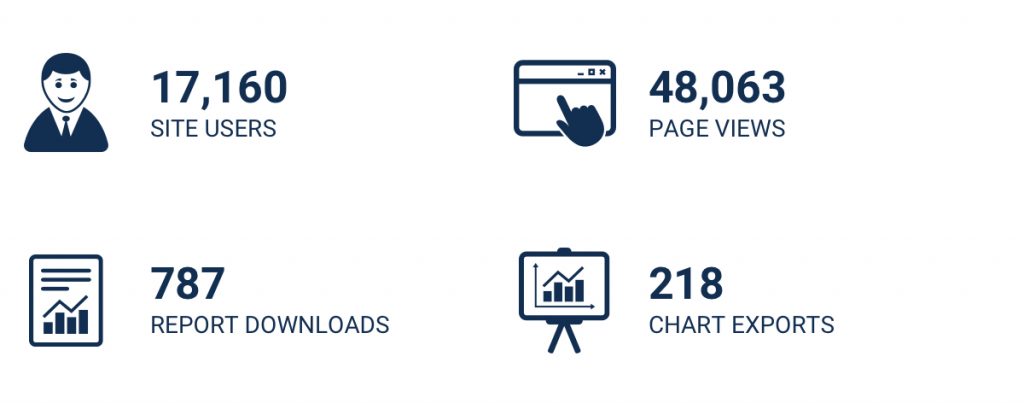
17,160 site users: More than 17,000 people have come to Understanding Houston through search engines, social media, or direct referrals since we launched last year, with an average of 1,430 monthly users.
48,063 pageviews: These users have explored more than 48,000 collective pages of Understanding Houston content.
787 report downloads: Nearly 800 reports have been downloaded by users for later use and reference.
218 chart exports: More than 200 charts have been exported by users to include in presentations, share on social media or feature on their website.
265 topic votes: Users have voted for the topics that matter most to them 265 times.
“Understanding Houston has served to inform our work with easy access to explore the data across the topics and subtopics within the website. This has been a tremendous value to have one central location for information.”
Jessica Davison – Sr. Program Manager, United Way of Greater Houston
How our community has grown
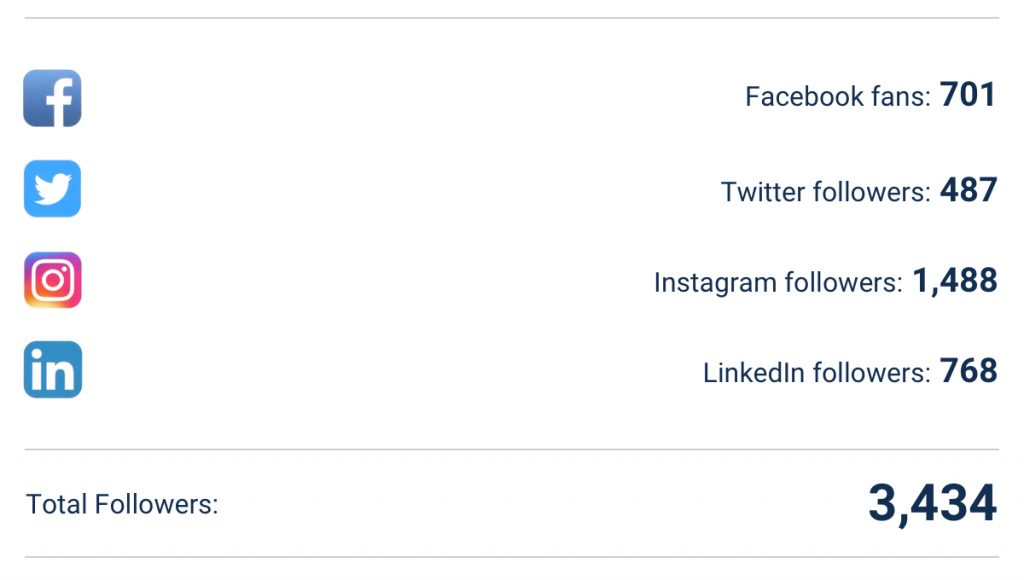
Understanding Houston launched its social media presence and monthly newsletter in January 2020 to grow our community, inform our users on important issues affecting the region and share new in-depth blogs and events.
To date, we’ve seen incredible support and engagement in our community, as our social platforms and newsletter subscribers continue to grow month over month, reaching 40,000 people via social media on average each month.
“Understanding Houston helps us stay relevant as we speak the same language of our top health partners who also use Understanding Houston’s data reports.”
Lharissa Jacobs – Vice President, Health Strategies, American Heart Association
These collaborations resulted in 17 in-depth blogs, including six guest-authored pieces that amplify voices from community leaders.
Expanding Understanding Houston hasn’t been limited to the written word; through an ongoing series of successful data briefings and webinars, we’ve briefed more than 700 donors, foundation, nonprofit and government partners on on key data insights across quality of life issues and topics such as criminal justice and housing inequities, with 97% of attendees reporting increased understanding of the Houston region after attending.
How we’ve responded to 2020’s challenges
2020 has been an unpredictable year by any measure, as each new month seemed to bring with it new challenges. Between the ongoing COVID-19 pandemic and the renewed focus on racial justice and inequality in our region and beyond, the Understanding Houston team rose to the occasion, developing content that enhanced understanding and provided invaluable context to the issues affecting us all.
COVID-19
When COVID-19 began to impact our region, we knew right away that our initial plans for the immediate future — including in-person events, blogs and social media posts — simply weren’t going to work as originally scheduled. Immediately, we shifted our focus on social media to helping our followers stay up to day with accurate, vetted information about COVID-19 in our region.
Since the initial outbreak, Understanding Houston has published six original blogs on the impacts of COVID-19, some of which have been among the most viewed blogs on Understanding Houston.
Racial inequality
Following the deaths of George Floyd, Breonna Taylor and several others at the hands of police, the nation’s attention turned en masse to issues surrounding racial injustice in our communities. Recognizing our platform’s ability to add invaluable context and depth to these conversations, we once again paused our previously scheduled content plans and shifted focus to help our community find answers to their most pressing questions.
With cooperation from our partners, we worked diligently to develop an information campaign consisting of 16 unique social posts that presented a holistic picture of racial inequities and injustices in the Greater Houston area, including an inspiring guest blog by Marjorie Joseph of Houston Coalition Against Hate.
This content resonated with the community and helped hundreds of new followers discover Understanding Houston as we added 528 new followers to our four social media platforms over the course of the campaign.
How we’re planning for the future of Understanding Houston
A region as dynamic and ever-changing as Houston requires a resource that can keep up. Looking ahead to our second year, we are already planning two major updates to the existing platform:
A brand new Disaster topic with four subtopic pages crafted to help donors, government officials and community leaders understand the risks and effects associated with recent disasters in our region.
Expanded content and engagement opportunities on economic opportunity that enables deeper learning and exploration of how we strengthen economic security for families across Houston.
With COVID-19 making in-person engagements a challenge for the foreseeable future, we will also continue to work with our community partners to host engaging online data briefings that will keep the conversation going until we are able to host in-person events again.
Thank you to everyone who has made this possible!
Whether looking ahead or looking back, we owe so much to the countless people who have helped Understanding Houston grow into the dynamic resource it is today. To all the donors, partners, guest bloggers, researchers, analysts, developers, designers, writers and followers who keep us moving forward, we are endlessly grateful.
A very special thank you to our founding partners and supporters, our advisory committee, our strategic research partners at Rice University’s Kinder Institute for Urban Research, and our communications partners at Baal + Spots and Deutser for their continued support of Understanding Houston.
We also couldn’t do what we do without the continued support of our donors. Your support keeps Understanding Houston evolving and accessible for all Houstonians, and we’re extremely grateful for the support we’ve received thus far. If you’d like to see Understanding Houston continue to grow and expand its reach in our communities, please consider making a donation.
Here’s to many more years of keeping Houston connected to the things that matter.
The year 2020 has been defined by significant change. From the many disruptions and adjustments associated with the COVID-19 pandemic to the renewed and evolving conversations surrounding racial injustice in America, each month has brought with it new reasons to reflect on and adapt to the shifting circumstances we’re all facing. Amidst these many challenges is another galvanizing moment — the 2020 election.
In addition to the presidential election, a number of state and local offices are on the ballot, and a record-setting number of registered voters in Texas are heading to the polls to make their voices heard. And while no one can truly predict the outcome of an election, we can examine previous trends to understand what lies ahead — both encouraging and troubling — when it comes to civic and electoral participation in Houston.
The total number of registered voters increased in all three counties between 2016 and 2018.
More than 3.1 million people were registered to vote in Greater Houston during the 2018 midterm elections. Between 2016 and 2018, the number of registered voters increased between 5% and 6%. Voter registration in Greater Houston grew faster than the rate for Texas (4.6%) and defied a national downward trend, as national voter registration fell by 3% during the same time period.
While increased voter registration inherently suggests increased engagement, voter turnout is the ultimate indicator of participation in our democractic system. Not only were more people registered to vote in the Houston area in 2018, they also voted at higher rates.
Voter turnout has remained steady for the last three presidential elections.
Voter turnout in the three-county region has remained flat over the last three presidential elections, with the highest turnout rates consistently in Fort Bend and Montgomery counties. However, changes in voter participation during midterm elections tell a very different story.
More than half of registered voters in the three-county region voted in the 2018 midterm elections.
Fewer than half of registered voters — in the three-county region and across the nation — participated in the 2010 and 2014 midterm elections. However, voter turnout in 2018 surged nearly 20 percentage points in all three counties, with 53% to 59% of registered voters in each county casting a ballot.
Disparities in voter registration in Greater Houston
Despite recent growth in overall voter registration, some groups are less likely to register than others. Greater Houston sees disparities in voter registration along race/ethnicity, nativity status, and educational attainment.
Black voters in the three-county region have the highest voter registration rate. .
While 70.4% of eligible Black residents and 68.0% of eligible white residents in Greater Houston were registered to vote in 2016, only 52.3% of eligible Hispanic residents were registered. The data indicate that citizens with higher levels of education tend to register to vote at the highest rate.
What happens after the elections?
While increased civic interaction, engagement and mobilization are to be expected during an election cycle, what happens after the polls close is arguably just as important. Our democractic system is rooted in the ideal that elected officials represent the needs of their constituents in our country’s high offices — a notion that requires trust and communication between elected officials and the people they represent. However, this isn’t always how things work out in the Houston area.
Ideally, public officials are able to hear directly from their constituents so that they can act on community concerns in the course of their duties. However, in Greater Houston, people contact elected officials at lower rates than the rest of the state and the rest of the country.
Greater Houston residents contact elected officials at nearly half the national rate.
In Greater Houston, only 6.1% of residents contact their elected officials at least once a year, compared to 8.1% at the state level and 11.0% nationally. This translates to about one out of every 17 residents. Ideally, this would suggest that Houston residents are happy enough with their elected officials that they don’t feel they need to contact them, but a survey of Houston-area residents found otherwise.
Houston-area residents are mostly split on whether or not they trust their local governments.
When asked whether their local government can be trusted to do what’s best for the community in a 2014 survey, Houston residents had a somewhat mixed response. More than half of Harris County residents responded favorably compared to 51.9% of Fort Bend County residents and 48.8% of Montgomery County residents. More recent national data show that 20% of American adults trust the federal government to “do the right thing” almost always or most of the time.
While this doesn’t mean that elected officials can’t or don’t deliver on campaign promises and community concerns, it does indicate that our region may still have work to do in increasing positive civic engagement and confidence among all residents.
Ensuring that this increased enthusiasm at the polls translates to meaningful engagement within our communities requires continued education and open conversations throughout the year — not just during election cycles. Understanding Houston is designed to help our region do just that by connecting people with key data about life in our communities, extending our platform to guest bloggers and sharing the latest updates with our followers on social media.
Help us keep the engagement alive; follow us on your favorite social media platform, learn how you can get involved, and help us continue to do what matters in our communities.
Access to and participation in the arts is a vital part of any community; and in a region as diverse as Houston, the arts play a crucial role in helping us see and understand cultures other than our own. And while Houston may be home to several world-class arts and culture organizations, not everyone in our region is able to participate equally — particularly Black, Latinx and economically disadvantaged residents. Despite 75% of Hispanic/Latino Houstonians saying they believe the arts are important, only 40% reported being able to attend an artistic event within the year of the survey. Fortunately, Alice Valdez and her team at MECA Houston are working to bridge that gap.
Alice’s advocacy work started in the 1960s with her initial brush with social justice reform, after her first public encounter with institutional racism. Her high school was selected to join the Texas Orchestra—part of the Texas Music Educators Association (TMEA)—and invited to perform at the annual TMEA conference in Houston. A Black classmate of Alice’s was barred from sharing the same hotel and from eating at the same restaurants as the other students of the Texas Orchestra. Her orchestra teacher gave his students two options: attend the conference without the Black student or protest the TMEA and advocate for the student’s inclusion. Alice and her classmates chose to support their fellow musician and they succeeded in their efforts, allowing all students to attend the conference together. The incident left a lasting impact on Alice and taught her how the arts can bring people together, no matter their social circumstances. Alice went on to graduate with a Bachelor of Music Education degree from the University of Texas at El Paso and earned her certification to teach instrumental music at all grade levels in Texas.
When Alice moved to Houston in the early 1970s, many inner-city Houston schools did not offer music education; this was a stark contrast to her experience growing up in El Paso, where most schools had band or orchestra programs. After becoming familiar with arts education programs in Houston, Alice quickly realized that inner-city schools of color would only receive funding for arts education if they were part of magnet programs or arts-oriented schools like the High School for the Performing and Visual Arts (HSPVA). Recognizing this gap in art education services inspired and influenced Alice to get involved with community philanthropy at St. Joseph Catholic Church in the Old Sixth Ward.
To build upon the spirit of the community, Alice founded and organized, along with the Morin, Salinas, and Zermeno families, St. Joseph Fun ‘n Food Fest. Following on the success of the festival, Alice founded an after school arts program, St. Joseph Multi-Ethnic Cultural Arts. She described the incorporation process as “on-the-job training” and marked her first steps into nonprofit management. In 1991, the organization became Multicultural Education and Counseling through the Arts (MECA). The nonprofit remained at St. Joseph for nearly fifteen years, completing several public art projects, like the Resurrected Christ mural inside the parish, until settling in the historic Dow School building in 1993.
MECA fosters the growth and development of underserved youths and adults through arts and cultural programming, academic assistance, community building, and support services. The organization assists over 4,000 students and their families each year through their social support services, multicultural artistic performances and events, and arts education. The goal of MECA is to cultivate self-esteem, discipline, and cultural pride in their students. One of the unique offerings of MECA is that it is at the intersection of social services and arts education. With Alice’s guidance, MECA has provided participants and families with extensive counseling for alcoholism, drug addiction, and abuse as well as social service referrals. Alice recognized the need for such services early in her teaching career, as she faced many hardships balancing her family life and professional aspirations. MECA’s innovative approach to combine social services and arts education under one nonprofit is not typical for arts organizations, but Alice’s advocacy efforts have impacted thousands of Houstonians over the course of her remarkable career.
Under Alice’s leadership, MECA has received numerous awards and recognitions, including a Point of Light designation by President George H. W. Bush. Alice is also lauded for her contributions to the visual arts and community parks—namely, initiating the planning and directing the construction of the Old Sixth Ward Art Park in inner-city Houston, and has gone on to direct many major public sculpture and mural projects throughout the Houston area. Alice sees her nonprofit endeavors as a way of giving to her community.
In no uncertain terms, easy and fair access to clean water is an absolute necessity for a prosperous Houston and its residents. And while many dedicated local officials and nonprofit organizations work to maintain the safety and drinkability of Houston’s water supply, some troubling trends require our region’s attention and action in order to keep our water supply healthy for all.
Working to protect our region’s water resources will require the awareness, input and action from people across the region — all of which starts with exploring the data.
1) Houston’s water supply is decreasing relative to our population growth
As the greater Houston population grows, so too does our water usage. Though our region’s supply is currently strong, careful use and conservation will be essential to maintaining and extending our resources for future generations.
In Fort Bend and Harris Counties, water withdrawals increased between 2010 and 2015.
In the three-county region’s two most populous counties — Fort Bend and Harris — water supply (also known as “withdrawals,” which refers to water taken from the ground or surface for use in homes, businesses, industries and food production) increased between 2010 and 2015 (most recent data available). Unsurprisingly, Harris County extracted the most water in 2015, withdrawing 287 milligals per day, up 2.5% from 2010. Similarly, withdrawals in Fort Bend County increased by 2.1% over the same time period, while Montgomery County withdrew less water in 2015 than in 2010.
The amount of publicly-supplied water per capita decreased between 2010 and 2015.
Withdrawals supplement water collected from rain which is also used for similar purposes, so while this measure is not a comprehensive indicator of a community’s total water supply, it is an important one, particularly within the context of population. The available water supply relative to the overall population (per capita) decreased in all three counties between 2010 and 2015. The decline in availability was most severe in Harris County, where supply dropped by nearly 15% over the 5-year period. A recent report from Texas Living Waters Project found that water conservation in Houston has worsened recently, primarily as a result of water loss in its distribution system (such as from leaking pipes). More broadly, Texas2036 reports that if Texas were hit with a drought today, the state would be unable to meet one-fourth of its water needs — calling on policymakers to reduce Texas’ water shortage by 40% by 2036.
2) Levels of drinking water contamination in Houston are (mostly) low
While we need to continue to monitor our water use, the good news is that our drinking water presents low levels of contamination and is generally safe to drink.
Water contamination is typically tracked by measuring levels of coliform bacteria, which indicate the presence of human or animal waste. One commonly recognized coliform bacteria is E. Coli, which is often harmless but can cause serious illness depending on the strain. Water contamination is also determined by the presence of non-coliform bacteria, harmful environmental organisms and inorganic chemicals.
A 2018 study conducted on Harris County’s water quality — the largest county in the state — found that 150 out of nearly 63,000 water samples contained a presence of coliform bacteria (0.24%). However, the presence of inorganic contaminants was noticeably higher. In the same study, 7.6% of 24,300 non-coliform samples exceeded limits for compounds possibly connected to industrial waste in the region.
3) Most Houston-area waterways are unsafe for human exposure
While drinking Houston tap water may be mostly safe, our natural bodies of water are another story. While large bodies of water aren’t usually the first thing people envision when they hear the name Houston, we didn’t get the nickname “The Bayou City” by accident. As home to four major bayous and more than 2,500 miles of waterways, the health of local bodies of water is an important indicator of our region’s larger environmental condition.
Nearly 900 miles of the region’s water streams, or 60%, are contaminated and unsafe for human consumption/exposure.
Harris County has twice as many miles of impaired water streams as unimpaired streams.
In Harris County, 71%, or 515 miles, of water streams are impaired, as are 52% of Montgomery County’s. While Fort Bend County has more miles of unimpaired streams than impaired streams, 43% of waterways are still unsafe. These ground or surface water streams are largely made unsafe by bacterial contamination, likely created by malfunctioning wastewater treatment plants, overflowing sewers and failing septic systems. Severe storms that cause flooding in Houston can also exacerbate Houston water contamination, particularly in areas prone to flooding.
4) Less trash is being thrown into our waterways
What causes water pollution in Houston? While industrial pollution and waste management practices account for much of Greater Houston’s water contamination (found in both waterways and groundwater), trash and litter from individual residents also play a role in the condition of our waterways. Fortunately, recent data suggest that littering and trash dumping in waterways is on the decline in the Houston area.
Each year, residents across the state join hands to remove waste and debris from our waterways during the annual Trash Bash. In recent years, Trash Bash volunteers have been finding and collecting far less trash than they used to.
After peaking in 2001, the amount of trash collected from Houston-area waterways has drastically declined.
In 2019, Trash Bash volunteers collected 56.5 tons of trash from Houston-area waterways, compared to 107.5 tons collected ten years prior, and 212.5 tons collected in 2001. While the Trash Bash is not a scientific study, the volume of trash collected does paint a picture of the amount of litter contaminating our waterways — and less trash collected can reasonably be interpreted as good news for the greater Houston environment.
Protecting Houston’s water supply is a job for everyone
When it comes to water quality in Houston, each of us can take meaningful steps to conserve and protect our region’s water for all residents throughout our region.
From reducing wasteful consumption to participating in local cleanup efforts and reaching out to your local officials with concerns and suggestions, there are many ways we can make a difference in our community.
Want to get involved? Check out these nonprofit organizations that do amazing work to protect our region’s water supply and see when and where you can help out:
Houston is known for many things — its sprawl, being the global energy capital, its infamous traffic, its world-class arts institutions and its inspiring levels of diversity, to name a few. But as a vast region that spans 9,500 square miles, no one piece of conventional wisdom about Houston applies to our whole region.
Making sense of Houston requires nuanced, county-by-county data that connects the dots and helps unpack the many factors affecting quality of life for the 7 million residents of Greater Houston. That’s why we created Understanding Houston.
With more than 200 data points spread across eight topics and an ever-growing library of blogs, there are many ways to use and explore Understanding Houston. Whether you’re researching for an article, preparing a presentation, looking for areas of need or just trying to better understand life in Houston, these 5 tips will help you get the most out of your experience with Understanding Houston.
Search for data about life in Houston
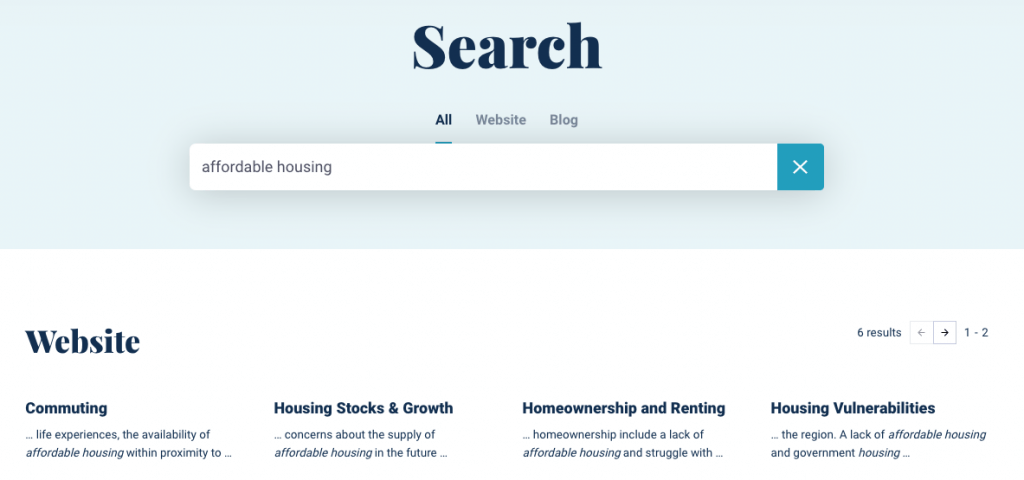
Search for any set of keywords related to life in Houston to discover a range of relevant resources.
Searching for data about Houston can be a challenge, especially when any given issue often intersects with many other vital topics. When you start researching on Understanding Houston, you won’t only find the main data you were after, but also related information and community perspectives to help deepen your research in ways you may not have expected.
Click the links to see how data points intersect
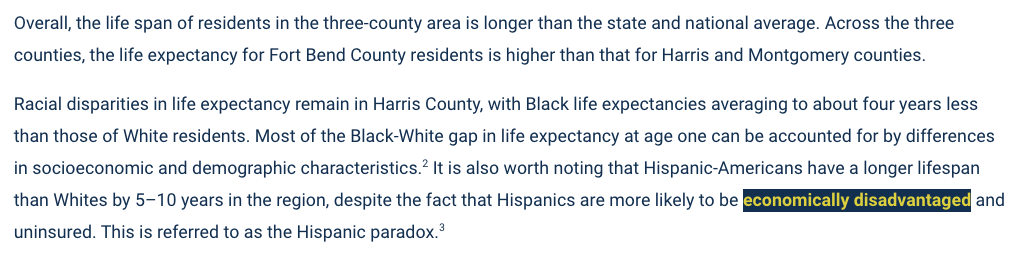
While you explore a particular topic, click on the links to connect the dots and see how various data points relate to one another.
Data rarely exists in a vacuum, and any given fact often requires several others to tell a complete story. So as you explore the data on any given topic, we encourage you to click the linked text near and around the many charts and data points. These links will take you directly to related points of interest and will help you make valuable connections.
Create and export charts
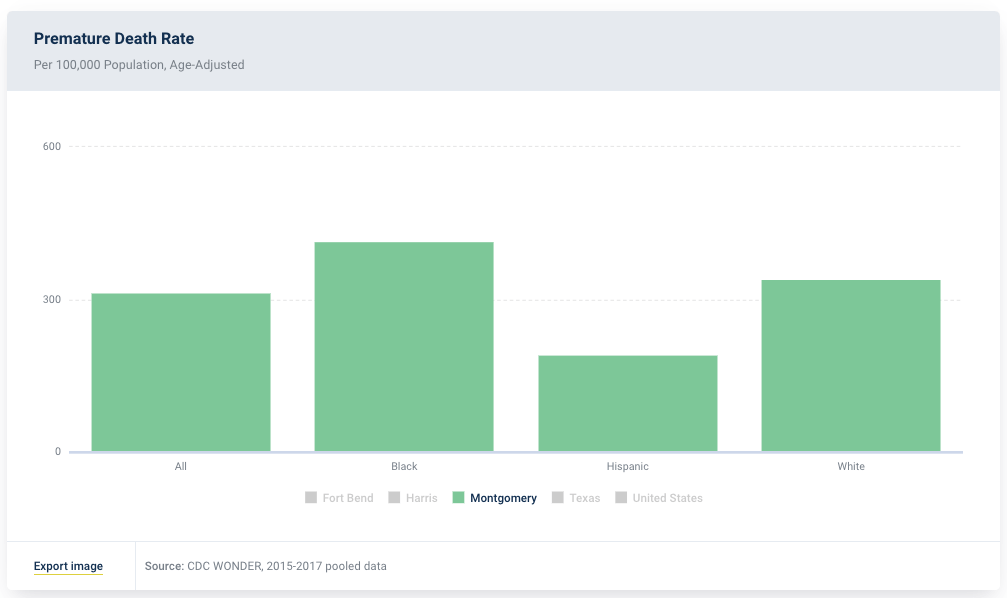
Toggle the data and click “Export Image” to download the exact right chart for your needs.
Understanding Houston covers Houston’s three most populous counties, but what if you only need data about one county, or even just the state? On most of our charts, you are able to switch on the data you want and exclude the data you don’t need.
Need the chart for a presentation or a report? Simply click export to download the chart complete with modifications made on the page.
Deepen your understanding with community perspectives
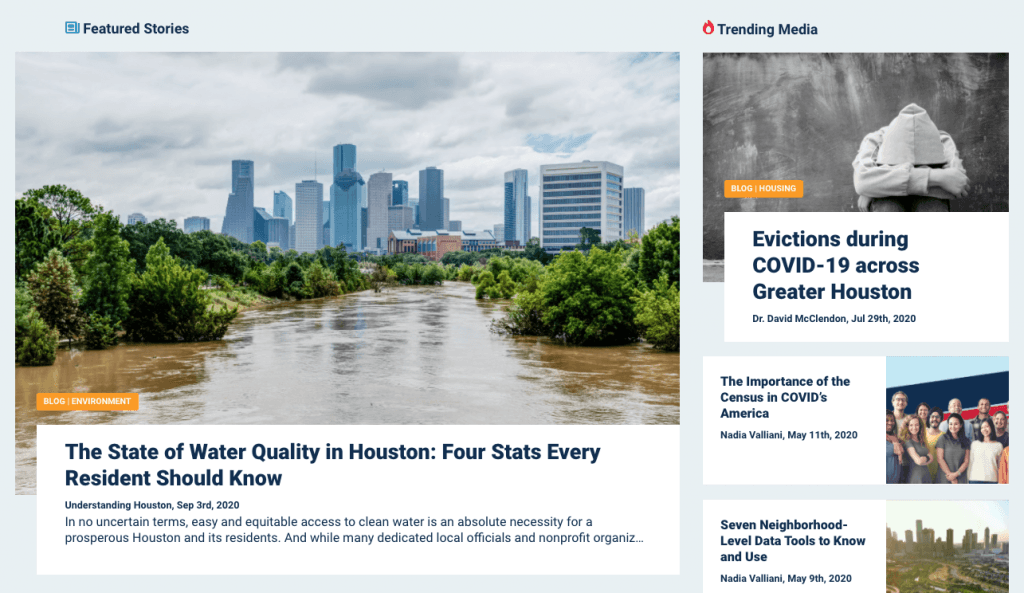
Understanding Houston offers blogs from team members and community leaders, updated regularly.
We know that data doesn’t tell us everything. Historical context, new ideas and community perspectives are necessary to help us gain the fullest possible picture of any given issue.
That’s why our team works with a variety of experts and community leaders to deepen our content library through blogs and essays. Combining regional data and personal perspective, these pieces add additional depth to the issues that matter most, and can help you expand your understanding of the issues you encounter throughout the site.
Vote for the topics that matter most to you
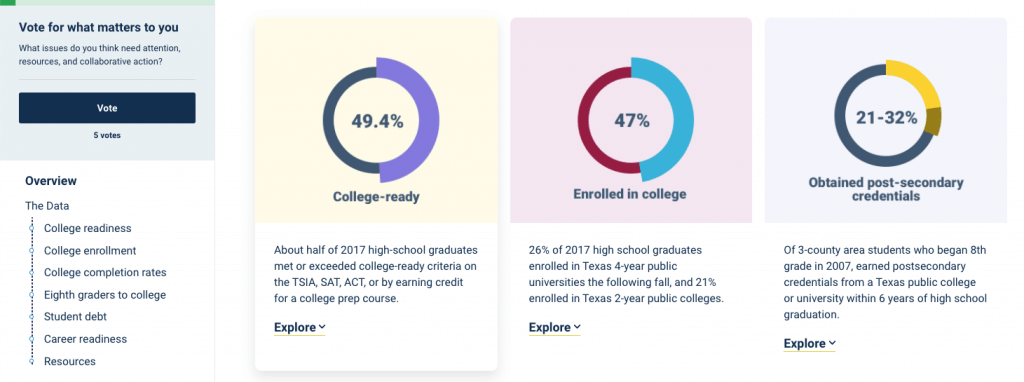
While exploring the site, click “Vote” on the topics you’d like to see more of in the future.
Understanding Houston is an ongoing project. We are always monitoring for new data, new insights, and new ways to make our platform more useful and accessible to everyone. That’s why we ask visitors to click “Vote” on the pages that interest them most.
Your votes help us prioritize improvements to the site, inform our future community-driven work and could result in substantial updates to the content that matters most to you as we work to update the site.
Help us keep Houston connected to what matters
As a community-driven initiative, Understanding Houston is dedicated to helping community leaders, activists and philanthropists do what matters most in our region. That means adding vital perspective, context and analysis to the most important issues affecting our region today.
To keep up with our mission, learn how you can get involved, join our mailing list and follow us on your favorite social media channels and see how we use data to help make sense of life in Houston.
Already loving Understanding Houston? Let us know how you’ve been using the website and what you’d like to see more of in future updates by filling out the form here.