Category: Disasters

  • Houston is Resilient

    Houston is Resilient

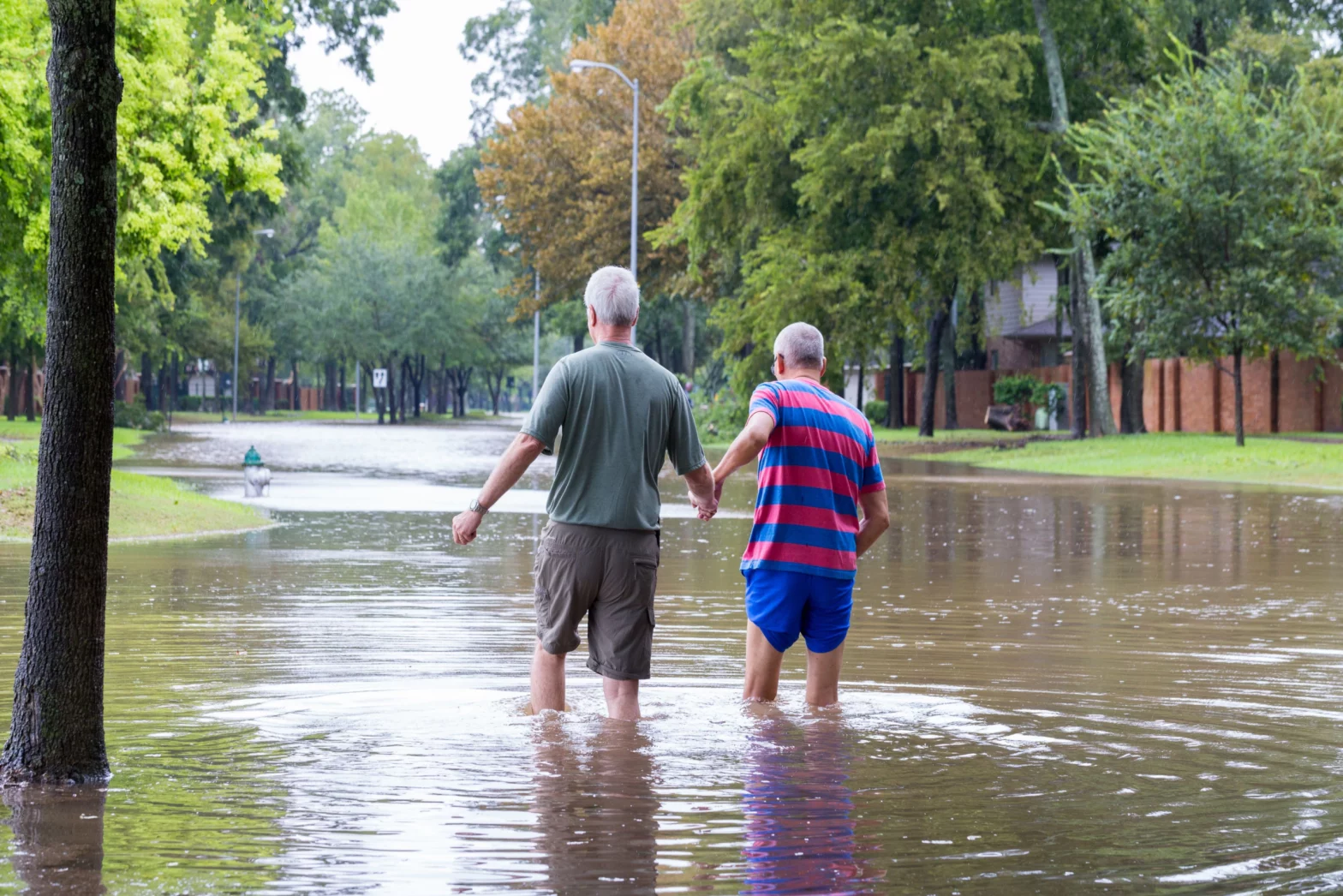
    Houston has certainly earned its reputation for resilience. Since 1980 the region has been hit by 26 natural disasters, including five hurricanes, five tropical storms, two wildfires, a dozen rain/flood events and a winter storm, to name a few. Nearly a third of these disasters have occurred since 2015, and yet the population continues to rise, and the three-county area has added jobs at a rate faster than the nation. 

    You’ve likely seen the “Houston bounces back” or “Houston Strong” messaging, but in a region celebrated for its resilience, not everyone bounces back equally after disaster strikes. What factors contribute to our ability to recover from the many ways disasters wreak havoc on our lives? It is important that, while acknowledging Houstonians’ resilience, we discuss the wide-ranging impacts behind the disasters that are often hiding behind the resilience narrative. The human experiences behind these disasters and the data we gather in their wake can both tell us more about what it is that makes Houston resilient and how we can better prepare for the future. 

    Uneven recovery, ongoing risk

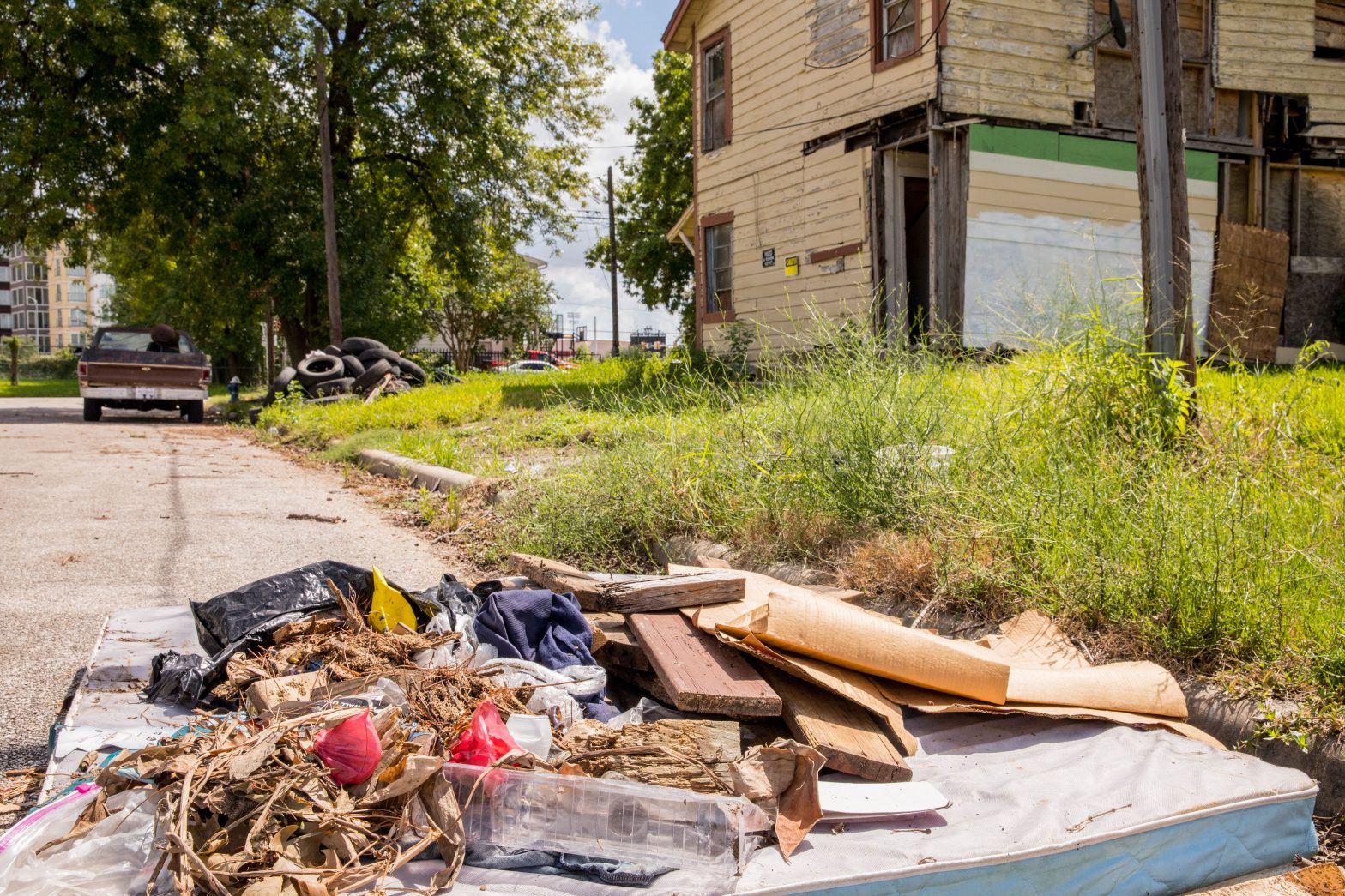
    About one in five residential properties are at risk of flooding in Houston’s three-county area, and 286,000 properties are projected to have “substantial” risk of flooding by the year 2050. A figure made more disquieting by the fact that communities most vulnerable to flooding are the least likely to recover. Historically, these neighborhoods are on low-lying land, receive fewer public flood mitigation projects, and are characterized by decades of disinvestment, such as poor stormwater infrastructure. 

    On top of that, residents of these communities are overwhelmingly low-income, immigrants, and historically marginalized, meaning they typically have the fewest resources available to prepare in advance of a storm and to help them recover from its effects once it passes.

    One year after Hurricane Harvey, the Episcopal Health Foundation conducted a survey that found that Black, low-income and immigrant families were most likely to report that they did not receive financial aid after the storm or that the financial aid they did receive covered “very little” or “none” of their financial losses. They were also more likely to report that they weren’t getting the help they needed to recover. These sentiments are validated by established research that shows that federal disaster assistance policies place vulnerable groups at a disadvantage and reduce their ability to access resources and assistance for recovery. More specifically, researchers at the University of Pittsburgh and Rice University found that wealth inequality increased in counties hit by more disasters. In Harris County, the wealth gap between Black and white families increased by an average of $87,000 from the effects of disasters alone.

    Hurricane Harvey

    Hurricane Harvey is estimated to be the second-costliest storm in U.S. history, causing about $125 billion in damage, and displaced tens of thousands of people over its six days of landfall. The challenging nature of disaster relief is plain to see when staring down a number like $125 billion.

    The federal response to Hurricane Harvey was historic. The Federal Emergency Management Administration (FEMA) distributed $918.2 million in aid from its Individual and Household Program (IHP) directly to residents of the three-county area after Harvey, and the Small Business Administration (SBA) issued $1.5 billion in low-interest, long-term loans to homeowners

    Both local government and private philanthropic dollars also play a significant role in immediate relief after disasters. Local government provides for the basic necessities of those families waiting on applications to be approved and disbursements to be released, and dollars from the private sector often serve as emergency funds for the particularly vulnerable, particularly those who have not historically accessed public benefits. Collectively, philanthropic funds to support recovery from Hurricane Harvey reached about $971 million following the storm.

    Still, nearly one in five (17%) Harris County residents reported that their quality of life was worse one year after Harvey as a direct result of the storm, with Black (31%) and low-income (20%) households bearing the brunt of the effect on the region. 

    COVID-19

    Though the Houston region has plenty of experience activating after a storm, we had never responded to a public health disaster of this scale. But the region responded quickly in March 2020 by adapting our weather-related disaster expertise to a pandemic. Our ability to be nimble and flexible in responding to the effects of COVID-19 revealed both strengths and gaps in our resilience.

    Not only were people getting sick and dying, our region suffered significant job loss, with unemployment peaking in April and May of 2020 at 14.6% in Harris County. Households with low incomes were the most likely to lose their jobs. One in five renters still reported that they were behind on payments in December 2021, almost two years after the onset of the pandemic. The Houston Metro Area has the highest rate of reported food insecurity, among the 15 most populous metros 15 times out of the first 40 surveys conducted by the Census Bureau, with the highest rates among non-white households and households with children. 

    The challenges were enormous, and our region quickly responded with innovative relief funds and programs. This is not an exhaustive list, of course, but here are just a few:

    • The majority of folks who lost their jobs at the beginning of the pandemic worked in hospitality and retail. The Get Shift Done program paid for out-of-work hospitality workers to staff food pantries — this served the dual purpose of responding to the skyrocketing demand for food donation while also providing living wages to folks who were laid off. 
    • The Lost Loved One Fund, funded through the Greater Houston COVID-19 Recovery Fund and administered by Memorial Assistance Ministries provided flexible financial assistance to families that lost a primary breadwinner or immediate family member due to COVID-19. 
    • To combat food scarcity, the Urban Harvest Community Gardens Program, one of many agencies addressing food insecurity in the region, donated 136,000 pounds of food in 2020 alone, and the Houston Eats Restaurant Support program raised almost $5 million to provide for food-insecure individuals. 

    Winter Storm Uri

    Most recently, Winter Storm Uri brought nearly unprecedented challenges in February 2021 to a region already well-acquainted with natural disasters.

    The Federal Reserve Bank of Dallas estimates the true costs of Winter Storm Uri to be somewhere between $80 and $130 billion, which would make it potentially the most costly weather disaster in Texas history. The storm left millions of people without power and water, causing damage in patterns not dissimilar to those of previous disasters in that vulnerable communities were affected disproportionately

    In response, Mayor Sylvestor Turner and Judge Lina Hidalgo quickly established the Houston Harris County Winter Storm Relief Fund, which the Greater Houston Community Foundation and United Way of Greater Houston jointly administered. The first round of emergency financial assistance was distributed within four days to pre-existing nonprofit partners with a proven record of disaster response — a pace faster than any previous local disaster response. 

    To help low-income homeowners repair damage caused by burst pipes and other effects of the ice storm, the Winter Storm Relief Fund supported an innovative program from Connective, a local nonprofit, that connects families in need with home repair agencies. Connective’s work streamlines the home repair process by serving as a one-stop shop for families and bringing increased accessibility to social services through their knowledge of the disaster relief cycle and cutting-edge, human-centered technology. 

    Resilience for all

    True climate resilience, however, is ultimately about not only ensuring the most vulnerable in our region are able to recover from disasters quickly, but also anticipating and preparing for the worst. Residents who are economically, housing, and food secure before disaster strikes are most likely to recover from the negative impacts of disasters in the shortest amount of time. 

    Houston has certainly earned its reputation for responding quickly and effectively after crises, but the future of reaching true climate resilience will require transformative systems/ infrastructure change, public investment in areas and communities most at risk, and philanthropic dollars that spur innovation. Still, Houston is strong, as are the people who call it home, and our collective capacity for innovation, empathy and hard work will always remain a hallmark of our region.
  • COVID-19’s ongoing effect on students in Greater Houston

    COVID-19’s ongoing effect on students in Greater Houston

    A data-driven look into how the pandemic has affected students in Greater Houston 

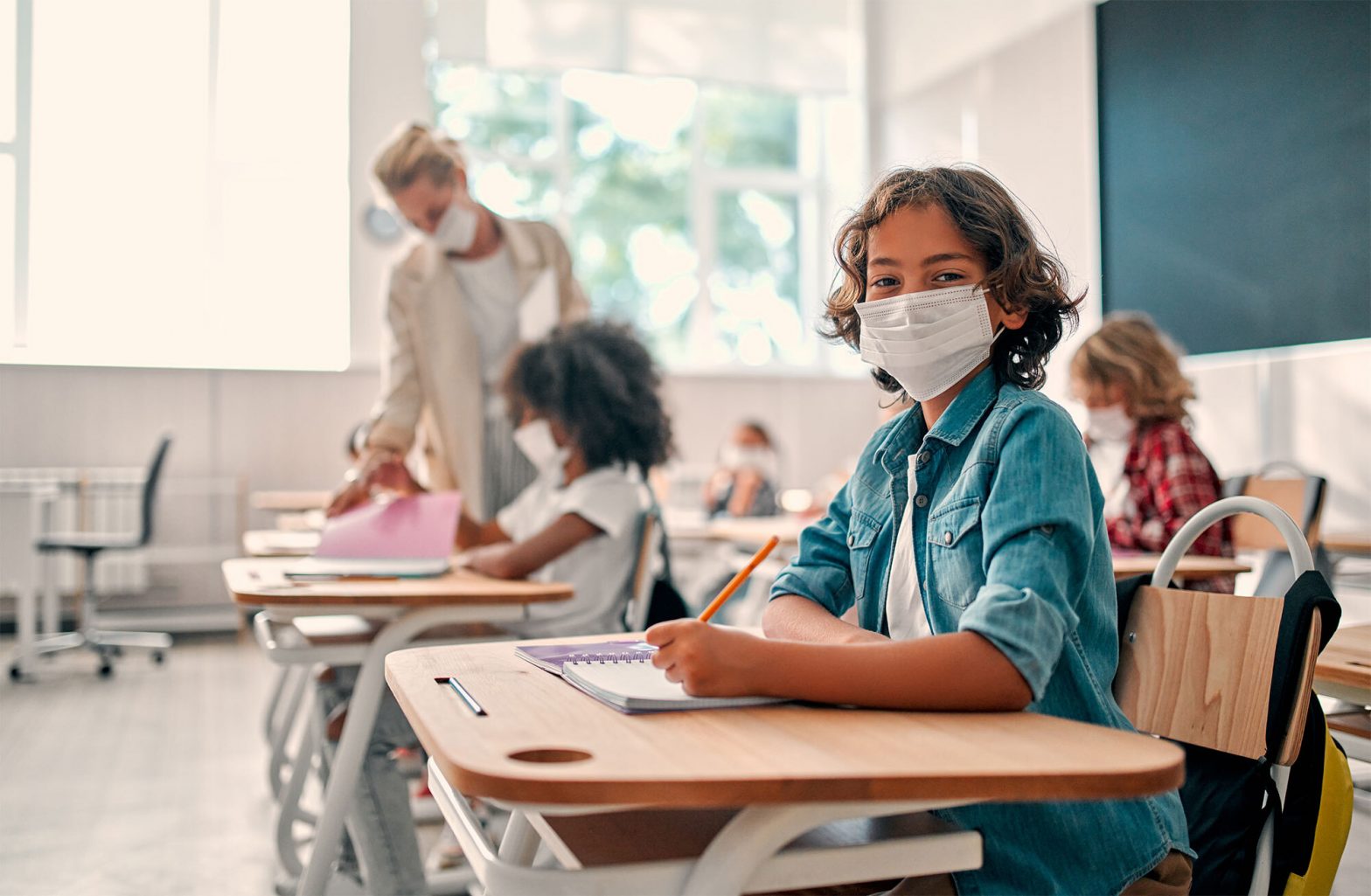
    Since March 2020, the world has been coping with the devastating impacts of the COVID-19 pandemic. For many students, the classroom suddenly became the kitchen table. Their teachers were now little squares on a screen. The learning experience that most students were accustomed to had been flipped upside down. 

    As the 2021-22 school year approaches and students return to the classroom amidst the fourth wave of COVID-19 infections, the pandemic and its effects are still ongoing. We’re analyzing available data on how COVID-19 has affected Houston-area students to shine a light on the challenges students may continue to face in yet another pandemic-affected school year.

    The struggle to adapt to online learning 

    The COVID-19 pandemic has drastically changed the way students experience their education. As Houston-area school districts and campuses transitioned to 100% online learning at the start of the pandemic, the need for stable internet and consistent access to technological devices like laptops and tablets became a necessity. 

    However, according to research from the Houston Education Research Consortium and RICE University, 20% of families reported that their child(ren) did not have a personal device such as a computer, laptop or tablet to do their schoolwork. The research also suggests that income played a significant role in setting students up for success in the form of access to the required resources to make online learning possible.  

    Almost half of the participating households earning less than $20,000 per year reported not having a device or internet for their child(ren) to complete schoolwork, compared to only 4% of families earning over $100,000 per year. 

    1 in 5 families

    in the Houston area lacked internet access or a digital device for their child(ren) to use to do their schoolwork during the early months of the pandemic.

    Source: Gulf Coast Coronavirus (COVID-19) Community Impact Survey

    Daniel Potter, Associate Director of the Houston Education Research Consortium, notes how research suggests that the pandemic has pushed a larger proportion of Black and Hispanic students online, which can negatively impact learning. According to his organization’s findings, 70% of Black students and 60% of Hispanic students in the Greater Houston area opted into virtual learning in the 2020-21 school year compared to white students (40%). These are the same students who are more likely to attend high-poverty schools that have fewer resources –– including necessary technology –– to engage all students successfully. 

    Parents show anxiety regarding students’ readiness for school

    In the Gulf Coast Coronavirus (COVID-19) Community Impact Survey, a majority of surveyed families reported feeling worried that students would not be ready for the 2020-21 school year. Those without access to WiFi worried more –– 67% of families without access to WiFi/Internet and a device for schoolwork expressed concern that their child would not be ready for the upcoming school year, compared to 49% of families with access to WiFi and devices for schoolwork. 

    Families that reported having access to WiFi and devices for schoolwork were not as worried about their children being prepared for the school year because they had the necessary resources. In an attempt to close this digital divide, Houston school districts distributed print copies of educational materials to families with limited access to technology to prevent students from falling behind. Additionally, WiFi hotspots purchased by the districts made online learning more accessible to all.

    The impacts on student performance

    From the cancellation of state standardized testing to the mandatory shift to remote instruction in March 2020, COVID-19 had a huge disruption on students. As schools transitioned into a “hybrid” learning model of virtual and in-person instruction in 2020-21, most campuses and students adapted to the new normal. However, as we begin the second full academic year in the era of COVID-19, the impacts on student learning and performance are beginning to emerge, though there is still much we do not know. 

    According to the Kinder Institute for Urban Research at Rice University, in the 2020-21 school year, several districts reported a significant increase in the percentage of students failing at least one course. Their findings also show that failure rates were typically highest for students attending school in the online/virtual setting.

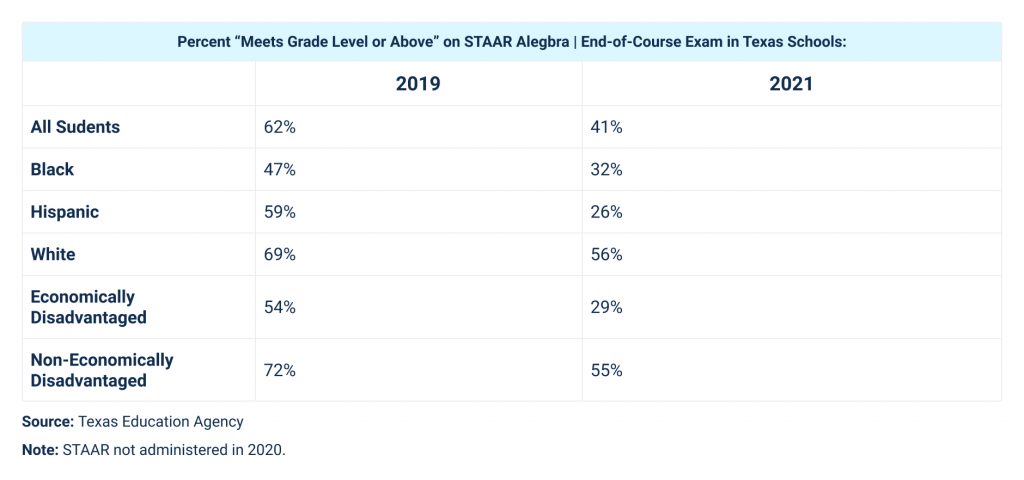
    One measurable assessment, the eighth-grade math proficiency exam, is important in assessing student readiness for high school. The results from the Algebra I End-of-Course (EOC) State of Texas Assessments of Academic Readiness (STAAR) given to students in Spring 2021 show a significant decline in performance compared to 2019. Performance was on an upward trend prior to this decline.

    In Spring 2021, 41% of students who took the Algebra I EOC exam met the state standard, compared to 62% in 2019. The proportion of students who met the standard fell 33 percentage points for Hispanic students, 25 points for low-income students, and 21 points for all students combined.

    The effects on higher education plans

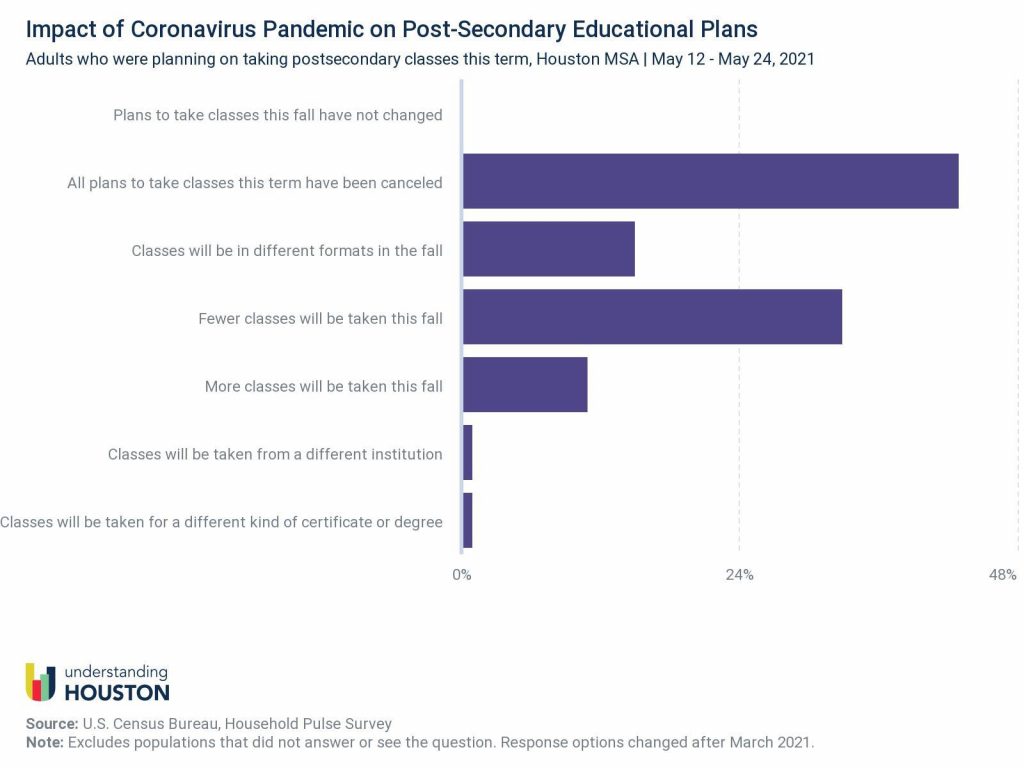
    While the total impact COVID-19 has had on student attrition and graduation rates in the Houston area is still unclear, preliminary research suggests that the pandemic has contributed to students changing their post-secondary education plans. Data from the National Student Clearinghouse Research Center supports this survey data. The number of students enrolling in undergraduate higher education in Spring 2021 fell by 727,000 students nationally, or 4.9%, from Spring 2020. For comparison, undergraduate enrollment fell 0.5% between Spring 2019 and Spring 2020. More than 65% of the total undergraduate enrollment decline occurred among community colleges, institutions that are more likely to serve low-income students and students of color. Texas is not immune either.

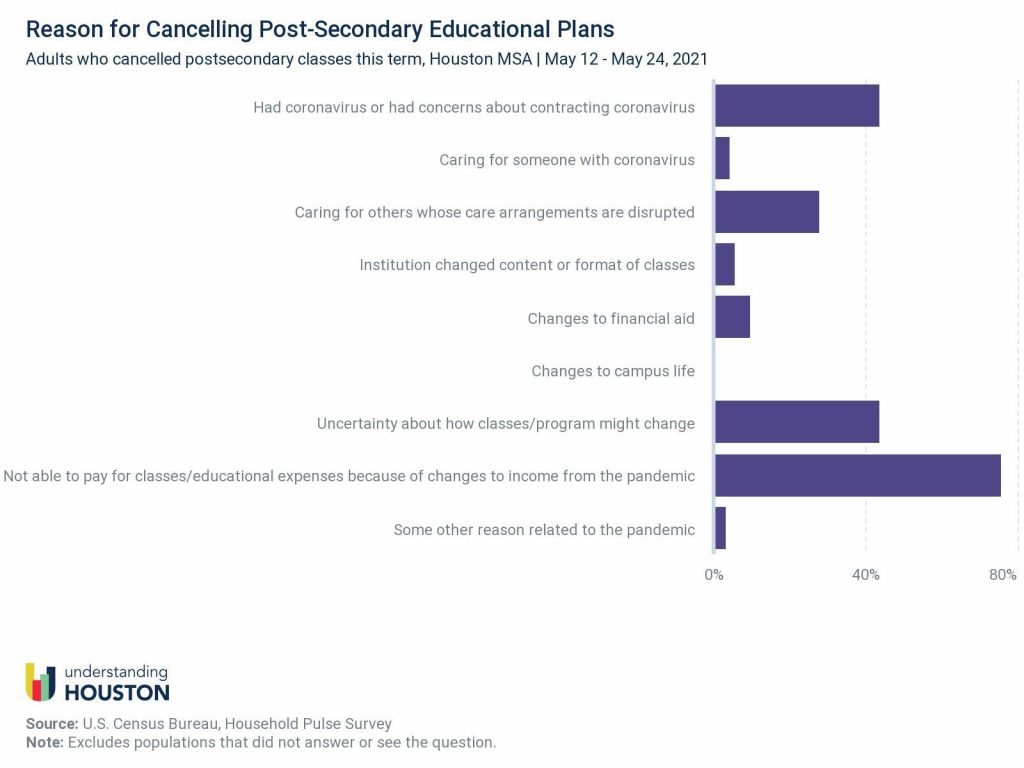
    According to the U.S. Census Bureau, 43% of Houston adults have canceled their higher education plans with 33% of students reporting they will be taking fewer classes in the fall of 2021. 

    Three out of four students who have decided to halt their post-secondary educational plans cite financial constraints as the main reason. Houston already has one of the lower rates of people with postsecondary degrees among peer metros; if this trend continues, it could have widespread implications on the quality of our workforce.

    Student mental health affects academic success

    It is impossible to discuss COVID-19 without acknowledging its effects on student mental health. From being cut off from one’s peer group and missing out on important milestones like prom, graduation, college visits, etc., to grieving the death of parents and other loved ones, including breadwinners, adolescents are struggling with much more than school. 

    Hispanics have the highest COVID-19 infection and death rates in the region and the highest rates of employment and income loss. A survey conducted by Latinos for Education found that Latino parents are most concerned with the mental health of their children. Another recent study estimated that nine family members are affected by one person who dies of the coronavirus. Given that Hispanics also make up the majority of students in Houston-area schools, thousands of Hispanic students have experienced the worst impacts of the pandemic, all while still trying to learn.

    Research indicates there is a direct link between mental health and academic achievement. It will be impossible to move on from the educational impacts of the pandemic without acknowledging and repairing student mental health, with an emphasis on supporting Hispanic students who have experienced the worst effects.

    Looking ahead to 2021-22 with the lessons we’ve learned

    COVID-19 has impacted everyone, but not everyone has been affected equally. Research suggests the pandemic has widened pre-existing disparities in academic performance and the pursuit of higher education. However, educators, school administrators and students have learned much since March 2020. We now know which tactics may work better than others, and we have a clearer picture of how students have been affected — and what they need moving forward.

    Educating students while trying to keep their teachers, faculty and staff safe during the pandemic is a challenging task that comes with consequences. As we navigate through another COVID school year, we hope to see improvement in overall student performance alongside practices that prioritize the health and well-being of our children and their educators. 

  • The Great She-cession: How COVID-19 is impacting women in the workforce

    The Great She-cession: How COVID-19 is impacting women in the workforce

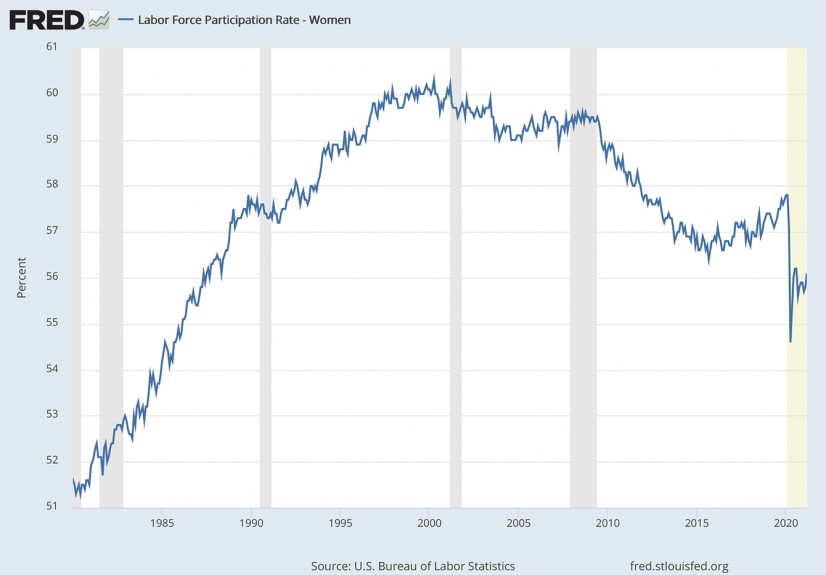
    America is facing an unprecedented exodus of women from the workforce. The hard-fought gains women have made over the past 40 years are at risk of being wiped out by the economic crisis caused by the COVID-19 pandemic. As of March 2021, more than 1.8 million women have left the workforce since the pandemic started. While this number is an improvement over the initial 4.2 million women who dropped out of the job market last April, so many women have left the labor force that the current participation rate has fallen to 56.1%, a level not seen since the late 1980s. 

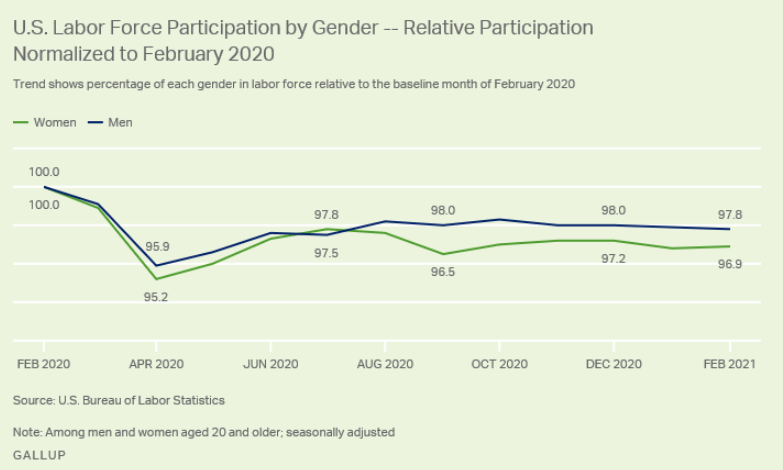
    Compared to men, women initially left the workforce in disproportionately higher numbers and their return to the job market has been slower. The graph below shows that using February 2020 as a baseline for both sexes, women have lagged men in their ability to regain their pre-pandemic employment levels. This disproportionate collapse in women’s labor participation has led some to call this the first “she-session.”

    Like everything related to COVID-19, the effects of the pandemic on working women varied among different groups. On average, women of color experienced greater hardships than all other workers, including white women. Comparing the experiences of Black, Hispanic and white women, Hispanic women had the highest unemployment rate — 20.1% — in April 2020, at the peak of the crisis. However, since then, Black women have found their recovery to be slower than the other groups.

    20.1% unemployment
    At the peak of the pandemic in April 2020, Hispanic women had the highest unemployment rate in the nation.

    Working mothers of young children also have been hit especially hard. As daycares closed and school became virtual, mothers found themselves taking on an even greater share of domestic responsibilities. According to a McKinsey report, 23% of working women with kids under the age of 10 have considered leaving the workforce altogether.

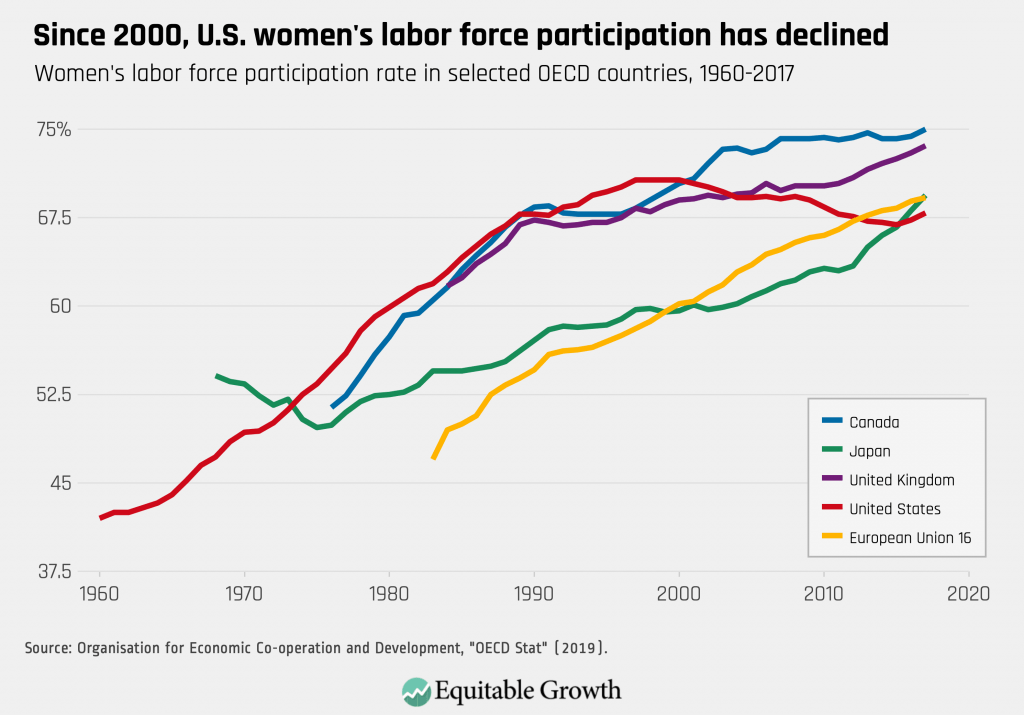
    While there is some evidence that women are beginning to find their way back into the labor force, it is important to realize that, like many other disparities the COVID-19 pandemic has highlighted in our society, it didn’t create this problem. It simply magnified it. The truth is that growth in women’s labor force participation has stalled since the early 2000s. It began to decline after the Great Recession, mimicking trends in men’s participation rate. Interestingly, this phenomenon isn’t replicated in other advanced economies around the world. The proportion of women in the U.S. labor force has declined since 2000 — the only country among five major OECD countries with that trend.

    “23% of working women with kids under the age of 10 have considered leaving the workforce altogether.”

    Societal expectations

    Even before COVID-19, women performed an unequal share of the domestic responsibilities in opposite-sex-headed households, even as the amount of time men spend on housework has increased over the last 50 years. In 2018, 9.6 million females gave family and home responsibilities as their reason for not participating in the labor force, compared to just 1 million men. This is hardly surprising. When families start looking at the high costs of child care and the lower wages of women, it seems to make the most economic sense. But these individual “forgone” conclusions are predicated on structural failures.

    The gender pay gap

    Equal Pay Day for 2021 was March 24. This date symbolizes how much longer a woman would need to work to earn the same amount the average man did in 2020 alone. Meaning, because women earn less, on average, than men, they must work an additional 82 days to earn as much as an average man did in one year. For Black women, that symbolic day would be in August, and not until October for Hispanic women. We see these disparities at both the national and local levels. In 2017, women in Montgomery County made $20,000 less than men and women in Fort Bend County made $15,000 less. Harris County had a smaller but still significant gender pay gap of $7,500.

    According to a study by the National Women’s Law Center, a woman starting her career today stands to lose $406,280 over a 40-year period compared to her male counterpart. This earning gap spans all jobs, no matter what career a woman choses. The same study found the gender wage gap in 98% of occupations. As Megan Rapinoe, the U.S. Women’s Soccer star, said in her testimony on Capitol Hill: “One cannot simply outperform inequality.” It is a truly pervasive problem, but it is hardly a new one. In fact, in 25 years, the gender pay gap has only shrunk 8 cents. At this rate, we can hope to close the gap by 2059. While this isn’t a problem exclusive to the U.S., other countries have made much better progress toward ending it.

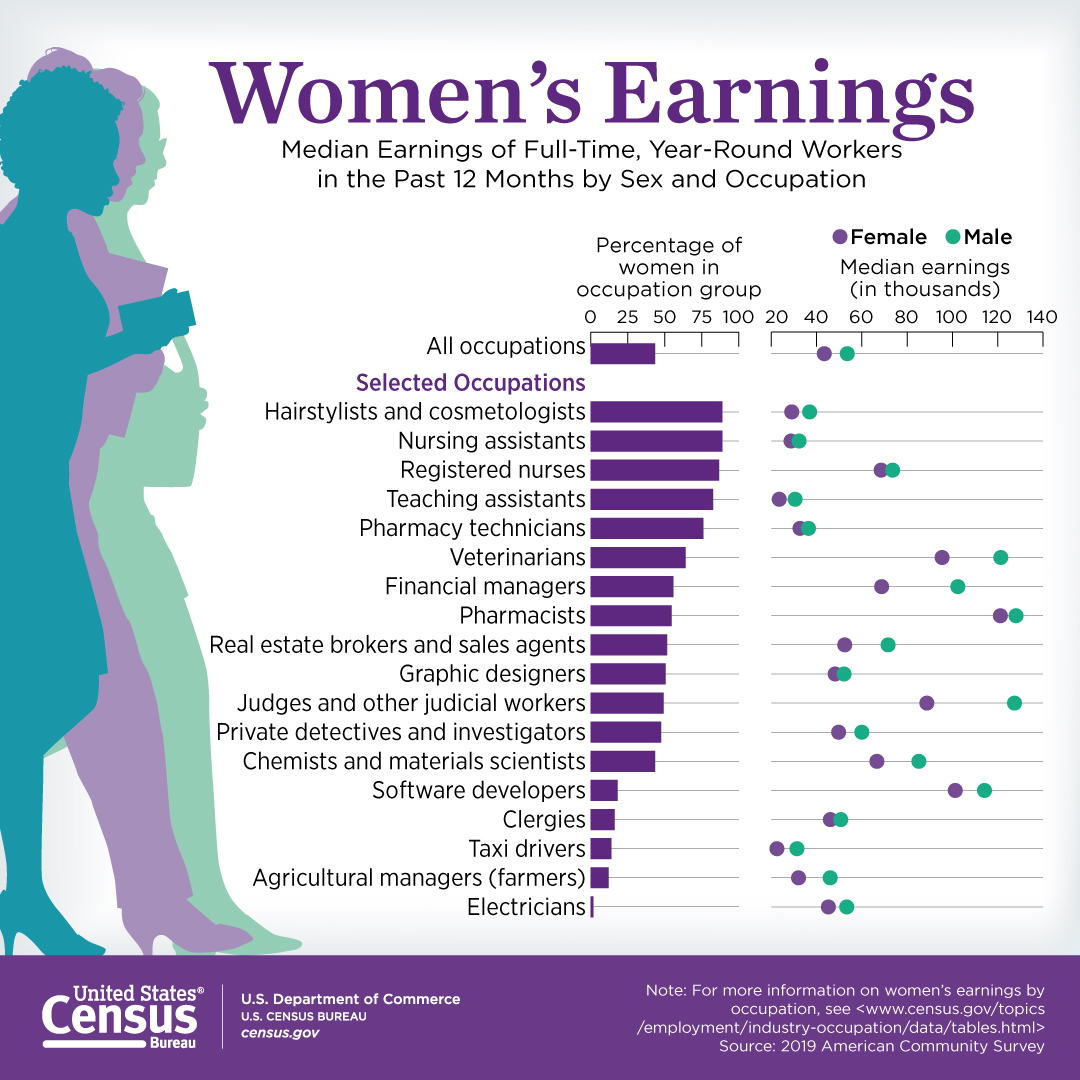
    Besides being paid less for the same work, women are also overrepresented in jobs with lower wages. While there are many underlying causes for this, one of the largest contributors is discrimination. According to a report from the Washington Center for Equitable Growth, occupations with more men tend to pay better regardless of skill or education level. These trends are especially more pronounced for women of color. The implication for this being that even working full time, these women face higher rates of poverty. The negative effects extend beyond women and hurt the next generation. According to a study from the Pew Research Center, single mothers are almost twice as likely as single fathers to be living below the poverty line.

    a woman starting her career today stands to lose $406,280 over a 40-year period compared to her male counterpart

    Structural obstacles to increasing women’s workforce participation

    COVID-19 has shown that, for all the advancements women have made in the workforce, the main impediment to gender equality is the structural barriers they face. COVID-19 further loosened the tenuous grip that kept many women in the workforce. 

    We have seen minimal gains in equal pay for equal work in the past quarter-century. The pay gap is a fundamental problem women faced before the pandemic, one they’ll continue to face throughout its duration, and even when it’s over. Research suggests that one of the most effective ways to close the pay gap is to help women achieve entry into the higher-paying, male-dominated fields, as women have an outsized representation in lower-paying jobs.

    Another roadblock for many women is lack of maternity leave. Research finds that mothers offered paid maternity leave were more likely to return to work after the birth of a child both in the short- and long-term. The study found a 20 percent reduction in the number of women who left their jobs in the first year after giving birth and up to a 50 percent reduction after five years. In addition to helping women stay in the workforce, evidence suggests that paid family leave provides myriad benefits to the child, which can have a positive influence on their future. 

    Oftentimes for women, the problem of finding affordable child care becomes almost insurmountable. In Texas, child care often costs more than college tuition, and parents don’t have 18 years to save for it. Even before the pandemic, child care in Texas was facing a tipping point. It is estimated that U.S. businesses lose roughly $4.4 billion a year because of lost productivity due gaps in child care. 

    Change, while not cheap, is necessary. Significant investments that support families will help all women, mothers, fathers, and children live up to their fullest potential and thrive by improving educational outcomes, time for family bonding, and allow both women and parents to “show up” fully in their professional lives.

    “In Texas, child care costs more than college tuition, and parents don’t have 18 years to save for it.”

    Women are integral to our collective prosperity

    Our ability to recover from the current economic crisis depends on women re-entering the workforce. Our ability to find new levels of economic growth depends on women being able to find economic success equal to men. A study often cited by Treasury Secretary Janet Yellen estimates that “increasing the female participation rate to that of men would raise our gross domestic product by five percent.” McKinsey estimates that gender parity would add 19% to GDP by 2025. If we don’t want the economic fallout of COVID-19 to become permanent, we must support women and encourage their return to the workforce. Our collective prosperity depends on it.

  • What we heard during our second Nonprofit Disaster Data Dive + Workshop

    What we heard during our second Nonprofit Disaster Data Dive + Workshop

    On May 4, 2021, Understanding Houston held its second Data Dive + Workshop (DDW) with United Way of Greater Houston on Vulnerabilities to and Impacts of Disasters. The second session in our three-part series brought together nonprofit organizations to examine the disaster data through interactive and engaging discussion.

    We started off with a review of the 4 takeaways from our first Data Dive + Workshop. For those who missed it, the first session covered key findings from the new subtopic on the various disaster risks to the region and COVID-19 data. You can find a recording of the event here, a copy of the presentation here and the Jamboard here.

    After that, we dove into the vulnerability to and impacts from disaster subtopic and reviewed data from 211 Texas/United Way Helpline two weeks and four weeks after four recent disasters.

    1. Houstonians across communities and neighborhoods are vulnerable to shocks caused by disasters:

    The extent to which natural disasters affect households depends largely on their situation before disaster strikes, and the Centers for Disease Control and Prevention’s (CDC) Social Vulnerability Index (SVI) is one of the most common ways to measure that level of vulnerability on a scale from 0 (lowest vulnerability) to 1 (highest vulnerability). 

    The SVI comprises 15 demographic characteristics and social factors across four themes: socioeconomic status, household composition and disability, non-white status and language, and housing and transportation. Disaster Data Dive + Workshop participants identified the practical ways in which social vulnerability plays out in our community and neighborhoods by SVI theme. 

    • Socioeconomic status 
      • Community members are taking longer to recover from back-to-back disasters.
      • More issues are exacerbated and compounded, with many people still trying to regain their employment. 
    • Household composition and disability
      • Lack of resources for older adults and youth in some communities such as Settegast.
    • Minority Status & Language
      • Limited English proficiency can limit ability to complete applications for assistance. 
      • Dissemination of information is challenged when community members have language barriers. 
    • Housing and transportation 
      • In some neighborhoods, homes are still affected by both Harvey and the utility outage from the Winter Freeze which increases their vulnerability to following disasters. 
      • Transportation outside of typical work hours (M-F, 9 a.m. – 5 p.m.) is limited, especially for outlying counties like Fort Bend and Montgomery.
    1. Financial impacts are the most pressing in our community and neighborhoods:

    Through a dotmocracy voting exercise, participants identified financial impacts as the most pressing threat in their community and neighborhoods after a disaster. The DDW session highlighted how disaster assistance claims to FEMA vary across counties. The data show that the approval rate in the three-county area rarely rose above 50% for most disasters occurring since 2005. In seven of the last nine disasters, renters are less likely to be approved than homeowners. In Harris County, approval rates for both homeowners and renters are lower compared to Fort Bend or Montgomery counties. 

    1. Leverage data to prepare and plan for next disaster response:

    The participants identified the need to invest in preparedness and planning efforts as well as prioritize disaster capacity building in non-crisis times. That was also a common theme from what we heard in the first DDW. 

    • Use data to assist with investing in infrastructure in areas where we know there is potential for greater impact.
    • Use data to determine if there are enough resources and service providers to respond to a disaster and meet needs when they arise.
      • Pre-identify relevant organizations, their target populations and their strengths.
    • Use data to learn from the past disasters.
      • Establish a process to capture lessons learned from previous disasters and outstanding issues to address (i.e., try to reduce future severity through personal and community resilience and public/private sector responsibility).

    Next Steps

    You can find a recording of the second session here, a copy of the presentation here, and the Google slides here.

    We hope you will join us for our last session as we collectively work toward building a more resilient and equitable region!

    Future Nonprofit Disaster Data Dive + Workshop:

    • Response to and Recovery from Disasters – June 8, 2021 from 9 a.m. to 10:30 a.m. Register here.

    How have you used the data from Understanding Houston? Share your story with us!

  • The pandemic turns one: 6 ways COVID-19 has impacted Greater Houston

    The pandemic turns one: 6 ways COVID-19 has impacted Greater Houston

    March 4, 2020: A Fort Bend County area man became the Houston area’s first presumptive positive case of COVID-19 after traveling on a Nile River cruise. From there, the situation worsened rapidly. Just one week later, the Houston Livestock Show and Rodeo was cancelled for the first time in 88 years after evidence of community spread was confirmed through a case in Montgomery County. Businesses began to close their doors and store shelves were quickly emptied as people across the region and the nation scrambled for answers. What will happen to me if I get the virus? How can I get tested? Will I keep my job? Will there be enough food? How long will this last? 

    One year later: we know much more than we did during those chaotic first weeks. With multiple vaccines receiving emergency use authorization, accessible testing and more treatment options, we’ve made some remarkable strides in our battle against the health effects of the pandemic. However, we also know more about the incredible toll the pandemic has taken on our region, and the impact it has had on the lives of millions of Houstonians. The data are irrefutable. Latino and Black communities have been hardest hit by the pandemic. They have paid the highest price: lost jobs, lost businesses, lost homes, lost loved ones and lost lives.

    While relief may be in sight for many, the toll of COVID-19 still looms large — both for the families of people who have lost loved ones and those who have lost livelihoods. Understanding what lies ahead for our region starts with understanding where we stand today, and in a year as catastrophic as any in recent memory, it behooves us to look back and reflect on what COVID-19 has meant for Houstonians and Houston to date.

    1. Nearly 465,000 Houstonians infected and 6,300 dead

    Despite some early hopes that the virus would be limited in its severity and short in its duration, the grim figures one year later tell a much different tale. In the three-county area alone, nearly 465,000 people have been infected as of March 7, 2021. More than 6,300 of those infected did not survive, and residents of color and low-income communities have been hit disproportionately hard throughout the region. 

    As the most populous county in the region by far, Harris County has seen both the highest number of cases and the highest number of deaths in the three-county region. However, each county has had roughly the same infection rate per 100,000 residents, ranging between 7,305 out of 100,000 residents in Montgomery County to just over 7,600 out of 100,000 residents in Fort Bend and Harris counties.

    Erica’s two adult brothers passed away due to COVID, only three weeks apart. As a result, Erica became the guardian for her young nephews. This has caused a great amount of stress for Erica and her husband, as they now have a family of five children to care for. When her application to the Lost Loved One Fund was accepted, she exclaimed, “Oh my God, thank you so much…you are a blessing. My family and I really appreciate it. God bless you.”

    – Client story from COVID-19 Lost Loved One Fund administered by Memorial Assistance Ministries (MAM), a Greater Houston COVID-19 Recovery Fund nonprofit partner

    While COVID-19 may have spread through the three counties at similar rates, it has not affected everyone equally. In all three counties, Hispanic and/or Black Houston-area residents represent a higher share of COVID-19 deaths than they do the overall population. 

    A recent study estimated that nine family members are affected by one person who dies of the coronavirus, which means nearly 60,000 people are grieving in our region. As Dr. Julie Kaplow wrote in a recent Understanding Houston blog, “the context in which the deaths are occurring (e.g., social distancing that prevents in-person, ongoing support and collective mourning) makes the grief-related impact even more pronounced, particularly for children and adolescents.” Compounding layers of devastation is the fact that the communities experiencing the majority of infections and deaths from the novel coronavirus are the same ones who have been most affected by employment and income loss. 

    2. Houstonians have unequal and inequitable access to vaccines

    In a year filled with difficult questions, one of the most pressing continues to be unanswered. To those who’ve spent the past year wondering when will the COVID-19 vaccine be ready? the answer is “it depends.”

    According to official vaccination data tracked by the Houston Chronicle, 18% of Fort Bend County’s population has received at least one vaccine, with 12% being fully vaccinated, as of the first week in March 2021. Vaccination rates in Harris and Montgomery counties are lower in comparison, with 14% and 12% of the population vaccinated, respectively.

    However, not all residents have equal access to the vaccine. The least likely to die from the pandemic are the first to become inoculated. This trend is already clear in the national data and in Texas where Hispanics/Latinos have suffered 43% of all COVID-19 cases, yet have received only 16% of vaccinations. Black Texans comprise 19% of all cases but only 7% of vaccine recipients, while Asian-American residents represent 9% of all cases but only 1% of vaccine recipients.

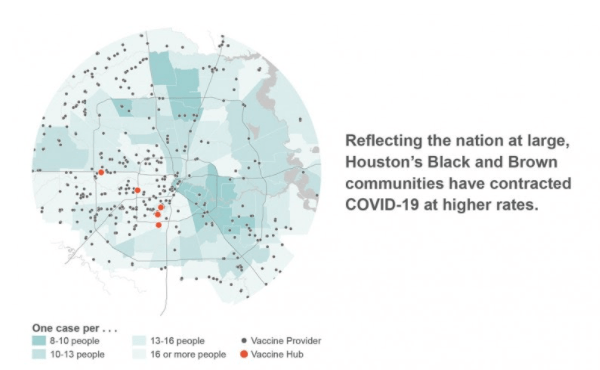
    An analysis by the Community Design Resource Center at the University of Houston found that “vaccination sites are glaringly sparse in neighborhoods where the pandemic has been most severely felt, and instead are overwhelmingly located in the same westside neighborhoods as the rest of Houston’s resources.”

    Source: Kinder Institute for Urban Research, Urban Edge: Mapping inequity in Houston’s COVID-19 vaccination rollout

    While race/ethnicity data on who has been vaccinated in Greater Houston is not publicly available, ZIP code-level data confirms that the highest vaccination rates are in communities with fewer COVID-19 cases. We can also use survey data from the U.S. Census Bureau to understand general vaccination trends by demographic characteristics — it is important to note the data presented below are not official vaccination rates.

    Vaccination rate estimates correlate with income level, as residents from higher income households are more likely to have already received a vaccination against COVID-19. On the high end, 43% of residents in households earning $200,000 or more per year have received the vaccine, compared to about 17% of residents in households with annual incomes below $25,000. 

    3. Houstonians have lost 141,000 jobs

    Rebecca is a single mom of three who found herself in a scary situation during March 2020. She contracted COVID-19 and could not go to work. As the sole provider of support for her children, the family’s livelihood depended upon her ability to work. When she was able to return to work in April, her employer had to close due to the impacts of the shutdown, leaving her unemployed and struggling to make ends meet. Rebecca received an eviction notice and had nowhere to turn. Helping her with gaining employment was essential to assisting her to get back on her feet in order to sustain herself beyond the COVID-19 funding that paid her rent. She joined our Financial Opportunity Center and enrolled in healthcare training. Rebecca now has a part time job at Texas Children’s Hospital, and will go full time earning $14/hr after gaining valuable credentials.

    – Client story from Volunteers of America Texas, a Greater Houston COVID-19 Recovery Fund nonprofit partner

    Between lockdown orders and massive shifts in demand, COVID-19 was a destructive force throughout the global economy, and Greater Houston was no exception to this trend. In addition to the pandemic’s well-documented effect on employment in Houston’s oil and gas industry, COVID-19 had devastating effects on construction workers, service industry professionals and arts professionals throughout the region, as unemployment skyrocketed throughout Greater Houston.

    By April 2020, unemployment rates had more than tripled from their previous average, soaring to 13.0% in Fort Bend, 14.6% in Harris, and 13.2% in Montgomery counties — setting new records for the region as more than 909,800 Greater Houston residents filed for unemployment between March 7, 2020 and February 13, 2021. While the Houston region has lost 141,000 official jobs in 2020 (the countless number of workers who were employed without official record — like in domestic work — will never be known), employment is slowly bouncing back. Though unemployment rates were down to 7.5–8.3% as of January 2021, the wide-ranging economic impacts continue to disproportionately impact lower-income workers.

    Those who were already vulnerable prior to the pandemic were also those hit the hardest by the pandemic’s economic fallout. According to Pulse survey data from the U.S. Census Bureau, residents in lower income households prior to the pandemic were more likely to have lost income a year later. 

    As of February 2021, 76% of residents who earn less than $25,000 per year had experienced a loss of income since March 13, 2020. Similarly, 60% of residents with annual earnings between $25,000 and $34,999 reported lost income. Conversely, those with higher incomes reported lost income at nearly half the rate of lower-income individuals, with 26% of those earning $150,000 to $199,999 annually and 33% of those earning $200,000 or more per year reporting lost income.

    Similarly, racial trends in pandemic-related job losses largely track with existing data on poverty in the Greater Houston region. In the three-county area, 53.4–81.4% of residents living in poverty are Black or Hispanic, and residents of both groups experienced higher rates of employment income loss during the pandemic. 

    As of February 2021, more than half of Greater Houston residents still report employment income loss. However, Black and Hispanic residents have lost income at the highest rates. In the Houston metropolitan area, nearly two-thirds of Black and Hispanic residents have lost income since mid-March 2020 compared to 41% of white residents. And while signs of recovery are beginning to emerge, the long-term effects of these disparities will have additional ramifications for our region in the years to come. A recent study from consulting firm McKinsey estimates that it could take two years longer for women and people of color to recover jobs lost during the pandemic.

    4. Hundreds of thousands of Houstonians are going hungry and worried about losing their homes

    Of the many questions that arose early in the pandemic, two concerns loomed especially large: How will I be able to feed my family? and How will I be able to pay my rent? As various levels of income loss swept the region, these questions became all too urgent for many, as the financial resources needed to cover life’s basic necessities became less and less assured with each passing day. 

    Approximately one-third of families receiving financial assistance and groceries had never visited [our agency for help] prior to the COVID-19 crisis. 

    – Mission Northeast, a Greater Houston COVID-19 Recovery Fund nonprofit partner

    Food insecurity in Houston during COVID-19

    Throughout the pandemic, The U.S. Census Bureau has been conducting Pulse surveys to assess the needs and status of major metropolitan areas throughout the country. In 10 of the 25 Pulse surveys issued, the Houston Metro Area reported the highest levels of food insecurity of any major metropolitan area in the country

    Since mid-April 2020, about 700,000, or 15%, Greater Houston households have “often” or “sometimes” not had enough to eat. Among households with children, that rate has climbed to an average of 20%. While rates have lowered as of February 2021, complications from Winter Storm Uri could see those rates continue to increase.

    There was a family that ran out of gas while in the [food distribution] line. It was a family of seven inside, (mom, dad and five children). The children were crying because they were hungry and hot. So, I went to get gas and took it to them. When they arrived for their turn in line, the mom instantly got out to get the groceries to see what she could immediately give to the children. As I watched them, I could see they must not have eaten much in days. I asked if they would like to come inside to eat more. The mom nodded her head yes and started crying. She asked her daughter to translate that it had been five days since they last ate. That they had gone to two other places in the last couple of days, but their electricity is off so they can’t cook the food. They could not pay their rent, nor electricity. Leveraging funds from GHCRF, we were able to help them with both their electric and rent.

    – Client story from My Brother’s Keeper Outreach Center, a Greater Houston COVID-19 Recovery Fund nonprofit partner

    Evictions and housing in Houston during COVID-19

    Even in normal circumstances, housing costs are the number one expense for Houston householders. And when lost incomes and uncertain financial futures became a fact of life for half of Greater Houston residents, the consequences were swift and severe. Greater Houston quickly found itself facing an eviction crisis that persists for many to this day, despite official moratorium orders. In fact, Houston has ranked among the top three cities in the nation for evictions filed during the pandemic.

    While early rent deferral programs protected some through the early days of the pandemic, the lasting effects of lost wages/employment caused many Houston residents to struggle with rent and mortgage payments as the pandemic wore on.

    Houston-area renters are typically more cost-burdened than homeowners, and the pandemic was no exception. Renters’ ability to pay rent largely decreased as the pandemic wore on. In early May 2020, just under 20% of renters reported missing the previous month’s mortgage payment. But as deferment programs and unemployment benefits ran out, missed rent checks increased, as the percentage of Houston-area renters who missed the previous month’s rent spiked to 35% in early February 2021.  

    Amanda lost her job shortly before the pandemic and was unable to find new employment as the pandemic struck the United States. She also struggled to obtain unemployment benefits. Then Amanda’s landlord filed for eviction. By searching through the property records, a Lone Star Legal Aid attorney discovered that Amanda’s apartment complex was backed by a loan through Freddie Mac. This meant it was subject to the CARES Act, which prevented landlords from filing evictions against tenants of federally-backed properties between March 27 and July 25, 2020 during the pandemic. The lawyer requested that the landlord dismiss the case immediately. Just a few hours later, the property manager filed a Motion to Dismiss the cases against Amanda and four other tenants in Amanda’s complex.

    – Client story from Lone Star Legal Aid, a Greater Houston COVID-19 Recovery Fund nonprofit partner

    Homeowners faced a similar experience, with missed mortgage payments spiking to nearly 24% in late December 2020 before gradually declining back down to 18% as of February 2021. Heading into March 2021, 41% of renters reported low confidence in their ability to make next month’s payment compared to 14% of homeowners. 

    As with other trends related to the COVID-19 pandemic, increased difficulty paying for housing has disproportionately impacted Black and Hispanic residents, who are also more likely to be renters than white residents. As of late February 2021, 42% of Black renters said they were behind on housing payments. Without further action and assistance, the housing crisis facing Houston-area renters is likely to last well into the vaccination phase of the pandemic — and possibly beyond.

    5. Learning has been disrupted for more than a million students in Houston

    Just over a week after Houston’s first confirmed case of COVID-19, Houston Independent School District closed down all campuses. What began as a one week closure turned into months of at-home learning as the pandemic showed no signs of stopping, forcing educators across the state to adapt and develop online learning models fast as this unprecedented crisis took hold.

    Despite valiant efforts from teachers and school districts, the impact on most students has been significant

    By the end of the 2019-2020 school year, 35% of students had gone without formal schooling due to outright cancellation of learning. As hard as teachers worked to make these programs effective, parents increasingly took on a significant share of the burden.

    In the early days of remote learning, Houston-area students spent an average of 15.5 hours per week learning from members of their household, compared to just 3.7 hours per week of formal education between teachers and students. While the transition from the 2019-20 school year to the 2020-21 school year saw improvements, many students are still learning less than they would under normal circumstances.

    As recently as late February, 37% of students in the Houston Metro Area reported spending less time on learning activities than they had prior to the pandemic. While most Houston-area students say they are spending as much or more time on learning activities than they did prior to the pandemic, one-third of Hispanic students — who currently represent more than half of Houston-area students — report less time spent on learning. The consequences of lost learning can be particularly pronounced for English language learners whose parents may not know or speak English at home and do not have full access to the resources needed for full online education. 

    For more information about COVID-19 and education in Houston, click here.

    6. Three out of four Houstonians are suffering from worse mental health

    Before COVID-19, Xochitl was already having a hard time providing for her family, which consisted of her partner and three children, because she was unemployed. COVID-19 has only exacerbated her financial problems. Since schools have closed she now has to balance taking care of her children, helping them with their school work, and providing them with meals — an unforeseen expense that increased her financial stress, in turn affecting her mental health. The financial assistance program has allowed Xochitl a little bit of reprieve to pay her bills.”

    – Client story from BakerRipley, a Greater Houston COVID-19 Recovery Fund nonprofit partner

    Between the stresses listed above and myriad others including prolonged isolation and feelings of uncertainty, COVID-19 has had a severe impact on the mental health of adults and children alike. As of late February 2021, nearly 3-in-10 Houston-area adults have reported feeling anxious or on edge for at least more than half the days of a week. 

    At its peak, during the week of July 21, 2020, 74% of Houston-area adults reported feeling anxious, nervous or on edge — 23% of whom reported feeling anxious every day that week. And while the most severe levels of anxiety have been in slight decline, the mental effects of the pandemic will continue to impact many in our region.  

    Looking back to prepare for what’s ahead

    Understanding Houston has worked with experts across disciplines to keep Houston connected with the insight and data it needs to make sense of the ongoing pandemic, and that mission will outlive the virus’s spread in our community. As we look toward recovery, we’ll continue to monitor our region’s progress, sharing valuable perspectives and new data as it becomes available. 

    But the road to recovery is far from over. The Greater Houston COVID-19 Recovery Fund has already helped thousands of Houston-area residents attain much-needed relief, but the need has not gone away. In fact, in the aftermath of the severe winter storm the region experienced in mid-February, the need is even greater. Please consider making a donation to the Houston Harris County Winter Storm Relief Fund to help our most vulnerable communities recover as we look toward brighter days ahead. 

    We also invite you to follow Understanding Houston on social media and subscribe to our newsletter to stay informed and help us do what matters for all residents of Greater Houston. 

    *Note, all names changed to protect clients’ privacy. 


  • 4 Takeaways from our first Nonprofit Disaster Data Dive + Workshop

    4 Takeaways from our first Nonprofit Disaster Data Dive + Workshop

    On March 4, 2021, Understanding Houston held its first Data Dive + Workshop with United Way of Greater Houston. These are interactive and engaging sessions with nonprofit organizations in which we talk about data! This event was the first in a three-part series of Data Dives + Workshops focused on natural disasters in Greater Houston. 

    In the first Data Dive + Workshop, we provided an overview of the new partnership between Greater Houston Community Foundation and United Way of Greater Houston to seek feedback from local nonprofit organizations on what they want to see as we build disaster-ready philanthropic partnerships to improve our collective disaster preparedness and response. We also shared key findings from our new subtopic on the various disaster risks to the region and from our COVID-19 data page

    Here are four takeaways from the robust and productive conversations with more than 75 Houston-area nonprofit agencies.

    1. One central place for nonprofit agencies to collaborate and coordinate during a disaster.

    When disaster strikes, one of the greatest challenges is communicating information in a timely and effective way. Nonprofit organizations that serve on the frontlines repeatedly cited the need for a central place to collaborate, communicate, and coordinate services and resources among each other. In particular, nonprofits want a central place to:

    • Share and communicate real-time needs
    • Provide consistent, accurate, timely messaging and updates
    • Access and find a catalogue/inventory of resources
    • Share and promote resources
    • Conduct client intakes
    • Provide referrals
    • Track clients so referrals are productive
    • Access community-level demographic, household, economic, and social vulnerability data, including maps
    • View a database of agencies by the services they provide, their strengths, populations served, and their contact information
    • Complete surveys and view real-time results

    2. Coordination should consider, include, and prepare for:

    • Start with prioritizing ALICE populations
    • Providing information to special populations such as individuals with disabilities
    • In-language and multiple language resources
    • Creating opportunities for agencies to focus on working in communities of color to reach under- and un-served populations

    3. Invest in agencies to build capacity before disaster strikes.

    • Invest in disaster capacity in non-crisis times, make preparedness and collective planning a real priority. 
      • Fund capacity building and make investments in technology and coordination which people typically do not want to fund
      • Establish clear channels of communication between organizations and  government agencies for coordinating resources for the community
    • Pre-identify relevant organizations, their target populations, and their strengths
    • Establish a process to capture lessons learned from previous disasters and outstanding issues to address (i.e., try to reduce future severity through personal and community resilience and public/private sector responsibility)
    • Catalog other types of local disasters  (e.g., chemical fires, explosions, etc.) in addition to the more widespread disasters

    4. Gain greater clarity on COVID-19’s local impact.

    As COVID-19 continues to impact our community, participants identified that they wanted to know more about its myriad impacts on different groups:

    • Impact on specific populations such as unsheltered community and different household sizes and compositions
    • Impact on family dynamics from child abuse and interpersonal violence
    • Impact on environment
    • Impact on small businesses
    • More on health impact
      • Long-term health
      • Non-covid health impact
      • Chronic health conditions
      • Effectiveness of vaccines

    Next Steps

    You can find a recording of the event here, a copy of the presentation here, and the Jamboard here.

    How have you used the data from Understanding Houston? Share your story with us!

    We hope you will join us in future sessions as we collectively work toward building a more resilient region with opportunity for all!!

    Future Nonprofit Disaster Data Dives + Workshops:

    • Vulnerabilities to and Impacts of Disasters – May 4, 2021 from 9 a.m. to 10:30 a.m. Register here.
    • Response to and Recovery from Disasters – June 8, 2021 from 9 a.m. to 10:30 a.m. Register here.

  • Three Facts Every Houstonian Should Know About Natural Disasters in Houston

    Three Facts Every Houstonian Should Know About Natural Disasters in Houston

    Unfortunately, natural disasters in Houston are nothing new. Whether you’re a lifelong Houstonian or a recent transplant, chances are you’ve either experienced a natural disaster firsthand or experienced some extremely close calls like those from the very busy 2020 storm season. And as the data has made clear, these disruptive weather events aren’t expected to let up any time soon. 

    Whatever your experience may be, the increased frequency and severity of natural disasters in Houston isn’t something our region can afford to overlook. In our recently published Disaster topic and subtopic pages, we examine the ongoing risks, vulnerabilities and response patterns affecting natural disasters in Houston across more than 50 unique data points. Below are the core points that every Houston-area resident should be aware of. 

    1) Houston’s flooding risk is high (and getting higher)

    When it comes to natural disasters like hurricanes, extreme precipitation and resultant flooding, Houston’s risk level has always been high and is only projected to grow. As of January 2021, Greater Houston has been the site of 25 federally declared disasters in just 40 years, nearly one-third of which have occurred since 2015. All but one of these seven recent disasters (COVID-19 in Houston) have involved flooding and/or hurricanes. 

    Why are there so many natural disasters in Houston? While much of Houston’s elevated natural disaster risk level can be attributed to its geography and proximity to the Gulf of Mexico, the ongoing effects of climate change and decades of ill-informed planning also play a significant role. When developing properties and planning communities, builders and developers consult FEMA Flood Zone maps in order to avoid building properties in areas at significant risk of flooding. However, these maps have been imperfect; about 75% of Houston-area flood damage between 1999 and 2009 occurred on properties built outside of FEMA-designated flood plains. Similarly, around 75% of homes flooded during Hurricane Harvey were outside Houston flood zones, as were 55% of the homes flooded during 2016’s Tax Day flood. 

    “Seven federally declared disasters have occurred in Houston since 2015.”

    All-in-all, 322,000 residential properties are at some risk of flooding in Houston’s three-county area. That’s more than one-in-five. While the issue of increased flood risk may be widespread in Greater Houston, the severity of risk disproportionately impacts Black, Hispanic and low-income residents. Decades of discriminatory housing policies have seen many low-income communities placed in low-lying lands that subsequently receive insufficient investment toward flood mitigation.

    With the dangers posed by extreme weather events projected to increase in coming decades, the number of properties at substantial risk of flooding in Houston is also poised to grow. 

    By 2050, one in seven properties (286,036) in the three-county area will be at substantial risk of flooding. By pure volume, Harris County is projected to bear most of the burden. Fort Bend County is projected to have the highest proportion of properties at substantial risk of flooding at nearly 20%. 

    2) Houston’s population is particularly vulnerable to the impacts of natural disasters

    Houstons’ geographic placement is one of the driving factors behind Houston’s high natural disaster risk levels, but the extent to which these disasters impact our region is a different story. Beyond our inherent risk levels, socioeconomic inequalities and man-made environmental factors increase our region’s vulnerability to negative effects of natural disasters — impacting our ability to withstand and recover from natural disasters when they happen. 

    Socioeconomic vulnerabilities 

    One of the most valuable tools we have in evaluating vulnerability is The Centers for Disease Control and Prevention’s Social Vulnerability Index (SVI). SVI measures the social vulnerability of counties and census tracts on a scale from 0 (indicating the lowest vulnerability) to 1 (highest vulnerability). Counties and census tracts with high SVI scores often face higher levels of human and economic suffering/loss in the wake of natural disasters. Factors that contribute to higher rates of social vulnerability include lower income levels, higher proportions of non-Whites, language barriers, housing segregation and other elements of discrimination and inequality. 

    Harris County has an SVI of 0.72, meaning Harris County is more vulnerable to the negative effects of disasters than 72% of counties in the country

    Communities with an SVI of 0.5 or higher are deemed to have medium-high vulnerability to the negative shocks disasters cause. In total, 3.4 million residents in Houston’s three-county region live in a medium-high risk census tract — that’s 58% of the Greater Houston population

    “58% of Greater Houston residents live in a census tract with medium-high vulnerability to the negative effects of disasters.”

    As established earlier, Black, Hispanic and low-income populations are disproportionately impacted when disasters strike. These vulnerable populations are more likely to experience food insecurity, job/income loss, housing insecurity, transportation challenges, reduced access to healthcare, and more. Compounding these issues, many in Houston’s most vulnerable communities never receive the federal assistance they need to properly recover. About 50% of FEMA claims made in the three-county region since 2005 have been declined, and renters — who are more likely to be in a highly vulnerable group — were less likely to be approved for assistance than homeowners in seven of the last nine disasters. 

    Environmental impacts

    Greater Houston also faces environmental vulnerabilities that impact public health on a large scale following natural disasters. During flooding events, sewage, debris and chemicals mix with flood waters, and as waters rise, they can carry pollutants into water bodies, residential homes and our drinking water supply. Because many refineries and chemical plants are located in low-lying areas, this added vulnerability is largely carried by already-vulnerable communities of color. These plants also contribute to lower air quality during natural disasters. Industrial facilities in Greater Houston generated an additional 340 tons of toxic air pollution during Hurricane Harvey, at minimum. 

    All-in-all, these and other environmental factors negatively impact our physical health. After Hurricane Harvey, 63% of respondents to the Texas Flood Registry reported experiencing at least one negative health symptom such as runny nose, headaches/migraines, problems concentrating, shortness of breath, or skin rash. 

    3) Houston’s ability to recover from natural disasters is highly uneven

    On their own, natural disasters do not discriminate. They can affect anyone in their path, and the immediate consequences of a hurricane or flood can ripple throughout all corners of the region, even if some groups bear more risk and vulnerability than others. The long-term effects of these disasters are ultimately determined by our region’s ability to recover, and the response we receive from the public and private sector. And while Greater Houston is often recognized for its generosity  — especially in the wake of Hurricane Harvey — the response often leaves Houston’s more vulnerable populations without the assistance they need to fully recover.

    The Federal Emergency Management Administration (FEMA) addresses urgent basic needs after disasters through the Individual and Household Program (IHP). When federally declared disasters strike, residents may apply for financial assistance from FEMA to help with essentials. However, those who may need the most financial assistance don’t always get it.

    With the exception of Hurricane Rita, homeowners have consistently received more federal assistance than renters, especially in the aftermath of Hurricane Harvey. Following Hurricane Harvey, renters received an average of $2,018 in IHP assistance compared to an average of $6,586 for homeowners. While homeowners are liable for more costs associated with storm damage, nearly half of Houston-area renters are significantly cost-burdened which limits their ability to pay for damages out-of-pocket. This disparity in financial relief can contribute to slower disaster recovery times and the exacerbation of pre-existing wealth and income inequalities

    Federal programs aren’t the only resource available to aid natural disaster recovery and mitigation. Local government also plays an important role, although many are dissatisfied with their performance. 

    In the three-county area, 74% of residents rate local government efforts to protect homes from flooding in Houston as poor-to-fair, with only 5% of surveyed residents rating protection efforts as “excellent.” 

    All-in-all, these barriers to disaster recovery ultimately burden economically vulnerable and disadvantaged residents the most, and widen pre-existing inequities and wealth gaps. A recent study found that the wealth gap between Black and White residents in Harris County grew by $87,000 as a result of  impacts from natural disasters. Similarly, 31% of Black Houston-area residents surveyed reported worse quality of life one year after Hurricane Harvey compared to 18% of White residents.

    Continue reading about social vulnerability and disaster recovery in Houston

    Understanding natural disasters in Houston can strengthen us for the future

    The existence of natural disasters may be beyond our control, but that doesn’t mean that we are powerless against them. By taking the time to understand their risk to and impact on our region, we can be better equipped to prepare for and address the consequences of disasters before they strike, ultimately enabling a smoother recovery toward an opportunity-rich region for all. 

    This new Disaster content is just the first stage in an ongoing expansion of the Understanding Houston platform. As a community-driven nonprofit, our mission to connect Houston leaders with the data they need to make informed decisions relies on the action and generosity of people like you. Consider exploring how you can get involved with Understanding Houston, and stay tuned to our social media for new data, insights and program updates. 

    Helpful Articles by Understanding Houston:

  • Houstonians’ Experiences with Hurricane Harvey and the COVID-19 Pandemic

    Houstonians’ Experiences with Hurricane Harvey and the COVID-19 Pandemic

    Analyzing major challenges facing vulnerable populations

    For many residents in the greater Houston area, two recent disasters have had lasting impact on their lives — Hurricane Harvey and the COVID-19 pandemic. The former dumped up to 60 inches of unrelenting rain that devastated neighborhood after neighborhood. COVID-19, of course, has hit the entire world and filled hospitals and unemployment rolls, including in our region.

    Although a hurricane and a pandemic are very different crises, the lives they upend are often the same. The many negative economic, environmental and public health impacts of disasters exacerbate pre-existing vulnerabilities in these areas. In other words, those who are vulnerable before a catastrophic event are much more impacted during the disaster event and will likely continue to suffer long after it is over.

    To provide policymakers, funders and stakeholders with reliable information about the impact of these disasters on Texans and inform their relief and recovery efforts, the Episcopal Health Foundation, in partnership with several research and funding collaborators, conducted public opinion surveys of Texans in 24 affected counties (for Hurricane Harvey) and the state (for the pandemic).1 Both surveys explored the disaster’s effects on income/employment, healthcare and mental health among various populations. Consistent with established research, findings from both surveys reveal that lower-income, non-white and undocumented communities are disproportionately impacted by these disasters.2

    How Hurricane Harvey and COVID-19 impact income and employment 

    Beyond the collateral damage disasters leave in their wake, the myriad disruptions to infrastructure, economic/market activity, access to resources and more can cause substantial job loss — either temporarily or more long-term. In the months following Hurricane Harvey and COVID-19, many residents throughout Harris County and the state lost income and/or employment. (Loss includes someone in their household lost a job, lost their business, had hours/wages cut back at work, or experienced some other loss of income, including furloughed, as a result of disaster.)

    Nearly half of Texas Gulf Coast residents affected by Hurricane Harvey reported income and/or employment losses three months after the event. Meanwhile, nearly four in 10 Texans reported similar effects six months after the COVID-19 pandemic began. Effects in Harris County appear more pronounced as a higher percentage of respondents reported income and/or employment losses over these two time periods. 

    While a direct comparison between surveys of income/job loss by household income is difficult due to the questions’ wording, the Hurricane Harvey report found that respondents with lower incomes were much more likely to experience income/employment loss than those with higher incomes. Across the 24 affected counties, 59% of respondents with incomes at or below the federal poverty level (FPL) reported income or job loss compared to 50% of those between 100%-200% FPL, 48% of those 200%-400% FPL, and 29% of those more than four times the FPL. Data from the Census Bureau finds that low-income adults are among those hit hardest financially by COVID-19.

    Both surveys also reveal consistent disparities across race/ethnicity. Following existing trends in poverty and income inequality, Hispanics consistently bore the largest economic impact during these disasters, followed by Black Texans. In Harris County, a staggering 82% of Hispanic respondents reported income and employment loss three months after Hurricane Harvey and 43% reported similar losses six months after the pandemic began. 

    In both the Hurricane Harvey and COVID-19 reports, we paid special attention to the experiences of those who are potentially undocumented immigrants. For our purposes, Texans who were not born in the U.S., did not have permanent resident status when they moved to the U.S., or who have not had their status changed since, were considered potentially undocumented immigrants. This population has lower job security and typically does not qualify for or access many governmental benefits which increases their vulnerability to economic shocks from a disaster.

    About nine in 10 potentially undocumented residents affected by Hurricane Harvey in the region had experienced job/income loss three months after the storm. About half of potentially undocumented residents reported job/income loss six months after the pandemic began. In the Hurricane Harvey report, six in 10 potentially undocumented immigrants worried that they will draw attention to their or their family’s immigration status if they seek assistance. 

    How Hurricane Harvey and COVID-19 impact health care in Texas

    Lost income and strained resources often force people to make difficult decisions regarding their expenses, which can cause people to delay or forego health care in the period following a crisis — especially if they have lost health insurance. Not surprising given the income/employment losses, many Houston and Texas residents chose to skip or delay health care in the months that followed both Hurricane Harvey and COVID-19.

    Texans skipped or delayed health care at a higher rate during COVID-19 than in the first three months after Hurricane Harvey. These differences are consistent across both the state/region and Harris County, and may be explained by personal health and safety concerns associated with visiting doctor offices during a pandemic. 

    The COVID-19 report finds that 44% of Texans with incomes above $75,000 a year skipped or delayed health care compared to 31% of respondents with incomes below $75,000. This  is  likely  because higher-income households tend to have higher rates of health insurance  coverage, allowing for greater access to health care that preceded the pandemic.

    The mental health impacts of Hurricane Harvey and COVID-19

    Disasters in any form take a toll on our individual and collective health. The fear and worry of potential or actual financial and personal loss from a disaster can have serious emotional impacts — including PTSD, anxiety, depression and others. The impacts on our mental health can be as severe and long-lasting as the more visible physical and economic damage, and in some cases more so. 

    The pandemic appears to have had worse effects on mental health than Hurricane Harvey. Close to half of Texans and Harris County residents said the worry or stress related to COVID-19 has had a negative impact on their mental health. Three months after Hurricane Harvey, 13% of Texans and 12% of Harris County residents reported that their mental health worsened as a result of the storm. This difference is likely due to the time-limited nature of Hurricane Harvey and that some neighborhoods were more affected than others.

    Key takeaways and what comes next

    Aside from the obvious differences between these two major crises, the findings from both surveys reinforce the fact that lower-income, non-white and undocumented populations are more likely to experience financial hardships and have a harder time coping with both disasters than their peers.

    These findings signal that public- and private-sector leaders need to do more to address economic, health and mental health needs related to the pandemic, particularly for our region’s most vulnerable residents. We must pay attention to the needs of a group that is critical to our region’s local economy, workforce, and social fabric — undocumented immigrants. As both surveys show, they are suffering even more than their peers during COVID-19. Policymakers and philanthropy should devise long-term assistance, relief and rebuilding strategies to assist these vulnerable populations.

    1. See An Early Assessment of Hurricane Harvey’s Impact on Vulnerable Texans in the Gulf Coast Region, Texans’ Views on the COVID Pandemic and Texans’ Views on the COVID-19 Pandemic in Harris County.

    2. In discussing some common threads of these reports, we should note that Hurricane Harvey is a one-time natural disaster event that impacted 41 counties in Southeast Texas while the COVID-19 pandemic is both a global and national public health emergency that continues to impact the entire state. Nonetheless, it is useful to compare the data relating to how these events have impacted the vulnerable populations in Texas and Harris County. 

  • Children’s Mental Health in the Context of the COVID-19 Pandemic

    Children’s Mental Health in the Context of the COVID-19 Pandemic

    Understanding and supporting our most vulnerable youth

    The impact of COVID-19 on the Greater Houston community has been, and continues to be, unpredictable. However, there is one thing we know with certainty — the pandemic is affecting children’s mental health. Adults and children alike feel the psychological impact of the pandemic, which often includes anxiety about the possibility of becoming infected and/or infecting others, the significant economic toll on families who have lost jobs, and decisions regarding whether and how to send children back to school. Social distancing can also make us feel more socially isolated, depressed, and lonely. In fact, we know that social support is a major protective factor when facing adversity — one that is now missing for many children and families.1

    It is also important to recognize that most of these reactions are completely normative in the context of the pandemic. And in fact, small amounts of anxiety can actually be adaptive and protective. To some degree, this is what helps us to feel compelled to wash our hands and practice social distancing. Too much anxiety, on the other hand, can cause significant distress and lead to further psychological issues. 

    COVID-19’s psychological effects on children

    Children may be at particularly high risk for longer term anxiety and depression as a result of the pandemic. They are often highly attuned to their parents’ own reactions; however, they may lack the cognitive ability, insight, or support to effectively express and process their feelings. In addition, the return to school, either virtually or in person, can have its own set of psychological consequences. For example, we have heard children who recently returned to in-person learning worry, “What if I get sick? What if I end up getting mom or dad sick, how will they take care of me?” We have also heard children participating in remote learning say, “Sometimes I feel invisible. I’m not sure if anyone remembers that I’m even there.” 

    Increased anxiety and depression 

    Although there have been few rigorous research studies examining the impact of the pandemic on children’s mental health, we know from a recent review of studies from other countries that children and adolescents appear to be experiencing high rates of anxiety and depression.2 

    How children manifest these symptoms can vary widely depending on the child’s age and developmental stage. For example, preschool-aged children may appear to be “clingy” with caregivers and become distressed at even brief separations. They may also show developmental regressions (e.g., eating, speech/language delays, toileting), increased oppositional behavior, and increased tearfulness. School-aged children may develop new fears or worries, such as fear of the dark, being alone or loud noises. They may also have difficulties sleeping, nightmares, increased irritability, and somatic complaints (headaches, stomach aches). Adolescents may exhibit similar problems, and are also likely to demonstrate lethargy or apathy, social withdrawal (isolating themselves in their room), increased moodiness or hopelessness about the future.

    Worsened outcomes for children with pre-existing risks 

    The psychological impact of the pandemic on children is closely intertwined with other preexisting risks and protective factors. For example, children may be more at risk for psychological and behavioral problems, including school-related outcomes, if they had preexisting mental health issues and/or had experienced prior traumas or losses. One of our studies conducted prior to the pandemic showed that bereavement was the strongest predictor of poor school outcomes (e.g., poor school grades, increased school drop-out, lack of school connectedness) among adolescents above and beyond any other form of trauma, including physical abuse, sexual abuse and/or witnessing domestic violence.3 This is particularly relevant for children in our underserved Black and Latino communities where we are seeing higher rates of pandemic-related deaths.4 

    For children with histories of trauma or loss, certain aspects of the pandemic can serve as trauma reminders (people, places or situations that remind the child of a prior traumatic event), leading to symptoms of post-traumatic stress. For example, seeing or hearing about individuals dying from COVID-19 can bring back disturbing thoughts or images of how other loved ones may have suffered or died. A twelve-year old girl who experienced the death of her mother to cancer began to complain of heart palpitations and nausea every time she saw a news story that involved COVID-19 patients in the hospital. “It makes me feel like her death is happening all over again. Just seeing the hospital gowns and doctors rushing into the room — I start to feel sick to my stomach.”

    Children’s grief in the context of the pandemic

    Over 215,000 Americans have died as a result of COVID-19 at the time of publication. A recent study estimated that nine family members are affected by one person who dies of the coronavirus.5 This means that nearly two million individuals (including children) are grieving. Unfortunately, these numbers are growing, even within our own Greater Houston community, and even more rapidly among our Black and Latino families. The context in which the deaths are occurring (e.g., social distancing that prevents in-person, ongoing support and collective mourning) makes the grief-related impact even more pronounced, particularly for children and adolescents.

    After a death, concerned parents and caregivers often ask, what should I expect from my child? What is considered a “normal” grief reaction? This is a difficult question to answer given that grief is influenced by a host of factors including the child’s age/developmental stage, prior traumas/losses, culture, religious/spiritual beliefs, family environment, and circumstances of the death, just to name a few. Our work with bereaved youth has shown us that children tend to grapple with three primary bereavement-related challenges: separation distress, existential/identity distress, and circumstance-related distress.6,7

    Separation distress can take the form of really missing the person who died and yearning and longing to have them back. Existential or identity distress includes feeling lost without the person or unsure of how life will go on without the person’s physical presence. Circumstance-related distress involves excessive worries or concerns about the way the person died, such as guilt or shame or anger about what caused the person to die. 

    At the same time, it is helpful to recognize that there is such thing as “good grief”, in that children and adolescents can and do find healthy ways of coping with each of these bereavement-related challenges.6 For example, when facing separation distress, children often engage in behaviors or activities that help them to feel connected to the person who died either by doing the same things that they used to enjoy doing with the person, memorializing them or identifying personality traits or interests that they had in common. 

    When facing existential/identity distress, youth can often find ways to carry on the legacy of the person who died or ensure that they’re living the kind of life that the person would have wanted for them. 

    And when facing circumstance-related distress, children naturally gravitate toward finding ways to transform the circumstances of the death into something meaningful so that people can avoid suffering in the same way.8 For example, a ten year-old boy who lost his mother to breast cancer said, “I try to raise money every year for the breast cancer walk so that other kids don’t have to go through what I went through.” Or a fourteen year-old girl who lost her sibling in a car accident said, “I want to become an ER doctor so that I can save kids’ lives. I don’t want other kids to die like my brother did.”

    What can we do to help children during COVID-19?

    Although the pandemic may feel out of control, there are things that we, as adults and caregivers, can do to help children who may be struggling with strong emotions.

    Addressing anxiety

    Help children to recognize what they CAN and DO control.
    While we may not be able to control what’s happening in our environment, we can control our own proactive efforts to stop the spread of the virus through physical distancing, wearing a mask and hand washing. Help children to feel empowered by “choosing” the ways in which they are helping themselves and their family to stay safe. We can also help to monitor and control children’s exposure to graphic news stories about the pandemic.

    • Encourage emotional awareness.
      Children have an easier time coping with their own emotions when they are encouraged to observe and identify them, as opposed to trying to push them away or hide them. This often requires the help and support of a caring adult to label feelings and normalize their reactions. For example, a parent might say, “It looks like you might be feeling nervous about going back to school. That’s totally normal and understandable, and sometimes it can help to talk about it. What can you tell me about how you’re feeling right now?”
    • Teach breathing exercises
      Breathing exercises can help to reduce the physiological aspects of anxiety by helping to reduce heart rate and blood pressure. Children and adolescents can easily implement these exercises when they’re feeling stressed. This is very effective for adults as well.
      • Breathe in through the nose for a count of 4 seconds.
      • Hold the breath for a count of 7 seconds.
      • Exhale through the mouth for the count of 8 seconds.
      • Repeat the cycle 4-8 times as needed.
    • Embrace enjoyable activities
      Sometimes a little distraction can go a long way to reduce anxiety or stress. Caregivers can help children by identifying activities that they might enjoy, whether it’s going for a walk, watching a favorite tv show, or calling a friend or family member.

    Addressing sadness or depressive symptoms

    • Shift focus to a better future: Help children recognize that the pandemic is temporary (even though it may seem like it’s going to last forever) and it will eventually come to an end.
    • Emphasize gratitude: Introduce the idea of practicing gratitude by helping children write in a journal or on paper three things that they’re grateful for each day. This can also become an end-of-day activity that the whole family participates in together.
    • Find a support network: For adolescents who may be less comfortable confiding in their parents, help them to identify at least one person who they can check in with each day – someone who can be a listening ear and offer comfort or support.

    Addressing Grief

    Caregivers often shy away from discussing the death of a loved one with children, as they tend to worry that they’re somehow “planting a seed” or raising concerns where there aren’t any. On the contrary, what we’ve learned is that children feel understood and validated when caregivers openly discuss the person’s death.9 It is helpful to use simple, developmentally appropriate language and let the child guide the conversation whenever possible. For example, a parent might say “I know Grandma’s death can feel confusing or upsetting, especially since we couldn’t be there to say goodbye to her. What kinds of questions or worries do you have? I would really like to hear how you’re feeling.”

    To address separation distress (yearning or longing for the person who died):

    • Help children find ways to feel connected to the person who died, which can include looking at photos or videos of the person together, memorializing the person by lighting a candle or planting flowers in their honor, or engaging in activities that the person really enjoyed.
    • If children were not able to say goodbye prior to the person’s death, it can help to write a letter to the person that includes everything they would have wanted to say to them.
    • If at all possible, give children an opportunity to hold onto something tangible that reminds them of the person, like a necklace or a photo.
    • Talk about the person who died – say their name often, talk about positive memories, encourage the child to share stories about the person.

    To address existential or identity distress, (when we feel like our lives are permanently altered or we don’t know who we are anymore):

    • Help children identify all of the positive traits or characteristics they have in common with the person who died and discuss how they can carry on the legacy of the person by focusing on those traits and behaviors.
    • Help children think about what the person would have wanted for them. How can they live their life in a way that honors the person’s memory?

    To address circumstance-related distress, (being very preoccupied with unhelpful thoughts about the circumstances of the death):

    • If the death is due to COVID-19, help children identify the ways in which we are coming together as a society to try to tackle this problem and things they are already doing to prevent the spread of the virus.
    • Often the circumstance-related distress stems from unanswered questions or concerns that children have about the way the person died (e.g., Did they suffer? Were they sad or scared?). . It can be helpful for children to ask the questions they have, or if it’s too difficult to express them out loud, they can write questions on a sheet of paper. Use simple and straightforward language to answer the questions without going into excessive detail. For more complicated questions, it can be helpful to have children speak to a physician who can provide information in developmentally appropriate terms that they will understand.

    Know When to Seek Additional Help 

    • Although most children will be resilient and even grow and learn from this pandemic, we also know that a number of youth will require more than just parental support. Below are what we would consider “red flags” that may indicate that a child requires a more thorough evaluation and possibly therapy:
    • Functional impairment: For younger children this can look like behavioral regressions or significant changes in behavior like extreme aggression or extreme fear to the point where a child refuses to leave a caregiver’s side. For older children, this can involve trouble getting out of bed in the morning, constant tearfulness or extreme withdrawal.
    • Dangerous behaviors: Excessive risk-taking behaviors, alcohol use, or drug use in adolescents should also be considered concerning.
    • Obsessive behaviors: Hand washing is encouraged, but if children reach a point where they become visibly distressed when they are not washing their hands or if it feels excessive, this is something to explore further.
    • Self-harm or suicidal tendencies: Any expression of a wish to die or hurt themselves likely requires an evaluation with a therapist.

    There are now plenty of telehealth options across the U.S. where children can be seen virtually by a therapist. You can either call your pediatrician or a mental health provider in your area to see what might be available, and there is good evidence to suggest that teletherapy is just as effective in reducing distress as in-person therapy.10

    In addition, Texas Health and Human Services has launched a 24/7 statewide mental health support line operated by the Harris Center. Individuals who are experiencing distress due to COVID-19 can call 833-986-1919 at any hour of the day to speak with a mental health professional.

    Although the pandemic has, in many ways, created more social isolation, it has also helped to raise awareness about the importance of mental health and well-being for our youth. Collectively, we have the ability to help children identify and address difficult emotions and come through the pandemic with even more skills to cope with whatever life throws their way.

    Julie Kaplow, Ph.D., ABPP, is executive director of The Trauma and Grief Center (TAG) Center at The Hackett Center for Mental Health. The TAG Center raises the standard of care and increases access to best practice care among youth who have experienced trauma and bereavement.

    References:

    1. Hostinar, C. E., Sullivan, R. M., & Gunnar, M. R. (2014). Psychobiological mechanisms underlying the social buffering of the HPA axis: A review of animal models and human studies across development. Psychological Bulletin, 140(1), 256-82. doi: 10.1037/a0032671.
    2. Wagner, K. D. (October, 2020). New findings about children’s mental health during COVID-19. Psychiatric Times.
    3.  Oosterhoff, B., Kaplow, J. B., & Layne, C. (2018). Links between bereavement due to sudden death and academic functioning: Results from a nationally representative sample of adolescents. School Psychology Quarterly, 33(3), 372–380.
    4. Centers for Disease Control and Prevention (2020). COVID-19 hospitalization and death by race/ethnicity. Report can be found here: https://www.cdc.gov/coronavirus/2019-ncov/covid-data/investigations-discovery/hospitalization-death-by-race-ethnicity.html
    5. Verdery, A.M., Smith-Greenaway, E., Margolis, R., & Daw, J. (2020). Tracking the reach of COVID-19 loss with a bereavement multiplier applied to the United States. Proceedings of the National Academy of Sciences, 117 (30), 17695-17701.
    6. Kaplow, J.B., Layne, C.M., Saltzman, W.R., Cozza, S.J., & Pynoos, R.S. (2013). Using Multidimensional Grief Theory to explore effects of deployment, reintegration, and death on military youth and families. Clinical Child and Family Psychology Review, 16, 322-340.
    7. Layne, C.M., Kaplow, J.B., Oosterhoff, B., Hill, R., & Pynoos, R. (2017). The interplay of trauma and bereavement in adolescence: Integrating pioneering work and recent advancements. Adolescent Psychiatry, 7(4), 266-285.
    8. Kaplow, J.B., Layne, C.M., & Pynoos, R.S. (2019). Treatment of Persistent Complex Bereavement Disorder in children and adolescents. In M. Prinstein, E. Youngstrom, E. Mash, & R. Barkley (Eds), Treatment of disorders in childhood and adolescence (4th ed., pp. 560-590) New York, NY: Guilford Publications, Inc.
    9. Shapiro, D., Howell, K., & Kaplow, J. (2014). Associations among mother-child communication quality, childhood maladaptive grief, and depressive symptoms. Death Studies, 38(3), 172-178.
    10. Boydell, K.M., Hodgins, M., Pignatiello, A., Teshima, J., Edwards, H., & Willis, D. (2014). Using technology to deliver mental health services to children and youth: A scoping review. Journal of the American Academy of Child and Adolescent Psychiatry, 23(2), 87-99.

    Additional Resources:

  • Houston’s Pulse: COVID-19’s Impact on Education

    Houston’s Pulse: COVID-19’s Impact on Education

    This time of year is typically filled with back-to-school excitement. Students dust off backpacks, pencils and binders from closets. Families flock to retailers to spend hours wandering around the “Back-to-School” sections, all to make sure students are prepared for their first day and beyond. 

    However, this year feels a little strange. “Back-to-school” has had a completely different meaning, as most school districts across the country start remotely for at least the first few weeks. Texas Education Agency (TEA) officials have granted districts authority to devise their own reopen plans. Houston ISD plans on teaching remotely for at least the first six weeks. Spring ISD is allowing parents to choose whether their child will be in the “safety-first in-person” section or the “empowered learning at-home” section. However, district officials have determined that it is not safe for anyone to come into school until September 11. Humble ISD started in-person classes for 35,000 students on August 24 — one of the first districts in the region to do so.

    In this time of uncertainty, parents and educators around the country are left wondering: will students actually be able to learn remotely this fall? Will virtual school be an effective way for kids to learn, or will they fall behind?

    Thanks to 12 weeks of survey data collected by the U.S. Census Bureau during the initial period of online learning following COVID-19-related school closures, we can analyze how learning disruptions impacted households and track how education changed during the beginning of the pandemic. While we can’t predict the future, we can use data about previous remote learning efforts to identify and understand the challenges that may lie ahead.

    The more we understand these educational changes and their implications, the more we can do to ensure all students in our region continue to learn during the pandemic. 

    Learning “looks” different during a pandemic

    The Trump Administration declared COVID-19 a national emergency in mid-March. Soon thereafter, schools closed for a couple of weeks and then moved to online learning when much of the country shut down. The first week of pulse surveys — as schools were in the middle of their spring semester — indicated 67% of classes were moved to distance learning and 31% of classes were cancelled altogether. While fewer students took summer classes, they continued to experience substantial changes to schedules as the virus continued to spread, and schools remained closed.

    According to Pulse Survey data, 64% of classes taking place in the Houston Metropolitan Statistical Area (MSA)1 during the week of July 9 were moved to a distance learning format. An additional 35% were completely cancelled, higher than the cancellation rate the week of April 23 (31%). These data align with trends in other major metros and the United States as a whole, representing major adjustments students and teachers must make across the nation.

    Education is now a household activity, though only part-time

    In a typical pre-COVID-19 school day, neither child nor parent spent much time at home working on intentional education activities beyond homework. In our new reality, this has changed drastically.

    The graph below compares the amount of time children and parents in Houston spent on education at home during the week of July 9 to other similar regions like Dallas-Ft. Worth Metro (fourth-largest metro in the nation), Greater Los Angeles (second largest school district in the country), Texas, and the U.S.

    Houston-area parents reported spending around four hours teaching their children at home in the past seven days. Similarly, children spent around one hour learning with a teacher and almost four hours learning on their own. This totals nine hours of learning during the week of the survey — less than an hour and a half per weekday. 

    While this is substantially less time than we’d expect for a regular school day, it’s on trend with rates for Texas and the U.S. overall. Notably, parents and students surveyed in Greater Los Angeles spent almost double the amount of time learning than those in Houston.

    These data reflect a snapshot from early July when the majority of students were on summer break, but students in Houston spent an inadequate amount of time on school even when it was officially in session. During the week of April 23 (when learning hours peaked), students studied for 17 hours — approximately three and a half hours per weekday — far below the usual eight hours students spend at school.

    The steady decline in hours dedicated to learning, especially during the academic year, potentially reflects increasingly negative feelings parents and children have toward online classes. A national poll found 42% of parents are concerned that COVID-19 will negatively impact their child’s education. Sitting in the same spot at home staring at a computer screen alone most likely quickly lost its appeal to students and parents. Online schooling leaves kids missing socializing with friends, individualized help from teachers, and designated time to move around or play. As the pandemic wears on, parents and students may be losing patience with the numerous challenges associated with at-home education.

    “42% of parents are concerned that COVID-19 will harm their child’s education.”

    Teachers share this wary sentiment toward online education. A national survey found that 75% of teachers reported their students were less engaged in remote class than in-person class, and an NPR/Ipsos poll found 84% of teachers assert that online learning will create opportunity gaps among students. With such a rapid pivot to a brand-new form of instruction, teachers did not have the opportunity to learn and effectively use virtual teaching platforms. Teachers are feeling overwhelmed, most commonly requesting “strategies to keep students engaged and motivated to learn remotely.” Simultaneously, they also want to ensure safety for their students and themselves.

    Households face significant challenges adapting to online learning

    Pulse Survey data suggest the extent to which education has become a household activity might vary by household income. According to Week 11 (July 9) survey data, Houston households with annual incomes below $50,000 reported spending the most time on educational activities. This pattern was observed in each of the previous 10 weeks as well. 

    While this appears promising, preliminary research indicates that the move to online learning will disproportionately hurt students from low-income homes. The digital divide between low- and high-income households (and schools) is a major contributor to disparities in learning loss. Schools and homes without adequate technological resources face major obstacles to successful online learning.

    Online classes necessitate children have access to a computer (or digital device beyond a smartphone) and internet access at home. This is not guaranteed for all students, of course. Approximately 6% of households in the three-county region don’t own a laptop, tablet, or smartphone, and another 11% have only a smartphone and no other type of computing device — totaling 346,400 households — according to 2018 U.S. Census Bureau estimates.

    Recent Pulse Survey data reinforce these lagging statistics. Households in Greater Houston report less access to computers/laptops than those in Dallas and Los Angeles metros as well as state and national levels. Houstonian are least likely to “always” have a device available and most likely to “never” have a device available for educational purposes compared to these major metros. Given the urban nature of our region, Houstonians’ access to the internet tends to be slightly higher than the rate for the state. Still, 12% of households (245,800) in the three-county region have no internet subscription at all, and additional 13% (274,400) have internet access through a cellular data plan only. 

    “346,400 households in the three-county area have no computing device other than a smartphone.”

    The expansive digital divide in Texas is well-known, and many school districts and nonprofits have worked to bridge the gap. Dallas addressed its students’ lack of access to devices and internet with Operation Connectivity which shares the cost with the state. This operation proved so successful that Governor Abbott launched it throughout Texas with the help of the Texas Education Agency in the beginning of May. However, Houston lags behind, with about a quarter of households reporting receiving a device from the school or district.

    The percentage of students who “never” have access to a device for educational purposes in Houston rose from less than two percent in Week 1 (April 23) to more than seven percent in Week 11 (July 9), suggesting students have less access to devices during the summer, potentially widening learning loss. Meanwhile, in Dallas and Los Angeles metros, the proportion of students without access to a device fell during the same time period.

    Three lessons that support a more successful Fall semester online

    Failing our region’s students is not an option for any of us. That’s why we’ve collected lessons gleaned from the data, established research, and practitioners that will support a successful fall semester for our youth.

    1. Focus on the most vulnerable.

    As we enter a new school year amidst a pandemic, pre-existing challenges are only likely to be exacerbated, particularly for students from low-income Black, or Latino households, with disabilities, or with limited English language skills. An analysis from consulting firm McKinsey found the average student could fall seven months behind at least. Compounding challenges, these students come from the groups who have faced the worst public health outcomes of the virus — it is likely they may have lost someone to the virus. We must support policies and programs that prioritize the most vulnerable students in our region.

    1. Expand access to technology and the internet.

    The region has come together to ensure students have access to the technology they need during this time of remote learning. HISD has established Digital Learning Centers where students without reliable tech access can go, but those who are concerned about the virus may steer clear. Consistent access to reliable, modern technology is critical to learning in general but more acutely now as we are still in the throes of a pandemic. We applaud the substantial efforts districts have made to support all students. 

    1. Support teachers and school staff.

    Even before the pandemic, schools faced significant challenges. One reason schools and districts are struggling to adapt to virtual instruction is they themselves lack adequate resources. Texas spent an average of $9,375 per pupil in the 2017-2018 school year, 23% less than the national average of $12,200. 

    “Texas spent 23% less per pupil than the national average in the 2017-18 school year.”

    Teachers are essential front-line workers, and we must support them as they embark on the substantial and significant mission of educating students in an unprecedented time of simultaneous public health, racial equity, economic, and political crises.

    1 The Houston Metropolitan Statistical Area (MSA) is a geography boundary designated by the Federal Office of Management and Budget that includes the following nine counties: Austin, Brazoria, Chambers, Fort Bend, Galveston, Harris, Liberty, Montgomery, and Waller.