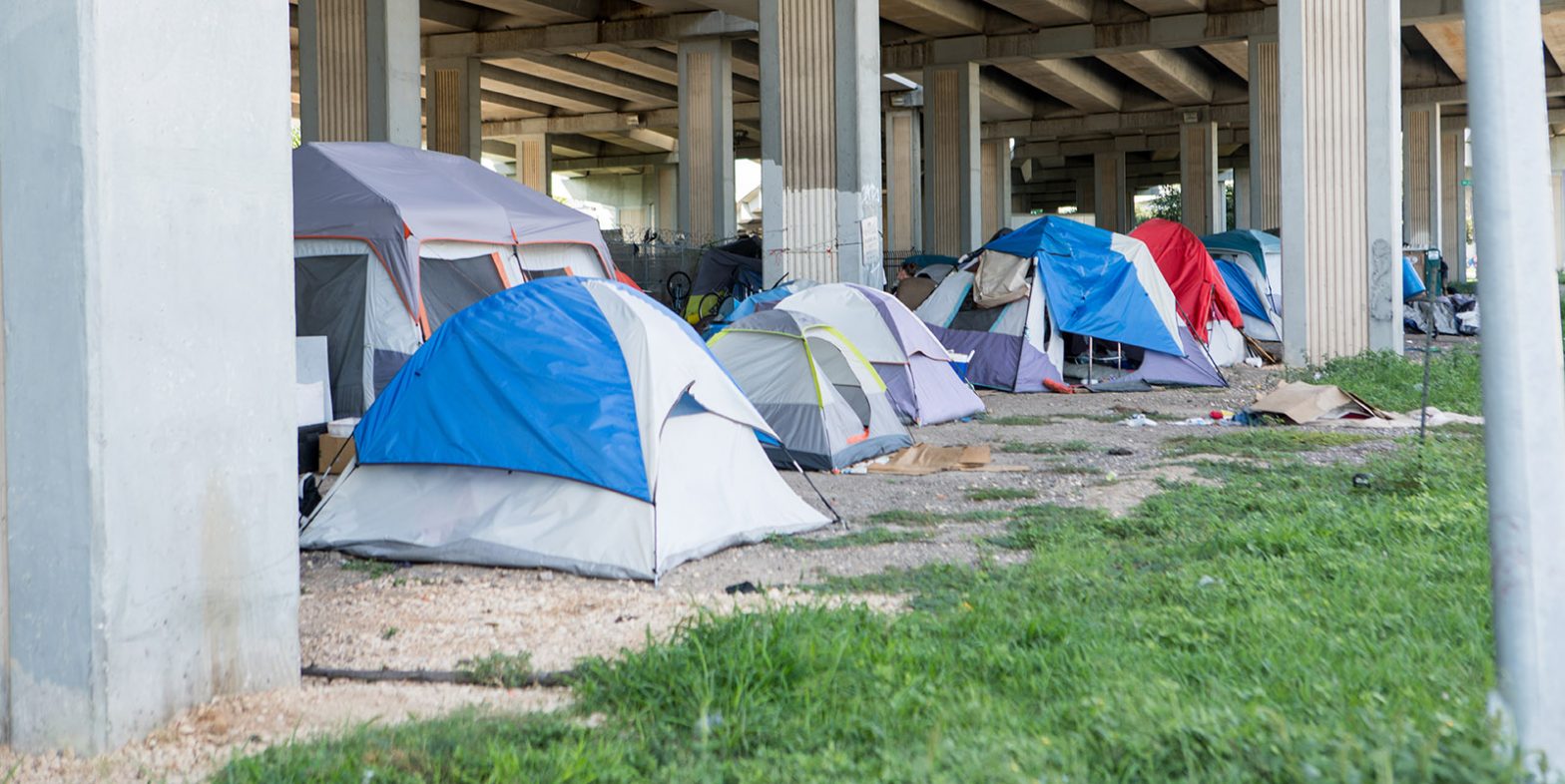
Housing Vulnerabilities in Houston
Unsafe or unstable housing continues to threaten the health, well-being, and economic security of Houston-area residents.
Many low-income households lack the necessary resources to afford soaring rents and bounce back from disasters, leaving them more vulnerable to unsafe housing conditions, eviction or even homelessness.
Why housing vulnerabilities matter to Houston
Hundreds of thousands of Houston-area residents face housing insecurity, vulnerability and disparities. For the most part, these are our neighbors who are burdened by housing costs, face economic insecurity, and have been negatively impacted by multiple devastating disasters. These challenges ultimately increase a household’s vulnerability to the next crisis, which can perpetuate a cycle of housing challenges and instability.
When housing prices rise faster than income growth and more households are forced to allocate more than 30% of their income to housing, the result is heightened housing insecurity and vulnerability. Natural disasters also contribute to housing vulnerabilities because they tend to damage or destroy the “naturally occurring” supply of affordable housing. Houston-area households have been hit with multiple devastating crises such as Hurricane Harvey in 2017, the COVID-19 pandemic, Winter Storm Uri in 2021, and Hurricane Beryl in 2024. Research has found that neighborhoods with greater pre-existing housing disparities see these disadvantages exacerbated by disasters because the homes are less able to withstand or recover from flooding or strong winds in the first place — for several reasons, including location (e.g., in a floodplain), infrastructure disinvestment (e.g., lack of storm drainage), use of low-quality materials, or because of damage caused by previous disasters. These obstacles can lead to unsafe and unsanitary housing conditions, overcrowding, evictions, or even homelessness.
By exploring and understanding housing vulnerabilities in Houston, we can take informed action to increase access to disaster-resilient, safe and affordable housing throughout our region.
The data
Renters are more likely than homeowners to live in housing units with problems.
Low-income households are more likely to sacrifice quality for cost by living in housing units that have structural issues or deficiencies. Housing problems include units with incomplete plumbing that lacks hot and cold piped water, a flush toilet, or a bathtub/shower or an incomplete kitchen that lacks running water, a strove, or a refrigerator.
Housing problems contribute to various health conditions, injuries and poor childhood development. Plumbing issues increase the likelihood of water leaks that promote the growth of mold, which negatively affects respiratory health and increases the likelihood of asthma. Corroded plumbing can increase the risk of lead exposure or poisoning.1
Across Houston’s three-county region, the share of housing units without complete plumbing has fluctuated over the past decade. In 2010-2014, about 0.57% of housing units in the region (10,000 homes) lacked complete plumbing. That improved through 2015-2019, dropping to 0.33% (7,000 homes) but increased once again to 0.43% of housing units with incomplete plumbing, representing 10,000 homes once again.
This same trend of improvement followed by reversal over the 2010-2014 to 2020-2024 period played out across all three counties. Montgomery County experienced the biggest fluctuation of the proportion of housing units without complete plumbing, dropping from 0.67% in 2010-2014 to 0.15% in 2015-2019 and then increasing to 0.45% as of 2020-2024. Fort Bend County remained relatively stable with rates ranging between 0.24% and 0.30% across all three periods.
Both renters and homeowners followed this same dip-and-rise trend, though renters are more likely than homeowners to live without complete plumbing in every period measured. However, that gap has been closing over time with the largest decrease occurring in Harris County. In 2010-2014, renters were nearly twice as likely as homeowners to lack complete plumbing (0.80% vs. 0.43%). By 2020-2024, that gap narrowed with 0.51% of renters and 0.46% of homeowners lacking complete plumbing.
A similar pattern emerges for housing units without a complete kitchen. In 2010–2014, 0.81% of housing units in the three-county region (15,000 homes) lacked a complete kitchen. That rate improved to 0.69% (14,000 homes) in 2015–2019, then ticked back up to 0.74% (17,000 homes) in 2020–2024. Compared to incomplete plumbing, incomplete kitchens are slightly more common across the region.
The proportion of units with an incomplete kitchen in Fort Bend County remained stable throughout all three periods, ranging from 0.47% to 0.49%. Harris and Montgomery counties experienced greater fluctuations ranging from 0.72% to 0.85% and 0.66% to 0.83%, respectively.
One out of 10 Houston-area households that rent are overcrowded
Overcrowding refers to the compromised health and safety conditions that can occur when many people live in a given space (one or more occupants per room). Families will often crowd in with relatives and friends to avoid homelessness, but people need sufficient space to meet their basic needs. Studies have shown that overcrowding can have a negative impact on physical and mental health, and that it can impede early childhood growth, development and education.2
Overall, 6% of occupied housing units in Houston’s three-county area are considered overcrowded in 2020-2024 2023, compared to 5% statewide and 3% nationally. Overcrowding is a bigger issue among renters than homeowners — about 10% of Houston-area renter households are overcrowded compared to 3% of homeowners.
Among the three counties, Harris County has consistently had the most overcrowding over the last decade. In 2020-2024, nearly 7% of occupied housing units in Harris County are overcrowded, compared to 3% and 4% in Fort Bend and Montgomery counties, respectively.
Eviction filings in Houston remain above pre-pandemic levels
An eviction filing is a legal process in which a landlord delivers a written “notice to vacate” and files legal action to evict a tenant from a rental property. Many eviction filings happen because the tenant is late in paying rent, not paying rent at all, or for other reasons listed in the terms of the lease agreement such as damage to the property or illegal use of the property. However, in most American cities and towns—including Houston—landlords can evict renters even if they have not missed a rent payment or otherwise violated their lease agreement; these are called “no fault” evictions, according to Eviction Lab at Princeton University.
Increasing housing cost burden, job loss or low wages, and an overall lack of affordable housing are among the root causes of evictions. Low-income families, low-income women, domestic violence survivors, and families with children are at high risk for eviction. Evictions force families from their community and support network, and children often have to switch schools. It can also cause job loss, adverse mental health effects, and the loss of possessions. Moreover, evictions can prolong a family’s residential instability as it harms the ability to secure future housing (because of court records) and forces low-income families into a devastating cycle of homelessness, problems that often take years to overcome, if at all.3
During the COVID-19 pandemic, evictions were suspended across Texas from March 19–May 18, 2020, though landlords could still give notice of eviction to tenants and file for eviction. In fact, more than 1,500 eviction cases were filed in Harris County during this period, according to January Advisors. Despite the CDC eviction moratorium that took effect on September 4, 2020, only 13% of defendants in Harris County benefited from the mandate. While the suspension of evictions and federal moratorium didn’t completely halt new eviction filings, these protections—bolstered by a surge in funding for rental assistance programs—significantly reduced the number of monthly eviction filings in Houston between March 2020 and December 2021.
During this period, monthly eviction filings consistently fell below pre-pandemic averages for the same month. However, starting in January 2022, local eviction filings have since begun to surpass their pre-pandemic levels. As of December 2025, monthly eviction filings in Houston have not returned to pre-pandemic levels likely due to several factors such as a growing number of residents living below the poverty line, soaring housing costs for renters, and a higher rate of residents being burdened by housing costs. In 2025, there were 77,000 eviction filings in Houston compared to a pre-pandemic yearly total of 58,000.
Read more about the impact of COVID-19 on evictions in Houston
Homelessness in the Houston area falls 63% in the last decade
Research has shown that homelessness has long-term consequences, especially to one’s physical and mental health.4,5 Additionally, the public costs incurred from homelessness can be significant for both health and human services and law enforcement.
According to HUD, there are four categories of homelessness: 1) people who lack nighttime residence and are living in a place not meant for human habitation; 2) those at imminent risk of homelessness and about to lose their home without any other resource; 3) unaccompanied youth under the age of 25 with no stable housing; and 4) people who flee domestic violence with no other residence or support network.
Additionally, people who experience homelessness can be classified as “sheltered” or “unsheltered.” People who are sheltered (whether they are staying at a homeless shelter in Houston or sleeping on a friend’s couch), typically reside in an emergency shelter or transitional housing, while people who are unsheltered reside in a place not meant for human habitation, such as outdoors or in a condemned building.
How many people are experiencing homelessness in Houston? Homelessness in Harris County has fallen from 8,000 in 2011 to 3,000 in 2025. That’s a 63% decrease, while Fort Bend has seen an 85% decline. The number of people experiencing homelessness in Montgomery County has seen an overall increase since 2017, when data started being reported. Even more significant, levels of homelessness in our region fell during a period characterized by one of the largest increases in population in Houston.
Certain groups remain at greater risk of experiencing homelessness than others. What percentage of homeless people are veterans in Greater Houston? Among the people who experienced homelessness in Houston’s three-county region in 2024, 7% were veterans. Additionally, 5% were unaccompanied youth, and 15% were considered chronically homeless. HUD defines chronically homeless as experiencing homelessness for at least 12 months or on at least four separate occasions in the last three years (for a total of 12 months). The rate of people who are categorized as chronically homeless in Greater Houston was lower than the state (19%) and the nation (22%).
The Coalition for the Homeless surveyed people who experienced homelessness in Houston’s three-county area for the annual homeless count and survey, also known as the Point-in-Time Count (PIT), in January 2025 The report found 16% of people experiencing homelessness in the Houston area are under the age of 18, and 77% are over the age of 24; 56% of the local population experiencing homelessness is Black and 26% is white. Additionally, 32% suffer from a serious mental illness; 26% suffer from a substance use disorder; 13% are victims/survivors of domestic violence, and 2% are HIV-positive.
Helpful Articles by Understanding Houston:
- Is Houston Affordable?
- Key insights from our Mental Health Data Dive + Workshop
- Houston is Changing
- Key Insights From Our Webinar on Housing Disparities in Houston
- Key Insights from our Ending Homelessness in Houston Event
References:
- World Health Organization & World Plumbing Council. (2006). Health aspects of plumbing. World Health Organization. https://apps.who.int/iris/handle/10665/43423
- Solari, C. D., & Mare, R. D. (2012). Housing crowding effects on children’s wellbeing. Social science research, 41(2), 464–476. https://doi.org/10.1016/j.ssresearch.2011.09.012
- Desmond, M., Gershenson, C., & Kiviat, B. (2015). Forced Relocation and Residential Instability among Urban Renters. Social Service Review, 89(2), 227–262. https://doi.org/10.1086/681091
- Currie, J., & Tekin, E. (2015). Is There a Link between Foreclosure and Health? American Economic Journal: Economic Policy, 7(1), 63–94. https://doi.org/10.1257/pol.20120325
- Shinn, M., Schteingart, J. S., Williams, N. C., Carlin-Mathis, J., Bialo-Karagis, N., Becker-Klein, R., & Weitzman, B. C. (2008). Long-Term Associations of Homelessness With Children’s Well-Being. American Behavioral Scientist, 51(6), 789–809. https://doi.org/10.1177/0002764207311988
- Analysis of 2020 data by the U.S. Department of Housing and Urban Development (HUD) because the data for 2021 did not include unsheltered counts in its report due to COVID-19 restrictions.