Month: July 2022

  • Key insights from our Mental Health Data Dive + Workshop

    Key insights from our Mental Health Data Dive + Workshop

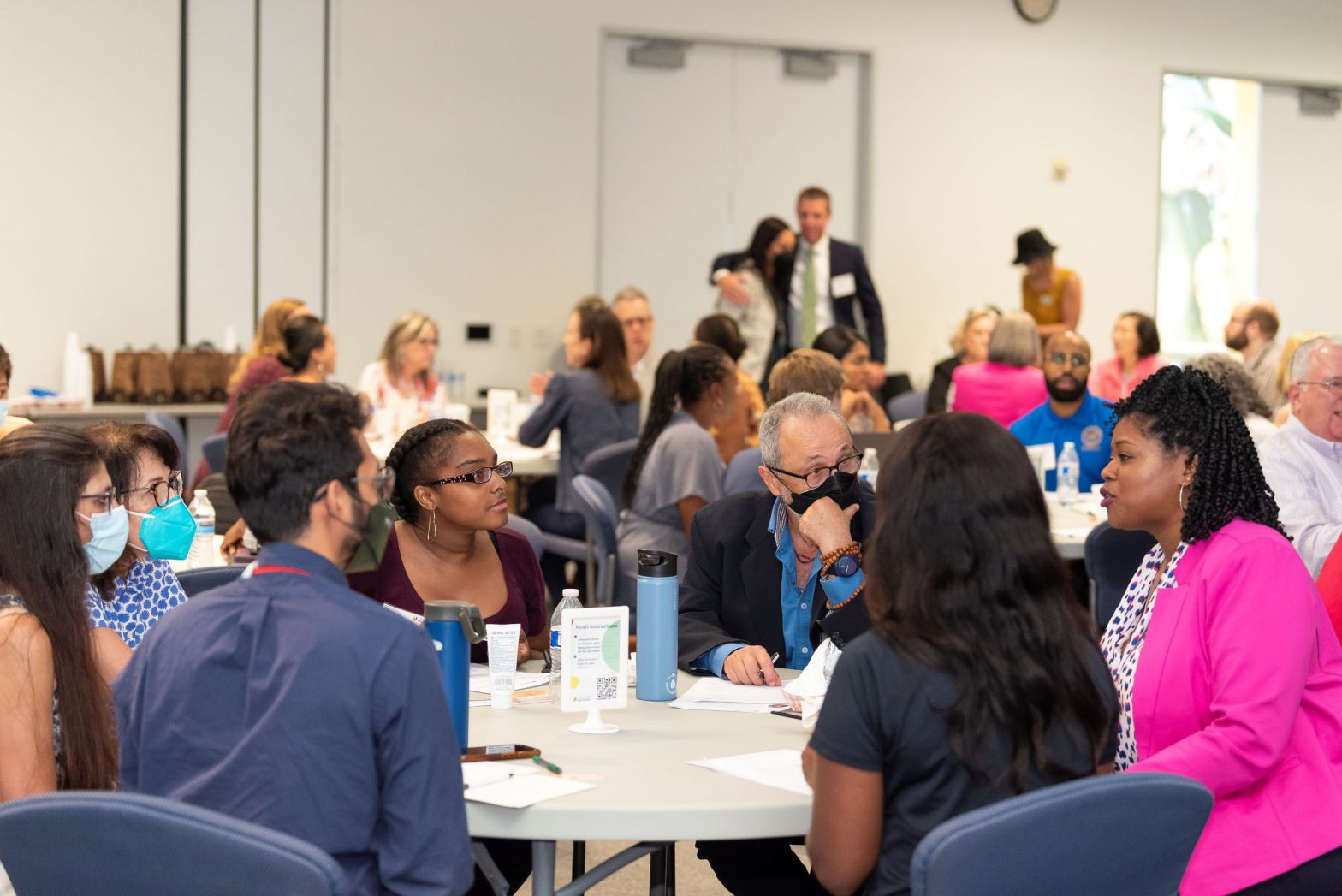
    Greater Houston Community Foundation hosted a program on July 20, 2022, to convene experts, researchers and practitioners around the increasingly severe mental health crisis affecting children and adolescents.

    The program began with a brief data presentation from Understanding Houston, to set the stage for the deeper dives from guest speakers that would follow. The convening featured presentations from the following experts:

    We explored data and different approaches, which included ways to improve child resilience; treat children who are coping with trauma and grief; identify and serve children in both school and community settings; and the various policy and legislative issues that influence the workforce, funding and efficacy in the mental health space. We have provided a few critical insights below, and we invite you to watch the event here.

    Concurrent and consecutive disasters and events have battered our mental health

    The past couple of years have been tough on most of us, but research and studies have shown that this time has been especially difficult for children. Not only due to having to navigate an entirely new way of living caused by a pandemic but also because of several successive, traumatic events in recent years. These events, combined with 24/7 news cycles and social media, can contribute to increased feelings of anxiety and unhappiness. However, the data indicates that things weren’t so great even before 2020.

    In roughly the last decade from 2009 to 2021, the share of American high-school students who say they feel “persistent feelings of sadness or hopelessness” rose from about a quarter to nearly half, which is the highest level of teenage sadness on record, according to the Centers for Disease Control and Prevention.

    But kids are not only struggling with feelings of anxiety and depression brought on by traumatic events. They are also grieving — more than 215,000 children nationally have lost a parent or caregiver who died as a result of COVID-19. Dr. Julie Kaplow, Executive Director of the Trauma and Grief Center at The Hackett Center for Mental Health, calls this the “silent epidemic of childhood trauma and grief.” She emphasizes “silent” because trauma and grief symptoms in children can be disguised which reduces the likelihood of receiving treatment.

    Community-based organizations that work to identify and treat mental and behavioral health challenges in children in school settings or otherwise, have been seeing this with their clients for a few years. As Shubhra Endley, Director of Mental Health and Wellness at Communities in Schools of Houston, noted, “We had barely wrapped up our mental health support we were doing in response to [Hurricane] Harvey, and we are now having to deal with housing instability, food instability — because of jobs that got cut during the pandemic — and it’s all impacting the well-being of our students.” Heads around the room nodded in agreement.

    Jessica Cisneros, Chief Clinical Officer at Family Houston, noted that it is one thing to identify students in need and offer help, and it is another issue entirely for a family/child to accept support. She notes the historically lower uptake rates among Latinos. Similarly, a survey from Episcopal Health Foundation and Kaiser Family Foundation found that Latinos were the least likely to receive mental health treatment after experiencing negative effects on mental health from Hurricane Harvey compared with Black and white residents.

    Aside from the typically lower insured rates among this demographic, cultural norms within the broader Hispanic community can stigmatize mental health treatment. But, that tendency could be reversing. Cisneros shared, “In the Latino community, we have seen a greater focus in reducing stigma by introducing psychotherapists on Spanish-speaking networks,” and she has seen positive results.

    There is a clear need for mental and behavioral treatment and therapy. But even if everyone who needs and wants help seeks it out, how available and accessible is treatment?

    A local mental and behavioral health provider workforce shortage is exacerbating treatment challenges

    Texas ranks last among states in mental health care access according to Mental Health America’s 2022 State of Mental Health report. And, residents in our three-county region have even less access to mental health treatment than the state average. Fort Bend County has the least amount of access to mental health treatment with only one mental health provider for roughly every 1,200 residents.

    These numbers cover mental health professionals for all ages, but if we look at the availability of child and adolescent clinical psychologists and psychiatrists, the numbers get worse. According to data from the American Psychological Association, out of the 100,000 U.S. clinical psychologists, only 4% are trained child and adolescent clinicians. Fort Bend, Harris and Montgomery counties all have a severe shortage of practicing child and adolescent psychiatrists.

    A Houston Chronicle analysis of staffing at 1,200 school districts in Texas found that many school districts do not meet the recommended ratios for these positions. 

    • 4 districts met the recommendation for social workers 
    • 24 districts for counselors 
    • 25 districts for psychologists 
    • 398 districts for nursing staff

    Andrea Usanga, Executive Director of Network of Behavioral Health Providers, works to increase the provider workforce through education and advocacy. She has been sounding the alarm for over a decade. 

    In 2009, Usanga testified before the Texas legislature on the mental and behavioral workforce shortage — at the time, about one-third of the counties in the state did not have the designation of partial or total Mental Health Care Health Professional Shortage Areas (HPSAs). Now, only one county of the 254 does not have a shortage. She urges action, “If we don’t start getting people in [the mental and behavioral health workforce] pipeline to be able to address these issues down the line, we are going to be in even bigger trouble.” Jessica Cisneros shared that Family Houston has also lost a significant number of staff during the pandemic’s peak which has made it harder to treat anyone who seeks help. 

    We need to do more to prevent challenges from snowballing and giving kids the tools they need to build resilience

    Usanga noted in her remarks, “At the exact time we are seeing increases…our available professional supply is going down.” So, how will everyone get the help they need? As Marcy Melvin, Deputy Director of The Hackett Center for Mental Health, implored at the beginning of her talk, we need to “… reimagine how we think about, talk about and define mental health treatment.” 

    Preventing mental health disorders and building resilience in children to cope with life challenges should be a priority now, Melvin declares. “We are never going to get to the point where we have enough practitioners to meet all of the needs of youth…We can’t stop bad things from happening, but what we can do is build the capacity so that when trauma, hard things happen, we have children and youth who have the capacity to be able to manage and get through those situations.”

    Melvin encourages all of us to engage in conversation, lean into community and equip children and youth with the tools they will need to successfully navigate future challenges. The Hackett Center promotes early childhood education as instrumental in that effort. Since a child’s brain is still forming and developing rapidly at that stage, integrating these tools early will build solid brain formation to help children manage stressors effectively. This preventative and resilient approach, particularly when implemented in early years, potentially avoids worsened feelings of hopelessness that can feel insurmountable when we don’t know how to cope.
  • Houston is Hot

    Houston is Hot

    Residents of the three-county region are no strangers to Houston’s heat

    We all know that Houston is hot. How quickly is Houston getting hotter and why? And what — aside from making us sweat — are the implications of the region’s excessive heat? 

    The rising heat foreshadows many distressing possibilities as it relates to climate change, as well as less obvious public health and economic impacts. Extreme heat in particular already kills more Americans every year than any other weather-related disaster. 

    With eight federally declared disasters in the last decade alone, a deadly winter storm in 2021, and consecutive record-setting summers, many of us feel we are already living with extreme weather. The region is currently experiencing its most severe early summer drought conditions in nearly a decade, and Houston is coming off of the hottest June in its history. The data surrounding the rising heat and the populations most affected by it can tell us a little more about both why Houston is hot and why it matters.

    How hot is “hotter,” exactly?

    Members of the Houston population who have been here a while are acclimated to Houston’s summer heat as much as one can be, although the prospect of it getting hotter surely isn’t welcomed by anyone. To answer the important qualifier of how Houston is getting hotter, we look to climate normals. 

    Climate normals, provided by the National Oceanic and Atmospheric Administration (or NOAA), are 30-year averages for climate and weather variations like temperature and precipitation. Because of the 30-year period over which they are recorded, climate normals provide a more clear picture of how our weather changes than annual variances do.

    The Climate Normals published by NOAA in May 2021 (with data representing 1991–2020) show that, compared to the previous 30-year average (1981–2010), average temperatures in the Houston region went up by between 0.6 to 1.0 degrees Fahrenheit, and annual rainfall increased by around two inches. 

    The region has already experienced a significant uptick in the number of days of extreme heat, which is defined by the CDC as days with temperatures of 95 degrees Fahrenheit or hotter. In fact, Montgomery County experienced 231 more days of extreme heat in the 2010s than it did in the previous decade — that is almost two-thirds of a year of added extreme heat over the last decade. Additionally, Harris County saw the number of days of extreme heat almost double over the same period, from 233 to 436.

    Continue reading about disaster risks and climate change in Houston

    Montgomery County experienced 231 more days of extreme heat in the 2010s than it did in the previous decade.

    How hot could Houston’s weather get?

    According to data from the Office of the Texas State Climatologist, the projected average temperature in Texas in the year 2036 is 1.8 degrees Fahrenheit warmer than the 1991–2020 average, and 3.0 degrees Fahrenheit warmer than the 1950–1999 average. They also project that the number of days in which temperatures reach 100 degrees Fahrenheit in the year 2036, will be nearly double the average rate for 2001–2020 in concentrated urban areas.

    Long-term projections predict a story of longer summers, longer Houston heat waves and less rainfall. While, according to the Resilience Science Information Network (RESIN), average annual precipitation amounts are not projected to change significantly, the season in which the precipitation occurs is. Essentially, when it does rain, it is expected to be more intense, but there is also the possibility of longer droughts. It is important to note that although the number of hurricanes the region will face is not expected to rise, the strength of the hurricanes that do make landfall is. RESIN warns that a decline in rainfall, combined with extended summers and heatwaves, could have a serious impact on social vulnerability, critical infrastructure and natural habitats.

    Projecting what Houston weather could look like in the future can be tricky, and doubt has been cast about the ability of climate models to accurately predict changes in temperature and precipitation. Research tells us, however, that climate projections tend to be pretty accurate. For example, a 2020 NASA study compared 17 climate model projections of average global temperature that were developed between 1970 and 2007 with actual changes in global temperature. Ten of the 17 models were spot on while the other seven were off by about 0.1 degree Celsius per decade. The researchers found that there was no evidence that these climate models have historically over or underestimated the impact of rising temperatures. Given today’s advanced technology and climate models, researchers express confidence that current scientists are skillfully predicting the impact of global warming.

    The Houston heat impacts some more than others

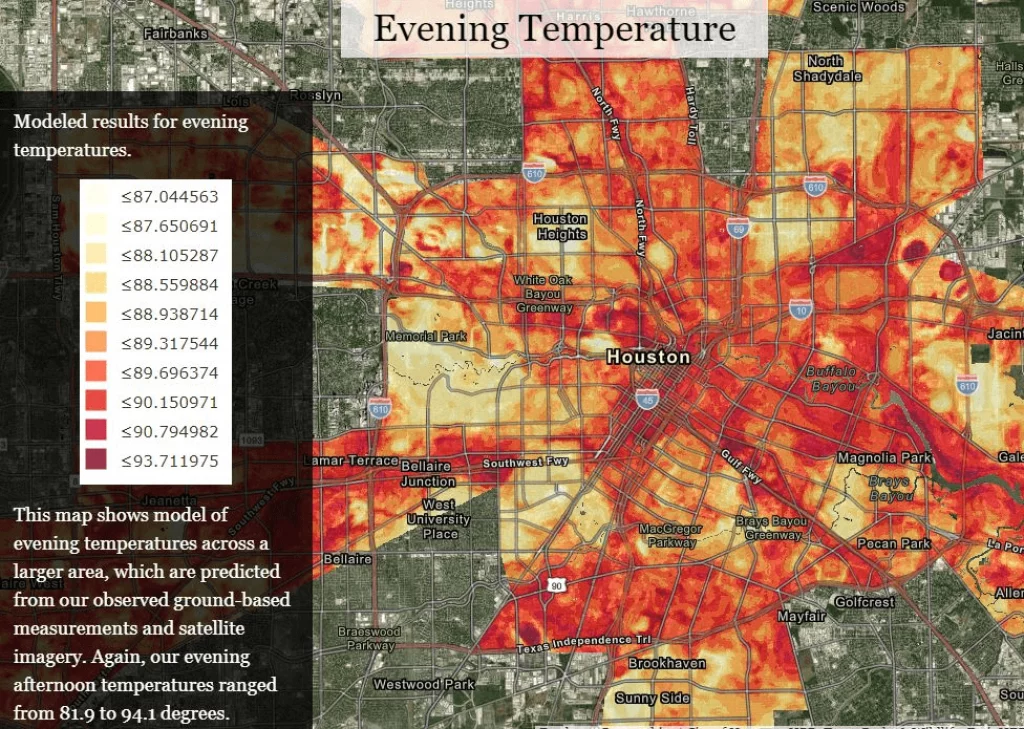
    Houston’s heat doesn’t affect everyone equally. Temperatures often vary by neighborhoods within the same city, where built infrastructure like bridges, parking lots and buildings contribute to pockets of heat known as “heat islands.” Heat islands are most likely to occur in urban areas, where there is too much concrete and too few trees to alleviate the heat. Concrete and pavement retain heat during the day and radiates it back throughout the evening, which keeps the surrounding area hotter for longer. We can feel the difference between walking across a vast parking lot on a steamy July afternoon compared to walking down a street with trees that meet in the middle.

    Houston ranks fourth in the nation in urban heat island intensity, and low-income communities and communities of color are most likely to have high nighttime temperatures in Houston.

    Heat islands are the greatest driver of heat-related health issues according to Houston Harris Heat Action Team. These heat islands can result in daytime temperatures in urban areas 1–7 degrees Fahrenheit higher than temperatures in outlying areas, and nighttime temperatures 2–5 degrees higher.

    Houston Harris Heat Action Team Heat Islands
    Source: Houston Harris Heat Action Team

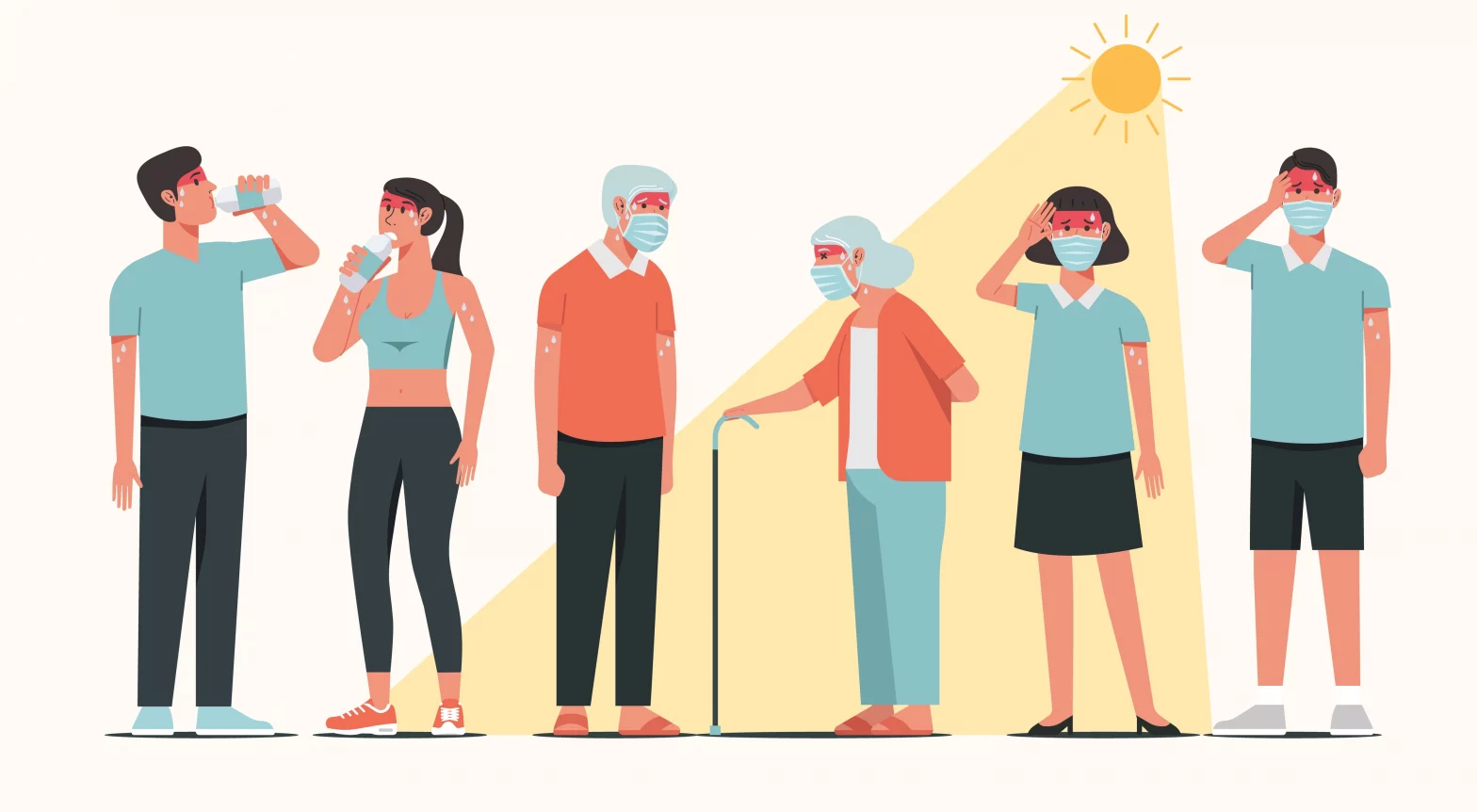
    According to the World Health Organization (WHO), temperature extremes can worsen chronic cardiovascular, respiratory and diabetes-related conditions, and even small changes in seasonal average temperatures are associated with increases in illnesses and death. Extreme heat already kills more Americans every year than any other weather-related disaster, and WHO reports that extreme heat events are only increasing in frequency, duration and magnitude.

    Extreme weather may hurt our economy

    The greater Houston region has already witnessed how extreme weather can affect our local economy. In 2017, when Hurricane Harvey inundated our region over several days, nearly all businesses were forced to shut down for a period of time because it was simply impossible to get anywhere. Much of the storm’s cost, estimated at $125 billion, is attributed to interruptions in business and employee displacement. 

    More recently, when Winter Storm Uri surprised the region in February 2021, power outages were rampant throughout the state and burst pipes damaged thousands of businesses and homes. These impacts to the Houston economy are estimated at $130 billion

    Globally, researchers estimate that rising temperatures could reduce crop yields by 30–46% before the end of the century under the slowest (B1) climate warming scenario and 63–82% under the most rapid (A1B) scenario, which would threaten our global food supply. It isn’t just national crops and higher electricity bills; extreme weather puts incalculable stress on local communities.

    In Houston, heat isn’t going away 

    Houstonians are already enduring the effects of excessive heat, but those risk factors will only become more acute as climate change continues to affect the region, and our region’s most vulnerable residents will bear the brunt of the harm. 

    How do you deal with heat in Houston? A few reminders as we get through the hottest time of the year:

    Houston is getting hotter, and we should prepare for heat and for a future of weather extremes that could repeatedly test the fabric of our region. Our continued ability to grow and prosper may depend on it.

    Helpful Articles by Understanding Houston: