Category: Education

For blogs that talk about Education

  • Fifth Ward Builds a New Library to Fight Illiteracy

    Fifth Ward Builds a New Library to Fight Illiteracy

    I’ve been the Pastor of Olivet Baptist Church, located in the Fifth Ward since 2004. Approximately 10 years ago, our church formed a nonprofit, Olevia Community Development Corporation, to take an active role in our community by developing people, property and resources within the Fifth Ward, a consistently under-resourced minority community since its beginning in 1866.

    “A Silent Crisis”

    In September of 2019, Houston Mayor Sylvester Turner launched the first ever Mayor’s Office for Adult Literacy. Director Federico Salas-Isnardi quickly set about employing a two-year study in partnership with the Barbara Bush Houston Literacy Foundation focusing on adult literacy, known as Houston’s Adult Literacy Blueprint, published in 2021.

    What the study found was a “silent crisis”: 32% of Harris County adults are functionally illiterate, meaning more than one in every three residents do not have the literacy skills they need “to successfully perform their role on the job, in their family, or in society.” The study’s conclusion: Houston needs to act strategically and proactively to address the pervasive, multifaceted, complex nature of low levels of adult literacy.

    Greater Houston’s population of more than 6.2 million is among the most diverse in the country, with a quarter of residents born outside of the U.S. and 145 spoken languages here. In Harris County – there is no racial/ethnic majority – though 44% percent identify as Latino, 19% percent as Black, and 7% as Asian American. Our region’s diversity is a strength — one that brings together different experiences, perspectives, and ideas.

    However, we also have challenges. Consider the finding that Black and Latino adults in Harris County are 3 times more likely than white adults to have low literacy skills,1 and that 94% of adult learners in Harris County are individuals from nondominant groups, with the vast majority (greater than 85%) being Black or Latino.2 This report found that the issues of illiteracy are rooted in underlying social conditions which go unnoticed in our collective consciousness.

    Why illiteracy matters

    The economic disparities in neighborhoods of color in Houston directly relate to overall educational attainment and literacy, by extension. In particular, poverty is closely intertwined with illiteracy. According to one national study, 43% of adults with the lowest literacy skills live in poverty, compared to 4% of those with the highest literacy skills.3


    In Fifth Ward, the median income is $38,000 (less than half the state average), 37% live below the poverty line, and 32% of adults have not completed high school. For comparison, about 17% of adults in Harris County have not completed high school and 15% live in poverty.

    What the study points out — and what we know from living, working, and ministering in the Fifth Ward — is that children of parents without a high school diploma have a much higher likelihood of also not finishing high school, which establishes a recurring pattern, often spanning multiple generations. With more than one million functionally illiterate adults in Harris County, the implications are dire.

    In fact, low literacy rates challenge the well-being and prosperity of families across our region and prevents many adults from reaching their fullest potential in life and the pursuit of the American Dream. When fewer of us do well, that threatens our region’s overall economy and social vitality. The literacy report found that Harris County’s economy could grow by $13 billion if adults with the lowest level of literacy increased their skills just by one level – that translates to a 3.3% increase in GDP. Further, research has shown that adults with low literacy tend to have worse outcomes in health, job opportunities, and economic stability. If low literacy rates in our region continue, we will not have the skilled workforce we need to support tomorrow’s economy, which could negatively impact our region’s growth and prosperity.

    Libraries as one tool in the fight

    Libraries are champions in the fight against illiteracy as they tend to offer a diverse range of approaches for both children and adults, are generally accessible in neighborhoods, and are free to all. One of the many solutions to tackling adult literacy is to fund more robustly community library programming. This literacy programming should include classes in ESL, workforce development and training, financial literacy, health literacy, and digital literacy. As Edward Melton, Director of the Harris Co. Library System, shared with us recently, “You can’t just build a library and believe people will come. You must have literacy programming dedicated to the needs of the immediate community.”

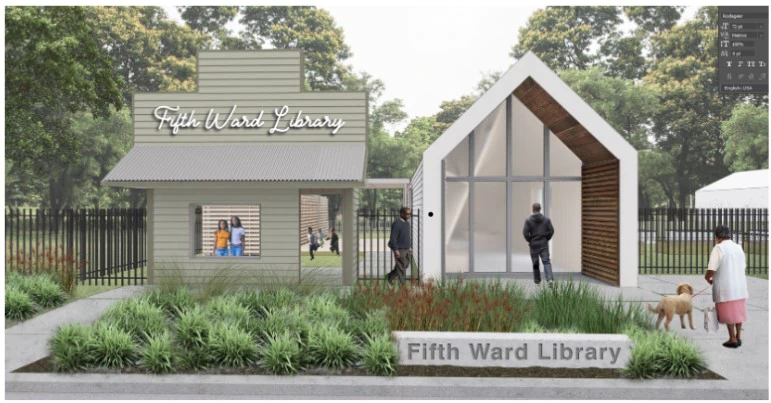
    Recently, we at the Olevia CDC have been working on the development of a library in the Fifth Ward as none exists for the 17,000 people who live in this neighborhood directly adjacent to and northeast of downtown Houston. The City of Houston Library in the Fifth Ward was located next to the Fifth Ward Multi-Service Center, but it received extensive damage from Hurricane Harvey in 2017 and has been closed since.

    This void has left the community without a valuable and needed resource for its citizens both young and seasoned for the past six and a half years. That means the following services are not being provided for Fifth Ward residents: programs and events such as story time for children, book clubs, and author talks. Along with missing traditional library services, neighborhood libraries also offer unique resources such as free access to online learning platforms, free tax preparation for seniors, access to free legal aid, health fairs and screenings, food giveaways, and so much more.

    In addition to providing basic services, the Olevia CDC’s library project is primed to be a destination space for the community and the neighborhood as it will utilize a historic building to create an innovative reading space. We partnered with the University of Houston Gerald Hines College of Architecture and the Design Build Master’s Classes to complete a structure that will fit within an existing unused donated structure.

    While books and literacy are paramount, we also plan to provide e-books via mobile devices, establish a community garden, host indoor and outdoor performances, an onsite coffee shop, spaces to hold community events, such as weddings, birthday parties, author book signings, Houston sport and entertainer celebrity reading literacy nights, corporate sponsored literacy events and much, much more. We intend for literacy and fun to be interconnected and highlight the true benefits of literacy.

    Join the fight

    As the Houston community begins to address this silent literacy crisis, it is clear from the Literacy Blueprint report that investing just $2,200 per year in adult education “can raise an adult learner up two grade levels.” By improving adult literacy rates through education and skills training, a greater number of Houston’s most marginalized, including those in the Fifth Ward, will be able to advance economically, support their families, and play a positive role in our society.

    There are many ways to join the fight against illiteracy in our region. I encourage you to see how you can get involved in your local library system — such as Harris County’s or Houston’s — to read to children or tutor. You can also join the literacy movement or volunteer in some other capacity. To learn more about our efforts in the Fifth Ward, including our efforts to build a new library, please visit us at Olevia Community Development Corporation.

    End Notes

    1 Program for the International Assessment of Adult Competencies (2017)
    2 Houston-Galveston Area Council (2021)
    3 Kirsch, I., et al., Adult Literacy in America: A First Look at the Results of the National Adult Literacy Survey. (Washington, D.C.: Office of Educational Research and Improvement, U.S. Dept. of Education, 2022) 61.

  • Guest Blog: Ending the inertia of student mobility in Houston

    Guest Blog: Ending the inertia of student mobility in Houston

    It matters that 60,000+ Houston-area students change schools each year. Here’s what we can do about it.

    Each school year in the Houston area, more than 60,000 children leave the school they were attending to enter another school. Given that more than 700,000 students are served by Houston-area schools1, the number of children moving may seem trivial, but for the teachers, classrooms, and students actually making these moves, this student mobility is disruptive, destabilizing, and carries both short- and long-term consequences.

    Students who change schools score lower on the State of Texas Assessment of Academic Readiness (STAAR) tests, both during the year they change schools and in subsequent ones. Changing schools also places students at an increased risk of being retained a grade, dropping out of high school, and failing to graduate at all. Moreover, the costs of student mobility extend beyond the mobile kids themselves — schools and classrooms with higher mobility have fewer kids passing the STAAR and lower overall ratings, even though these ratings are based almost exclusively on students who haven’t changed schools. Mobility matters for students, for schools, and for communities, and to better address the challenges it poses to the Houston area, we must first know more about who is mobile, where mobility takes place and why mobility happens.

    Which students are mobile

    Our research found patterns among students who change schools. In the Houston region, white students and Black students are more likely to change schools than Hispanic students or Asian students. Student performance — as much as it is affected by student mobility — also predicts which students will change schools. For instance, if a student scores in the bottom 10th percentile on the STAAR math test, during the next school year that student is five times more likely to change schools as their peers who scored in the top 10th percentile. 

    Students with lower STAAR scores in 2015-16 were more than five times as likely to change schools in the 2016-17 school year

    Perhaps the most notable trend in mobility is its inertia — students who change schools one year are more likely to change schools again the next year. In fact, about one in five previously mobile students will change schools again, compared to about one in 20 non-previously mobile students. Student mobility begets student mobility begets student mobility.

    1-in-5
    previously mobile students will change schools again, compared to about 1-in-20 non-previously mobile students.

    Where mobility takes place

    One of the features of student mobility that makes it so disruptive is that it typically involves students changing not only their school but also the district they attend. Less than one-third of student mobility begins and ends at campuses in the same district. That means the majority of student mobility involves students going to a new school, in a new district, with new rules, cultures, classroom climates, and social contexts. But while most student mobility travels between school districts, that does not mean students and their families are moving great distances. Some of the most common student mobility is between neighboring campuses, it just so happens that in the urban context of Houston, those campuses belong to different districts.

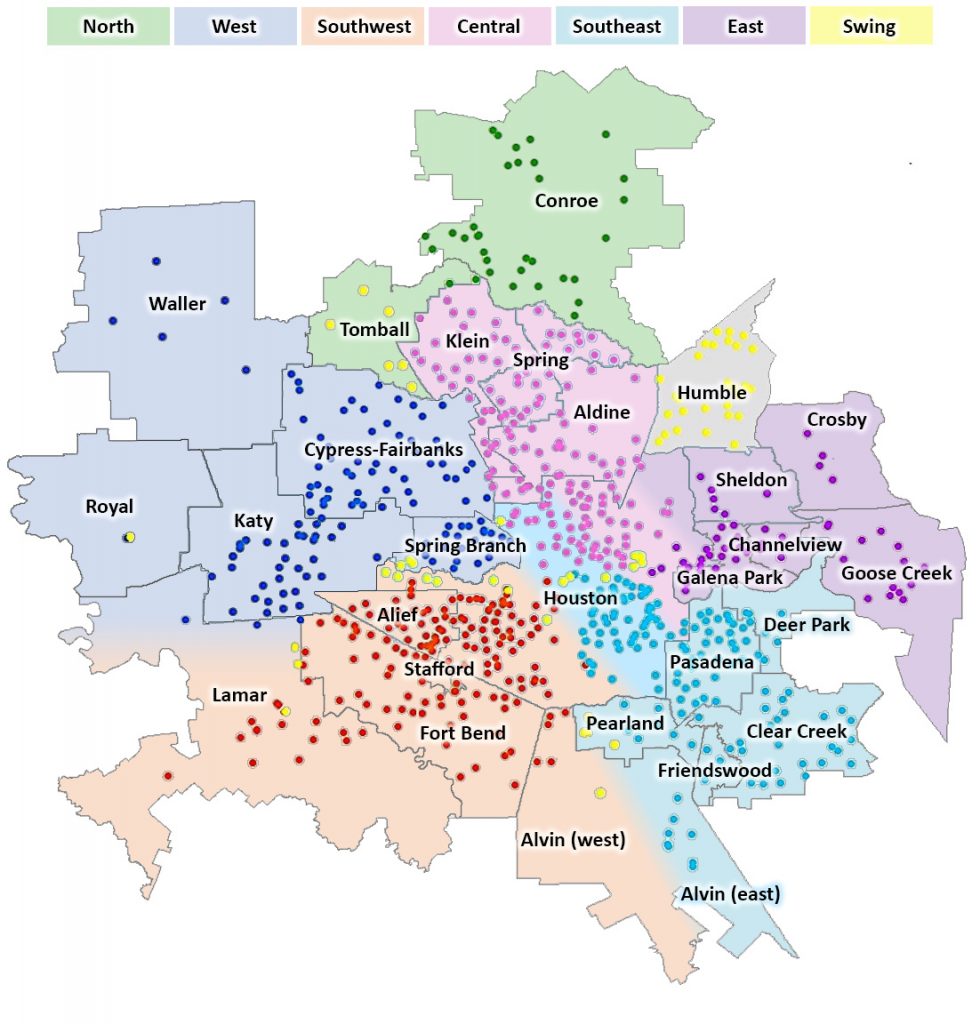
    This pattern of student mobility — going between districts but remaining close to home — has produced six major student mobility networks in the Houston region. These mobility networks consist of schools who commonly exchange students during the school year, are geographically clustered, and cut across district boundaries. They are identified as the Central, East, North, Southeast, Southwest, and West networks, as depicted in the image below. To see and learn more about these six mobility networks, click here.

    Source: Bao, K., Molina, M., Kennedy, C., & Potter, D. (2021). Student mobility networks in the Greater Houston area: Elementary school student mobility networks. Houston, TX: Houston Education Research Consortium, Kinder Institute for Urban Research, Rice University.

    “Less than one-third of student mobility begins and ends at campuses in the same district.”

    Why student mobility happens

    The reasons students change schools, while diverse, tend to be driven by economics and education. The economic drivers of student mobility relate to the diminishing availability of quality, affordable housing in Houston. As parents look to balance better, safer communities and affordability, there is an ongoing cycle of mobility that follows — as evidenced in the inertia of student mobility mentioned earlier. In addition to finding affordable housing, parents also face decisions around where to live relative to where they work. 

    And from an education perspective, a student’s current school may not be working for them,so the parents may decide to relocate. Despite the best intention behind much of mobility — finding better housing, seeking out a schooling context more aligned with what a parent wants — the school change is disruptive to students’ learning and achievement.

    Why student mobility issues persist in Houston

    Changing schools is a disruptive event, particularly when it is accompanied by a change in where a family lives. Many districts around the Houston area have policies and plans — formal and informal — to help minimize the disruptiveness of the change. Some schools that experience high levels of student mobility have “welcoming teams” of students who buddy up with the newly arrived peer to show them around the building, help them with their class schedule and get them accustomed to the new campus. Other districts have invested in academic support specialists who are connecting with mobile students within 48 hours of their arrival to their new campus to meet them, learn about their skills, and plug them into any remedial services that help prepare the student to fit into their new classes. Still other districts have “home school” programs, so that if a child’s family needs to find a new home they can finish out the school-year at their original school (in some cases, even if the family has moved to a neighborhood in a different district). 

    Districts already do so much in service to mobile students, so why does changing schools continue to have such negative consequences?

    First, student mobility is a regional problem that districts are being forced to grapple with independently. That so little mobility stays within a district means that even if a district passed policies or plans to eliminate all of its student mobility, those plans — which would likely carry significant costs — would address less than one-third of the student mobility coming into the district each year. This fact notwithstanding, districts have put into place systems that minimize disruption in the logistics of students’ education when they change schools within the district. 

    Every district in the Houston region has an integrated student information system that connects all campuses in a district in real-time. If a student was enrolled in School A on Friday and School B on Monday, if those schools are in the same district, all of the student records and information associated with that student follow them instantaneously. These records are critical because they contain information on special services and accommodations students receive, such as services or supports provided for students with Individualized Education Plans (IEPs) in special education programs. These student records also include information about English learner status, gifted/talented status, interventions or other programs the student may be involved with, and other details about a student’s schooling that are not always otherwise available.

    Texas public schools have a way to exchange these records between school districts, the Texas Records Exchange (TREx), but the system involves one campus requesting information and another campus sending information. This process can often be slow and burdensome. In terms of instruction time, the loss of a week or more when a student is not receiving the appropriate supports and services can set students back significantly. Improving upon the TREx system to provide real-time access to student records across districts would go a long way to optimizing the continuity in children’s education, but any such improvements would need to be made with an eye towards logistical and data security matters.

    Second, since student mobility tends to travel between districts, mobile students become the responsibility of everybody and simultaneously nobody. Mobile students find themselves in this space, in no small part, because currently the Texas Education Agency (TEA) only counts students for accountability purposes if the student was enrolled at a school at the time of the October Snapshot (early part of the school year) and when state assessments were administered (later part of the school year). For those students who change schools in the middle of the year, their STAAR performance is not counted toward any campus, and if the student moved between districts, it’s not counted toward any district. TEA excludes all students who change schools during the school year from the accountability subset. This makes sense — to hold a campus and district accountable for its students who have been there the whole year — but also opens up the opportunity for mobile students to fall through the proverbial cracks.

    Exploring available solutions

    As a multi-district issue, many districts will need to work together to address student mobility. Additionally, the same way school districts currently have assistant superintendents overseeing elementary schools or directors of multilingual programs, the state needs to fund parallel positions for overseeing mobile students.State funding could be specifically allocated to positions housed within districts tasked with working across districts to streamline information sharing, collaborate on policies prioritizing schooling stability, and work to curtail the drivers of student mobility as well as its consequences. In doing so, districts and the state can work together to support these students currently poised to slip through accountability cracks.

    Admittedly, a school district could independently opt to prioritize its mobile students and fund a “director of mobile student services” position; however, as discussed above — mobility is not a single district’s issue. Asking for a district to foot the bill for a position that would work to serve and support students coming from other districts as well as going to other districts could be unnecessarily fraught with problems, as parents and communities might reasonably ask why their tax dollars are going to support students who are no longer attending a school in their district. 

    The state — or, potentially entities in the philanthropic community — could serve as a funder to offset community expenses, building on the precedent of the state’s programs and departments aimed at supporting “highly mobile” students (which is a program appropriately aimed at supporting students and their families who are experiencing homelessness), to create a new initiative in charge of overseeing and supporting a larger segment of the student population: those who change schools each school year.

    In addition to lessening the consequences of mobility, reducing the phenomenon altogether is also an option worth exploring. To keep students in the schools that work for them and their families, funds could be raised in order to allow public school districts to financially support families being forced to move to find affordable housing. While the reasons given above for students changing schools listed economic and educational reasons, the most common reason is economics, and in the Houston context that often translates to families needing to find safe, affordable housing

    To the extent families are being forced to move because they can no longer afford their current housing arrangement, funds could be set up in a district to support families and to do so in a sliding-scale manner to ensure that the most supports went to help those who could benefit the most from it. The source of these funds could be philanthropic, carved out from current budgets, or through the establishment of a new tax. Though no one wants a higher tax bill, small increases to property taxes that went towards keeping families housed who would otherwise be moving, could actually help increase property values by creating more stable residents, reducing transiency, and promoting the family and education in the community.

    Final thoughts

    Tens of thousands of students change schools in the Houston area each year. This mobility translates to lower test scores and higher risks for grade retention and dropout. Yet, it is not a mystery which students will change schools, and there is a relatively high degree of certainty where students will go when they’re mobile. 

    The newfound understanding of this phenomenon in the Houston area shows student mobility is both widespread throughout the region and can be dealt with proactively. Student information systems can be connected across districts to ensure greater continuity in children’s education, positions can be established with the purpose of directly and intentionally supporting mobile students (and their families), and trivial adjustments to tax-rates can translate to meaningful sums of money tagged to help stabilize families and communities. 

    Student mobility has been part of the Houston region and educational landscape for years, but it does not have to be. Now knowing the patterns and predictors of who is mobile, where they are mobile, and why they are mobile offers the opportunity to move past understanding student mobility in the Houston context to do something about it.

    References:

    1Houston-area schools refers to the collection of 10 public school districts in and around Harris County who partnered with the Houston Education Research Consortium (HERC) to study student mobility.

  • COVID-19’s ongoing effect on students in Greater Houston

    COVID-19’s ongoing effect on students in Greater Houston

    A data-driven look into how the pandemic has affected students in Greater Houston 

    Since March 2020, the world has been coping with the devastating impacts of the COVID-19 pandemic. For many students, the classroom suddenly became the kitchen table. Their teachers were now little squares on a screen. The learning experience that most students were accustomed to had been flipped upside down. 

    As the 2021-22 school year approaches and students return to the classroom amidst the fourth wave of COVID-19 infections, the pandemic and its effects are still ongoing. We’re analyzing available data on how COVID-19 has affected Houston-area students to shine a light on the challenges students may continue to face in yet another pandemic-affected school year.

    The struggle to adapt to online learning 

    The COVID-19 pandemic has drastically changed the way students experience their education. As Houston-area school districts and campuses transitioned to 100% online learning at the start of the pandemic, the need for stable internet and consistent access to technological devices like laptops and tablets became a necessity. 

    However, according to research from the Houston Education Research Consortium and RICE University, 20% of families reported that their child(ren) did not have a personal device such as a computer, laptop or tablet to do their schoolwork. The research also suggests that income played a significant role in setting students up for success in the form of access to the required resources to make online learning possible.  

    Almost half of the participating households earning less than $20,000 per year reported not having a device or internet for their child(ren) to complete schoolwork, compared to only 4% of families earning over $100,000 per year. 

    1 in 5 families

    in the Houston area lacked internet access or a digital device for their child(ren) to use to do their schoolwork during the early months of the pandemic.

    Source: Gulf Coast Coronavirus (COVID-19) Community Impact Survey

    Daniel Potter, Associate Director of the Houston Education Research Consortium, notes how research suggests that the pandemic has pushed a larger proportion of Black and Hispanic students online, which can negatively impact learning. According to his organization’s findings, 70% of Black students and 60% of Hispanic students in the Greater Houston area opted into virtual learning in the 2020-21 school year compared to white students (40%). These are the same students who are more likely to attend high-poverty schools that have fewer resources –– including necessary technology –– to engage all students successfully. 

    Parents show anxiety regarding students’ readiness for school

    In the Gulf Coast Coronavirus (COVID-19) Community Impact Survey, a majority of surveyed families reported feeling worried that students would not be ready for the 2020-21 school year. Those without access to WiFi worried more –– 67% of families without access to WiFi/Internet and a device for schoolwork expressed concern that their child would not be ready for the upcoming school year, compared to 49% of families with access to WiFi and devices for schoolwork. 

    Families that reported having access to WiFi and devices for schoolwork were not as worried about their children being prepared for the school year because they had the necessary resources. In an attempt to close this digital divide, Houston school districts distributed print copies of educational materials to families with limited access to technology to prevent students from falling behind. Additionally, WiFi hotspots purchased by the districts made online learning more accessible to all.

    The impacts on student performance

    From the cancellation of state standardized testing to the mandatory shift to remote instruction in March 2020, COVID-19 had a huge disruption on students. As schools transitioned into a “hybrid” learning model of virtual and in-person instruction in 2020-21, most campuses and students adapted to the new normal. However, as we begin the second full academic year in the era of COVID-19, the impacts on student learning and performance are beginning to emerge, though there is still much we do not know. 

    According to the Kinder Institute for Urban Research at Rice University, in the 2020-21 school year, several districts reported a significant increase in the percentage of students failing at least one course. Their findings also show that failure rates were typically highest for students attending school in the online/virtual setting.

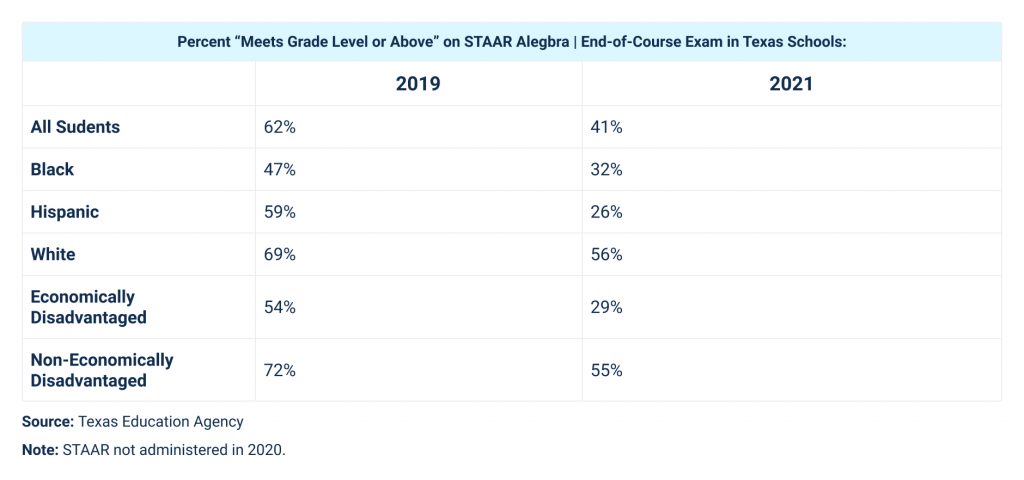
    One measurable assessment, the eighth-grade math proficiency exam, is important in assessing student readiness for high school. The results from the Algebra I End-of-Course (EOC) State of Texas Assessments of Academic Readiness (STAAR) given to students in Spring 2021 show a significant decline in performance compared to 2019. Performance was on an upward trend prior to this decline.

    In Spring 2021, 41% of students who took the Algebra I EOC exam met the state standard, compared to 62% in 2019. The proportion of students who met the standard fell 33 percentage points for Hispanic students, 25 points for low-income students, and 21 points for all students combined.

    The effects on higher education plans

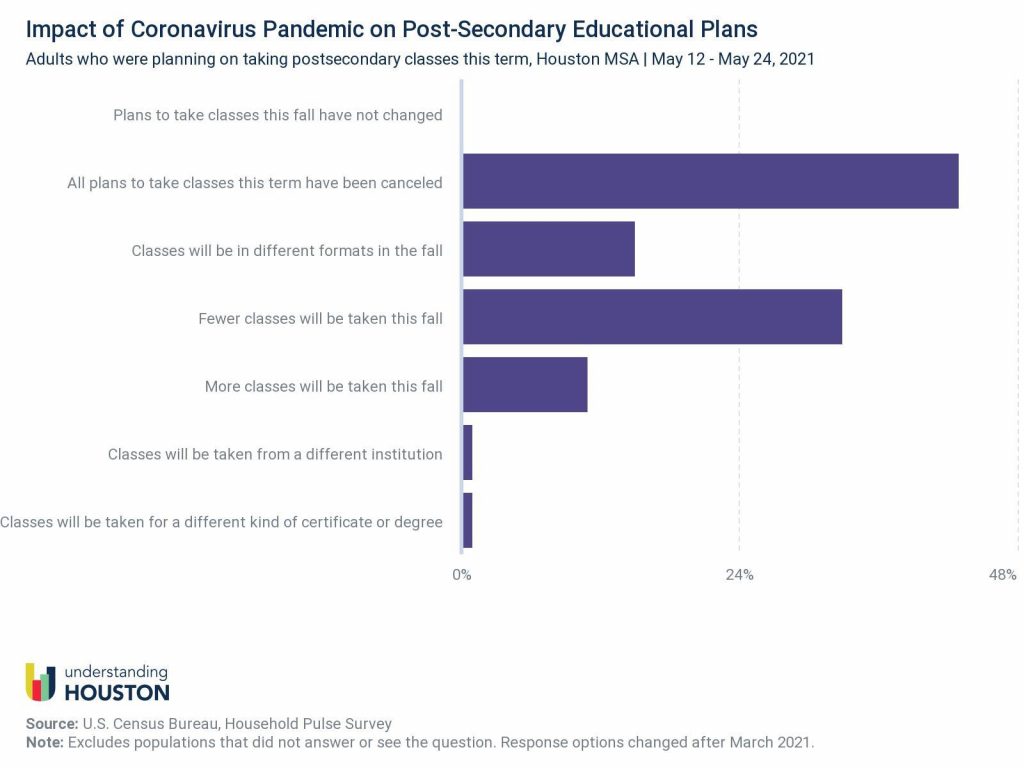
    While the total impact COVID-19 has had on student attrition and graduation rates in the Houston area is still unclear, preliminary research suggests that the pandemic has contributed to students changing their post-secondary education plans. Data from the National Student Clearinghouse Research Center supports this survey data. The number of students enrolling in undergraduate higher education in Spring 2021 fell by 727,000 students nationally, or 4.9%, from Spring 2020. For comparison, undergraduate enrollment fell 0.5% between Spring 2019 and Spring 2020. More than 65% of the total undergraduate enrollment decline occurred among community colleges, institutions that are more likely to serve low-income students and students of color. Texas is not immune either.

    According to the U.S. Census Bureau, 43% of Houston adults have canceled their higher education plans with 33% of students reporting they will be taking fewer classes in the fall of 2021. 

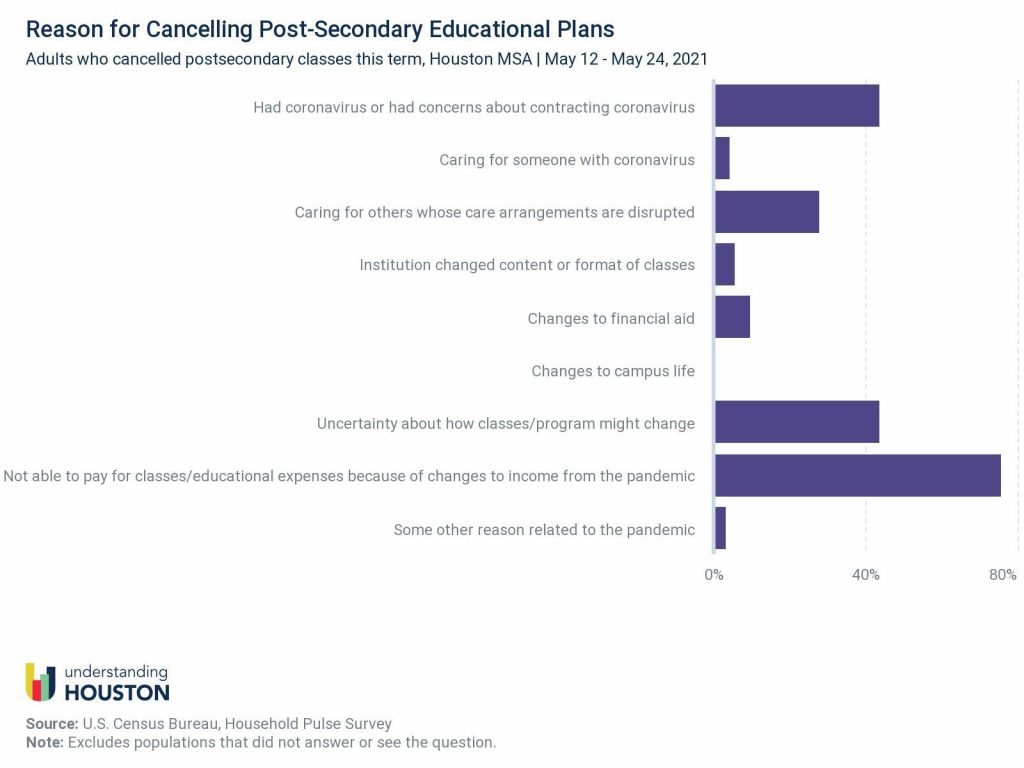
    Three out of four students who have decided to halt their post-secondary educational plans cite financial constraints as the main reason. Houston already has one of the lower rates of people with postsecondary degrees among peer metros; if this trend continues, it could have widespread implications on the quality of our workforce.

    Student mental health affects academic success

    It is impossible to discuss COVID-19 without acknowledging its effects on student mental health. From being cut off from one’s peer group and missing out on important milestones like prom, graduation, college visits, etc., to grieving the death of parents and other loved ones, including breadwinners, adolescents are struggling with much more than school. 

    Hispanics have the highest COVID-19 infection and death rates in the region and the highest rates of employment and income loss. A survey conducted by Latinos for Education found that Latino parents are most concerned with the mental health of their children. Another recent study estimated that nine family members are affected by one person who dies of the coronavirus. Given that Hispanics also make up the majority of students in Houston-area schools, thousands of Hispanic students have experienced the worst impacts of the pandemic, all while still trying to learn.

    Research indicates there is a direct link between mental health and academic achievement. It will be impossible to move on from the educational impacts of the pandemic without acknowledging and repairing student mental health, with an emphasis on supporting Hispanic students who have experienced the worst effects.

    Looking ahead to 2021-22 with the lessons we’ve learned

    COVID-19 has impacted everyone, but not everyone has been affected equally. Research suggests the pandemic has widened pre-existing disparities in academic performance and the pursuit of higher education. However, educators, school administrators and students have learned much since March 2020. We now know which tactics may work better than others, and we have a clearer picture of how students have been affected — and what they need moving forward.

    Educating students while trying to keep their teachers, faculty and staff safe during the pandemic is a challenging task that comes with consequences. As we navigate through another COVID school year, we hope to see improvement in overall student performance alongside practices that prioritize the health and well-being of our children and their educators. 

  • Caring for Teachers is Caring for Students

    Caring for Teachers is Caring for Students

    After a year of teaching and living through a pandemic, educator mental health is at risk and yet, at the same time, we desperately need to avoid further school disruptions. Teacher burnout and turnover — already cause for concern long before pandemic life — have increased. An additional 11 percent of teachers say they may leave the classroom even though they weren’t planning to do so before. As it is, 40-50% of teachers leave the classroom within their first five years, and 40% of teachers in Houston’s three-county region have fewer than five years of experience, which affects student achievement.

    Teachers are often told to put their own oxygen masks on first. They’re encouraged to “take care of themselves,” get more sleep, take deep breaths. Mindfulness training and toolkits have recently gained attention as promising school-based interventions to address the burnout cascade, but most mindfulness approaches reflect a primarily solitary practice aimed at individual growth. These strategies, while well-intended, can feel dismissive to teachers. It’s as if we are telling a sick person to just “get better.” Educators’ burnout symptoms are due to much larger, systemic and cultural problems. 

    Many teachers talk to us about the relational gaps they experience in schools: the stress of loneliness, isolation, and toxic adult cultures. Relationship problems cannot be solved by any individual’s actions alone. It requires comprehensive approaches that involve every adult.

    FuelEd is a non-profit organization deeply devoted to educator social-emotional skills and wellbeing. But we rarely use the term “educator self-care” — because it’s kind of a misnomer. On a neurobiological level, what society traditionally thinks of as self-care simply isn’t possible without first receiving care in relationships. Over the course of our development as social creatures, humans go on a journey from being almost completely regulated by others, as is the case with a hungry, crying infant who needs the constant care of an adult; to being co-regulated, where we get help from another person as we attempt to regulate ourselves. Over time, through repeated experiences of being calmed and cared for through relationships, we humans develop the brain structures and skills for self-regulation, self-care, and resilience in the face of stress. 

    Care from others precedes self-care. So, solving the teacher stress crisis is less a matter of asking teachers to put on their own oxygen masks, but rather ensuring every teacher has someone who can help put an oxygen mask on with them. 

    Our vision? The whole educator

    FuelEd is a professional learning organization that provides teachers, principals and district leaders with training in the science of relationships as well as support to grow their own social and emotional competencies. We assist educators in doing the “inner work” of exploring their triggers, attachment styles and early childhood experiences, while also learning the science of attachment and trauma, and key skills to build secure relationships. 

    This therapeutic deep dive into self-awareness is most poignantly represented by our “mindful storytelling” circle, where small groups of educators share their “attachment stories.” Educators take turns recounting memories from early childhood relationships, exploring the hurt caused by parents/caregivers who didn’t meet their needs, and unpacking how these formative experiences influence their relationships today, in school and out. You can hear a pin drop as educators take the risk to share, and listen, with sincere intent and deep respect for one anothers’ stories.  

    At the conclusion of the training, educators learn to build a peer-support network: a protocol we call “stewardship” where educators are paired and instructed to meet weekly for an hour. Week after week, one educator shows up ready to listen deeply, and the other shows up ready to share real problems from their professional or personal lives, with honesty and vulnerability. The relationship skills from the training provides the foundational building blocks needed to support, and receive support, from fellow educators. Educators’ newfound self-awareness serves as a starting point to go deeper into themselves. What results is a mutually beneficial giving-and-receiving of care. It’s a repeated and reliable experience of co-regulation: helping educators move from stress to calm with the support of a caring relationship. 

    One year later, our educators were asked, “Since engaging with FuelEd, have you experienced an increase in the following [self-care] behaviors?” Here is what we’ve found.

    Educators’ self-care, self-regulation and resilience grew through relationships that took them deeper into self-awareness through being known, seen and loved. Reaching out helps us reach in. This is especially true in times of crisis and transition. Researcher Dr. Liesel Ebersohn believes “flocking”—huddling up and sticking together, like a flock of birds — might be a way of coping with stress that is more adaptive than the other more commonly known stress responses of flight, fight or freeze. This is exactly what educators in our studies have done: used relationships as self-care, as a way to regulate themselves.

    “There’s no other time in my week where I have an hour to speak uninterrupted about something of emotional weight. It’s a pressure release valve. It’s good for my mental health and makes me more conscious in my relationships—particularly with my kids. This inspired me to go to therapy …. to move away from survival, to look at myself as a human being, not just a teacher. This helped me to take care of myself.” -Educator

    Without an emphasis on restoring educator resilience through relationship, isolation and “flight” from the field may occur. 

    Caring for teachers is caring for students

    Being cared for by others helps educators care for themselves, but being seen by others also helps educators change how they see themselves and their students. Our intervention grows educators’ theory of mind, an important social-cognitive skill that involves the ability to think about thoughts, emotions and beliefs — both your own and others — and to plan social responses based on the internal worlds of others. Theory of mind involves thinking about thinking, but it also refers to the ability to understand that other people’s thoughts and beliefs may be different from your own and to consider the factors that led to those mental states. 

    It appears that the experience of unpacking their own history and trauma may enable educators to develop compassion, sensitivity, and responsiveness to students and their trauma. When educators understand that their past shapes and influences who they are, they begin to understand that others’ pasts similarly shape who they are and how they show up. The research team at FuelEd developed the term “storysight” to describe this capacity to understand others through the lens of their own story. 

    “Reflecting on my own background and life …has helped me understand myself and be more empathetic with others. I’ve been nice with myself and gentler with myself. I feel like I have more of a handle on that [so now] I’ve been doing that with my own students. Giving them a break. Letting them mess up. Now, I feel like I react to what the child needs, not what I need. I have a greater rapport with the kids this year. You’re seeing more to a child than what you normally would see.”

    When asked what, if any, changes educators experienced in the following areas, one year after their training, here is what we found.

    These changes to teachers’ relationship behaviors are significant, as multitudes of studies have shown the ways strong teacher-student relationships promote higher academic achievement, greater social competence, and fewer behavioral problems in students. Clearly, taking care of teachers is taking care of students. 

    How to change a system?

    Even more exciting is the way that investing in teachers’ wellbeing through collective care can create a ripple effect that shifts policies and practices within schools and district systems

    In 2015, Principal Sarah Guererro was charged by the superintendent of Spring Branch Independent School District to turn her school around, academically. After she and her leadership team at Northbrook Middle School attended a FuelEd training, they committed to setting up an essential practice that would create more time and space for listening to staff. They already had weekly teacher meetings for discussing student progress, but additional check-ins were set in motion to help leadership gain awareness of teachers’ feelings, needs and perspectives. Educators were invited to share whatever they wished — be it an issue with classroom management or personal issues at home. According to Brian Jaffe, the school’s Social Emotional Learning (SEL) Support Specialist, “Because I had that safe space to feel valued by my principal, I was able to provide that for my teachers, and the teachers were then able to create the same safety for students. We saw this ripple out to create an entire ecosystem of support.”

    As Northbrook Middle School became a community where adults felt safe and valued, educators began to connect more with students and as a result, learned a lot more about them. Suddenly, there was an overabundance of information and awareness about the high levels of trauma and social-emotional needs within the student body. To solve this, the team created a referral system whereby those closest to the ground—teachers and students—could quickly and easily submit a student’s name to the school support team who then provided a similar “check in” for the student.

    By being responsive and timely, and addressing concerns big and small, trust was built in this systematic practice that helped all students and staff feel safe and seen. Over the course of five years, the school witnessed significant improvements: 67% reduction of out of school placement, in which a student is located to an alternative schooling environment in order to meet their unique needs; staff retention went from 57% to 80-90%; and a 21% increase in student achievement on STAAR.

    The Anatomy of Change

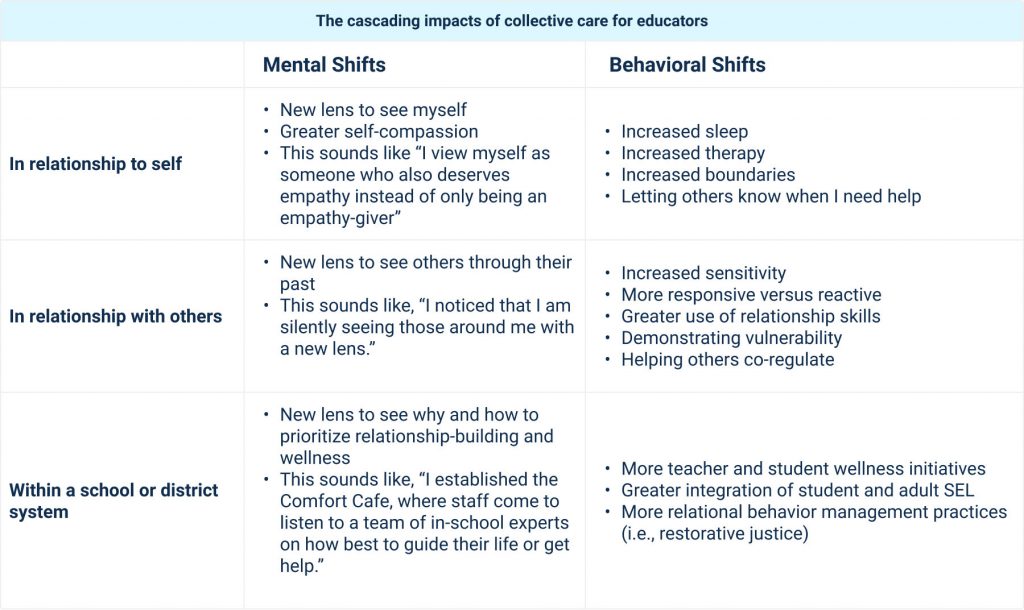
    As this story demonstrates, teaching, learning and leading in schools is an interpersonal endeavor and therefore, traditional school achievement outcomes such as teacher retention and student achievement are deeply intertwined with personal and interpersonal dynamics on a school campus. The table below illuminates what FuelEd is discovering to be the anatomy of this complex and dynamic change process:

    What can we do, now?

    The truth is, our educational system’s current issues related to educator stress are not new. Teaching is a highly stressful profession and it’s not just because of large class sizes or pressures of state testing. The emotional lives of educators and associated burnout-related fatigue are affected by their vicarious exposure to students’ trauma. Add to this: like students, teachers and principals also have their own experiences with trauma, which shape their thoughts, feelings and behavior in relationships. Our bodies keep a record of experiences in our lives where safety was lost, so any unprocessed trauma can be triggered in the classroom, regardless of whether it happened 20 years or 20 days ago. And though these reactions can be driven by protective instincts, they can also exhaust educators emotionally and damage relationships in equal measure. Call it a job hazard for teachers whose careers are built on emotional regulation, and whose effectiveness is grounded in their ability to build healthy relationships.

    The need is real and recognized by educators who tell us how much they value trauma-informed adult SEL and wellness work—but educators also express strong tensions about not having time or space to engage regularly. Creating and incentivizing feasible systems where educators both give and receive care, as a routine part of the profession, would represent an innovative approach to the problem of teacher stress and burnout. 

    Here are some ideas for how you can get started:

    • Build a stewardship system in schools. Consider building a low-stress, low-cost peer support system at your school or district. The ROI is huge in terms of self-regulation and stress release. Capacity and skill building for staff in empathic communication is a critical prerequisite to ensure safety and effectiveness of the system, so be sure to secure necessary professional development.
    • Provide counseling for educators. Counseling is an intensive relational experience of being safe, seen and soothed. FuelEd has provided over 12,000 counseling sessions to teachers since 2012. We have found that when school districts actively promote, normalize, and create pathways for attending therapy, many teachers engage, and experience powerful impacts on their well-being and careers. 
    • Expand the definition of trauma-informed to include educator trauma. Our childhoods shape who we are. Educators cannot address students’ social-emotional needs nor be “trauma-informed” if they have not processed their own trauma and social-emotional needs. Fortunately, secure relationships that help us reflect on our past heal trauma. If we can shift the definition of trauma-informed practice to include educator trauma, school climates can become places where students and adults alike can heal and thrive.

    Educator care is not a flash in the pan. It’s not one-time professional development, it’s not a worksheet, it’s not a daily meditation nor a sudsy soak in the tub. Building individuals means building communities, and vice versa. And so, the very best thing we can do for our children, and the adults who serve them, is to make schools into places where secure relationships and adult development happen every day in the regular course of work. Places where educators are accepted for who they are and encouraged for who they can become. So they can do the very same thing for our children. 

    About the Authors

    Megan Marcus is the Founder of FuelEd. She holds a B.A. in Psychology from the University of California at Berkeley, a Masters degree in Psychology from Pepperdine University, and a Masters in Education, Policy, and Management from Harvard’s Graduate School of Education. In 2017, Megan was named an Ashoka Fellow, “a leading social entrepreneur [recognized] to have  innovative solutions to social problems and the potential to change patterns across society.

    Dr. Kelley Munger is the Director of Research & Development at FuelEd. She holds a BA in English from Auburn University, an MA in Teaching from Lee University, and an MA in Counseling Psychology from Covenant Seminary. She completed her PhD in Early Intervention and Special Education at the University of Oregon in 2019. Kelley is a researcher and licensed therapist working in the areas of trauma, adult attachment, special education, and human development. 

  • Houston’s Pulse: COVID-19’s Impact on Education

    Houston’s Pulse: COVID-19’s Impact on Education

    This time of year is typically filled with back-to-school excitement. Students dust off backpacks, pencils and binders from closets. Families flock to retailers to spend hours wandering around the “Back-to-School” sections, all to make sure students are prepared for their first day and beyond. 

    However, this year feels a little strange. “Back-to-school” has had a completely different meaning, as most school districts across the country start remotely for at least the first few weeks. Texas Education Agency (TEA) officials have granted districts authority to devise their own reopen plans. Houston ISD plans on teaching remotely for at least the first six weeks. Spring ISD is allowing parents to choose whether their child will be in the “safety-first in-person” section or the “empowered learning at-home” section. However, district officials have determined that it is not safe for anyone to come into school until September 11. Humble ISD started in-person classes for 35,000 students on August 24 — one of the first districts in the region to do so.

    In this time of uncertainty, parents and educators around the country are left wondering: will students actually be able to learn remotely this fall? Will virtual school be an effective way for kids to learn, or will they fall behind?

    Thanks to 12 weeks of survey data collected by the U.S. Census Bureau during the initial period of online learning following COVID-19-related school closures, we can analyze how learning disruptions impacted households and track how education changed during the beginning of the pandemic. While we can’t predict the future, we can use data about previous remote learning efforts to identify and understand the challenges that may lie ahead.

    The more we understand these educational changes and their implications, the more we can do to ensure all students in our region continue to learn during the pandemic. 

    Learning “looks” different during a pandemic

    The Trump Administration declared COVID-19 a national emergency in mid-March. Soon thereafter, schools closed for a couple of weeks and then moved to online learning when much of the country shut down. The first week of pulse surveys — as schools were in the middle of their spring semester — indicated 67% of classes were moved to distance learning and 31% of classes were cancelled altogether. While fewer students took summer classes, they continued to experience substantial changes to schedules as the virus continued to spread, and schools remained closed.

    According to Pulse Survey data, 64% of classes taking place in the Houston Metropolitan Statistical Area (MSA)1 during the week of July 9 were moved to a distance learning format. An additional 35% were completely cancelled, higher than the cancellation rate the week of April 23 (31%). These data align with trends in other major metros and the United States as a whole, representing major adjustments students and teachers must make across the nation.

    Education is now a household activity, though only part-time

    In a typical pre-COVID-19 school day, neither child nor parent spent much time at home working on intentional education activities beyond homework. In our new reality, this has changed drastically.

    The graph below compares the amount of time children and parents in Houston spent on education at home during the week of July 9 to other similar regions like Dallas-Ft. Worth Metro (fourth-largest metro in the nation), Greater Los Angeles (second largest school district in the country), Texas, and the U.S.

    Houston-area parents reported spending around four hours teaching their children at home in the past seven days. Similarly, children spent around one hour learning with a teacher and almost four hours learning on their own. This totals nine hours of learning during the week of the survey — less than an hour and a half per weekday. 

    While this is substantially less time than we’d expect for a regular school day, it’s on trend with rates for Texas and the U.S. overall. Notably, parents and students surveyed in Greater Los Angeles spent almost double the amount of time learning than those in Houston.

    These data reflect a snapshot from early July when the majority of students were on summer break, but students in Houston spent an inadequate amount of time on school even when it was officially in session. During the week of April 23 (when learning hours peaked), students studied for 17 hours — approximately three and a half hours per weekday — far below the usual eight hours students spend at school.

    The steady decline in hours dedicated to learning, especially during the academic year, potentially reflects increasingly negative feelings parents and children have toward online classes. A national poll found 42% of parents are concerned that COVID-19 will negatively impact their child’s education. Sitting in the same spot at home staring at a computer screen alone most likely quickly lost its appeal to students and parents. Online schooling leaves kids missing socializing with friends, individualized help from teachers, and designated time to move around or play. As the pandemic wears on, parents and students may be losing patience with the numerous challenges associated with at-home education.

    “42% of parents are concerned that COVID-19 will harm their child’s education.”

    Teachers share this wary sentiment toward online education. A national survey found that 75% of teachers reported their students were less engaged in remote class than in-person class, and an NPR/Ipsos poll found 84% of teachers assert that online learning will create opportunity gaps among students. With such a rapid pivot to a brand-new form of instruction, teachers did not have the opportunity to learn and effectively use virtual teaching platforms. Teachers are feeling overwhelmed, most commonly requesting “strategies to keep students engaged and motivated to learn remotely.” Simultaneously, they also want to ensure safety for their students and themselves.

    Households face significant challenges adapting to online learning

    Pulse Survey data suggest the extent to which education has become a household activity might vary by household income. According to Week 11 (July 9) survey data, Houston households with annual incomes below $50,000 reported spending the most time on educational activities. This pattern was observed in each of the previous 10 weeks as well. 

    While this appears promising, preliminary research indicates that the move to online learning will disproportionately hurt students from low-income homes. The digital divide between low- and high-income households (and schools) is a major contributor to disparities in learning loss. Schools and homes without adequate technological resources face major obstacles to successful online learning.

    Online classes necessitate children have access to a computer (or digital device beyond a smartphone) and internet access at home. This is not guaranteed for all students, of course. Approximately 6% of households in the three-county region don’t own a laptop, tablet, or smartphone, and another 11% have only a smartphone and no other type of computing device — totaling 346,400 households — according to 2018 U.S. Census Bureau estimates.

    Recent Pulse Survey data reinforce these lagging statistics. Households in Greater Houston report less access to computers/laptops than those in Dallas and Los Angeles metros as well as state and national levels. Houstonian are least likely to “always” have a device available and most likely to “never” have a device available for educational purposes compared to these major metros. Given the urban nature of our region, Houstonians’ access to the internet tends to be slightly higher than the rate for the state. Still, 12% of households (245,800) in the three-county region have no internet subscription at all, and additional 13% (274,400) have internet access through a cellular data plan only. 

    “346,400 households in the three-county area have no computing device other than a smartphone.”

    The expansive digital divide in Texas is well-known, and many school districts and nonprofits have worked to bridge the gap. Dallas addressed its students’ lack of access to devices and internet with Operation Connectivity which shares the cost with the state. This operation proved so successful that Governor Abbott launched it throughout Texas with the help of the Texas Education Agency in the beginning of May. However, Houston lags behind, with about a quarter of households reporting receiving a device from the school or district.

    The percentage of students who “never” have access to a device for educational purposes in Houston rose from less than two percent in Week 1 (April 23) to more than seven percent in Week 11 (July 9), suggesting students have less access to devices during the summer, potentially widening learning loss. Meanwhile, in Dallas and Los Angeles metros, the proportion of students without access to a device fell during the same time period.

    Three lessons that support a more successful Fall semester online

    Failing our region’s students is not an option for any of us. That’s why we’ve collected lessons gleaned from the data, established research, and practitioners that will support a successful fall semester for our youth.

    1. Focus on the most vulnerable.

    As we enter a new school year amidst a pandemic, pre-existing challenges are only likely to be exacerbated, particularly for students from low-income Black, or Latino households, with disabilities, or with limited English language skills. An analysis from consulting firm McKinsey found the average student could fall seven months behind at least. Compounding challenges, these students come from the groups who have faced the worst public health outcomes of the virus — it is likely they may have lost someone to the virus. We must support policies and programs that prioritize the most vulnerable students in our region.

    1. Expand access to technology and the internet.

    The region has come together to ensure students have access to the technology they need during this time of remote learning. HISD has established Digital Learning Centers where students without reliable tech access can go, but those who are concerned about the virus may steer clear. Consistent access to reliable, modern technology is critical to learning in general but more acutely now as we are still in the throes of a pandemic. We applaud the substantial efforts districts have made to support all students. 

    1. Support teachers and school staff.

    Even before the pandemic, schools faced significant challenges. One reason schools and districts are struggling to adapt to virtual instruction is they themselves lack adequate resources. Texas spent an average of $9,375 per pupil in the 2017-2018 school year, 23% less than the national average of $12,200. 

    “Texas spent 23% less per pupil than the national average in the 2017-18 school year.”

    Teachers are essential front-line workers, and we must support them as they embark on the substantial and significant mission of educating students in an unprecedented time of simultaneous public health, racial equity, economic, and political crises.

    1 The Houston Metropolitan Statistical Area (MSA) is a geography boundary designated by the Federal Office of Management and Budget that includes the following nine counties: Austin, Brazoria, Chambers, Fort Bend, Galveston, Harris, Liberty, Montgomery, and Waller.

  • Using science and evidence to drive investments in early childhood

    Using science and evidence to drive investments in early childhood

    How research reinforces the importance of high-quality early childhood education.

    The vitality of Houston depends, in part, on the aptitude of the next generation to achieve success.  Houston needs a capable workforce that can handle the challenges of an ever-changing global economy, and the factors that shape the capacity of our future workforce depend on the decisions we make now as a region.

    Decades of science demonstrate that the ability of an individual to achieve success is strongly influenced by how the brain develops during the first few years of life. From birth to age three, the brain makes over one million neuronal connections per second. These neuronal connections are vital to building a strong, healthy brain structure. The brain is responsible for every human function, from breathing to executive function, and how the brain develops during the first few years of life influences a person’s potential for learning, problem-solving, motor skills, emotional and behavioral function, and essentially every other aspect of human life. Yet, not all children have the same opportunities for the experiences and interactions necessary for healthy brain development.

    An unequal start for too many children

    While the biological process of one neuron connecting to another is driven partly by genetics, environmental factors play a significant role in the quantity and quality of those connections. Whether connections are maintained, wither, or die depends on the input a child’s brain receives from his or her environment and relationships with caregivers. “Serve and return” is a phrase coined by the Center on the Developing Child at Harvard University that describes the types of interactions necessary for optimal brain development. 

    Serve and return interactions are those that occur between caretaker and child and involve responding to a child’s non-verbal and verbal cues with kindness, affection, physical touch, language and other forms of communication.  While this seems fairly simple, the brain requires consistent, frequent serve and return interactions, which can be difficult for many working families, especially the working poor who often have multiple jobs. Moreover, many children spend the majority of their time in childcare centers where engagement with young children is limited to diaper changes and feeding. 

    Most caregivers want to give their children as many opportunities as possible, yet there are many social, economic, political and environmental factors that create barriers to caregivers’ ability to optimize brain development. For example, poverty, food insecurity, and neighborhood violence significantly increases the risk of parental stress and depression, which impedes caregiver-child interactions. Poor housing conditions, such as the presence of lead paint, can directly impact the brain development of a child, as lead deposits can cause neuronal cell death in the brain. Lastly, adverse childhood experiences and unrelenting, sustained stress have substantial and lasting impacts on both caregiver and child.


    Click here to explore funding recommendations that maximize impact.

    An investment gap that must be filled

    The complex and large-scale nature of all the factors that can influence brain development during childhood has led to a gap in investment from birth to age three because the task can seem insurmountable. Also, access to families with children age three and younger can be difficult if they are not in a childcare system. Thus, philanthropy and advocacy organizations often steer their efforts to a more manageable goal of increasing access to pre-kindergarten.  Increasing opportunities for early learning is very important and research has shown improved academic and economic gains from pre-K, especially for children from low-income families. However, these outcomes depend on how aligned the pre-K program is with developmental science. 

    The part of the brain primarily responsible for learning and memory is called the hippocampus, which unlike most of the other parts of the brain, continuously forms new neuronal connections throughout a lifetime. That is why adults can be life-long learners. However, the critical window of brain development during the first three years of life occurs in the cerebral cortex, which is responsible for intelligence, personality, “soft skills,” and many other vital human functions. Optimal cerebral function is required for individuals to be successful in the workplace and have healthy relationships. Yet, the cerebral cortex is not adequately stimulated by all pre-K programs. Moreover, most pre-K programs begin at age four, which is after the majority of brain architecture has already been developed.

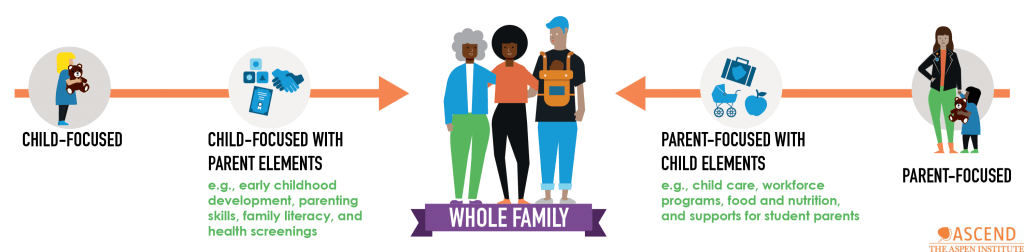
    Two-generational, whole family approaches hold tremendous promise 

    Early Head Start (EHS) is an excellent example of how policymakers developed a two-generation intervention based on science. EHS provides parental support to improve caregiver brain-building skills, and services start during pregnancy and continue through age three. EHS intentionally goes beyond a traditional “educational” framework to include components that stimulate the intellectual, social, and emotional aspects of a child’s development. This creates neuronal connections in other parts of a child’s brain, not just the hippocampus. EHS also addresses the social and economic needs of the parents, which, as described above, can be barriers to optimal caregiver-child interactions. This “two-generation” approach is an important aspect of the EHS program and is worthy of emulation.

    National efforts are well underway to catalyze a resurgence of this approach. Simply put, two-generational approaches acknowledge an obvious truth: different children’s outcomes are largely dependent on the vitality of the families and neighborhoods in which they live. Hence, two-generation approaches intentionally focus on addressing the needs of the whole family and the factors that keep them from prospering, with the goal of optimizing conditions for both parents and their children.  

    In Houston, we have several opportunities to support or create holistic, two-generation interventions that facilitate early childhood development. The Mayor’s Complete Communities initiative provides an opportunity to leverage current neighborhood investments to reduce many adverse factors that affect families and create a caregiver educational program that increases caregiver brain-building skills. In partnership with the Children’s Museum of Houston, the City of Houston Health Department has launched Houston Basics, which is a public health campaign designed to increase caregiver serve and return with young children. Houston Basics can be leveraged to launch more intensive brain-building training for caregivers, as well as connect families to social support resources. Other cities, such as St. Paul, Minnesota, have increased the brain-building skills of childcare workers, and have standardized and improved childcare centers while also providing education and job training to help parents move out of poverty.

    The opportunity for a focused, data-driven investment strategy

    If we want improved outcomes for Houston’s children, we have to align our priorities, policies, and investments with science. Rather than divide our funding priorities and advocacy efforts in early childhood into education, childcare, and parenting program silos, we need to have a comprehensive and integrated approach that provides support for children and their families from pregnancy through Kindergarten. We should follow the child, rather than the sector. We also need to develop multi-sector interventions that can address some of the economic and social challenges many families experience, while also building their capacity to be brain builders despite these challenges.  Lastly, we need to understand there are significant opportunity costs when we do not prioritize solutions that focus on the first few years of life. As we wait longer to intervene, the cost of intervention increases and the return on investment decreases. 

    Understanding Houston is a great step towards using data and science to inform decision-making. It also provides a platform for a variety of stakeholders to receive information, which hopefully will spur dialogue and challenge beliefs amongst a variety of interested parties. Houston is a strong, resilient region. The task of ensuring every child has the same opportunity for optimal brain development is large, but if we allow developmental science to shape our policies, practices and investments, we can ensure a bright, prosperous future for Houston’s children and prospective workforce.

    Quianta Moore, M.D., J.D., is the Fellow in Child Health Policy at the Baker Institute for Public Policy. Her research focuses on developing empirically informed policies to advance the health and equitable future of children and their communities. Read more.

  • Parents Must Shape Public Education in Houston

    Parents Must Shape Public Education in Houston

    As the keeper of Houston’s citywide education vision, Good Reason Houston is committed to making sure that happens.

    Good Reason Houston exists for a very simple purpose — to ensure that every child, in every Houston neighborhood, excels in a world-class public school and thrives in the Houston of tomorrow. That means that we must transform our schools today. This is a citywide challenge and we need a citywide solution. Good Reason Houston will partner with those districts that are ready and willing to take bold and courageous action to transform their schools now, not five years from now. We began this work two years ago, and as we built the foundation for our strategy it became clear that the families most directly served and impacted by public education did not play an active role in critical education decisions impacting their children. As a community, we haven’t spent enough time trying to understand what families need and want for their children. In order to create the kind of citywide changes Houston needs, Good Reason Houston immediately began thinking about opportunities to bridge the gap between families and the schools and districts that serve them. 

    The first step required more and better information about parent attitudes toward the schools they have access to today, and what they hope for in the schools of tomorrow. Collecting that kind of information — across districts, across systems, across geography and demography — is no small task, so we engaged a best-in-class research partner to lead the work — Wakefield Research Partners.

    Research objectives

    Good Reason Houston partnered with Wakefield Research Partners to interview more than 1,500 families across Houston to understand how those families feel about the schools their children currently have access to and what they’d like to see for their children in the future. We then asked parents about the kind of information they wanted and needed to make decisions about their child’s education, and finally, we talked to them about their willingness to become advocates at the school and district level for education transformation.  

    Our methodology

    Wakefield Research completed phase two quantitative research through a survey conducted between February 20, 2019, and March 28, 2019. 1,540 Houston parents across nine independent school districts and local charter schools completed the survey. Districts represented in the survey include Aldine, Alief, Channelview, Galena Park, Houston, Pasadena, Sheldon, Spring and Spring Branch. 216 of the total respondents have children who attend a charter school. The margin of error for this study among all Houston parents is +/- 2.5 percentage points at the 95% confidence level.

    These findings are illuminating and we hope that others will learn as much from them as we have. To that end, we are releasing this research on our website: goodreasonhouston.org/parentresearch.

    For Good Reason Houston, this data tells us parents are ready and willing to be a part of this discussion. We believe the TEA A-F ratings are a critical first step. We will work closely with parents and districts to make sure that parents not only have information, but have the ability to do something about it — whether that means improving their existing school, choosing to attend a different school, or joining with the district to create entirely new school options. 

    We’ve included some highlights below, and we hope this is just the beginning of a new citywide conversation about what parents want and expect for their children and how we — city and district leaders, educators, policymakers, education stakeholders, and the public — can ensure that our schools provide that for every family. 

    Key findings

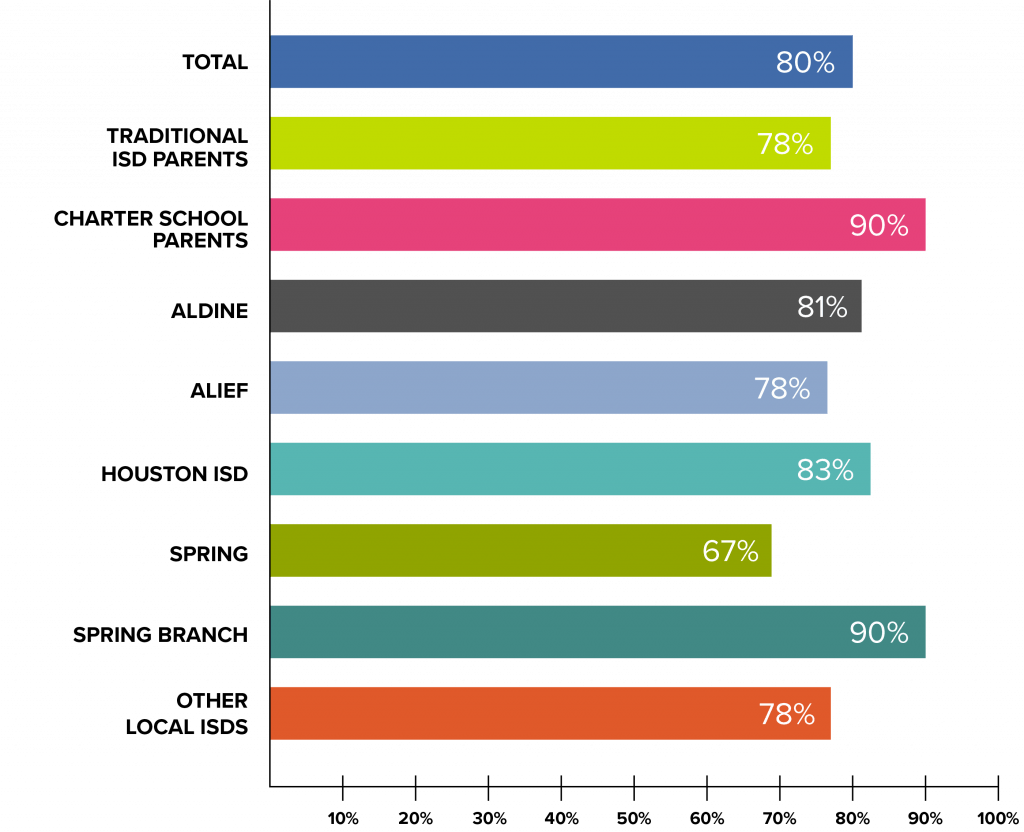
    1. Parents overwhelmingly support a common accountability system for schools and find that information valuable. The Texas Education Agency’s new A-F system was very popular with the vast majority of parents. They found it to be a credible source of objective information that allowed them to make more informed decisions.
      Percent Who Feel the A-F Rating System is Very or Extremely Valuable
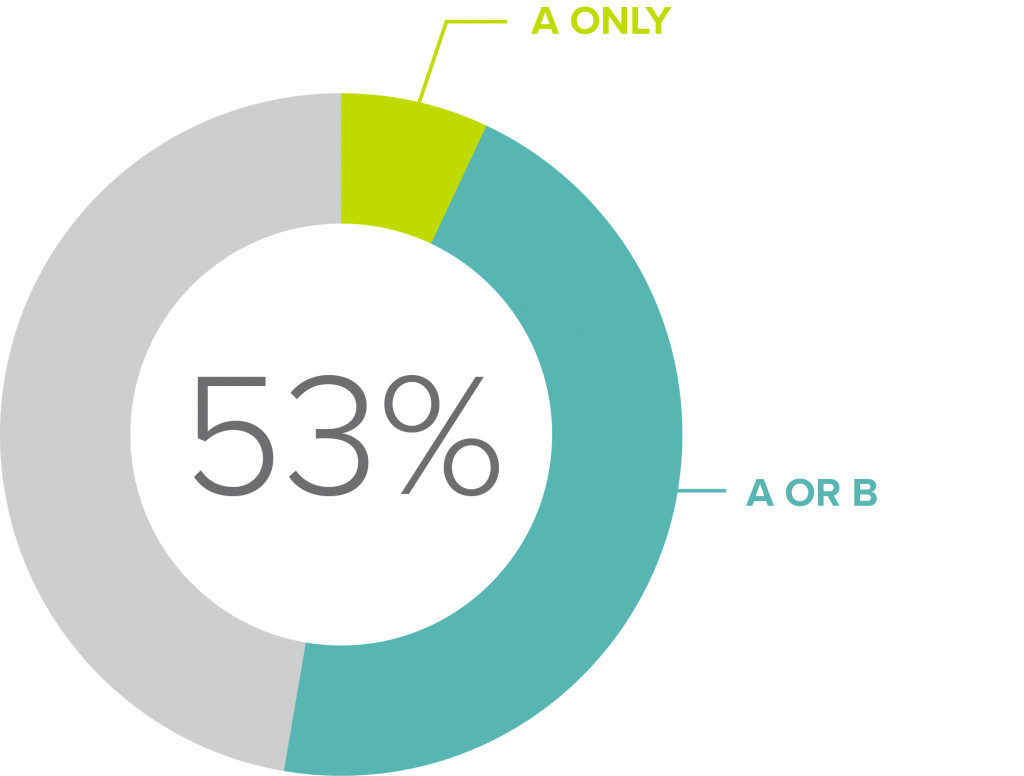
    2. Parents think there is more to be done to improve the quality of schools. Parents are not satisfied with the quality of their own child’s school or the system as a whole. Parents in this city want and need more schools rated A and B.
      Acceptable Ratings for Child’s School
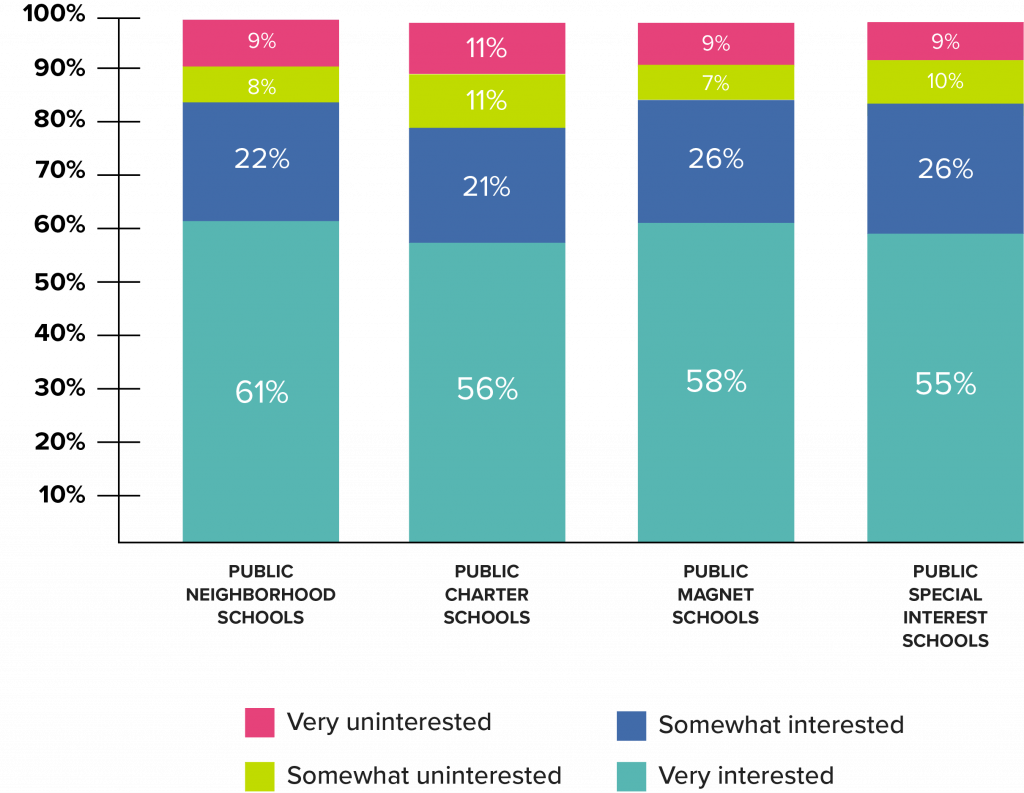
    3. Parents clearly want more diverse public school options for their students. Parents across districts and systems felt very positively about a variety of school types and want both better access to different kinds of schools, and more information about what is available for their students.
      How Interested Are You in Enrolling Your Child(ren) in Each of the Following School Types?
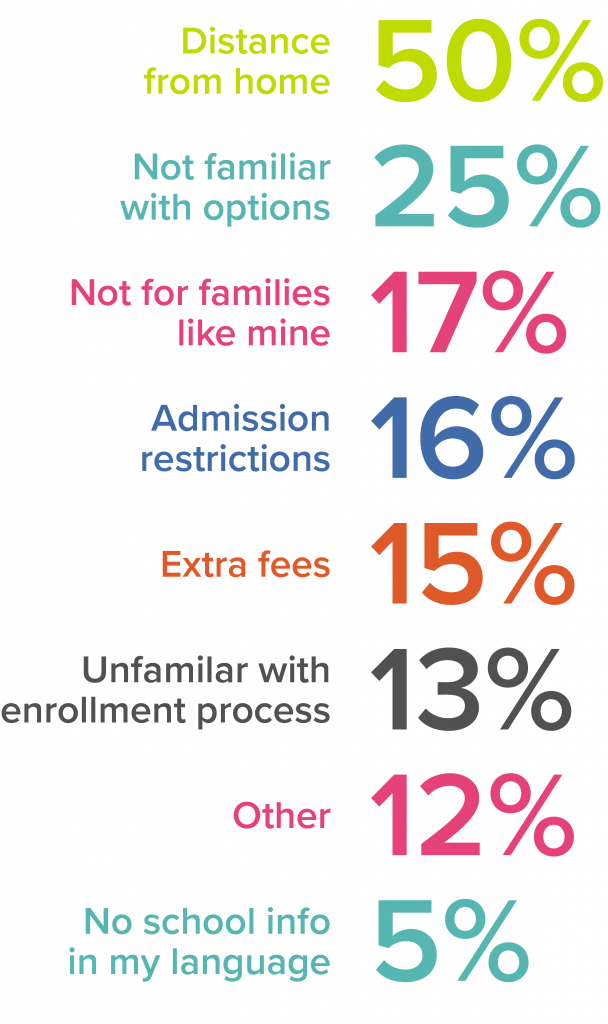
    4. Parents desire easier access to quality school options. Parents need better access to information, transportation and enrollment opportunities to feel like they have access to quality choices. For many parents, it’s not enough to make sure good schools exist; we must also make sure they are realistic options for more students.
      Top Reasons Why Parents Don’t Feel They Have Access to Multiple Public Neighborhood Schools Options
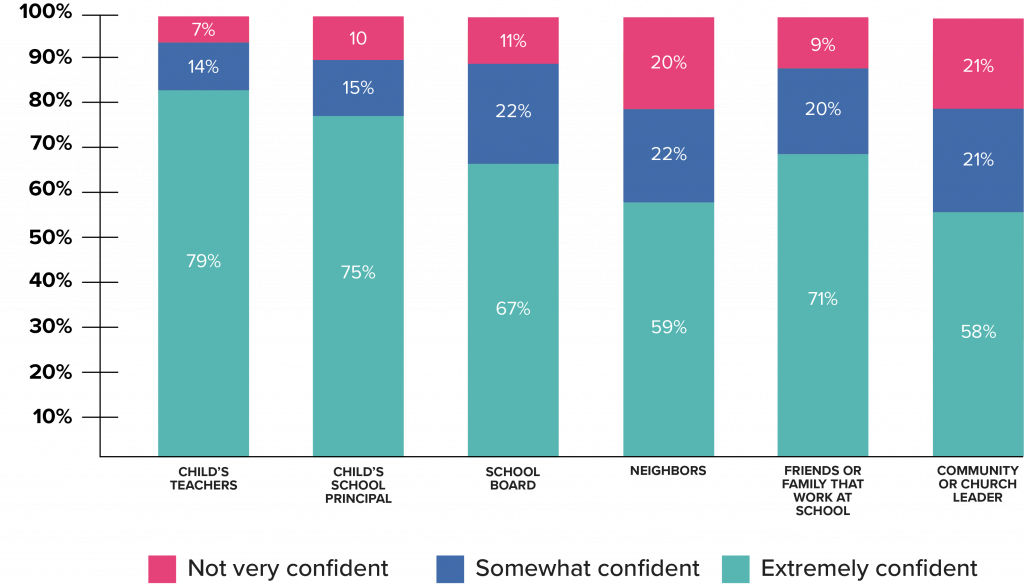
    5. Parents will take action and advocate for their children’s education. Parents want changes and they’re willing to work for them if we as a city can give them the resources and support to become advocates for not only their own child, but for all children.
      Parents’ Level of Confidence in Reaching Out to Each Person or Group to Address School Quality
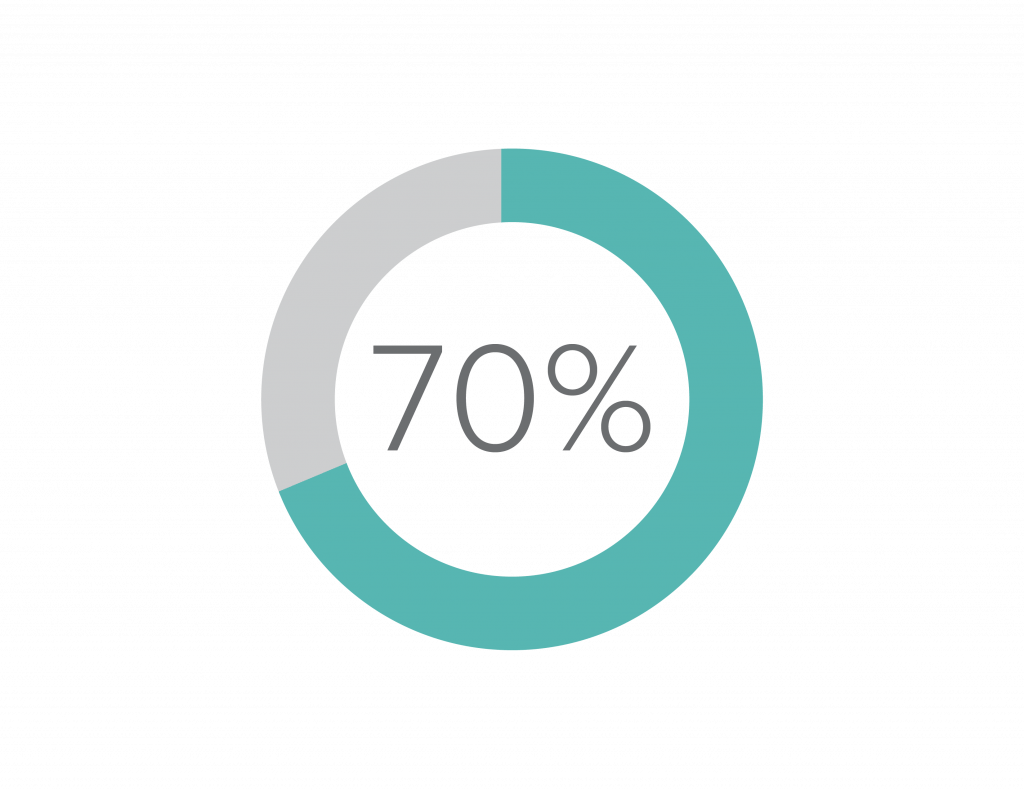
    6. Parents are not concerned with the political infighting in education, they just want good schools. Despite the political debates about testing and accountability and divisive rhetoric about charter schools, parent opinion has not been impacted. This is clear in the discussion of the A-F system. Similarly, fewer than 1-in-10 parents feel negatively about charter schools, the majority feel positive and want to learn more, and more than 70% of parents believe quality is far more important than how a school is governed.
      % Who Agree Academic Achievement is More Important Than School

    Good Reason Houston is on a mission to increase the number of students succeeding in high-quality schools today and thriving in the workforce tomorrow.

    Alexandra “Alex” Hales Elizondo is the founding CEO of Good Reason Houston. Prior to launching Good Reason Houston, Alex served as the Executive Director of Teach For America Dallas-Fort Worth, leading a team of 50 staff members and a network of 1,200 educators.

  • Kindergarten teacher, advocate for early childhood education

    Kindergarten teacher, advocate for early childhood education

    Blessy George: Advocate — Early Childhood Educator

    As a kindergarten teacher in Harris County, Blessy George has had a first-hand view of the impact early childhood education can have on a child’s academic future. 

    “At the end of kindergarten, there are high expectations from the students,” George said. “A lot of times, my struggling students at the end of the year are the ones who did not do pre-K. These kids just needed more time.” When it comes to time, there’s only so much a teacher can do to help all of their students achieve success. 

    George says she works with her students in small groups of four or five students put together based on academic performance. But when she moves on from small groups and into classroom-wide lessons, some students struggle to follow along.

    The fight for early education in Texas has been a long one, but an important one, according to education professionals. Funding for pre-K has been granted and cut every few years since 2011. However, things are beginning to look up after lawmakers recently put money back into the annual budget for full-day pre-k for qualifying students.

    While the bill represents a step in the right direction for accessible pre-K, Erin Baumgartner believes real progress starts by addressing Texan’s misconceptions of these valuable programs.

    “Right now, pre-K is not the norm,” said Baumgartner, an early education researcher for the Houston Education Research Consortium at Rice University. “It’s not provided for all students. It’s provided for the at-risk populations, so it may be less common that everyone just assumes a child should be in pre-K somewhere. I think we should be talking about universal pre-K because it’s important to change the expectations and the norms around going to pre-K.”

    To George and other teachers like her, pre-k could be considered a prerequisite to ensure success in kindergarten. “They need to learn certain things before they came into kindergarten,” she said. The prerequisites George wishes she saw in every student include identifying all 26 letters (upper case and lower case), identifying all letter sounds, identifying numbers 0-10, and writing your own name. “The challenge with pre-K is it’s not free for everybody — you have to qualify for it,” she said.

    To qualify under the Texas bill passed in 2019, students have to be four-years-old, and must meet at least one of the following criteria: be from a low-income family, live in foster care or be homeless, have an active-duty military parent, be a child of a first responder or educator of the school district, or have limited English-speaking skills.

    “There’s a lot of families who are not homeless or don’t qualify, but a lot of those families can’t afford to pay for pre-K, either,” George said. “Those are the kids who are really struggling.” To close the gaps for the kids “in the middle,” George works directly with the parents.

    “A lot of these kids that did not do well, they end up repeating first grade,” George said. “So before that, I scare the parents into understanding that if they don’t do anything at home and they aren’t involved in their child’s academic success, then their child might have to repeat and no parent wants that.”

    Educators like George and Baumgartner will continue to advocate for high-quality, accessible pre-K programs in Texas. Visit the links below to learn more about the importance of early childhood education.

    Additional resources