Month: March 2021

  • Women’s History Month: 8 Houston Leaders making a difference today

    Women’s History Month: 8 Houston Leaders making a difference today

    From protecting green spaces to fighting for gender equality and beyond, these are the women creating a better future for our region

    Every March, the United Nations sets a theme for Women’s History Month, and the theme for 2021 is “Women in leadership: Achieving an equal future in a COVID-19 world”. This theme celebrates the tremendous efforts by women and girls around the world in shaping a more equitable future and recovery from the COVID-19 pandemic, and highlights the gaps that remain. 

    The COVID-19 pandemic has had major impacts on the entire world, but has been particularly hard on women, who tend to be overrepresented in service industry jobs that were lost at disproportionately high rates due to stay-at-home orders. Women are exiting the workforce at higher rates than men due to historically unequal childcare between moms and dads, in addition to pre-existing gender pay gaps and overrepresentation in low-paying jobs.

    For Women’s History Month, we are highlighting some of the incredible Houston-area women who are working every day to fight inequalities that have been exacerbated by the pandemic. Building a more vibrant Houston with opportunity for all, these women spend countless hours improving our community through teaching and research, creating accessible green spaces, advocating for human rights and providing resources to some of the most vulnerable in our community.

    We recognize that there are many women doing incredible work in the Houston area and that this list is far from exhaustive. If you know of a leader or organization that we should highlight, please let us know!

    Shellye Arnold, President and Chief Executive Officer at Memorial Park Conservancy
    Daily, physical activity can reduce the risk of cardiovascular disease, diabetes and even some cancers. Research has found that  increases in park and recreation space are associated with increases in physical activity. The Houston three-county area boasts a number of beautiful parks, and nearly 82% of residents live within one mile of a park. However, that figure could change. Between 2001 and 2018, all three counties experienced at least an 18% increase in developed land. During the same period, these counties saw a considerable decline in the percentage of wetland, which comes with increased risk of flooding from heavy rainfall. 

    Shellye Arnold is working with her team to conserve our region’s green space, create a more resilient and connected Memorial Park, and improve public access to the Park. With the Conservancy’s project partners, she is leading the execution of the Park’s Master Plan – and it’s associated Ten-Year Plan – that is currently underway. She seeks to advance the Conservancy’s mission to restore, preserve, and enhance Memorial Park for all Houstonians both today and for generations to come. 

    “We have parks and green spaces of national significance and are continuing to grow and improve them with the public and private sectors working closely together. Innovating and investing in infrastructure for managing the storm water that regularly ravages our city is necessary. Houston has the opportunity to embrace lessons learned from cities that have tackled this problem successfully, including the creation of sustainable green infrastructure.” Shellye envisions a Houston that “will be known more as a green city, and less as a grey (concrete) city.”

    Charity Carter, Founder and Executive Director at Edison Arts Foundation

    Houston boasts a vibrant arts scene that is an essential part of our region’s quality of life. In fact, access to the arts has been shown to promote inclusion, community improvement, academic achievement and even improved mental health for residents. However, access to the arts in our region is not equal. Only 29% of Harris County residents who have a household income below $37,500 reported they have attended a live arts performance, compared to 58% of respondents with a household income of more than $100,000. 

    Charity Carter sees how interconnected the arts are with other quality of life indicators, and dreams of a Houston area where there is better quality of life for all residents that includes long term and lasting investments in communities with few resources. Through her organization,, she works tirelessly to make the arts in Houston more accessible by developing cultural and performing arts programs for children, adults and families throughout the community. Currently, they are working on a project in East Fort Bend County “that will blend arts and cultural programming, affordable housing, early literacy education, health care, entrepreneurship, jobs creation, outdoor green space and public arts into one community, creating necessary elements for an economically thriving community.”

    Charity is inspired by women such as her mother, Bertha Edison, and Lauren Anderson, who was the first Black principal ballerina for a major ballet company, “because of her commitment to stay in Houston and give back to the children in Houston.” Her advice to other women is to remember that “the race isn’t given to the swift nor to the strong but to the one who endures to the end!”

    Dr. Stacie Craft DeFreitas, Associate Dean of the College of Humanities and Social Sciences at University of Houston Downtown
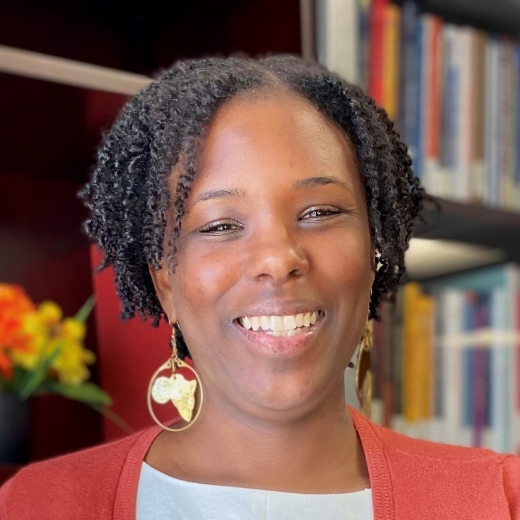
    Quality education for all students is vital for a prosperous region and a thriving workforce and economy. However, educational attainment and success in the Houston three-county area vary significantly by race and socioeconomic status. Only 48% of economically disadvantaged students met or exceeded grade-level expectations in math compared to 71% of their non-economically disadvantaged peers, and only 14.4% of Hispanic and 26.1% of Black adults in the region hold a bachelor’s degree or higher, compared to 46.5% of white residents. 

    Dr. Stacie DeFreitas’ research explores what can be done to improve the academic success of youth, particularly urban, minority youth by examining mentoring relationships, faculty-student interactions and the influence of the educational environment on students. “My main concern with K12 education is the disparity across ethnic/racial groups and socioeconomic status. I have concerns that many of the public schools have been abandoned by those of higher socioeconomic status and many who identify as European American or white. This has resulted in schools that are less well funded and supported as the needs of the students are not priorities due to low rates of advocacy.”

    In her career, Dr. DeFreitas felt unconfident at times and had difficulty speaking up in meetings with more senior colleagues. “I felt like I had to have everything worded perfectly and was unsure of how to take a risk.” Over time, she received mentorship and support from others, which helped her build that confidence in her knowledge and abilities. Her recommendation to other women is to “build a network of individuals to support them and that they can support. Make sure that you are giving back and not just taking. This network should be broad and cover the personal and professional arenas.”

    She has been inspired by individuals such as Dr. Ernie Wade, a clinical psychologist and director of Minority Affairs at Wake Forest University, whose mentorship and impactful work inspired her to pursue clinical psychology; as well as Dr. Jennifer Montgomery, whom she describes as “a selfless person who strives to take care of others and lead a life of happiness and peace.”

    Secunda Joseph, Co-Founder of ImagiNoir/BLMHTX & Director of Community Organizing and Smart Media

    Houston leads most cities in racial, economic, and poverty disparities. It is also one of the worst for minorities when it comes to racial segregation as well as education and poverty gaps, according to an analysis by the Urban Institute. In the Houston three-county area, the median income gap between white and Black households is $38,605. That racial wealth gap will only be exacerbated by the COVID-19 pandemic. Since the onset of the pandemic, Black Houstonians have been affected by COVID-19 at disproportionately higher rates, and Black households in the Houston metropolitan area are experiencing higher rates of income loss and more difficulties paying for usual household expenses due to COVID-19 compared to white households. 

    Secunda, also known  as “For The People BAE” to her peers and colleagues, imagines a better Houston area in the future as a city where all community members have equitable access to resources. “I imagine a Houston where people have access, no matter where they live, to quality health care, quality education, and safety. And not safety in terms of police and punishment, but safety in terms of, I have the income I need and my neighbors have what they need. When folks have what they need crime, particularly survival crime, goes down.” 

    Through her organization, Secunda is coordinating and collaborating with others to effect positive change in the Greater Houston area through “trusting the people we are in the community with and using the resources that we have to highlight their voices and acknowledge the power, creativity, and wisdom that comes from these communities finding themselves needing help because of systemic oppression. Currently, that is happening through our mutual aid work.”

    Secunda is inspired by many women. One women, in particular, being BLMHTX co-founder, Brandi Holmes. She admires her can-do attitude and problem solving approach to her work, as well as her perseverance to do what’s right and get the important work done even in the face of adversity and limited resources. “She inspires me because she never gives up.”

    Going forward, Secunda will be working day in and day out, little by little to reimagine and recreate our current systems through an Ella Baker model of community organizing, which brings people together for sustained and coordinated strategic action for social justice. 

    “I would say, trust the people that we’re serving and encourage them to lead.”

    Rachna Khare, Executive Director at Daya Houston

    In May 2020, Houston saw a 15% increase in domestic violence offenses compared to the previous year, and a 48% increase in calls related to family violence involving aggravated assault.

    Rachna Khare works with survivors of domestic and sexual violence. Since the onset of the COVID-19 pandemic, her organization has seen an increase in the severity and frequency of domestic abuse, as well as the impact on clients who have recently fled an abusive relationship becoming unemployed due to the pandemic or having to cut their hours to take care of children who are at home. 

    “Across the county, we’re seeing women exiting the workforce. With domestic violence survivors, there is an added risk because these individuals typically experience some sort of financial control as part of their abuse. These women are exiting the workforce out of necessity which creates risks of them going back to their abusive partner due to financial need.”

    Rachna is working hard to ensure these survivors have access to the resources they need to continue thriving and surviving during the pandemic. “We are meeting a moment that is so uncertain with a ton of flexibility and malleability. Meeting people where they are, not being in a box, because these challenges are not in a box.”

    Going forward, Daya Houston will be focused on intentional outreach to a broader group of domestic violence survivors and reexamining the structures they have in place to be more innovative and responsive to what the community needs. 

    Rachna has hope in the Houston Strong commitment that she has seen from her neighbors during Hurricane Harvey, throughout this pandemic, and, most recently, in the aftermath of Winter Storm Uri where “people give philanthropically, give their time, and open their homes. I think that in a crisis we’re amazing as a city, and I would love to see that same mentality of community shifting over to the day-to-day as well.”

    Anandrea Molina, Founder and Executive Director at Organización Latina de Trans en Texas
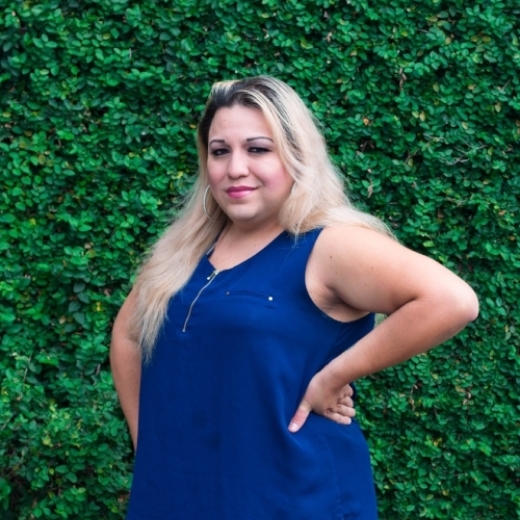
    In Houston, the number of hate crime offenses rose 191% between 2017 and 2018; 75% of which were either motivated by race/ethnicity/ancestry, sexual orientation or gender/gender identity. 

    Ana envisions a Houston that is more accepting and inclusive. Through her organization, she supports, defends the rights of and creates survival networks for the trans latinx community. 

    “To create a better Houston, we need to change the systems placed here before us that we have grown to accept, and learn from our history to not repeat the same mistakes. These systems cause oppression and division within communities, and we hope to overcome all of these obstacles. Especially in the trans sector.”

    In her work, throughout the COVID-19 pandemic, Ana has seen the disproportionate impact on transgender women who already face so many barriers. “Transwomen often feel not included in any communities and lack support systems causing a disproportion of unemployment and the situation is even worse for those who are undocumented.”

    Ana is inspired by Harris County Judge Hidalgo for her strength and courage. “She fights for immigrants, the most vulnerable, and many communities have benefited from her hard work and dedication.” She also finds inspiration in the Houston immigrant community who are and always have been essential to the framework that makes Houston a robust and diverse region.

    “We each have our own story and struggle we deal with. We should be proud of everything we have accomplished and survived.”*

    Linda Toyota, VP Community Engagement and Development at LiftFund

    Small businesses are a major driver of employment, and the entrepreneurs who run them are more beneficial to our economy and stimulate more growth than larger businesses — helping to lower poverty and improve low-income areas. The U.S. Small Business Administration Office of Advocacy report indicates that women represent 44% of the U.S. economic activity. Despite the female demographic launching the most startups, they are underfunded.

    Through her leadership role at LiftFund, a nonprofit community lender, Linda Toyota not only recognizes the importance of loans to small business to create a more prosperous region, but also the impact these microloans can have “to promote wealth, business ownership, access to funding opportunities, availability of business and financial education, and information to help individuals break through the systemic barriers that have disproportionately impacted women and people from historically marginalized communities.”

    Linda looks forward to a Houston area where the potential of women entrepreneurs is fully realized and where “they could impact their livelihood and the economic growth of our community. I envision a Houston that is more inclusive and equitable.”

    The importance of diversity in Linda’s work and throughout her life comes from the history of her family and it aligns with LiftFund’s vision of a world where everyone has opportunity and access to education, just and equitable economies, the freedom to be fully engaged in the world, and are empowered to reach their dreams. Her parents were U.S. born Japanese Americans who were incarcerated in internment camps after the attack on Pearl Harbor. Despite this, her father enlisted in the U.S. Army and her mother was able to leave the camp when a family sponsored her. The exclusion experienced by her parents played a substantial role in making diversity and inclusion an important pillar throughout her life. She firmly believes that “one person can make a difference.”

    Elena White, Executive Director and Founder of Connective
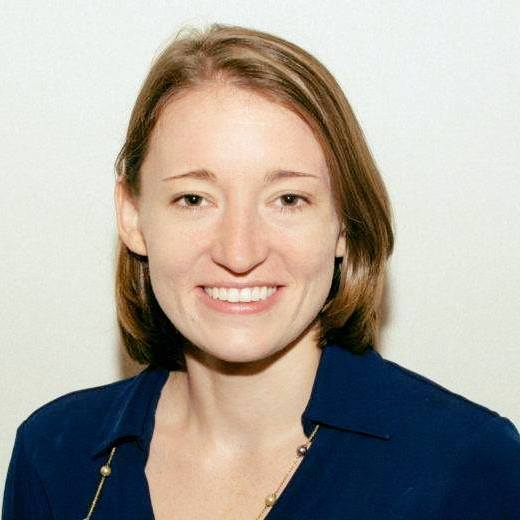
    The Federal Emergency Management Agency (FEMA) has declared a disaster in Fort Bend, Harris, or Montgomery counties 26 times in the past 41 years. Despite the frequency of natural disasters in the Greater Houston area, many of which involved flooding, a majority of residents do not believe the local government is successful in protecting their homes from flooding. Six months after Hurricane Harvey, about 40% of people in the three-county area rated efforts by the local government to protect homes from flooding as “poor.” However, even with assistance, the impacts of disasters can last more than several years for those with the fewest resources. About 41% of Black residents who were affected by Hurricane Harvey reported that their lives were still “somewhat” or “very” disrupted one year later, compared to 26% of white residents.

    Elena White is working to improve Houston’s preparedness system in the event of a natural disaster and to ensure resources are distributed to the most vulnerable in our community when a disaster does strike. 

    “I believe that Houston should face the hard truths of climate change head on — leading the nation in proactive implementation of solutions to make our community more resilient, rather than facing disasters reactively.”

    Through the COVID-19 pandemic recovery work and human-centered research her organization is leading, Elena has seen first-hand the disproportionate impact on vulnerable populations like single, immigrant mothers, and their stories have stuck with her.

    “I think of Clara, a recently divorced mother of three, originally from Honduras, who gets her family food these days from the Food Bank and says that she often feels viewed as less than human by the staff at her apartment complex, And, Raquel, a hairstylist who lost 70% of her wages since the start of the pandemic. When asked what she’ll do if she cannot pay her rent next month, Raquel says, ‘I don’t have a plan. I don’t have a plan. The plan is day to day.’”

    “My organization’s vision is to transform social services to become human-centered. I personally want to live in this city without being constantly in survival mode, and I hope to continue to push for a city where no one is constantly in survival mode.”

    *Some portions of this interview were translated to English from Spanish.
  • The pandemic turns one: 6 ways COVID-19 has impacted Greater Houston

    The pandemic turns one: 6 ways COVID-19 has impacted Greater Houston

    March 4, 2020: A Fort Bend County area man became the Houston area’s first presumptive positive case of COVID-19 after traveling on a Nile River cruise. From there, the situation worsened rapidly. Just one week later, the Houston Livestock Show and Rodeo was cancelled for the first time in 88 years after evidence of community spread was confirmed through a case in Montgomery County. Businesses began to close their doors and store shelves were quickly emptied as people across the region and the nation scrambled for answers. What will happen to me if I get the virus? How can I get tested? Will I keep my job? Will there be enough food? How long will this last? 

    One year later: we know much more than we did during those chaotic first weeks. With multiple vaccines receiving emergency use authorization, accessible testing and more treatment options, we’ve made some remarkable strides in our battle against the health effects of the pandemic. However, we also know more about the incredible toll the pandemic has taken on our region, and the impact it has had on the lives of millions of Houstonians. The data are irrefutable. Latino and Black communities have been hardest hit by the pandemic. They have paid the highest price: lost jobs, lost businesses, lost homes, lost loved ones and lost lives.

    While relief may be in sight for many, the toll of COVID-19 still looms large — both for the families of people who have lost loved ones and those who have lost livelihoods. Understanding what lies ahead for our region starts with understanding where we stand today, and in a year as catastrophic as any in recent memory, it behooves us to look back and reflect on what COVID-19 has meant for Houstonians and Houston to date.

    1. Nearly 465,000 Houstonians infected and 6,300 dead

    Despite some early hopes that the virus would be limited in its severity and short in its duration, the grim figures one year later tell a much different tale. In the three-county area alone, nearly 465,000 people have been infected as of March 7, 2021. More than 6,300 of those infected did not survive, and residents of color and low-income communities have been hit disproportionately hard throughout the region. 

    As the most populous county in the region by far, Harris County has seen both the highest number of cases and the highest number of deaths in the three-county region. However, each county has had roughly the same infection rate per 100,000 residents, ranging between 7,305 out of 100,000 residents in Montgomery County to just over 7,600 out of 100,000 residents in Fort Bend and Harris counties.

    Erica’s two adult brothers passed away due to COVID, only three weeks apart. As a result, Erica became the guardian for her young nephews. This has caused a great amount of stress for Erica and her husband, as they now have a family of five children to care for. When her application to the Lost Loved One Fund was accepted, she exclaimed, “Oh my God, thank you so much…you are a blessing. My family and I really appreciate it. God bless you.”

    – Client story from COVID-19 Lost Loved One Fund administered by Memorial Assistance Ministries (MAM), a Greater Houston COVID-19 Recovery Fund nonprofit partner

    While COVID-19 may have spread through the three counties at similar rates, it has not affected everyone equally. In all three counties, Hispanic and/or Black Houston-area residents represent a higher share of COVID-19 deaths than they do the overall population. 

    A recent study estimated that nine family members are affected by one person who dies of the coronavirus, which means nearly 60,000 people are grieving in our region. As Dr. Julie Kaplow wrote in a recent Understanding Houston blog, “the context in which the deaths are occurring (e.g., social distancing that prevents in-person, ongoing support and collective mourning) makes the grief-related impact even more pronounced, particularly for children and adolescents.” Compounding layers of devastation is the fact that the communities experiencing the majority of infections and deaths from the novel coronavirus are the same ones who have been most affected by employment and income loss. 

    2. Houstonians have unequal and inequitable access to vaccines

    In a year filled with difficult questions, one of the most pressing continues to be unanswered. To those who’ve spent the past year wondering when will the COVID-19 vaccine be ready? the answer is “it depends.”

    According to official vaccination data tracked by the Houston Chronicle, 18% of Fort Bend County’s population has received at least one vaccine, with 12% being fully vaccinated, as of the first week in March 2021. Vaccination rates in Harris and Montgomery counties are lower in comparison, with 14% and 12% of the population vaccinated, respectively.

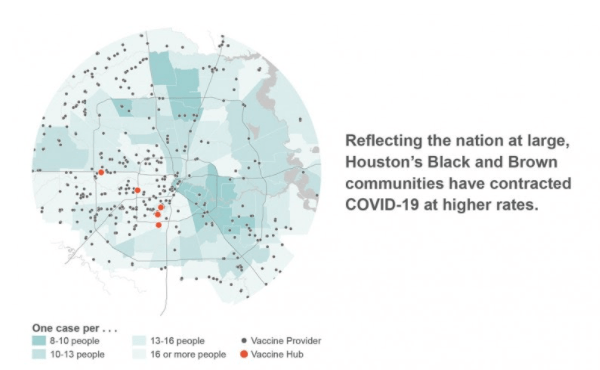
    However, not all residents have equal access to the vaccine. The least likely to die from the pandemic are the first to become inoculated. This trend is already clear in the national data and in Texas where Hispanics/Latinos have suffered 43% of all COVID-19 cases, yet have received only 16% of vaccinations. Black Texans comprise 19% of all cases but only 7% of vaccine recipients, while Asian-American residents represent 9% of all cases but only 1% of vaccine recipients.

    An analysis by the Community Design Resource Center at the University of Houston found that “vaccination sites are glaringly sparse in neighborhoods where the pandemic has been most severely felt, and instead are overwhelmingly located in the same westside neighborhoods as the rest of Houston’s resources.”

    Source: Kinder Institute for Urban Research, Urban Edge: Mapping inequity in Houston’s COVID-19 vaccination rollout

    While race/ethnicity data on who has been vaccinated in Greater Houston is not publicly available, ZIP code-level data confirms that the highest vaccination rates are in communities with fewer COVID-19 cases. We can also use survey data from the U.S. Census Bureau to understand general vaccination trends by demographic characteristics — it is important to note the data presented below are not official vaccination rates.

    Vaccination rate estimates correlate with income level, as residents from higher income households are more likely to have already received a vaccination against COVID-19. On the high end, 43% of residents in households earning $200,000 or more per year have received the vaccine, compared to about 17% of residents in households with annual incomes below $25,000. 

    3. Houstonians have lost 141,000 jobs

    Rebecca is a single mom of three who found herself in a scary situation during March 2020. She contracted COVID-19 and could not go to work. As the sole provider of support for her children, the family’s livelihood depended upon her ability to work. When she was able to return to work in April, her employer had to close due to the impacts of the shutdown, leaving her unemployed and struggling to make ends meet. Rebecca received an eviction notice and had nowhere to turn. Helping her with gaining employment was essential to assisting her to get back on her feet in order to sustain herself beyond the COVID-19 funding that paid her rent. She joined our Financial Opportunity Center and enrolled in healthcare training. Rebecca now has a part time job at Texas Children’s Hospital, and will go full time earning $14/hr after gaining valuable credentials.

    – Client story from Volunteers of America Texas, a Greater Houston COVID-19 Recovery Fund nonprofit partner

    Between lockdown orders and massive shifts in demand, COVID-19 was a destructive force throughout the global economy, and Greater Houston was no exception to this trend. In addition to the pandemic’s well-documented effect on employment in Houston’s oil and gas industry, COVID-19 had devastating effects on construction workers, service industry professionals and arts professionals throughout the region, as unemployment skyrocketed throughout Greater Houston.

    By April 2020, unemployment rates had more than tripled from their previous average, soaring to 13.0% in Fort Bend, 14.6% in Harris, and 13.2% in Montgomery counties — setting new records for the region as more than 909,800 Greater Houston residents filed for unemployment between March 7, 2020 and February 13, 2021. While the Houston region has lost 141,000 official jobs in 2020 (the countless number of workers who were employed without official record — like in domestic work — will never be known), employment is slowly bouncing back. Though unemployment rates were down to 7.5–8.3% as of January 2021, the wide-ranging economic impacts continue to disproportionately impact lower-income workers.

    Those who were already vulnerable prior to the pandemic were also those hit the hardest by the pandemic’s economic fallout. According to Pulse survey data from the U.S. Census Bureau, residents in lower income households prior to the pandemic were more likely to have lost income a year later. 

    As of February 2021, 76% of residents who earn less than $25,000 per year had experienced a loss of income since March 13, 2020. Similarly, 60% of residents with annual earnings between $25,000 and $34,999 reported lost income. Conversely, those with higher incomes reported lost income at nearly half the rate of lower-income individuals, with 26% of those earning $150,000 to $199,999 annually and 33% of those earning $200,000 or more per year reporting lost income.

    Similarly, racial trends in pandemic-related job losses largely track with existing data on poverty in the Greater Houston region. In the three-county area, 53.4–81.4% of residents living in poverty are Black or Hispanic, and residents of both groups experienced higher rates of employment income loss during the pandemic. 

    As of February 2021, more than half of Greater Houston residents still report employment income loss. However, Black and Hispanic residents have lost income at the highest rates. In the Houston metropolitan area, nearly two-thirds of Black and Hispanic residents have lost income since mid-March 2020 compared to 41% of white residents. And while signs of recovery are beginning to emerge, the long-term effects of these disparities will have additional ramifications for our region in the years to come. A recent study from consulting firm McKinsey estimates that it could take two years longer for women and people of color to recover jobs lost during the pandemic.

    4. Hundreds of thousands of Houstonians are going hungry and worried about losing their homes

    Of the many questions that arose early in the pandemic, two concerns loomed especially large: How will I be able to feed my family? and How will I be able to pay my rent? As various levels of income loss swept the region, these questions became all too urgent for many, as the financial resources needed to cover life’s basic necessities became less and less assured with each passing day. 

    Approximately one-third of families receiving financial assistance and groceries had never visited [our agency for help] prior to the COVID-19 crisis. 

    – Mission Northeast, a Greater Houston COVID-19 Recovery Fund nonprofit partner

    Food insecurity in Houston during COVID-19

    Throughout the pandemic, The U.S. Census Bureau has been conducting Pulse surveys to assess the needs and status of major metropolitan areas throughout the country. In 10 of the 25 Pulse surveys issued, the Houston Metro Area reported the highest levels of food insecurity of any major metropolitan area in the country

    Since mid-April 2020, about 700,000, or 15%, Greater Houston households have “often” or “sometimes” not had enough to eat. Among households with children, that rate has climbed to an average of 20%. While rates have lowered as of February 2021, complications from Winter Storm Uri could see those rates continue to increase.

    There was a family that ran out of gas while in the [food distribution] line. It was a family of seven inside, (mom, dad and five children). The children were crying because they were hungry and hot. So, I went to get gas and took it to them. When they arrived for their turn in line, the mom instantly got out to get the groceries to see what she could immediately give to the children. As I watched them, I could see they must not have eaten much in days. I asked if they would like to come inside to eat more. The mom nodded her head yes and started crying. She asked her daughter to translate that it had been five days since they last ate. That they had gone to two other places in the last couple of days, but their electricity is off so they can’t cook the food. They could not pay their rent, nor electricity. Leveraging funds from GHCRF, we were able to help them with both their electric and rent.

    – Client story from My Brother’s Keeper Outreach Center, a Greater Houston COVID-19 Recovery Fund nonprofit partner

    Evictions and housing in Houston during COVID-19

    Even in normal circumstances, housing costs are the number one expense for Houston householders. And when lost incomes and uncertain financial futures became a fact of life for half of Greater Houston residents, the consequences were swift and severe. Greater Houston quickly found itself facing an eviction crisis that persists for many to this day, despite official moratorium orders. In fact, Houston has ranked among the top three cities in the nation for evictions filed during the pandemic.

    While early rent deferral programs protected some through the early days of the pandemic, the lasting effects of lost wages/employment caused many Houston residents to struggle with rent and mortgage payments as the pandemic wore on.

    Houston-area renters are typically more cost-burdened than homeowners, and the pandemic was no exception. Renters’ ability to pay rent largely decreased as the pandemic wore on. In early May 2020, just under 20% of renters reported missing the previous month’s mortgage payment. But as deferment programs and unemployment benefits ran out, missed rent checks increased, as the percentage of Houston-area renters who missed the previous month’s rent spiked to 35% in early February 2021.  

    Amanda lost her job shortly before the pandemic and was unable to find new employment as the pandemic struck the United States. She also struggled to obtain unemployment benefits. Then Amanda’s landlord filed for eviction. By searching through the property records, a Lone Star Legal Aid attorney discovered that Amanda’s apartment complex was backed by a loan through Freddie Mac. This meant it was subject to the CARES Act, which prevented landlords from filing evictions against tenants of federally-backed properties between March 27 and July 25, 2020 during the pandemic. The lawyer requested that the landlord dismiss the case immediately. Just a few hours later, the property manager filed a Motion to Dismiss the cases against Amanda and four other tenants in Amanda’s complex.

    – Client story from Lone Star Legal Aid, a Greater Houston COVID-19 Recovery Fund nonprofit partner

    Homeowners faced a similar experience, with missed mortgage payments spiking to nearly 24% in late December 2020 before gradually declining back down to 18% as of February 2021. Heading into March 2021, 41% of renters reported low confidence in their ability to make next month’s payment compared to 14% of homeowners. 

    As with other trends related to the COVID-19 pandemic, increased difficulty paying for housing has disproportionately impacted Black and Hispanic residents, who are also more likely to be renters than white residents. As of late February 2021, 42% of Black renters said they were behind on housing payments. Without further action and assistance, the housing crisis facing Houston-area renters is likely to last well into the vaccination phase of the pandemic — and possibly beyond.

    5. Learning has been disrupted for more than a million students in Houston

    Just over a week after Houston’s first confirmed case of COVID-19, Houston Independent School District closed down all campuses. What began as a one week closure turned into months of at-home learning as the pandemic showed no signs of stopping, forcing educators across the state to adapt and develop online learning models fast as this unprecedented crisis took hold.

    Despite valiant efforts from teachers and school districts, the impact on most students has been significant

    By the end of the 2019-2020 school year, 35% of students had gone without formal schooling due to outright cancellation of learning. As hard as teachers worked to make these programs effective, parents increasingly took on a significant share of the burden.

    In the early days of remote learning, Houston-area students spent an average of 15.5 hours per week learning from members of their household, compared to just 3.7 hours per week of formal education between teachers and students. While the transition from the 2019-20 school year to the 2020-21 school year saw improvements, many students are still learning less than they would under normal circumstances.

    As recently as late February, 37% of students in the Houston Metro Area reported spending less time on learning activities than they had prior to the pandemic. While most Houston-area students say they are spending as much or more time on learning activities than they did prior to the pandemic, one-third of Hispanic students — who currently represent more than half of Houston-area students — report less time spent on learning. The consequences of lost learning can be particularly pronounced for English language learners whose parents may not know or speak English at home and do not have full access to the resources needed for full online education. 

    For more information about COVID-19 and education in Houston, click here.

    6. Three out of four Houstonians are suffering from worse mental health

    Before COVID-19, Xochitl was already having a hard time providing for her family, which consisted of her partner and three children, because she was unemployed. COVID-19 has only exacerbated her financial problems. Since schools have closed she now has to balance taking care of her children, helping them with their school work, and providing them with meals — an unforeseen expense that increased her financial stress, in turn affecting her mental health. The financial assistance program has allowed Xochitl a little bit of reprieve to pay her bills.”

    – Client story from BakerRipley, a Greater Houston COVID-19 Recovery Fund nonprofit partner

    Between the stresses listed above and myriad others including prolonged isolation and feelings of uncertainty, COVID-19 has had a severe impact on the mental health of adults and children alike. As of late February 2021, nearly 3-in-10 Houston-area adults have reported feeling anxious or on edge for at least more than half the days of a week. 

    At its peak, during the week of July 21, 2020, 74% of Houston-area adults reported feeling anxious, nervous or on edge — 23% of whom reported feeling anxious every day that week. And while the most severe levels of anxiety have been in slight decline, the mental effects of the pandemic will continue to impact many in our region.  

    Looking back to prepare for what’s ahead

    Understanding Houston has worked with experts across disciplines to keep Houston connected with the insight and data it needs to make sense of the ongoing pandemic, and that mission will outlive the virus’s spread in our community. As we look toward recovery, we’ll continue to monitor our region’s progress, sharing valuable perspectives and new data as it becomes available. 

    But the road to recovery is far from over. The Greater Houston COVID-19 Recovery Fund has already helped thousands of Houston-area residents attain much-needed relief, but the need has not gone away. In fact, in the aftermath of the severe winter storm the region experienced in mid-February, the need is even greater. Please consider making a donation to the Houston Harris County Winter Storm Relief Fund to help our most vulnerable communities recover as we look toward brighter days ahead. 

    We also invite you to follow Understanding Houston on social media and subscribe to our newsletter to stay informed and help us do what matters for all residents of Greater Houston. 

    *Note, all names changed to protect clients’ privacy. 


  • 4 Takeaways from our first Nonprofit Disaster Data Dive + Workshop

    4 Takeaways from our first Nonprofit Disaster Data Dive + Workshop

    On March 4, 2021, Understanding Houston held its first Data Dive + Workshop with United Way of Greater Houston. These are interactive and engaging sessions with nonprofit organizations in which we talk about data! This event was the first in a three-part series of Data Dives + Workshops focused on natural disasters in Greater Houston. 

    In the first Data Dive + Workshop, we provided an overview of the new partnership between Greater Houston Community Foundation and United Way of Greater Houston to seek feedback from local nonprofit organizations on what they want to see as we build disaster-ready philanthropic partnerships to improve our collective disaster preparedness and response. We also shared key findings from our new subtopic on the various disaster risks to the region and from our COVID-19 data page

    Here are four takeaways from the robust and productive conversations with more than 75 Houston-area nonprofit agencies.

    1. One central place for nonprofit agencies to collaborate and coordinate during a disaster.

    When disaster strikes, one of the greatest challenges is communicating information in a timely and effective way. Nonprofit organizations that serve on the frontlines repeatedly cited the need for a central place to collaborate, communicate, and coordinate services and resources among each other. In particular, nonprofits want a central place to:

    • Share and communicate real-time needs
    • Provide consistent, accurate, timely messaging and updates
    • Access and find a catalogue/inventory of resources
    • Share and promote resources
    • Conduct client intakes
    • Provide referrals
    • Track clients so referrals are productive
    • Access community-level demographic, household, economic, and social vulnerability data, including maps
    • View a database of agencies by the services they provide, their strengths, populations served, and their contact information
    • Complete surveys and view real-time results

    2. Coordination should consider, include, and prepare for:

    • Start with prioritizing ALICE populations
    • Providing information to special populations such as individuals with disabilities
    • In-language and multiple language resources
    • Creating opportunities for agencies to focus on working in communities of color to reach under- and un-served populations

    3. Invest in agencies to build capacity before disaster strikes.

    • Invest in disaster capacity in non-crisis times, make preparedness and collective planning a real priority. 
      • Fund capacity building and make investments in technology and coordination which people typically do not want to fund
      • Establish clear channels of communication between organizations and  government agencies for coordinating resources for the community
    • Pre-identify relevant organizations, their target populations, and their strengths
    • Establish a process to capture lessons learned from previous disasters and outstanding issues to address (i.e., try to reduce future severity through personal and community resilience and public/private sector responsibility)
    • Catalog other types of local disasters  (e.g., chemical fires, explosions, etc.) in addition to the more widespread disasters

    4. Gain greater clarity on COVID-19’s local impact.

    As COVID-19 continues to impact our community, participants identified that they wanted to know more about its myriad impacts on different groups:

    • Impact on specific populations such as unsheltered community and different household sizes and compositions
    • Impact on family dynamics from child abuse and interpersonal violence
    • Impact on environment
    • Impact on small businesses
    • More on health impact
      • Long-term health
      • Non-covid health impact
      • Chronic health conditions
      • Effectiveness of vaccines

    Next Steps

    You can find a recording of the event here, a copy of the presentation here, and the Jamboard here.

    How have you used the data from Understanding Houston? Share your story with us!

    We hope you will join us in future sessions as we collectively work toward building a more resilient region with opportunity for all!!

    Future Nonprofit Disaster Data Dives + Workshops:

    • Vulnerabilities to and Impacts of Disasters – May 4, 2021 from 9 a.m. to 10:30 a.m. Register here.
    • Response to and Recovery from Disasters – June 8, 2021 from 9 a.m. to 10:30 a.m. Register here.

  • The Human Cost of Cash Bail in Texas

    The Human Cost of Cash Bail in Texas

    The COVID-19 pandemic has exacerbated many pre-existing disparities in access to healthcare, housing, and other life-dependent measures. These disparities often intersect with more severe outcomes in our criminal justice system, and are then met with a broken cash bail system. The outcomes dictated by these disparities can be dire. A study by the University of Texas found that of the 297 incarcerated individuals in Texas correctional facilities who died of COVID-19 between May and September 2020, 80% had not yet been convicted of a crime.1 This crisis within a crisis has further reinforced calls for pretrial justice reform in Texas and around the country.

    In most of the state, pretrial justice programs are entirely dependent on cash bail, which favors wealthier defendants over poorer ones, violating the Equal Protection Clause of the Fourteenth Amendment of the United States Constitution.2 This system not only detains non-violent offenders simply because they cannot afford bail, but also allows violent offenders the chance of release if they can afford it. This unconstitutional system transfers approximately $15 billion in the United States each year from the poorest, most vulnerable communities to privately-held bail bond corporations in the process.3

    What pretrial reforms have taken place across the country?

    Proponents of cash bail systems argue that releasing or offering bond assistance to pretrial offenders increases the likelihood of bail jumping, repeat offenses and crime in general.4 But a recent study conducted by researchers at Loyola University found that 2017 Cook County bail reform measures increased the number of people released pretrial without causing significant changes in the level of new criminal activity. The reforms also saved the Chicago-area community approximately $31.4 million that would have been used on bail funds in only the first six months after initiating the program. This program even included alleged felony defendants.

    Data-driven insights gleaned from studies such as this have assisted lawmakers across the country in crafting evidence-based policymaking in regards to cash-based pretrial reform. On February 22, 2021, Illinois Governor J.B. Pritzker signed the Pretrial Fairness Act (HB 3653 SFA2) into law, making Illinois the first state in the U.S. to effectively eliminate cash bail. While the bill eliminates cash bail for many defendants, it still permits judges to detain individuals if they’ve been charged with felonies such as murder or domestic battery. The only misdemeanor charges that permit the use of pre-trial detention are domestic or family violence, in order to ensure the safety of the victims. In addition to reforming cash bail practices, the 764 page bill also includes provisions for the creation of a Pretrial Practices Data Oversight Board, a Domestic Violence Pretrial Practices Working Group, establishes a “civil right of action,”5 bans outright chokeholds, and even creates a confidential mental health program for law enforcement officers. While this is the most progressive pretrial justice program passed in the United States to date, even conservative thinkers find value in certain aspects of bail reform efforts such as this.

    What is Harris County doing to mitigate harm caused by cash bail?

    While Illinois is leading the country in progressive pretrial reforms, lawyers and policy makers in Harris County have also been working to eliminate wealth-based descrimination in pre-trial populations. In 2016, defendants in Harris County filed a class action lawsuit arguing the unconstitutionality of bail practices, resulting in the creation of the ODonnell v. Harris County Consent Decree. The resultant measures allow Class A and B misdemeanor arrestees the chance to apply for swift release or to receive bail assistance in the form of personal or general order bonds.6 Those who are not eligible for swift release or personal bonds include those arrested:

    • and charged with domestic violence, violating a protective order in a domestic violence case, or making a terroristic threat against a family or household member;
    • and charged with assault;
    • and charged with a second or subsequent driving-under-the-influence (DUI) offence;
    • and charged with a new offense while on pretrial release;
    • on a warrant issued after a bond revocation or bond forfeiture7; or
    • individuals arrested while on any type of community supervision for a Class A or B misdemeanor or a felony.8

    Led by Brandon Garrett of Duke University, Sandra Guerra Thompson of the Criminal Justice Institute at the University of Houston Law Center, and Dr. Dottie Carmichael of the Public Policy Research Institute at Texas A&M, the Independent Monitor for the ODonnell v. Harris County Consent Decree recently released their first six-month report, showing promising signs of progress. “Gone are the days when a poor person would be locked up solely due to an inability to pay,” Garrett said in response to the findings.

    Some key metrics featured in the report include a large increase in releases of misdemeanor arrestees, a large reduction in the use of cash bail in misdemeanor cases, a reduction in race disparities in the use of cash bail and an overall decline in pretrial jail days (from an average of five days or more to two days or fewer) without resulting in an increase of reoffenders. In fact, the report found a slight decline in the number of reoffenders (shown below).9

    How much money is the Consent Decree saving the Harris County community?

    In the Independent Monitor’s second six month report (published March 3, 2021), Dr. Carmichael and researchers at Texas A&M University found significant decreases in the cost of bail incurred by Harris County communities. In 2016, the actual cost of bonds to individuals and their families in Harris County totaled $4.4 million. Just three years later, the actual cost of bonds incurred by local communities was just over $500,000, an 89% decrease from 2016.10

    89% decrease in bail spend

    In the three years since enacting bail reform, annual costs to the community dropped from $4.4 million in 2016 to $500,000 in 2019.

    What other improvements can be attributed to the Consent Decree?

    The Consent Decree has also vastly improved the quality and administration of due process for those awaiting trial. A few key improvements detailed in the Decree are that every defendant must now receive a bail hearing within 48 hours of their arrest, defendants must be represented by a lawyer in bail hearings, forms are now translated in the defendant’s native language, and translators are available at all hearings.11 Email and phone reminders are also now in place, which helps increase the likelihood that defendants show up to trial. In a recent Understanding Houston webinar, Sybil Sybille, a Fellow at Pure Justice and member of the Community Working Group for the independent monitor of the Consent Decree, shared her thoughts regarding the efficacy of the program saying, “It’s working. People have access to bonds … as long as you haven’t violated a bond in the past.”

    “An important part of the success of the Consent Decree is due to our team’s ‘Community Working Group,’” said deputy monitor Sandra Guerra Thompson. “The group is comprised of community leaders with experience in providing services for the homeless, survivors of domestic violence and sex trafficking, foster kids, immigrants and others.”12 The inclusion of independent, community-led oversight in Harris County’s recent bail reforms has set the county apart from other bail reform measures across the country, but still fails to address the population of felony defendants.

    According to Dr. Howard Henderson of the Center for Justice Research at Texas Southern University, pretrial justice reforms must be accompanied by programs that address the underlying “societal pre-existing conditions” that prevent fair access to mental healthcare, quality education and economic opportunity. The truth of this wisdom can be seen in the aforementioned research conducted by Loyola University in response to Cook County’s recent bail reforms. The researchers found that the most common new charge for alleged reoffenders was misdemeanor drug possession, followed by retail theft and drug dealing. The impetus of each of these offenses could be suppressed if historically neglected communities were given greater access to quality employment, mental healthcare and substance abuse counseling. Taking a glimpse at the mental health breakdown of the Harris County Jail population further supports these claims.

    Has the Consent Decree improved outcomes for those with mental health indicators?

    According to the continuously updated Harris County Jail dashboard, nearly three quarters of the Harris County Jail population have mental health indicators. According to the Bureau of Justice Statistics, mental health indicators are defined as “serious psychological distress in the 30 days prior to the interview or having a history of a mental health problem.”13

    In the second six-month report created by the Independent Monitor for the Consent Decree, the data show that misdemeanor defendants with mental health problems are being arrested at roughly the same rate as prior to the Consent Decree (30% of all misdemeanor arrestees have mental health issues). However, the Independent Monitor team did find that recidivism rates in those with mental health indicators have decreased slightly in recent years, from about 45% in 2015 to about 38% in 2019. These data illustrate that while the Consent Decree has resulted in slight improvements in outcomes for those with mental health needs, additional diversion and affordable mental health care programs are needed. Local organizations such as the Harris Center for Mental Health, Intellectual and Developmental Disabilities are working to fill this gap in equal access to mental health services.

    Has the Consent Decree minimized the COVID risk in Harris County Jail?

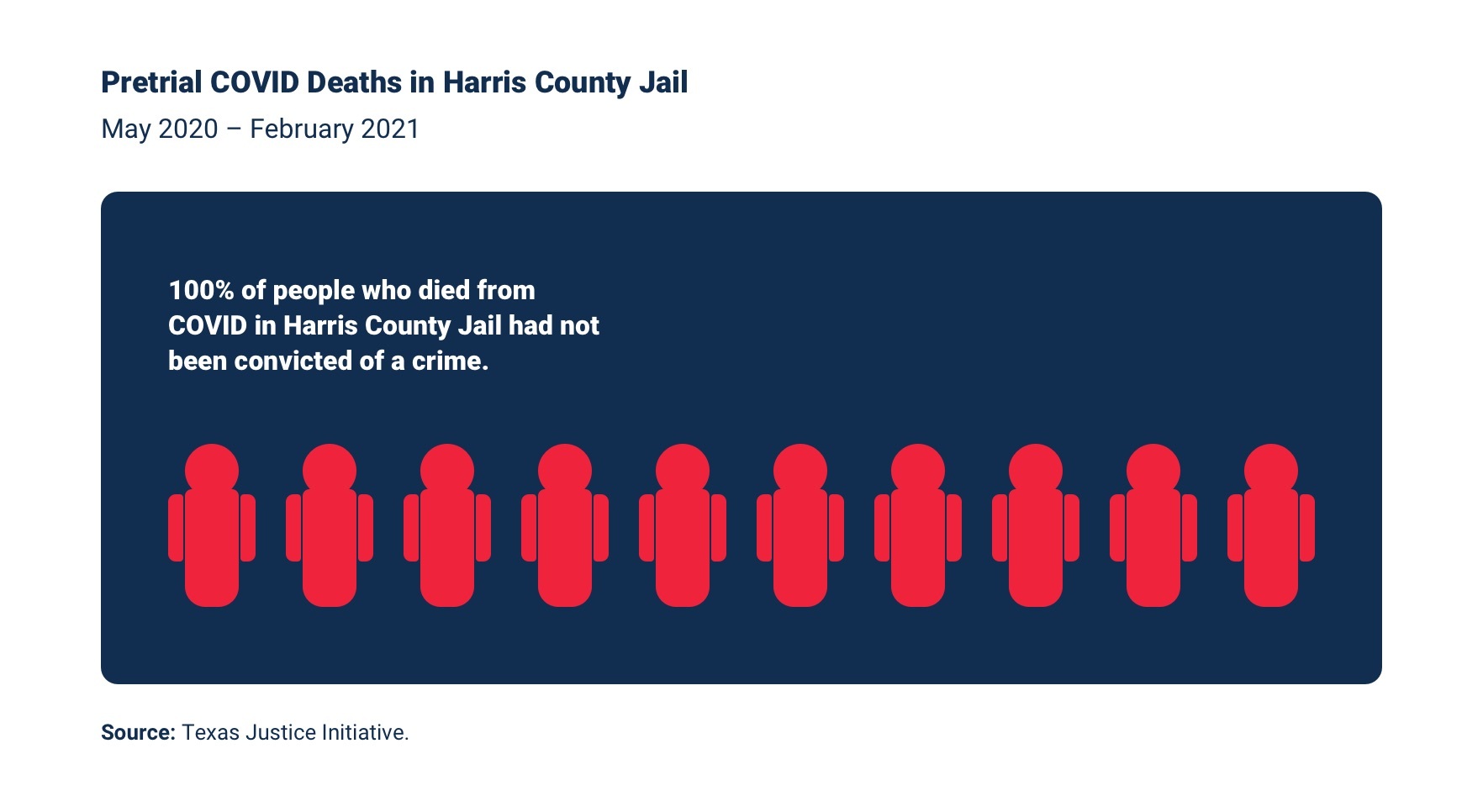
    Despite Harris County’s proactive measures in enacting the Consent Decree prior to the onset of the COVID-19 pandemic, a large share of people who died of COVID-19 in Harris County correctional facilities had not been convicted of a crime. According to the Texas Justice Initiative’s dataset on COVID-19 fatalities in Texas correctional facilities, all ten people who died (with Custodial Death Reports14 available) from COVID-19 in Harris County Jail had been awaiting trial.

    100% of people who died from COVID in Harris County Jail had not been convicted of a crime.

    Of the ten who died while awaiting trial, five were charged with a violent crime against persons, likely making them  ineligible for swift release. Two were charged with Possession of a Controlled Substance, and at least two individuals who were on staff in Harris County correctional facilities have also died from COVID-19.

    While one may be quick to equate these deaths as failures of the Consent Decree, the avoidable tragedy of these deaths cannot be attributed to the program, because most of these people were not eligible for swift release under current requirements. Instead, their deaths can be attributed to the lack of a program that addresses felony defendants.

    What does Harris County Jail look like now, without a pretrial diversion program that addresses felony defendants?

    As of January 28, 2021, Harris County Jail was at 97% capacity, with 87% of the population awaiting trial.15 Despite efforts of local nonprofits like the collaborative leading the Community Bail Fund, Harris County Jail is reaching a breaking point. “Almost all of these individuals have bail that is set at amounts that are beyond their or their families’ financial means,” Amrutha Jindal, an attorney with Restoring Justice, stated to CBS. “As a result, they are stuck in jail – where the virus is rampant, social distancing is impossible and PPE is limited — merely due to their poverty.”

    These data show that while the Consent Decree has vastly improved the efficacy of the pretrial process, the program can only do so much. As you can see in the figure below, a vast majority of those in Harris County Jail are alleged felony offenders, and therefore are not eligible for swift release or general order bonds.

    This means they are forced to stay in jail for an indefinite period of time, subjecting them to life-threatening and torturous conditions, often without being convicted of a crime due to the COVID-caused delays in the courts. In an interview with the Texas Criminal Justice Coalition, one incarcerated man described his experience in quarantine saying, “We had to go to the single-man cells (solitary confinement) for fifteen days, eating bologna sandwiches for lunch and dinner.” Another incarcerated person described his experience, “Sometimes, we didn’t even come out for like 30, 40 hours. We’d just be locked in the cell, the one-man cell, for like 40 hours… It’s not fair. It’s not right.”

    While the Harris County Consent Decree has made great progress in reducing wealth-based discrimination and upholding due process in pretrial misdemeaner populations, additional reforms that address alleged felony offenders and the inhumane treatment that incarcerated people are being subjected to are needed. The story of Preston Chaney illustrates the urgent need for such reforms. Chaney was arrested for allegedly stealing lawn equipment and frozen meat. Despite the pettiness of these charges, burglary is a felony offense in Harris County, making him ineligible for swift release under the current Consent Decree requirements. A judge set a relatively modest $100 bail but Chaney was unable to pay. After spending three months awaiting trial in Harris County Jail, Chaney contracted COVID-19 and tragically died shortly thereafter. This entirely avoidable death was purely due to Chaney’s inability to pay bail, undoubtedly caused by “societal pre-existing conditions” alluded to by Dr. Henderson earlier.

    While the Consent Decree has vastly improved the efficacy of the pretrial process, the program can only do so much.”

    What can be done to improve the pretrial process?

    Although Harris County is leading Texas in amending unconstitutional bail practices, there is clearly much work to be done. Engaged citizens who would like to take part in building a fairer pretrial justice system can do so by educating themselves and/or providing material assistance to the organizations mentioned in the piece and supplied below. If you would like to stay updated on the research into the efficacy of the Consent Decree, the Independent Monitor team released their second six-month report on March 3, 2021, which provides clearer insights into the efficacy of the program. Future reports and updates can be found here. Future pretrial reforms that address alleged felony defendants may be on the horizon. According to the Civil Rights Corps, an additional lawsuit against felony cash bail practices is ongoing.

    End Notes:

    1Data used in this study were collected from early March 22, 2020 to October 4, 2020.

    2Wydra, E.B. (October, 2017) When cash bail violates the Constitution. Constitutional Accountability Center

    3ACLU (2017) Selling Off Our Freedom: How insurance corporations have taken over our bail system. Report can be found here: https://www.aclu.org/sites/default/files/field_document/059_bail_report_2_1.pdf

    4Bail jumping is the defined as the act of failing to appear to a court-mandated trial for a crime.

    5A civil right of action can be defined as an individual’s legal right to sue.

    6General order bonds are judicial release orders, pre-approved by Presiding Judges, that require the release of the arrestee. (Source)

    7This can occur when a defendant fails to show up to court for previous offense, forfeiting their opportunity to receive bonds for future offenses. 

    8United States District Court For the Southern District of Texas, Houston Division. Full decree can be found here: http://www2.harriscountytx.gov/cmpdocuments/caoimages/Ex1ConsentDecree.pdf

    9Monitoring Pretrial Reform in Harris County: Second Report of the Court-Appointed Monitor (March 3, 2021)

    10Garrett, B.L. , Thompson, S.G. (September 2020) Monitoring Pretrial Reform in Harris County. Report can be found here: https://www.scribd.com/document/474748071/ODonnell-Monitor-Report-Six-Months-Final#fullscreen&from_embed

     11Docket Entry No. 701-2 at 17–18, citing sections of the Texas Penal Code

    12Garrett, B.L. , Thompson, S.G. (September, 2020) Monitoring Pretrial Reform in Harris County. Report can be found here: https://www.scribd.com/document/474748071/ODonnell-Monitor-Report-Six-Months-Final#fullscreen&from_embed

    13Berzofsky, M., Bronson, J. (June, 2017) Indicators Of Mental Health Problems Reported By Prisoners And Jail Inmates, 2011-2012. Bureau of Justice Statistics.

    14Custodial Death Reports are created for every person that dies while in custody of a Texas correctional facility. These reports include information pertaining to the individual’s cause of death, detention charges, and location. 

    15“The largest jail in Texas is nearing capacity. Experts warn it could become a hotbed for COVID-19.” CBS News, 2021. Accessed online.

    Additional Resources

    Local Organizations:

    Regional Organizations:

  • The COVID-19 vaccine in Houston: What residents need to know

    The COVID-19 vaccine in Houston: What residents need to know

    Accessibility issues and misinformation have created rollout challenges throughout the region. Here’s what you need to know. 

    Where can I get the vaccine?

    Vaccines are available at pharmacies, grocery stores and ad-hoc vaccination centers set up at major locations throughout the region, including NRG Stadium in Harris County.

    Each county has different resources and distribution patterns for getting residents vaccinated. Check this map and this tool to explore your vaccination options throughout the state. 

    Who can get the vaccine?

    As of now, there are three categories of vaccine eligibility (1A, 1B and 1C), determined by various factors including age, occupation and underlying health conditions. 

    1A) Front-line healthcare workers and residents at long-term care facilities

    1B) People 65+ or people 16+ with a health condition that increases risk of severe COVID‑19 illness

    1C) All residents age 50 and older

    In some counties where there is a surplus of vaccine supply, individuals who do not meet the current criteria may still be able to obtain the vaccine. 

    Who should get the vaccine?

    It is essential that as many people as possible get the COVID-19 vaccine. The vaccine has proven safe and effective through many clinical trials, and all currently available options are shown to safely protect recipients against severe effects from COVID-19 and reduce the likelihood of infection/transmission.

    However, the vaccine may not be safe for some, including:

    • Children 16 and younger
    • People who have received a different vaccine within the last 14 days
    • People who are severely immunocompromised 
    • People who have allergies to vaccine components