Month: November 2020

  • A Look Back at Understanding Houston’s First Year

    A Look Back at Understanding Houston’s First Year

    The Greater Houston region is filled with possibilities. Across Greater Houston’s 10,000+ square miles live more than 7 million people from all walks of life and more than 90 countries. They speak nearly 150 unique languages. They help their neighbors at higher rates than the national average. They create world class arts and cultural experiences. And, most importantly, they work together to create a more vibrant Houston region with opportunity for all. 

    Whether you’re a philanthropist looking for guidance on where your dollars can make the most impact in Greater Houston, or you’re just a concerned community member hoping to understand and act on the issues that matter to you, Understanding Houston was created to measure what matters to our communities, so that people like you can do what matters in our communities.

    It’s been one year since our official launch, and we’re amazed and inspired by the outpouring of support and engagement we’ve seen from our community on a near-daily basis. Through important conversations on social media, inspiring events and compelling guest perspectives, Understanding Houston has achieved remarkable growth in its first year, and our journey is only just beginning. 

    These are just some of the highlights from year one. 

    How people are using the website

    As an expansive resource, Understanding Houston offers web visitors a number of ways to make the most of our data, including downloadable reports and charts, as well as a voting system that allows visitors to let us know the content we should expand on moving forward. 

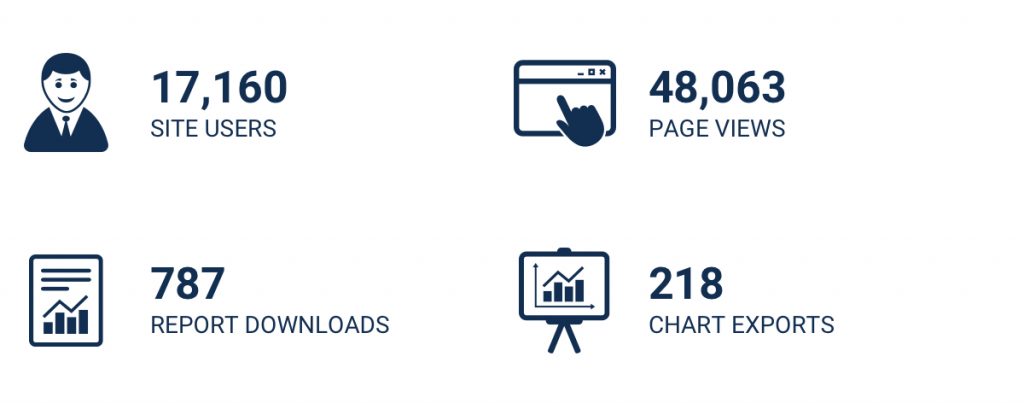
    Here’s how use of the Understanding Houston website has panned out over our first year: 
    This image has an empty alt attribute; its file name is img-using-the-site@2x-1024x403.jpg
    • 17,160 site users: More than 17,000 people have come to Understanding Houston through search engines, social media, or direct referrals since we launched last year, with an average of 1,430 monthly users.
    • 48,063 pageviews: These users have explored more than 48,000 collective pages of Understanding Houston content. 
    • 787 report downloads: Nearly 800 reports have been downloaded by users for later use and reference.
    • 218 chart exports: More than 200 charts have been exported by users to include in presentations, share on social media or feature on their website.
    • 265 topic votes: Users have voted for the topics that matter most to them 265 times. 

    Understanding Houston has served to inform our work with easy access to explore the data across the topics and subtopics within the website. This has been a tremendous value to have one central location for information.”

    Jessica Davison – Sr. Program Manager, United Way of Greater Houston

    How our community has grown

    Understanding Houston launched its social media presence and monthly newsletter in January 2020 to grow our community, inform our users on important issues affecting the region and share new in-depth blogs and events. 

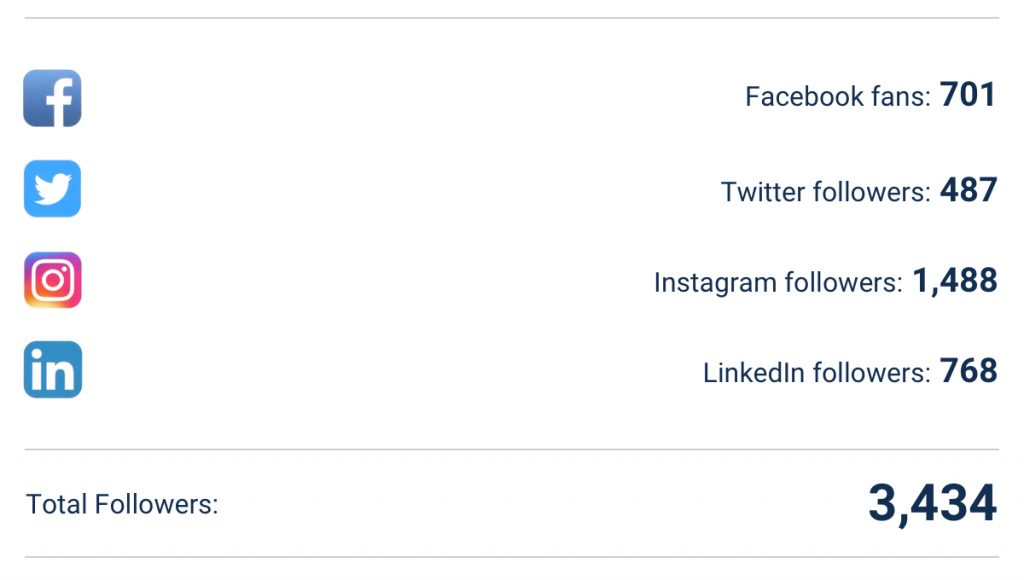
    To date, we’ve seen incredible support and engagement in our community, as our social platforms  and newsletter subscribers continue to grow month over month, reaching 40,000 people via social media on average each month. 

    Here’s where we stand as of this month:

    1,701 total email subscribers

    Social media followers

    This image has an empty alt attribute; its file name is img-total-followers@2x-1024x580.jpg

    “Understanding Houston helps us stay relevant as we speak the same language of our top health partners who also use Understanding Houston’s data reports.”

    Lharissa Jacobs – Vice President, Health Strategies, American Heart Association

    How we’ve expanded our platform

    From the very beginning, Understanding Houston has been a collaborative initiative between the Greater Houston Community Foundation and strategic research partner, Rice University’s Kinder Institute for Urban Research. Since our launch, Understanding Houston has partnered with a variety of leaders and organizations including the George Foundation, the Hackett Center for Mental Health, Houston Coalition Against Hate, Houston in Action, January Advisors, NAMI Greater Houston, and many others. 

    These collaborations resulted in 17 in-depth blogs, including six guest-authored pieces that amplify voices from community leaders.

    Expanding Understanding Houston hasn’t been limited to the written word; through an ongoing series of successful data briefings and webinars, we’ve briefed more than 700 donors, foundation, nonprofit and government partners on on key data insights across quality of life issues and topics such as criminal justice and housing inequities, with 97% of attendees reporting increased understanding of the Houston region after attending. 

    How we’ve responded to 2020’s challenges

    2020 has been an unpredictable year by any measure, as each new month seemed to bring with it new challenges. Between the ongoing COVID-19 pandemic and the renewed focus on racial justice and inequality in our region and beyond, the Understanding Houston team rose to the occasion, developing content that enhanced understanding and provided invaluable context to the issues affecting us all. 

    COVID-19

    When COVID-19 began to impact our region, we knew right away that our initial plans for the immediate future — including in-person events, blogs and social media posts — simply weren’t going to work as originally scheduled. Immediately, we shifted our focus on social media to helping our followers stay up to day with accurate, vetted information about COVID-19 in our region.

    Since the initial outbreak, Understanding Houston has published six original blogs on the impacts of COVID-19, some of which have been among the most viewed blogs on Understanding Houston.

    Racial inequality 

    Following the deaths of George Floyd, Breonna Taylor and several others at the hands of police, the nation’s attention turned en masse to issues surrounding racial injustice in our communities. Recognizing our platform’s ability to add invaluable context and depth to these conversations, we once again paused our previously scheduled content plans and shifted focus to help our community find answers to their most pressing questions. 

    With cooperation from our partners, we worked diligently to develop an information campaign consisting of 16 unique social posts that presented a holistic picture of racial inequities and injustices in the Greater Houston area, including an inspiring guest blog by Marjorie Joseph of Houston Coalition Against Hate.

    This content resonated with the community and helped hundreds of new followers discover Understanding Houston as we added 528 new followers to our four social media platforms over the course of the campaign.

    How we’re planning for the future of Understanding Houston

    A region as dynamic and ever-changing as Houston requires a resource that can keep up. Looking ahead to our second year, we are already planning two major updates to the existing platform: 

    1. A brand new Disaster topic with four subtopic pages crafted to help donors, government officials and community leaders understand the risks and effects associated with recent disasters in our region.
    2. Expanded content and engagement opportunities on economic opportunity that enables deeper learning and exploration of how we strengthen economic security for families across Houston.

    With COVID-19 making in-person engagements a challenge for the foreseeable future, we will also continue to work with our community partners to host engaging online data briefings that will keep the conversation going until we are able to host in-person events again.

    Thank you to everyone who has made this possible!

    Whether looking ahead or looking back, we owe so much to the countless people who have helped Understanding Houston grow into the dynamic resource it is today. To all the donors, partners, guest bloggers, researchers, analysts, developers, designers, writers and followers who keep us moving forward, we are endlessly grateful.

    A very special thank you to our founding partners and supporters, our advisory committee, our strategic research partners at Rice University’s Kinder Institute for Urban Research, and our communications partners at Baal + Spots and Deutser for their continued support of Understanding Houston.

    We also couldn’t do what we do without the continued support of our donors. Your support keeps Understanding Houston evolving and accessible for all Houstonians, and we’re extremely grateful for the support we’ve received thus far. If you’d like to see Understanding Houston continue to grow and expand its reach in our communities, please consider making a donation. 

    Here’s to many more years of keeping Houston connected to the things that matter.
  • Houstonians’ Experiences with Hurricane Harvey and the COVID-19 Pandemic

    Houstonians’ Experiences with Hurricane Harvey and the COVID-19 Pandemic

    Analyzing major challenges facing vulnerable populations

    For many residents in the greater Houston area, two recent disasters have had lasting impact on their lives — Hurricane Harvey and the COVID-19 pandemic. The former dumped up to 60 inches of unrelenting rain that devastated neighborhood after neighborhood. COVID-19, of course, has hit the entire world and filled hospitals and unemployment rolls, including in our region.

    Although a hurricane and a pandemic are very different crises, the lives they upend are often the same. The many negative economic, environmental and public health impacts of disasters exacerbate pre-existing vulnerabilities in these areas. In other words, those who are vulnerable before a catastrophic event are much more impacted during the disaster event and will likely continue to suffer long after it is over.

    To provide policymakers, funders and stakeholders with reliable information about the impact of these disasters on Texans and inform their relief and recovery efforts, the Episcopal Health Foundation, in partnership with several research and funding collaborators, conducted public opinion surveys of Texans in 24 affected counties (for Hurricane Harvey) and the state (for the pandemic).1 Both surveys explored the disaster’s effects on income/employment, healthcare and mental health among various populations. Consistent with established research, findings from both surveys reveal that lower-income, non-white and undocumented communities are disproportionately impacted by these disasters.2

    How Hurricane Harvey and COVID-19 impact income and employment 

    Beyond the collateral damage disasters leave in their wake, the myriad disruptions to infrastructure, economic/market activity, access to resources and more can cause substantial job loss — either temporarily or more long-term. In the months following Hurricane Harvey and COVID-19, many residents throughout Harris County and the state lost income and/or employment. (Loss includes someone in their household lost a job, lost their business, had hours/wages cut back at work, or experienced some other loss of income, including furloughed, as a result of disaster.)

    Nearly half of Texas Gulf Coast residents affected by Hurricane Harvey reported income and/or employment losses three months after the event. Meanwhile, nearly four in 10 Texans reported similar effects six months after the COVID-19 pandemic began. Effects in Harris County appear more pronounced as a higher percentage of respondents reported income and/or employment losses over these two time periods. 

    While a direct comparison between surveys of income/job loss by household income is difficult due to the questions’ wording, the Hurricane Harvey report found that respondents with lower incomes were much more likely to experience income/employment loss than those with higher incomes. Across the 24 affected counties, 59% of respondents with incomes at or below the federal poverty level (FPL) reported income or job loss compared to 50% of those between 100%-200% FPL, 48% of those 200%-400% FPL, and 29% of those more than four times the FPL. Data from the Census Bureau finds that low-income adults are among those hit hardest financially by COVID-19.

    Both surveys also reveal consistent disparities across race/ethnicity. Following existing trends in poverty and income inequality, Hispanics consistently bore the largest economic impact during these disasters, followed by Black Texans. In Harris County, a staggering 82% of Hispanic respondents reported income and employment loss three months after Hurricane Harvey and 43% reported similar losses six months after the pandemic began. 

    In both the Hurricane Harvey and COVID-19 reports, we paid special attention to the experiences of those who are potentially undocumented immigrants. For our purposes, Texans who were not born in the U.S., did not have permanent resident status when they moved to the U.S., or who have not had their status changed since, were considered potentially undocumented immigrants. This population has lower job security and typically does not qualify for or access many governmental benefits which increases their vulnerability to economic shocks from a disaster.

    About nine in 10 potentially undocumented residents affected by Hurricane Harvey in the region had experienced job/income loss three months after the storm. About half of potentially undocumented residents reported job/income loss six months after the pandemic began. In the Hurricane Harvey report, six in 10 potentially undocumented immigrants worried that they will draw attention to their or their family’s immigration status if they seek assistance. 

    How Hurricane Harvey and COVID-19 impact health care in Texas

    Lost income and strained resources often force people to make difficult decisions regarding their expenses, which can cause people to delay or forego health care in the period following a crisis — especially if they have lost health insurance. Not surprising given the income/employment losses, many Houston and Texas residents chose to skip or delay health care in the months that followed both Hurricane Harvey and COVID-19.

    Texans skipped or delayed health care at a higher rate during COVID-19 than in the first three months after Hurricane Harvey. These differences are consistent across both the state/region and Harris County, and may be explained by personal health and safety concerns associated with visiting doctor offices during a pandemic. 

    The COVID-19 report finds that 44% of Texans with incomes above $75,000 a year skipped or delayed health care compared to 31% of respondents with incomes below $75,000. This  is  likely  because higher-income households tend to have higher rates of health insurance  coverage, allowing for greater access to health care that preceded the pandemic.

    The mental health impacts of Hurricane Harvey and COVID-19

    Disasters in any form take a toll on our individual and collective health. The fear and worry of potential or actual financial and personal loss from a disaster can have serious emotional impacts — including PTSD, anxiety, depression and others. The impacts on our mental health can be as severe and long-lasting as the more visible physical and economic damage, and in some cases more so. 

    The pandemic appears to have had worse effects on mental health than Hurricane Harvey. Close to half of Texans and Harris County residents said the worry or stress related to COVID-19 has had a negative impact on their mental health. Three months after Hurricane Harvey, 13% of Texans and 12% of Harris County residents reported that their mental health worsened as a result of the storm. This difference is likely due to the time-limited nature of Hurricane Harvey and that some neighborhoods were more affected than others.

    Key takeaways and what comes next

    Aside from the obvious differences between these two major crises, the findings from both surveys reinforce the fact that lower-income, non-white and undocumented populations are more likely to experience financial hardships and have a harder time coping with both disasters than their peers.

    These findings signal that public- and private-sector leaders need to do more to address economic, health and mental health needs related to the pandemic, particularly for our region’s most vulnerable residents. We must pay attention to the needs of a group that is critical to our region’s local economy, workforce, and social fabric — undocumented immigrants. As both surveys show, they are suffering even more than their peers during COVID-19. Policymakers and philanthropy should devise long-term assistance, relief and rebuilding strategies to assist these vulnerable populations.

    1. See An Early Assessment of Hurricane Harvey’s Impact on Vulnerable Texans in the Gulf Coast Region, Texans’ Views on the COVID Pandemic and Texans’ Views on the COVID-19 Pandemic in Harris County.

    2. In discussing some common threads of these reports, we should note that Hurricane Harvey is a one-time natural disaster event that impacted 41 counties in Southeast Texas while the COVID-19 pandemic is both a global and national public health emergency that continues to impact the entire state. Nonetheless, it is useful to compare the data relating to how these events have impacted the vulnerable populations in Texas and Harris County.