Category: Disasters

  • COVID-19’s Impact on Nonprofits: Exploring new data on arts and culture nonprofits in Houston

    COVID-19’s Impact on Nonprofits: Exploring new data on arts and culture nonprofits in Houston

    Whether young or old, rich or poor, it’s highly likely that you benefit from the work of a nonprofit organization. Nonprofits provide vital services for people from all walks of life — from basic necessities like food and housing to enriching cultural experiences and houses of worship. As the third largest sector across the country, employing 11.4 million people, nonprofits provide many essential functions to society. Today, the organizations that enrich our lives and are relied upon during times of great need are also struggling due to COVID-19.

    With COVID-19 disrupting financial stability around the world, businesses of all types are struggling to make ends meet, and nonprofits are no exception. In a March survey of 500 nonprofits by Charities Aid Foundation of America, nearly 97% of responding organizations reported negative impacts from COVID-19. Because many of the in-person fundraising events that nonprofits rely on have been cancelled, organizations are having to quickly adapt to raise funds in different ways. Those that generate income through program services are also experiencing massive disruption. More than two-thirds of nonprofits report reductions in funding, with 97% expecting sustained losses over the next 12 months. Additionally, more than 40% of these nonprofits expect funding to decrease by more than one-fifth.

    This decrease in funding presents a huge worry to nonprofit employees. In theory, the Paycheck Protection Program (PPP) could be helping these nonprofit organizations.  However, a study by the Johnson Center found the number of nonprofit jobs protected by the PPP was approximately 20% less than expected. A recent United Way report found that 1.64 million nonprofit workers nationwide lost their jobs between February through May. Our nonprofits are in dire need of assistance, and yet, they are not receiving the support they need in this pandemic.

    How COVID-19 has affected Houston-area nonprofits 

    Houston-area nonprofits are facing similar challenges. According to a mid-March survey of 76 regional nonprofit partners typically active in disaster response, the Greater Houston Community Foundation (GHCF) found that 85% of organizations expected a significant increase in demand for their services such as food, emergency financial assistance, and information and guidance at the onset of shutdowns. Simultaneously, half of these organizations reported insufficient resources to meet increased community needs. 

    The visualization below highlights the top needs identified by nonprofits in mid-March, though we know their needs continue to evolve and potentially worsen as the pandemic continues.
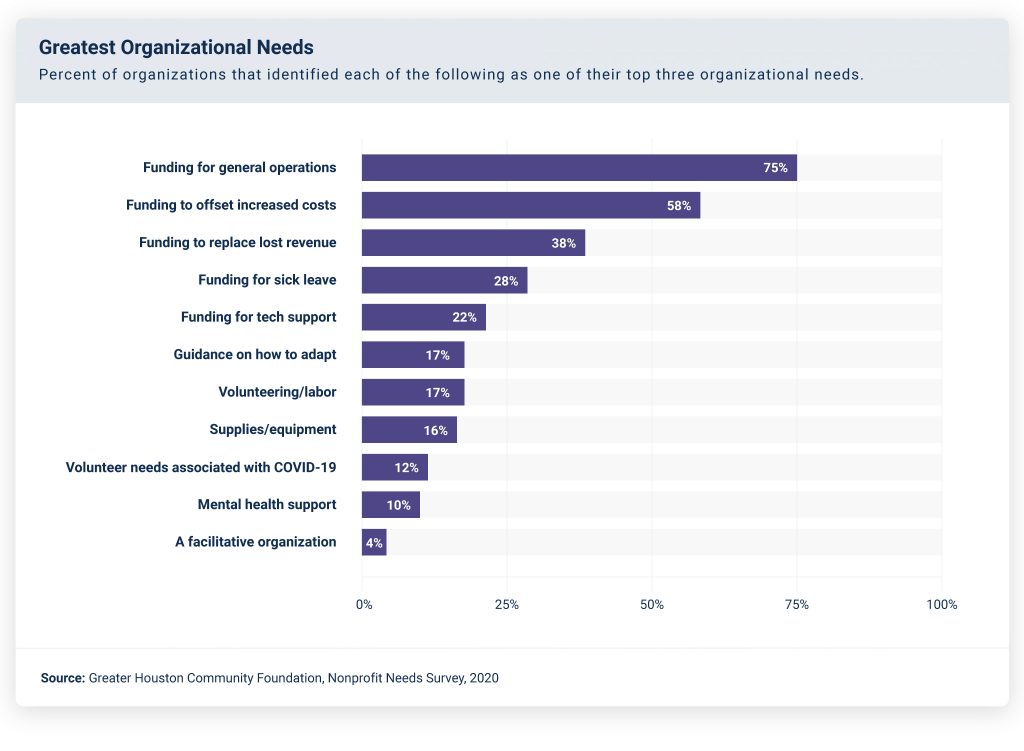
    Funding, tech solutions, sanitation supplies, protective equipment and additional volunteers are among the top needs of Houston-area nonprofits.

    It is no surprise that the top four needs revolve around funding. More than 500 Houston nonprofits flooded the Greater Houston COVID-19 Recovery Fund’s open request process seeking financial support. These requests ranged from organizations that provide wide-ranging services to low-income families and specifically older adults, people with disabilities, and the medically uninsured to arts and cultural organizations seeking assistance to redesign services and support employees. Nonprofit financial needs far outnumber available funds, and fund administrators continue to share fund requests to raise awareness of current needs in our community and to encourage increased philanthropy during this difficult time. 

    Nonprofits are truly on the front lines in our fight against this pandemic with employees risking their safety to help Houstonians survive, and they need support themselves. Arts and culture organizations in Houston have worked particularly hard to quantify the pandemic’s impact on the industry — one that is typically deprioritized in times of crises — to convey their great need as well. 

    COVID’s impact on Houston-area Arts and Culture Nonprofits 

    Greater Houston’s arts and culture nonprofits play a key role in making our region a vibrant place to live, work and play, providing residents with beautiful sights, exciting events and educational activities. Houston’s world-class museums, theaters and ballets attract visitors from around the world. In addition, these 600+ arts and culture nonprofits in the Greater Houston region generate around $1.12 billion in annual economic activity and employ around 30,000 Houstonians. The industry attracts more than 10 million people a year to 22,000 artist events. 

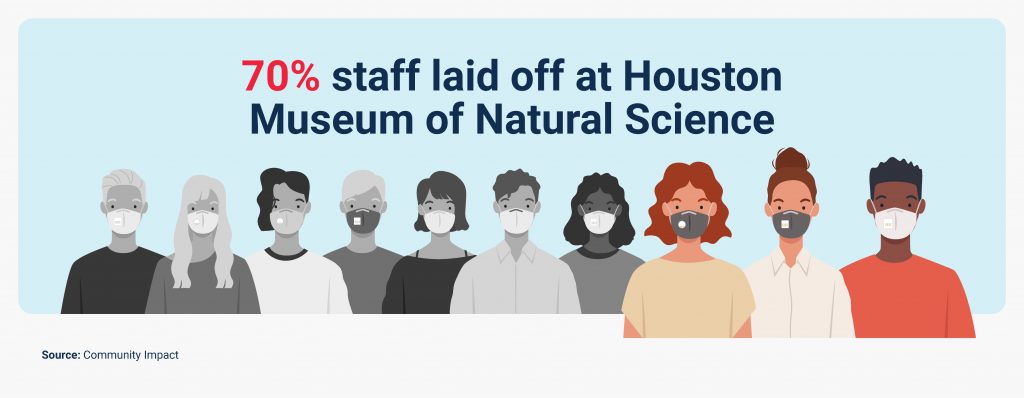
    However, those statistics reflect a pre-COVID-19 reality. Now, this industry rooted in bringing people together is struggling to survive in the wake of the pandemic. The Houston Arts Alliance found that arts organizations estimate losses of $75 million in earned income from ticket sales, entry fees, etc., $6 million from cancelled programs, and $10 million in donations. 

    While visual artists rely on digital platforms for the time being, performing artists look to new media to share their talents. With shows cancelled and art exhibits closed, arts organizations and individual artists are in distress. More than a quarter of all Houston artists have lost 100% of their income due to COVID-19, as the graph below demonstrates.

    The needs assessment also found over 486 Houston artists have requested local emergency funds through the Greater Houston Area Artist Relief Fund. The following graph illustrates this urgent financial need, displaying artists’ lack of confidence in meeting monthly financial obligations.

    An analysis of statewide unemployment insurance claims bears this out. The next graph highlights the huge jump in unemployment claims throughout Texas from people who worked in the arts, entertainment, and recreation industry prior to the COVID-19 outbreak. 

    The number of unemployment insurance claims per week from the arts, entertainment, and recreation industry grew by more than 700% between the first and last weeks of March — a consequence of shutdowns and social distancing measures prompted by the novel coronavirus. While claims from the arts and culture industry comprise a small percentage of total unemployment claims, the impact on the region is significant, as we describe in the following section.

    COVID-19’s Impact on Each Area of the Arts

    Museums
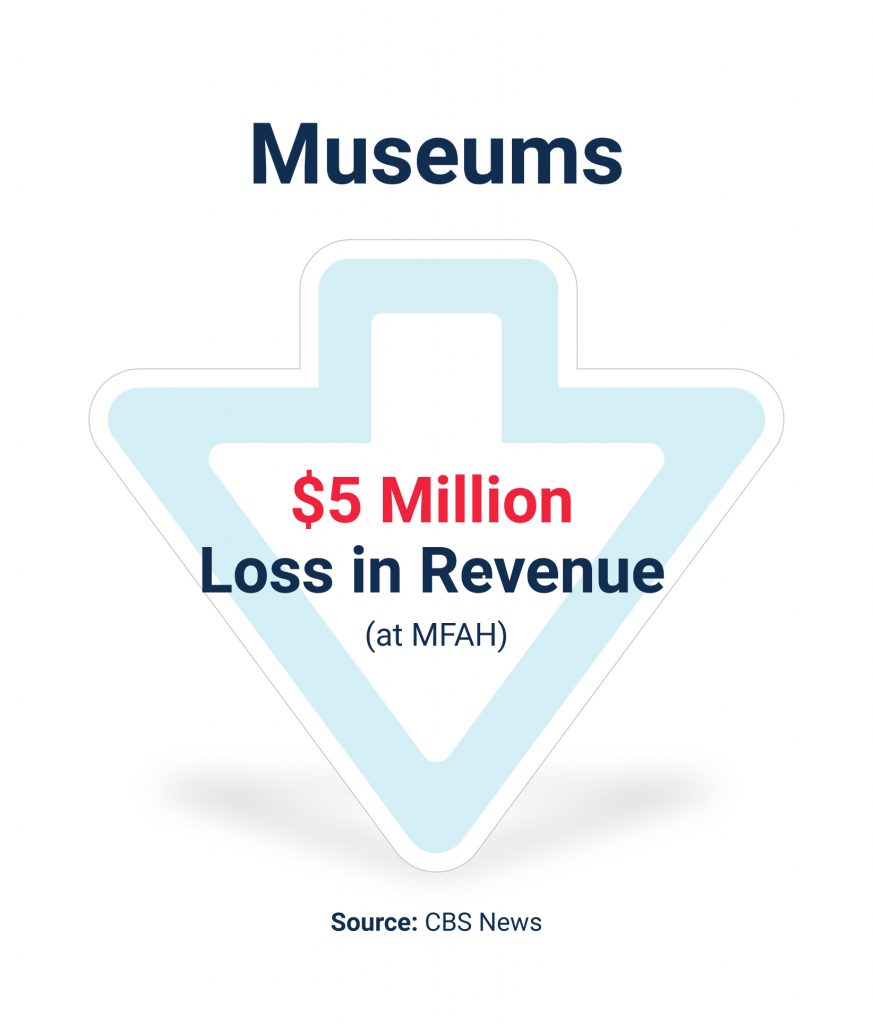
    Museums around Houston shut down from mid-March to May when COVID-19 emerged, which for many also included cancelling visiting speakers and events. To replace the in-person museum experience, many museums offered virtual experiences including films, tours, artist lectures and family activities for children at home, such as the #MFAHatHOME Virtual Experience and the Children’s Museum Daily Virtual Learning. The Fort Bend Museum has even started collecting oral histories from county residents to create a future exhibit about residents during the COVID-19 pandemic. Starting in late May, most museums reopened at 20–25% capacity. However, some museums, such as the Menil Collection, remain closed.

    Theaters
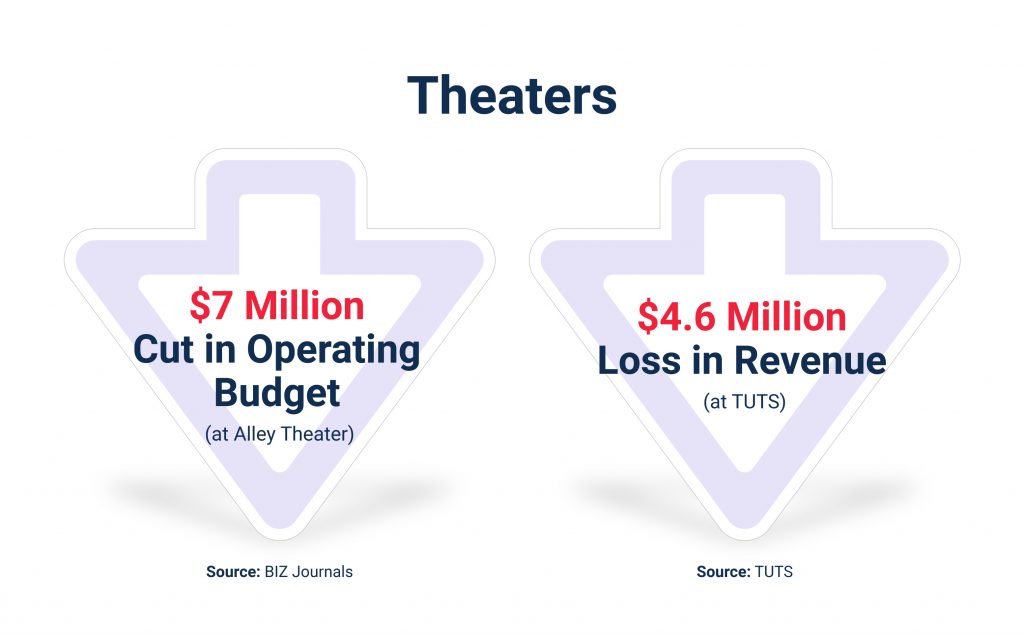
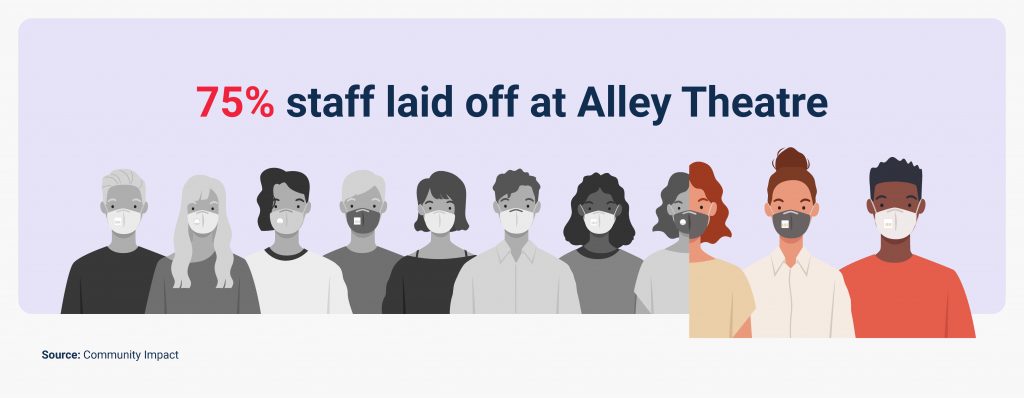
    Theaters around the region began cancelling shows in the middle of March, with some theaters losing more than half of their 2019–20 season. In Montgomery County, the Crighton Theatre, the “Ultimate Venue-outside the Loop” according to the Houston Chronicle, optimistically still has shows scheduled for the middle of August. However, in Harris County, theaters, such as Theatre Under the Stars, are not planning in-person shows until December at the earliest. In the meantime, theaters are posting recordings of previous shows online and conducting summer camps over online platforms.

    Houston Symphony
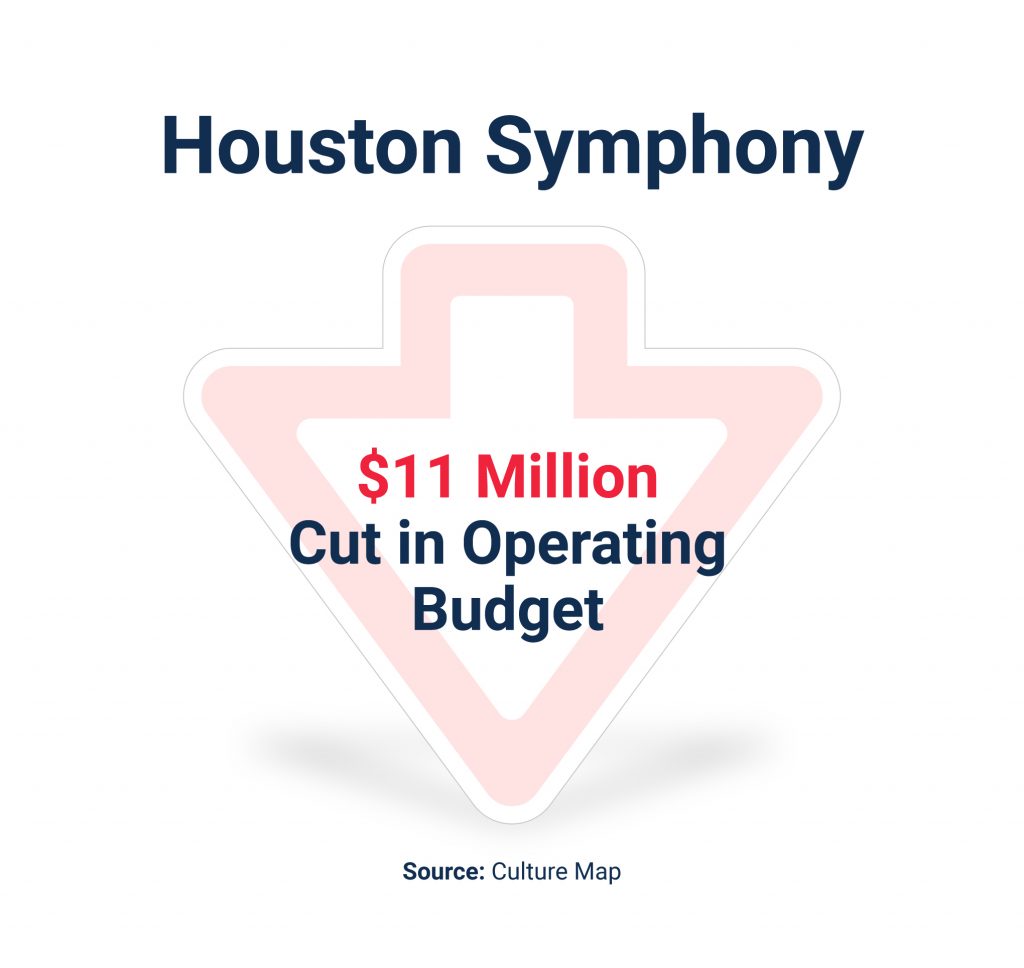
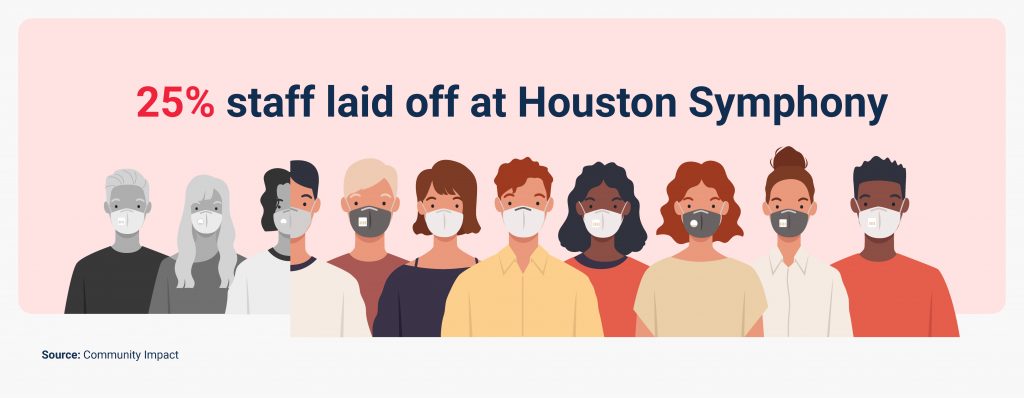
    Houston Symphony started cancelling shows in the middle of March and was eventually forced to cancel the remainder of their 2019–20 season, losing 41 scheduled performances.  During these tough times, they have continued to support Houstonians with a series featuring their musicians playing together from their own homes. In July, they kicked off a new livestream performance series, Live from Jones Hall.

    Houston Grand Opera

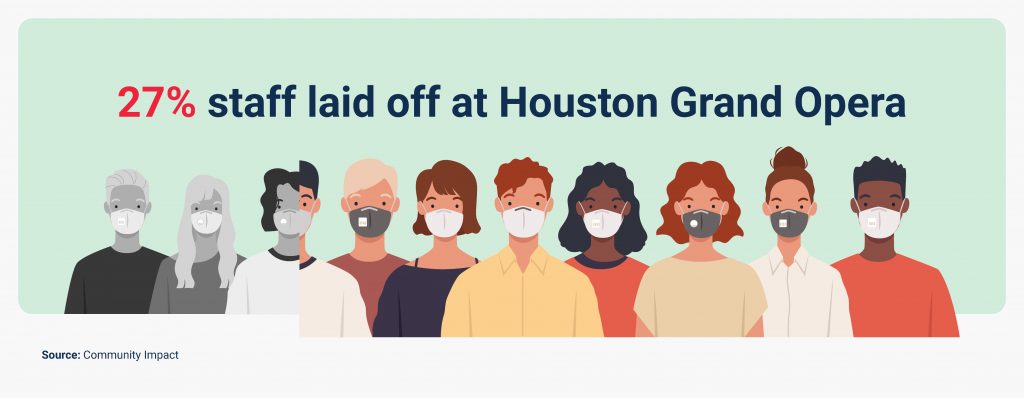
    Starting in the middle of March, Houston Grand Opera was forced to cancel in-person shows until April 2021. This decision called off 33 of their 47 planned performances for this season. Until they are allowed to perform in person, they will continue to release bimonthly online video performances.

    Houston Ballet
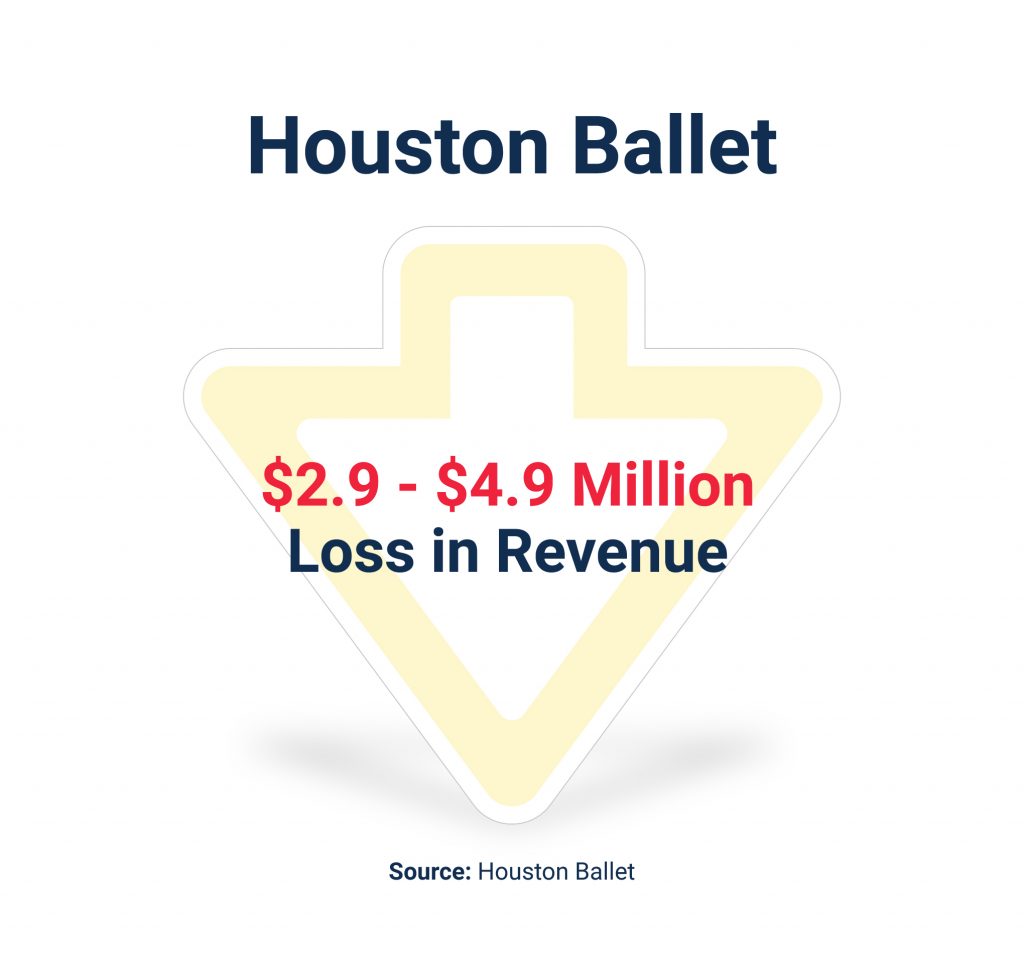
    Houston Ballet made the final call to close for the “foreseeable future” in the beginning of April.  Forced to cancel the remainder of their 2019-20 season, Houston Ballet had to scrap 16 ballets. Additionally, their academy classes transitioned to online instruction with students moving out of dorms, and their summer intensive program has been cancelled. To keep students in practice, the academy faculty create virtual ballet classes for all levels. 

    What can you do to help arts and culture nonprofits in Houston?

    Even prior to COVID-19, many Houston-area artists found themselves in a precarious financial position. With the unprecedented impact COVID-19 has had on arts and culture nonprofits, creative professionals are often facing an increased burden from this global pandemic. Americans for the Arts estimates the financial impact of COVID-19 on national arts and culture organizations is $9.1 billion. While the data paints a grim picture for Houston-area arts and culture nonprofits, there are still ways to help these cherished institutions weather the storm. Here are some of the steps you can take to support our arts and culture nonprofits:

    • Donate to the Greater Houston Area Arts Relief Fund for artists and arts workers: https://charity.gofundme.com/o/en/campaign/ghaarf (organized by the Houston Arts Alliance)
    • Participate in Houston in Action’s Art Votes
    • Check out these ideas for action from United Ways of Texas
    • Email covidresponse@ghcf.org for a list of nonprofits seeking additional funds.
    • Donate directly to your favorite arts and culture nonprofit.
    • Donate your tickets to performances, instead of asking for refunds.
    • Exchange your tickets for tickets to a future performance.
    • Buy tickets to online performances and other virtual experiences.
    • Enroll your children in online art/culture camps.
    • Buy season passes/subscriptions for the 2020-2021 season.
    • Attend online fundraisers for your favorite nonprofits.
    • Learn about more specific, personal ways to help artists by attending the Houston Arts Alliance Arts Town Hall: https://www.houstonartsalliance.com/arts-town-hall
  • Evictions during COVID-19 across Greater Houston

    Evictions during COVID-19 across Greater Houston

    Evictions are on the rise in Houston. As the Covid-19 pandemic and economic downturn continues to batter Texas and the Greater Houston region, millions of families are wondering how they’re going to be able to pay the bills. According to a recent Census Bureau survey, 37% of adults in the Houston metropolitan area either missed last month’s rent or mortgage payment, or have slight or no confidence that their household can pay next month’s rent or mortgage on time.

    Back in March, the Texas Supreme Court provided some initial relief to renters with a statewide moratorium halting all evictions. That moratorium expired in late May, however, and eviction filings are ramping back up, even at properties with federally backed mortgages covered by the CARES Act’s eviction moratorium, which ended on Friday. Public and philanthropic dollars are trying to fill in the gaps but the need is big and time is running out. 

    Data can help us better understand and respond to this looming eviction crisis. January Advisors has been collecting data on eviction cases in Harris County for some time. We recently partnered with Princeton University’s Eviction Lab to collect data on eviction case filings each week in cities across the country for their COVID-19 Eviction Tracking System

    In this post, I track eviction filings since January 2020 across Harris, Fort Bend, Galveston and Montgomery (partial data) counties to uncover how many evictions have been filed, where they’ve been filed, and which communities are bearing the brunt of eviction during COVID-19.

    How many evictions have been filed?

    Since March 19, 2020, when the Texas Supreme Court’s eviction moratorium went into effect, landlords have filed over 6,500 evictions across Greater Houston (Harris, Fort Bend, Galveston and Montgomery counties). This data comes from public court records collected by January Advisors through public-facing websites in each county. In Montgomery County, data is only made available for the Justice of the Peace Court Precinct 3 (Judge Matt Beasley).

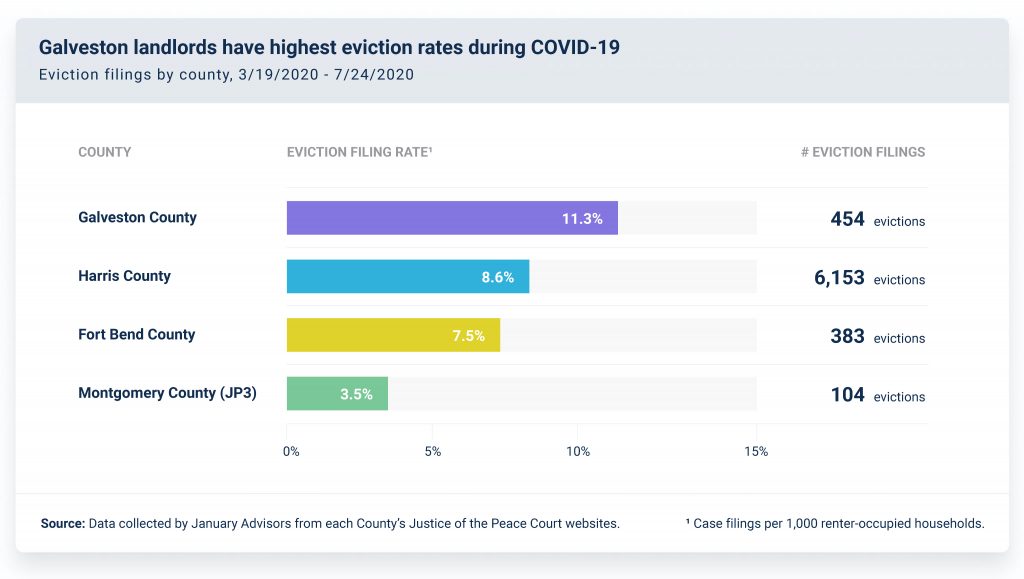
    The bulk of COVID-19 evictions have been filed in Harris County — 6,153 evictions — followed by Galveston (454) and Fort Bend (383) counties. Adjusted for the number of renters, however, Galveston County landlords emerge as the top evictors during this period: Since April, there have been 11.3 eviction cases filed for every 1,000 renter-occupied households in Galveston County compared with 8.6 in Harris County, 7.5 in Fort Bend County, and 3.5 in Montgomery County JP3.

    Adjusted for the number of renters, Galveston has the highest rate of evictions in the Greater Houston region.

    A higher eviction filing rate in Galveston reflects, in part, the differences in housing patterns and costs. Compared with Harris County, Galveston County is less urbanized, has fewer renters, and more homeowners. Residents who do rent in Galveston are more economically vulnerable and pay more of their incomes on rent, according to the latest American Community Survey estimates

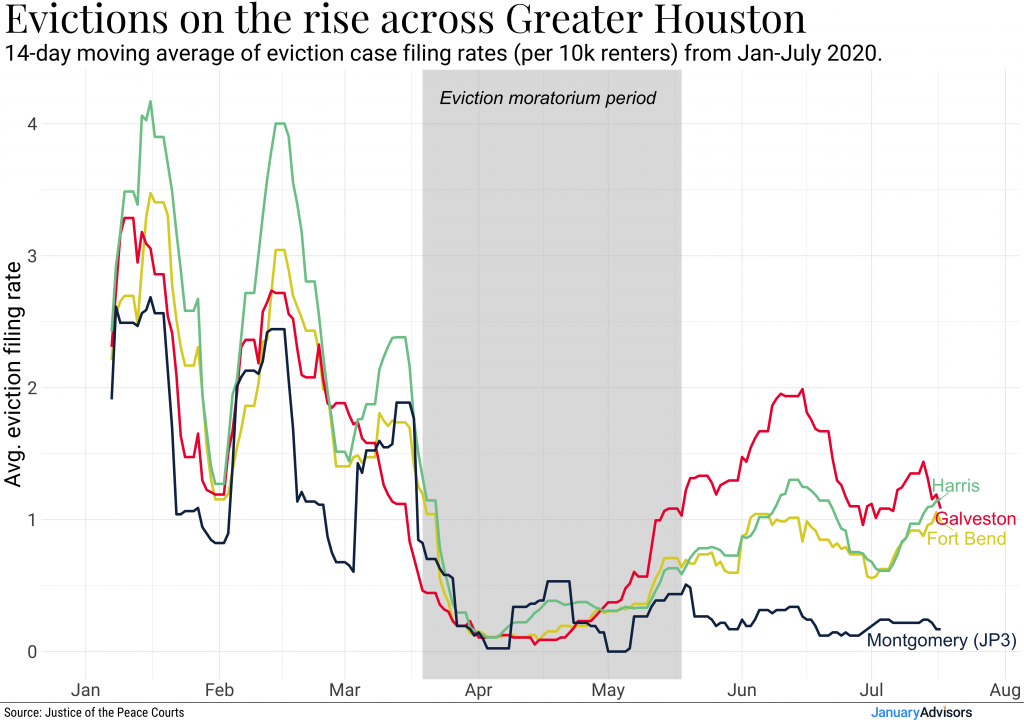
    Looking over time, the impact of the Texas Supreme Court’s eviction moratorium is striking. The chart below shows the eviction filing rate for each county since January 2020. Starting in late March, when the moratorium went into effect, the number of eviction cases dropped to near zero across the region within a week. 

    The moratorium, however, did not prevent landlords from filing evictions — it only prevented courts from hearing these cases and kicking families out of their homes. In fact, many landlords continued to file eviction cases during April and May. During the two-month moratorium period, there were 1,650 eviction cases filed across the region.

    Eviction filings have picked back up since the moratorium was lifted on May 18, although they remain below where they were before the pandemic. Across Greater Houston, over 5,400 eviction cases have been filed by landlords since the moratorium ended. For more information on the top evictors in Harris County, check out this daily eviction tracker.

    Where are evictions being filed?

    In Texas, eviction cases are heard by the Justice of the Peace Courts (JP Courts) in each county. These local judges have the power and discretion to postpone eviction cases if they choose. In Dallas, for example, JPs have agreed to halt evictions through the summer as families and businesses try to make ends meet. Harris County Judge Lina Hidalgo and Houston Mayor Sylvester Turner have urged Harris County JPs to do the same, and some have followed suit, but so far there is no countywide or regional agreement among Justices of the Peace. 

    To get a better sense of the geography of eviction filings and the growing case load, the map below breaks down eviction case filing rates by JP precincts in all four counties (note: each precinct in Harris County has two judges). To overlay the unadjusted filing counts, click the box in the top right corner.

    Overall, the top three JP precincts with the highest rate of eviction case filings are Harris County JP 4 and 7 (10.3 and 10 filings per 1,000 renter households), and Galveston County JP 1 (9.6), followed by JP 3 in Harris County (9.1) and JP 2 in Fort Bend (9/1). 

    In Harris County, JP 5 has the highest raw number of eviction filings of any precinct – but it also has the highest number of renters (over 230,000). Still, housing advocates tracking hearings have noted that Judge Russ Ridgway and Judge Jeff Williams are also hearing more eviction cases than any other JP in Harris County — at the same time, some of their colleagues are suspending hearings. Precinct #5 — which covers neighborhoods in Southwest Houston — is also being hit hard by Covid-19

    Who is at risk of eviction in Greater Houston?

    Black/African American renters in Greater Houston have been more likely to receive an eviction than other race-ethnic groups during this period. Since March 19, more than a third (36%) of eviction cases are estimated to be filed against Black leaseholders, despite the fact that Black householders only make up 28% of all renter households in the region.

    By contrast, White renters make up an estimated 29% of eviction cases (on par with their share of renter households) while Latino/Hispanic and Asian-American leaseholders are underrepresented in eviction filings relative to their share of renter households.

    Race-ethnicity estimates of leaseholders were generated using a statistical model that takes into account the leaseholders’ last name (comparing it to the Census Bureau’s surname list) and the race-ethnicity of their census tract of residence (Read more about the methodology here). 

    Higher rate of evictions among Black residents is not unique to Houston nor to the current crisis. This pattern reflects a long history of discriminatory housing and employment policies in the United States that have left many Black residents with substandard housing in segregated neighborhoods, less wealth and access to financial resources, and greater economic vulnerability during economic downturns (See here, here, and here for more in-depth discussions). 

    It is also important to remember that these data only reflect eviction cases that have been filed in court. An unknown number of informal evictions are likely taking place during this period in which landlords are threatening eviction and renters leave. Foreign-born and undocumented residents, who are more likely to be from Latino and Asian American communities, may be more vulnerable to these types of evictions.

    In fact, recent data collected by the Census Bureau finds that Hispanic/Latino renters in Houston are twice as likely to report slight or no confidence in their ability to pay next month’s rent — 67% among Hispanic/Latino renters compared with 34% and 33% among White and Black renters.

    What can be done to limit evictions?

    If we hope to contain the spread of the virus and keep our community healthy, throwing families who cannot pay rent out on the street will only make things worse. Moreover, the high levels of eviction filings we see in Houston are not inevitable: Harris and Galveston counties saw more evictions the week of July 12–18 than Austin, Boston, Cleveland, Jacksonville, Kansas City, St. Louis, Milwaukee and Richmond combined.

    Although evictions are just one of the many pressing concerns Houston faces at this moment, it is one that is preventable if local, state, and federal officials act quickly. Here are just a few ideas about what can be done:

    • Extend (and enforce) the CARES Act moratorium: There is mounting evidence that the CARES Act eviction moratorium, which prevented landlords with federally backed mortgages from filing evictions, helped reduce the number of evictions filed, even if some landlords, out of ignorance or indifference, violated the ban. The federal moratorium ended on Friday (7/24), however, paving the way for a flood of evictions in the coming weeks. Congress needs to renew the moratorium, expand it to cover ALL renters, and ensure there are consequences for landlords who violate the eviction ban.
    • Delay eviction proceedings: Local city councils and county Justices of the Peace can enact their own ordinances and agreements to delay eviction hearings and prevent tenants from being evicted. Dallas JP’s are refusing to hear eviction cases. Austin’s city council decided to extend its eviction moratorium. Why can’t local officials in the Houston area do the same thing?
    • Give tenants more time: Even if some judges refuse to hear cases during this period, these cases do not simply go away. Landlords can and will continue to file eviction cases through the summer, and renters who are behind on rent will be at risk of eviction. Given the scale of job losses, it is unlikely that most renters will be able to catch up on back rent in the near future. Austin and Dallas passed grace period ordinances, which give renters more time to catch up on late rent payments before being evicted. Counties in the Houston region should follow suit.
    • Tenant’s right to counsel: Most tenants, if they attend their eviction trials at all, do not have legal representation. In Harris County, tenants were assisted by attorneys in only 4% of eviction cases since March 19, 2020. A right to counsel would ensure that renters are better protected from predatory landlords, especially those who are openly violating the CARES Act eviction ban (and its possible extension).
    • More income and rental assistance is needed: As Congress debates the details of the next pandemic bill, the millions of families at risk of eviction should be at top of mind. Bans and delays in eviction cases do not solve the larger problem: If tenants can’t make rent, many landlords can’t pay their mortgages or their employees. If we do not do more to support renters, the entire housing system is at risk of collapse. 

  • After six federal disasters in five years, why do we not fully prepare?

    After six federal disasters in five years, why do we not fully prepare?

    Fellow Houstonians, we are one month into the 2020 Atlantic Hurricane Season. Experts predict another above-average hurricane season this year — meaning we could see more storms active in the Atlantic Ocean and Gulf Coast. Indeed, the beginning of the season has already been very active.

    Houstonians have experienced the devastation and loss from six federally declared flooding disasters in the past five years, most notably Hurricane Harvey. Weather events do not have to be a national disaster to make an impact. Even one inch of water inside a home can cause $25,000 worth of damage. Flood events that were believed to occur every 50 years have been occurring annually in recent years. This is not an anomaly. Research shows the frequency and intensity of rainstorms have increased throughout the Houston area, and the number of extreme precipitation days is only projected to worsen in the coming years.

    Even one inch of water inside a home can cause $25,000 worth of damage.”

    People in general are not great about preparing for natural disasters like flooding and hurricanes. Psychologically, our minds have a hard time grappling with massive, far-off, highly uncertain things, which can result in poor decision-making if we are caught without a plan. Also, we tend to have short memories about how we felt in the throes of disaster – diminished memories reduce the sense of urgency we feel to prepare. For example, an August 2018 (one year after the historic Hurricane Harvey) online poll found that 72% of residents in Texas had not taken any precautions in advance of hurricane season and nearly two-thirds did not have an emergency bag prepared. And, given how eventful the first half of this year has been, it’s not surprising that preparing for hurricane season is not top-of-mind for most of us. But, it must be. Here’s why.

    How COVID-19 complicates natural disaster preparation 

    Imagine there is an invisible shield protecting our community from the negative effects of flooding and natural disasters. This shield is composed of layers that include a prepared, healthy, financially and economically secure populace; a well-resourced and unconstrained nonprofit sector; plentiful capacity in our hospitals and emergency management sectors; and, of course, strong feelings of trust within and connection to our community at large. All these factors contribute to a community’s resilience and recovery from a disaster, strengthening the shield. 

    But this shield can only be as strong as its weakest layer, and right now, all layers are stretching their limits. We are experiencing record unemployment. More than 800,000 families in the Houston-area were economically insecure before the pandemic, and many are struggling financially as a result of impacts from COVID-19. Nonprofits are working at maximum capacity serving those affected by COVID-19. Our hospitals are beginning to reach capacity. And we are currently fighting the worst pandemic in a century, meaning resources are strained across the board — both public and private. Complicating rescue and recovery efforts, “neighbors helping neighbors” has added risk during a time when we need to practice social distancing. Even more worrisome, social distancing will be challenging in venues like NRG or the George R. Brown Convention Center which typically serve as temporary shelters during and immediately after major storms.

    The protective shield is made stronger each time one of us takes action to improve our chances of bouncing back from a serious storm.

    That’s why it is all the more important to actually prepare this year, Houston. The protective shield is made stronger each time one of us takes action to improve our chances of bouncing back from a serious storm. This includes doing things like preparing a disaster kit, formalizing a communication plan with our loved ones, and protecting ourselves and our homes. It is imperative we do these things since there is so much that we cannot control.

    Take these steps now to prepare

    1. Get information. Visit your county’s Office of Homeland Security and Emergency Management website for excellent resources on preparing for a natural disaster, particularly during a pandemic. These sites have checklists and suggested plans for preparing disaster kits, caring for your pets, communicating with loved ones, reviewing flood zone maps, and purchasing flood insurance.
    2. Prepare a disaster kit
    3. Complete a family communication plan. Plan how you will assemble your family and loved ones, and anticipate where you will go for different situations. Get together with your family and agree on the ways to contact one another in an emergency, identify meeting locations, and make a Family Emergency Communication Plan.
    4. Assess flooding risk. Know if your home is at risk of flooding. You can view a Flood Insurance Rate Map (FIRM or floodplain map) at the Federal Emergency Management Agency’s Map Service Center or at your county emergency site.
    5. Consider purchasing flood insurance. Harris County Flood Control District recommends that all Harris County residents become informed about their flood risk and have flood insurance no matter where they reside in Harris County. Flood insurance accelerates the rebuilding and replacement of personal property and fosters community resiliency as a whole. For information on flood insurance, visit the National Flood Insurance Program website or call 1-888-379-9531.
    6. Sign up for emergency alerts. The Flood Warning System (FWS) offers an alert feature that allows residents to subscribe to and receive email/text alerts that report near real-time rainfall and water levels. Residents are able to customize alerts and notifications for bayous and tributaries in their particular areas of interest. Sign up for the Alert Notification System at fwsalerts.org.
    7. Don’t get complacent – educate yourself. Check out these other great resources.

    We may contain COVID, but storms are here to stay

    Time will tell if 2020’s COVID-complicated hurricane season will bring a storm as historic or destructive as Hurricane Harvey, but the steps we take to strengthen our shield today can also help to fortify our region for future natural disasters. After all, a lasting solution to COVID-19 may be around the corner, but flooding and hurricanes in Greater Houston are here to stay.

    If you haven’t already, get ready. Hurricane season is a six-month marathon from June 1 through November 30. Let’s do our best to fortify that protective shield for our entire community. Let’s prepare, Houston.

  • COVID-19’s potential impact in Greater Houston, by the numbers

    COVID-19’s potential impact in Greater Houston, by the numbers

    COVID-19 has upended lives around the globe, and Houston is no exception. We continue to hear the worst is yet to come, but it’s difficult to fully comprehend what that means or take proper action without context. To mitigate the effects of this global public health crisis in our region, we must understand the scope of vulnerability in the Greater Houston area.

    While we can’t predict the future of COVID-19, we can use local data to better understand what may be in store for our region so we can take collective action to reduce the risk to the most vulnerable communities.

    Want to give back and get involved? Visit greaterhoustonrecovery.org to learn more about the Greater Houston COVID-19 Recovery Fund, and how your support can help our neighbors who need it the most. 

    The “current” state of affairs

    It’s challenging to stay fully informed of the crisis as the number of cases, deaths and recoveries varies depending on when and where you look. Officially, the Centers for Disease Control (CDC) reports more than 304,800 cases in the nation, while the Johns Hopkins Coronavirus Resource Center reports 339,000. The Texas Department of Health and Human Services is tracking more than 7,200 cases in the state as does the Houston Chronicle. What we do know is that the virus has been quietly spreading across the country for several weeks, and these figures are just the beginning.

    Following the number of cases and fatalities is a good place to start in understanding the magnitude of the crisis, but it fails to account for the deeper ramifications COVID-19 may have for different people in our region. As with other disasters, the most vulnerable populations will be disproportionately affected. In this brief, we aim to identify and quantify vulnerable groups in our region that COVID-19 will impact in a variety of ways. While this is by no means an exhaustive list, we hope it informs our collective response in assisting those who need it most.

    COVID-19 and health risks in the Houston area

    At publication time, more than 72,000 people around the world have died from COVID-19 — nearly 15% of whom were Americans. While hospitalization figures are inconsistent among states, the COVID Tracking Project reports more than 41,500 cumulative hospitalizations across the nation. Of course, the novel coronavirus poses significant public health risks, but for some, the risks are much higher.

    Older adults

    CDC researchers found that COVID-19 fatality rates increase with age, particularly for those over the age of 65. Death rates for Americans 85 years and older range from 10% to 27%, followed by 3% to 11% among persons aged 65–84 years, 1% to 3% among persons aged 55–64 years, and less than 1% among persons younger than 20. These findings are consistent with data from the first two months of 2020 in China.1

    More than 660,000 adults over the age of 65 live in Fort Bend, Harris, and Montgomery counties. Worse, more than 134,000 (about one in five) live alone, with particularly high concentrations in Fort Bend County. Given their heightened vulnerability to the effects of COVID-19, older residents who live alone may face additional challenges safely obtaining the supplies and resources they need in order to practice social distancing. We also know that 134,000 seniors live below 150% of the poverty level, further hindering their ability to weather this crisis.

    People with chronic health conditions

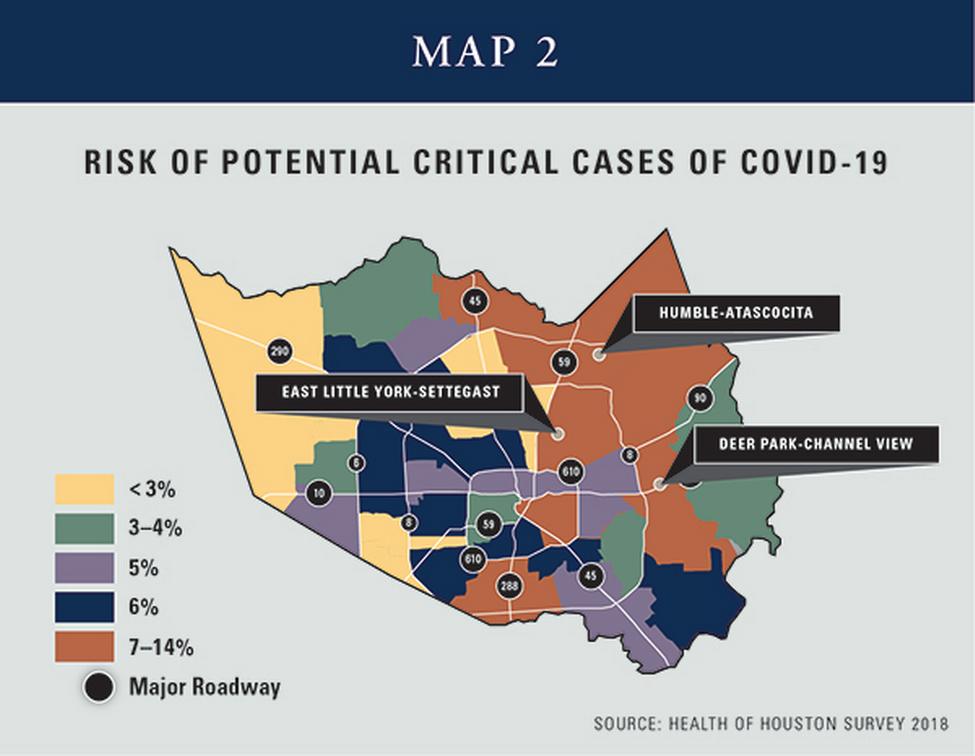
    People with chronic health conditions like diabetes, compromised immune systems, heart disease, and asthma are also at higher risk of contracting and succumbing to COVID-19. The Institute for Health Policy at UT Health Science Center of Houston conducted an analysis of Census data in Harris County to map individuals with the highest risk for hospitalization and critical care needs. UTHealth researchers found that areas with the largest proportions of residents at high risk of critical illness from COVID-19 include Deer Park-Channel View, East Little York-Settegast, and Humble-Atascocita. 


    The areas of Harris County where residents are mostly likely to need critical care for COVID-19 are shown in orange. (Photo by Heath of Houston/UTHealth)

    Take a deeper look: Explore this interactive map to see how these and other risk factors correspond to confirmed COVID-19 cases in Harris County.

    Uninsured

    No one wants to get sick, but for those without health insurance, the stakes are even higher. The Houston Metropolitan Area is home to the largest number of uninsured in Texas, which has the largest number and rate of uninsured in the country. Workers without health insurance are most likely to be part-time, gig economy, or low-wage employees, which means they likely do not have paid sick leave, compounding risks.2

    President Trump signed the “Phase 2 Stimulus Package” (the Families First Coronavirus Response Act) on March 18 which provides free testing, but individuals will still be responsible for paying their treatment costs. This could affect some of the more than 1.1 million people, including 184,300 children, in the three-county region who are uninsured. 

    Mental Health

    Harris County issued the first stay-home order effective March 17, but many of us are into our third or fourth week of staying home. The mental and emotional toll of COVID-19, for even the least vulnerable among us, will only continue as the pandemic wears on. Anxiety about the health of loved ones and ourselves, isolation, loneliness, and joblessness can all wear down our sense of well-being as the outbreak’s severity increases.

    Coronavirus-related stress likely exacerbates pre-existing mental health conditions and mental health care access challenges in our region. As of 2018, the percentage of adults experiencing frequent mental distress (14 or more days of poor mental health within a month) in Houston’s three largest counties ranged from 9% in Fort Bend County to 12% in Harris County, where more than half of confirmed Houston-area cases of COVID-19 have been reported. 

    While those who have access to mental health care may be able to continue treatment through remote appointments, many in the Greater Houston region lack access to care altogether. As of 2018, Houston’s three largest counties average one mental health care provider for every 988 residents, lower than the state average and less than half the national average. 

    Economic risks of COVID-19 in the Houston area

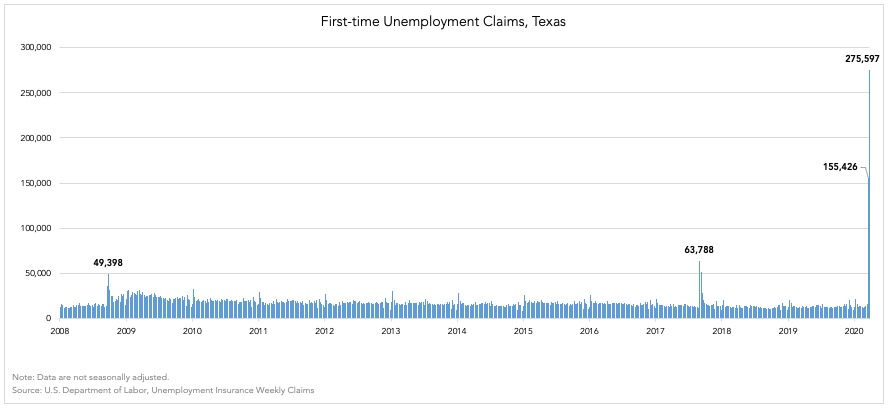
    Layoffs due to COVID-19 have begun throughout the Houston area, adding to challenges in healthcare access, mental health and more. Nearly 10 million Americans have filed for unemployment for the first time in the past two weeks, more than 431,000 of whom are from Texas. For the first time, the CARES Act expanded unemployment benefits and loans to these workers, but the process to connect people to these resources in a timely manner will be challenging.

    As the graph below shows, these figures are unprecedented. Patrick Jankowski, senior vice president of research at the Greater Houston Partnership estimates mid-March job losses are nearly 38,000 in Metro Houston, though those figures can’t be confirmed until jobs data come out in early May. 

    High-risk industries

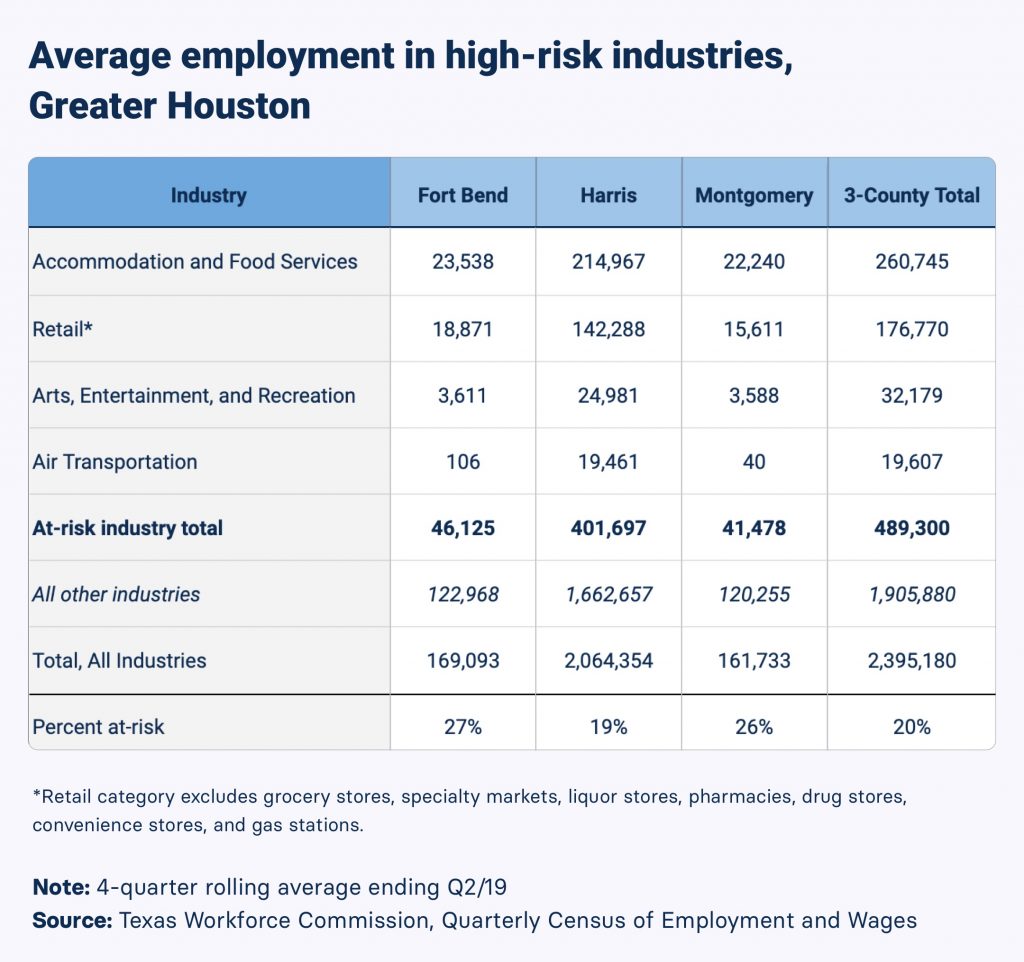
    The majority of unemployment claims are from workers in the service industry — hotels, bars, restaurants, entertainment, leisure — as well as retail and travel. One out of every five workers in the three-county region is employed in a sector at high-risk for job loss, totaling about half a million people. Houstonians in these high-risk industries earned nearly $4 billion in wages in the second quarter of 2019. 

    While these industries are at immediate risk from the economic effects of COVID-19, the steep decline in oil prices will have longer-lasting and wide-ranging implications for businesses and workers in the oil and gas industry. Houston, as the energy capital of the world, will certainly be disproportionately affected.

    Low-wage workers

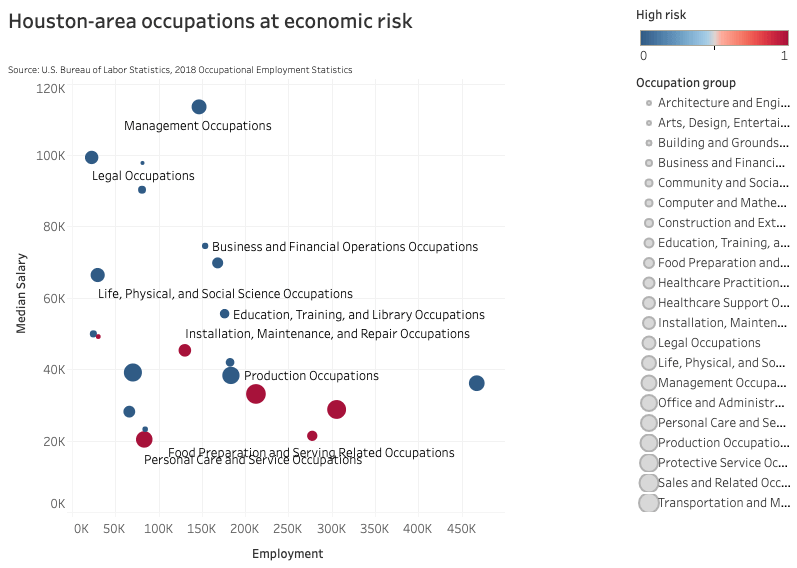
    Not all occupations in the aforementioned industries are at risk for layoffs. National data show that low-wage, part-time, and hourly workers in specific sectors have been hit the hardest with job and wage losses. The graph below shows the number of jobs and median annual salaries for workers grouped by job function. Occupations that are most at risk (in red) have the lowest salaries. Traditionally, that also suggests workers are paid hourly, don’t have health insurance, and don’t receive paid sick leave. Many groups will be eligible for paid sick leave and unemployment benefits offered by the federal government’s response to COVID-19, but not all, and workers will still have to make the difficult choice between protecting their health or earning an income. The stakes are high as 40% of Houstonians don’t have $400 in savings to deal with an unexpected emergency.

    To view an interactive version of this graph, click here.

    Small businesses

    Small businesses in particular are struggling as everyone is told to stay home, and revenue has plummeted as a result. Nearly 127,000 small businesses employ fewer than 500 people in our region and comprise half of Houston-area businesses—most of these (89,500) employ fewer than 10, according to U.S. Census Bureau County Business Patterns. About 38 percent of small businesses in our region are minority-owned, putting livelihoods at risk and compounding challenges minorities have historically faced. 

    A survey by the Greater Houston Partnership shows that 91% of its small business members (defined as 500 or fewer employees) have lost revenue, about half are not able to pay staff during the shut-down, and more than one-third have laid off workers. There is hope that recent federal legislation will slow some of the job losses as small businesses take advantage of the Paycheck Protection Program (PPP), which requires companies to use the majority of funds to continue to pay staff.

    Vulnerable populations in the Houston area

    In addition to the groups identified above, immigrants, those who experience homelessness, and school-aged children are especially vulnerable to the hardships caused by COVID-19. In general, residents who were struggling prior to the pandemic will face compounded economic hardship during the crisis. This includes individuals and families living in poverty and low-income working households, also called Asset-Limited, Income-Constrained, and Employed (ALICE). Again, what follows is not a complete list, but we hope to call out examples of people in our community who will need the most help.

    Immigrants

    Immigrants, especially those who are undocumented, are particularly vulnerable to crises like disasters and pandemics. Immigrants tend to have less access to information and services since they may not be as familiar with credible sources, or with knowing how to navigate the system, and are more likely to encounter language barriers.

    More than 1.5 million Houstonians were born outside the U.S. but call the three-county region home—that’s one out of every four people. The Migration Population Institute estimates 473,000 undocumented immigrants live in Greater Houston. According to the Census Bureau, more than half of immigrants in the region speak English less than “very well.” A recent report from ProPublica highlights the obstacles limited English proficient speakers encounter trying to advocate for their medical care. Given there are more than 145 languages spoken in the region, the need for interpreters and translators right now is critical. To view a map of where immigrants live in Houston, click here.

    Immigrants also tend to have less access to forms of federal and state assistance (even though most pay taxes) because they are typically excluded from government programs and they are less likely to take advantage of aid for which they are eligible. Compounding their vulnerability, immigrants are more likely to be uninsured and work low-paying jobs. They are also over-represented in sectors immediately affected by layoffs. Ironically, an analysis by the Migration Policy Institute found that six million immigrant workers are at the front lines of keeping Americans healthy and fed during the pandemic by working in hospitals, as care-givers, or on farms. 

    Immigrants without legal status will have an even harder time weathering this pandemic as they are not eligible to benefit from the trillions of dollars in aid the federal government is releasing. In fact, the CARES Act, the $2.2 trillion stimulus package signed by President Trump on March 27, explicitly excludes them. Even mixed-status tax-paying households where American-born children have at least one parent without legal status will be ineligible for benefits.

    Those who are homeless

    People experiencing homelessness are particularly vulnerable during this pandemic. Homeless individuals tend to be older, and are more likely to suffer from mental illness and chronic conditions, making them more susceptible to the virus. Additionally, it is nearly impossible to follow CDC guidelines regarding social distancing, staying home, and regular hand hygiene without a permanent residence. 

    A marginalized population in the best of times, the unique needs of these individuals are often deprioritized in times of crisis. According to 2019 data from the Coalition for the Homeless, nearly 4,000 sheltered and unsheltered people live in Fort Bend, Harris, and Montgomery counties. Houston Mayor Sylvester Turner announced on April 1 that the city will rent hotel rooms to shelter Houston’s homeless individuals, but this population will require much more support as this crisis continues.

    School-aged children

    While school districts in Texas are officially closed through May 4, many parents are preparing for schools to remain shuttered for the remainder of the academic year. Several organizations, districts, teachers, and parents have stepped up to ensure that children continue to learn, but with parents working from home and the general chaos COVID-19 has created, maintaining a high-quality education at home is challenging, particularly for low-income working parents and those without internet access or computers. For example, recent data from Los Angeles Unified (LAUSD), the second-largest school district in the country, show that about 15,000 high school students are absent online and have failed to do any schoolwork, and more than 40,000 (about one-third of all high schoolers) have not been in daily contact with their teachers since mid-March, suggesting that distance-learning is not reaching everyone.

    Moreover, when students spend time away from school during the summer, they sometimes lose what they learned over the academic year, a concept known as “summer slide.” One study found that students lost between 25% and 30% of what they learned during the school year, with lower income students at a greater disadvantage than their wealthier peers. About 691,500 public school students (62% of students enrolled) in the three-county region are identified as economically disadvantaged, meaning they qualify for free or reduced-price lunch. For many children, these free or reduced-price school meals are their primary source of daily nutrition. And, for the 98,000 students with disabilities and special needs in our region, the consequences of being out of school for a prolonged amount of time could be even more serious.

    Understanding challenges to help Houston move forward

    COVID-19 may be the first pandemic any of us have lived through, but this is far from the first time Houstonians have dealt with adversity. We’ve seen how this community comes together — neighbor helping neighbor, stranger helping stranger. For the good of this region that we all call home, please stay home if you are able. The more we reduce our physical contact with each other, the more neighbors we can save. That, if anything, is clear. 

    There are still plenty of ways to help from home. The United Way of Greater Houston and the Greater Houston Community Foundation have established the Greater Houston COVID-19 Recovery Fund, endorsed by Mayor Sylvester Turner and Harris County Judge Lina Hidalgo, to support local nonprofits that help those we identified here and more. Visit greaterhoustonrecovery.org today to see how you can get involved.

    Additional Resources:

    End Notes:

    1 The same CDC study found that while fatality rates might be very low for young people, they are not entirely immune to the effects of COVID-19 — nearly 40% of those hospitalized for coronavirus from mid-February to mid-March were between the age of 20 and 54.
    2 Recent federal legislation allows for paid sick leave.