Category: Arts

For blogs that talk about art

  • Houston is Vibrant

    Houston is Vibrant

    For some time, Greater Houston has been, to those who don’t live here, in the midst of an identity crisis. Even Anthony Bourdain, a man who made a career of ostensibly analyzing and broadcasting to the world the essence of every city into which he wandered, admitted to “entertaining lazy prejudices and assumptions” about the Houston region and its residents. 

    Maybe it isn’t their fault. Houston does, to some degree, defy categorization. Are we cowboys or astronauts? Are we defined by the award-winning chefs or the abundance of mom-and-pop spots? Our world-class museums or our fanatical football fans? 

    The confluence of Houstonians’s ideas and sensibilities have informed the evolution of our region in complex and unobvious ways, too great in number to track, catalog or fully recount. The region’s diversity and vastness extend to our arts, culture, and food — and create an environment of constant discovery. Understanding Houston would like to spotlight just a few places and organizations that make our corner of the world so vibrant. 

    Houston’s world-class arts community 

    Houston is home to the esteemed Theater District, which boasts nearly 13,000 seats, and is one of only five cities with permanent resident companies in each of the major performing arts disciplines. The Alley Theatre, Hobby Center for the Performing Arts, Houston Ballet’s Center for Dance, [Jesse H.] Jones Hall [for the Performing Arts], Revention Music Center and the Wortham Theater Center are all within the 17 blocks that comprise Houston’s Theater District. Additionally, many smaller venues and organizations bring the arts to all corners of the region. 

    Similar to the Theater District, Houston’s renowned Museum District is broken into four walkable, themed zones, featuring both touring and permanent exhibits throughout. While the Museum of Fine Arts might be the oldest art museum in Texas, it is certainly not the only way to engage with the arts in Houston.

    There were more than 1,260 arts and culture organizations in Houston’s three-county area in 2020, up from just 181 in 1990. Most of this growth was in Harris County (599 new organizations), but both Montgomery and Fort Bend counties both saw significant growth in arts and cultural sectors as well — the number of arts and cultural organizations in Montgomery County grew tenfold in 30 years. 

    These organizations contribute significantly to the local economy as well; the Houston Metropolitan Area’s nonprofit arts and culture industry generated over $579.4 million in total economic activity in 2015, according to the latest Arts & Economic Prosperity report. These organizations directly supported 14,389 full-time equivalent jobs and delivered $42.8 million in local and state government revenue.

    Despite an abundance of arts organizations and performances, families with lower incomes do not have the same level of access to the arts as higher-income households.

    According to the latest Houston Arts Survey, just 29% of respondents with reported household incomes below $37,500 attended a live performance, compared to 52% for respondents with annual household incomes between $37,501 and $62,500 — and the disparities continue to increase with higher earnings

    However, Houston’s passion for the arts isn’t fully reflected in official access or attendance figures. Many organizations in Greater Houston work to address disparities in access to and participation in the arts. Groups like Asia Society Texas Center, MECA Houston, the Laini Kuumba Ngoma Troupe and the Institute of Hispanic Culture celebrate and showcase the artistic traditions and cultural expression of diverse communities that have been historically underrepresented in the “traditional arts” scene. 

    A region shaped by local and global traditions

    Houston’s three-county region observes an amalgam of traditions — both homegrown and carried from afar. The Houston Livestock Show and Rodeo, the world’s largest of its kind, is an example of a homegrown tradition informed by the traditions of another culture. The Rodeo grew out of an effort to preserve a regional industry but has made efforts to incorporate and recognize Latin American contributions to the industry and culture from which it was born. The Houston Livestock Show and Rodeo wouldn’t exist without  the charreada, which was the cultural precursor to the rodeo, or those big Texas cattle drives (which sustained the nascent Texas economy) that came by way of Spanish Mexico. 

    The Houston region is home to a number of religious congregations that originated from around the globe. The Islamic Society of Greater Houston (ISGH) is the largest Islamic society in North America, and the BAPS Shri Swaminarayan Mandir is the first and only traditional Hindu temple of its kind in the United States — the stones for which were hand sculpted by 2,000 artisans in India. 

    The BAPS Shri Swaminarayan Mandir is one in a long line of ambitious monuments that tells the story of our region. The Astrodome also comes to mind, but so do smaller places like the “Be Someone” bridge and the Rothko Chapel, which showcase a different form of Houston’s social and intellectual ambitions. The former often serves as a barometer for our times, as the message often changes to represent the current needs and fears of the citizenry, and the latter stands immovable. 

    Houston’s culinary influence

    Houston, once known mainly for Tex-Mex and chain restaurants, now boasts eateries that represent more than 70 countries and American regions. Renowned chef and restaurateur, David Chang called Houston the “next food capital of America” in 2016, and the food scene has only grown since then. The most meaningful way that the food scene in Houston has changed recently is not in the flavor of the food itself, but in the visibility it has gained on the national stage — 10 Houston chefs were among the 2022 James Beard Award Semifinalists.

    Despite the bevy of talented chefs on the cutting edge of cuisine, the evolution of the region’s culinary identity is due in principle to one factor: the diversity of its residents. 

    Our position on the Gulf Coast secured a foothold not only on fresh local seafood but on one-of-a-kind Cajun cuisine, and the French fundamentals that inform it. The Czexans (Czech Texans) that immigrated to the hill country have given us a lot more than the famous, but still nationally obscure kolache. The fact that our region is home to the third largest population of Vietnamese Americans in the nation has contributed to a culinary culture in which dishes like pho or bánh mì are as commonplace as BBQ and hamburgers. Additionally, the significant South Asian population has given rise to some of the most acclaimed Indian and Pakistani food in the country. 

    A region made vibrant by its residents

    We all know that Houston is diverse. We have seen the data asserted time and time again. What that data does not tell us, however, is the individual stories of all of those people. The un-measurable and intangible essence of what makes Houston special is that for every person represented artistically or culinarily in the three-county region, there are thousands more, cooking in their homes or painting for their grandchildren. 

    Houston is certainly vibrant, but it wouldn’t be anything without Houstonians — who are as difficult to define as the region itself. Be they artists, chefs, or cowboys, the stories and passions of the people that inhabit the region are what bring Houston alive.
  • A Path Forward: How Arts Education Helps Student Learning and Well-Being

    A Path Forward: How Arts Education Helps Student Learning and Well-Being

    The 2021–22 school year has reamplified public concerns regarding COVID-19’s continued impact on our children, including its toll on their mental and emotional wellbeing as well as lost learning opportunities. Addressing these needs will necessitate holistic, comprehensive approaches that require our community to reexamine children’s educational priorities, needs and resources. While many of these strategies will require further investigation and experimentation, the arts have proven to be remarkably valuable in addressing and strengthening students’ social and emotional learning needs.

    As a region with remarkable wealth and an abundance of arts resources, we believe that Houston-area schools should work together with arts organizations and institutions to utilize the arts and address our students’ pressing needs.  

    What is Social Emotional Learning?

    Defining Social Emotional Learning (SEL) is complicated because the phrase is often employed differently by various stakeholder groups. A classroom teacher may use SEL to refer to social emotional skills like empathy and perseverance. Meanwhile, a parent may think of SEL as a means for promoting positive relationships amongst their children’s peers.

    The Collaborative for Academic, Social, and Emotional Learning (CASEL) defines SEL as the process through which people (both young and old) acquire knowledge and skills to manage their emotions and feelings, achieve goals, display compassion and empathy for others, cultivate and maintain relationships, make better decisions, and ultimately develop a healthy self-image.

    Policymakers have come to recognize the importance of SEL in schools. In the reauthorization of the Elementary and Secondary Education Act, i.e., The Every Student Succeeds Act (ESSA), Congress added legislation requiring states to broaden their measures of school quality and effectiveness. The vast majority of states have since responded by adopting measures that assess students’ school engagement, school culture and climate, and SEL. While the emphasis on SEL had been gaining steam, the COVID-19 pandemic made its importance all the more apparent.

    About one-third of adults in the Houston Metro Area have reported feeling nervous, anxious, or on edge for at least more than half the days of a week since the start of the pandemic, with some groups faring worse than others. As students across Houston continue to experience high rates of anxiety, trauma and depression in light of the pandemic, it is important to address these mental health challenges directly. Latinos for Education recently shared that 46% of Spanish-speaking parents in Houston have seen their children experience mental health struggles and decreased socialization. 

    SEL development combats these issues head on. A 2017 study showed that students who received SEL programming tended to handle emotional distress better and experienced less drug usage. Research also shows strong correlations between mental health and academic performance — the same study found that students who received SEL programming averaged 13 percentage points higher than non-SEL peers on academic performance metrics.

    These benefits go beyond the individual. A separate 2015 cost-benefit analysis on SEL interventions reported an average of an $11 return on investment for every dollar spent on SEL programming. This type of return on investment can be utilized by the Houston community-at-large to increase economic opportunities, reduce poverty, and improve other outcomes for students.

    The Arts Opportunity

    There is little consistency in how schools approach teaching SEL concepts to their students. Some campuses integrate SEL into their school improvement and/or strategic plans directly and encourage their teachers to incorporate SEL concepts into existing lesson plans, while others teach SEL concepts entirely separate. Regardless of what approach an individual campus may choose, there is one scientifically proven, yet historically overlooked (and underfunded) avenue for increasing these skills: arts education.

    Children grow their skills and behaviors through developmental experiences that allow them to participate in daily life and reflect on how their participation impacts them. These experiences also tend to be the most impactful when they occur in “strong, supportive, and sustained developmental relationships with important adults and peers.” Put another way, students develop skills, habits and behaviors most effectively when they are actively involved in the “doing” of learning, and when they are surrounded by people they care about, like teachers and classmates. 

    Communal active learning is at the core of arts education. Any art form, whether it be music, theatre, visual arts, dance, etc., provides students the chance to actively explore new concepts, new skills and new behaviors with their peers. Arts education programming affords students an opportunity to mimic or interpret experts and leaders in an art form, participate as much or as little as they feel comfortable, develop self-discipline through practice and contribute to a collective effort. For instance, a classroom of third graders may mimic their art teacher’s still-life painting and attempt to produce something similar. This act forces the student to think critically about how to produce a similar piece, what materials they may need, and how to move their hands. They may look around and engage nearby students for advice or learn by what others are doing. The process of creating art builds focus and endured concentration, while empowering students to express themselves in ways they normally would not be able to articulate.

    A 2019 Rice University study examined the impacts of arts educational experiences on Houston students and also found considerable impacts on their social and emotional outcomes. Students who received access to these arts educational experiences saw substantial increases in their writing achievement, compassion for others, and a reduction in school disciplinary issues. Among elementary school students, this same study saw significant increases in school engagement levels, aspirations for college, and empathy.

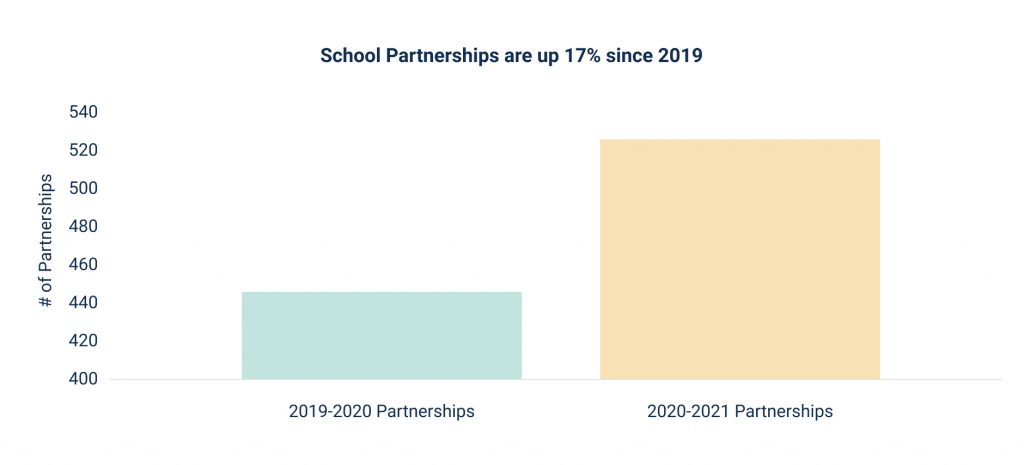
    Funders and decision-makers often point to a lack of empirical evidence as the reasoning behind not investing in the arts. This study is tangible proof that right here in Houston, arts education is a lever for improving SEL outcomes. Our region has already developed a strong, vibrant and growing infrastructure for supporting this work. The creation of the Houston ISD Fine Arts Department in 2017 has seen the Fine Arts student-teacher ratio drop by over 100 students per teacher and has eliminated 30 Fine Arts deserts at elementary schools across the city. Arts Connect Houston, a collective-impact organization of over 80 partners, including arts and cultural organizations, Houston ISD, funders, and city/government leaders exists to increase equal access to the arts  in schools across Houston. Since 2019, we have seen partnerships between schools and cultural organizations grow 17% — demonstrating an increase in understanding the impact the arts can have in supporting students, particularly amid an ongoing pandemic. Imagine what that growth could look like, and the subsequent SEL outcomes, if the arts were sufficiently supported.

    An arts-rich education in Houston

    Margo Hickman, a theatre teacher in Houston noted that when she looks at her students, “so many of them are frustrated. They are angry. The arts allow them to release those feelings.” Margo incorporates Social Emotional Learning through theatre games and meditation. When asked how the arts have impacted her student’s social-emotional learning, she simply added, “The arts have saved people’s lives.”

    “So many of the [students] are frustrated. They are angry. The arts allow them to release those feelings.”

    – Margo Hickman, Theatre Teacher in Houston

    Social Emotional Learning is an important aspect of a child’s development, and the arts provide a proven pathway to grow those skills, but students lack equal access to these valuable educational experiences. As of 2021, it is estimated that nearly 9,000 elementary school students within Houston ISD do not have access to a full-time certified fine arts teacher at their school. Last year, nearly 40 schools reported no partnerships with any arts and cultural organizations, while others worked with as many as six. Moreover, past studies have shown that students from historically underserved communities are much less likely to engage in arts learning experiences outside of school (while affluent students are twice as likely!), meaning that investments from schools and districts are critical for ensuring that these students have these opportunities. Shaela Sageth, a Houston ISD student planning on pursuing an arts-related degree next fall highlights the disparity in access saying  “Being low-income, school was my only chance to access arts classes and creative tools while growing up. I would have liked to have had these kinds of diverse arts opportunities in my schools.” 

    Looking ahead

    As our community continues to discuss the best way forward, administrators will face incredible challenges for determining how best to spend scarce resources. As a community, we need to consider holistic, comprehensive approaches that employ the vast resources available in our city to provide all students no matter their neighborhood or school, with the tools they need to successfully navigate the trauma of a global health crisis and prepare them for lifelong success. Arts education is a tried-and-true means for addressing these challenges.

    It is up to all of us, now more than ever, to ensure that every child has access to the benefits of an arts-rich education. Our city has already cultivated the necessary tools to implement meaningful change. Despite the horrible crisis we have found ourselves in for the past year and a half, we have also been afforded an incredible opportunity to reevaluate how we educate our students. It is time to invest in the “arts opportunity” and grow and nurture our children’s humanity, sense of community, and perseverance. Doing so will ensure that Houston remains a vibrant and thriving community for years to come.  

     By Michael Sheehy, Deborah Lugo, and Daniel H. Bowen, PhD

    Michael Sheehy is the Data + Advocacy manager for Arts Connect Houston. He holds a degree in theatre from the University of Kentucky and an M.P.P. from the Sanford School of Public Policy at Duke University. Before coming to Houston, Michael worked as a researcher measuring audience response to COVID-19 and social impact for WolfBrown and El Sistema USA respectively.

    Deborah Lugo is the Executive Director for Arts Connect Houston. Through her work, she facilitates strategic alignments and opportunities in order to expand access to arts education for students throughout the Houston ISD. Deborah, originally from Puerto Rico, holds a Master in Public Policy from Princeton University and a Bachelor in Violin Performance from Florida International University. Before her time at Arts Connect, she was the Executive Director of Mercury Chamber Orchestra.

    Daniel Bowen, Ph.D. is an associate professor with Texas A&M University’s Department of Educational Administration and Human Resource Development, a research affiliate of Rice University’s Houston Education Research Consortium (HERC), and the co-director of the National Endowment for the Arts-sponsored Arts, Humanities, and Civic Engagement Lab. Dr. Bowen primarily investigates the educational impacts of arts, humanities, and civic engagement learning experiences through experimental and quasi-experimental research methods. 

  • Meet Alice Valdez: Musician, educator, advocate, and MECA founder

    Meet Alice Valdez: Musician, educator, advocate, and MECA founder

    Alice Valdez: Musician—Educator—Advocate

    Access to and participation in the arts is a vital part of any community; and in a region as diverse as Houston, the arts play a crucial role in helping us see and understand cultures other than our own. And while Houston may be home to several world-class arts and culture organizations, not everyone in our region is able to participate equally — particularly Black, Latinx and economically disadvantaged residents. Despite 75% of Hispanic/Latino Houstonians saying they believe the arts are important, only 40% reported being able to attend an artistic event within the year of the survey. Fortunately, Alice Valdez and her team at MECA Houston are working to bridge that gap. 

    Alice’s advocacy work started in the 1960s with her initial brush with social justice reform, after her first public encounter with institutional racism. Her high school was selected to join the Texas Orchestra—part of the Texas Music Educators Association (TMEA)—and invited to perform at the annual TMEA conference in Houston. A Black classmate of Alice’s was barred from sharing the same hotel and from eating at the same restaurants as the other students of the Texas Orchestra. Her orchestra teacher gave his students two options: attend the conference without the Black student or protest the TMEA and advocate for the student’s inclusion. Alice and her classmates chose to support their fellow musician and they succeeded in their efforts, allowing all students to attend the conference together. The incident left a lasting impact on Alice and taught her how the arts can bring people together, no matter their social circumstances. Alice went on to graduate with a Bachelor of Music Education degree from the University of Texas at El Paso and earned her certification to teach instrumental music at all grade levels in Texas.

    When Alice moved to Houston in the early 1970s, many inner-city Houston schools did not offer music education; this was a stark contrast to her experience growing up in El Paso, where most schools had band or orchestra programs. After becoming familiar with arts education programs in Houston, Alice quickly realized that inner-city schools of color would only receive funding for arts education if they were part of magnet programs or arts-oriented schools like the High School for the Performing and Visual Arts (HSPVA). Recognizing this gap in art education services inspired and influenced Alice to get involved with community philanthropy at St. Joseph Catholic Church in the Old Sixth Ward.

    To build upon the spirit of the community, Alice founded and organized, along with the Morin, Salinas, and Zermeno families, St. Joseph Fun ‘n Food Fest. Following on the success of the festival, Alice founded an after school arts program, St. Joseph Multi-Ethnic Cultural Arts. She described the incorporation process as “on-the-job training” and marked her first steps into nonprofit management. In 1991, the organization became Multicultural Education and Counseling through the Arts (MECA). The nonprofit remained at St. Joseph for nearly fifteen years, completing several public art projects, like the Resurrected Christ mural inside the parish, until settling in the historic Dow School building in 1993.

    MECA fosters the growth and development of underserved youths and adults through arts and cultural programming, academic assistance, community building, and support services. The organization assists over 4,000 students and their families each year through their social support services, multicultural artistic performances and events, and arts education. The goal of MECA is to cultivate self-esteem, discipline, and cultural pride in their students. One of the unique offerings of MECA is that it is at the intersection of social services and arts education. With Alice’s guidance, MECA has provided participants and families with extensive counseling for alcoholism, drug addiction, and abuse as well as social service referrals. Alice recognized the need for such services early in her teaching career, as she faced many hardships balancing her family life and professional aspirations. MECA’s innovative approach to combine social services and arts education under one nonprofit is not typical for arts organizations, but Alice’s advocacy efforts have impacted thousands of Houstonians over the course of her remarkable career.

    Under Alice’s leadership, MECA has received numerous awards and recognitions, including a Point of Light designation by President George H. W. Bush. Alice is also lauded for her contributions to the visual arts and community parks—namely, initiating the planning and directing the construction of the Old Sixth Ward Art Park in inner-city Houston, and has gone on to direct many major public sculpture and mural projects throughout the Houston area. Alice sees her nonprofit endeavors as a way of giving to her community.

  • COVID-19’s Impact on Nonprofits: Exploring new data on arts and culture nonprofits in Houston

    COVID-19’s Impact on Nonprofits: Exploring new data on arts and culture nonprofits in Houston

    Whether young or old, rich or poor, it’s highly likely that you benefit from the work of a nonprofit organization. Nonprofits provide vital services for people from all walks of life — from basic necessities like food and housing to enriching cultural experiences and houses of worship. As the third largest sector across the country, employing 11.4 million people, nonprofits provide many essential functions to society. Today, the organizations that enrich our lives and are relied upon during times of great need are also struggling due to COVID-19.

    With COVID-19 disrupting financial stability around the world, businesses of all types are struggling to make ends meet, and nonprofits are no exception. In a March survey of 500 nonprofits by Charities Aid Foundation of America, nearly 97% of responding organizations reported negative impacts from COVID-19. Because many of the in-person fundraising events that nonprofits rely on have been cancelled, organizations are having to quickly adapt to raise funds in different ways. Those that generate income through program services are also experiencing massive disruption. More than two-thirds of nonprofits report reductions in funding, with 97% expecting sustained losses over the next 12 months. Additionally, more than 40% of these nonprofits expect funding to decrease by more than one-fifth.

    This decrease in funding presents a huge worry to nonprofit employees. In theory, the Paycheck Protection Program (PPP) could be helping these nonprofit organizations.  However, a study by the Johnson Center found the number of nonprofit jobs protected by the PPP was approximately 20% less than expected. A recent United Way report found that 1.64 million nonprofit workers nationwide lost their jobs between February through May. Our nonprofits are in dire need of assistance, and yet, they are not receiving the support they need in this pandemic.

    How COVID-19 has affected Houston-area nonprofits 

    Houston-area nonprofits are facing similar challenges. According to a mid-March survey of 76 regional nonprofit partners typically active in disaster response, the Greater Houston Community Foundation (GHCF) found that 85% of organizations expected a significant increase in demand for their services such as food, emergency financial assistance, and information and guidance at the onset of shutdowns. Simultaneously, half of these organizations reported insufficient resources to meet increased community needs. 

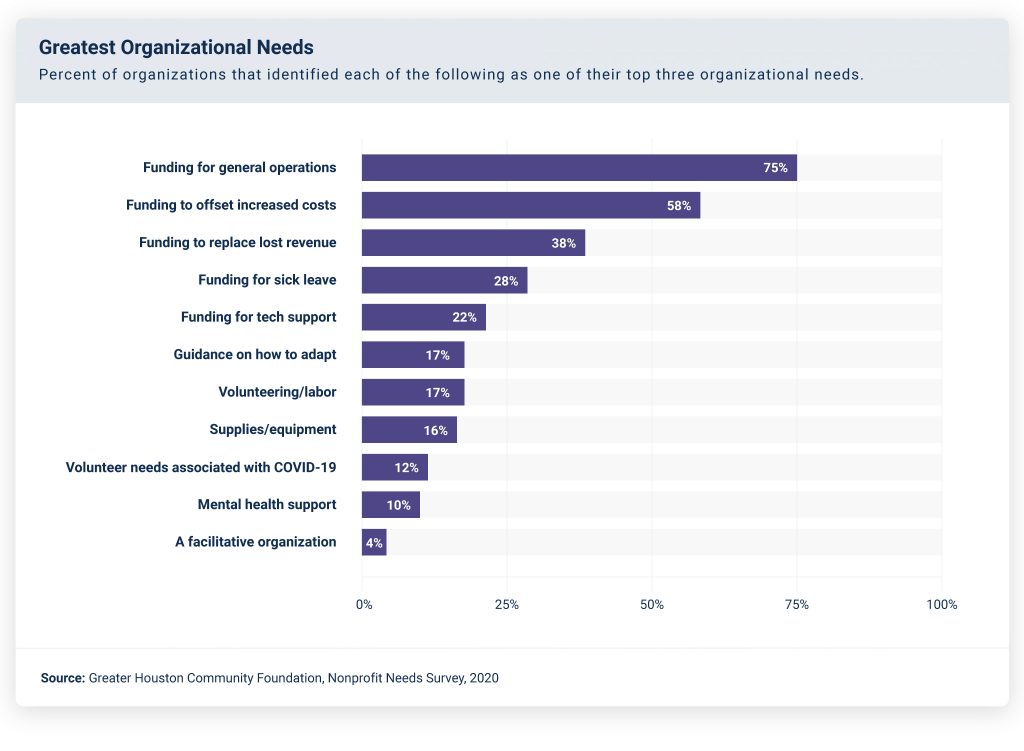
    The visualization below highlights the top needs identified by nonprofits in mid-March, though we know their needs continue to evolve and potentially worsen as the pandemic continues.

    Funding, tech solutions, sanitation supplies, protective equipment and additional volunteers are among the top needs of Houston-area nonprofits.

    It is no surprise that the top four needs revolve around funding. More than 500 Houston nonprofits flooded the Greater Houston COVID-19 Recovery Fund’s open request process seeking financial support. These requests ranged from organizations that provide wide-ranging services to low-income families and specifically older adults, people with disabilities, and the medically uninsured to arts and cultural organizations seeking assistance to redesign services and support employees. Nonprofit financial needs far outnumber available funds, and fund administrators continue to share fund requests to raise awareness of current needs in our community and to encourage increased philanthropy during this difficult time. 

    Nonprofits are truly on the front lines in our fight against this pandemic with employees risking their safety to help Houstonians survive, and they need support themselves. Arts and culture organizations in Houston have worked particularly hard to quantify the pandemic’s impact on the industry — one that is typically deprioritized in times of crises — to convey their great need as well. 

    COVID’s impact on Houston-area Arts and Culture Nonprofits 

    Greater Houston’s arts and culture nonprofits play a key role in making our region a vibrant place to live, work and play, providing residents with beautiful sights, exciting events and educational activities. Houston’s world-class museums, theaters and ballets attract visitors from around the world. In addition, these 600+ arts and culture nonprofits in the Greater Houston region generate around $1.12 billion in annual economic activity and employ around 30,000 Houstonians. The industry attracts more than 10 million people a year to 22,000 artist events. 

    However, those statistics reflect a pre-COVID-19 reality. Now, this industry rooted in bringing people together is struggling to survive in the wake of the pandemic. The Houston Arts Alliance found that arts organizations estimate losses of $75 million in earned income from ticket sales, entry fees, etc., $6 million from cancelled programs, and $10 million in donations. 

    While visual artists rely on digital platforms for the time being, performing artists look to new media to share their talents. With shows cancelled and art exhibits closed, arts organizations and individual artists are in distress. More than a quarter of all Houston artists have lost 100% of their income due to COVID-19, as the graph below demonstrates.

    The needs assessment also found over 486 Houston artists have requested local emergency funds through the Greater Houston Area Artist Relief Fund. The following graph illustrates this urgent financial need, displaying artists’ lack of confidence in meeting monthly financial obligations.

    An analysis of statewide unemployment insurance claims bears this out. The next graph highlights the huge jump in unemployment claims throughout Texas from people who worked in the arts, entertainment, and recreation industry prior to the COVID-19 outbreak. 

    The number of unemployment insurance claims per week from the arts, entertainment, and recreation industry grew by more than 700% between the first and last weeks of March — a consequence of shutdowns and social distancing measures prompted by the novel coronavirus. While claims from the arts and culture industry comprise a small percentage of total unemployment claims, the impact on the region is significant, as we describe in the following section.

    COVID-19’s Impact on Each Area of the Arts

    Museums

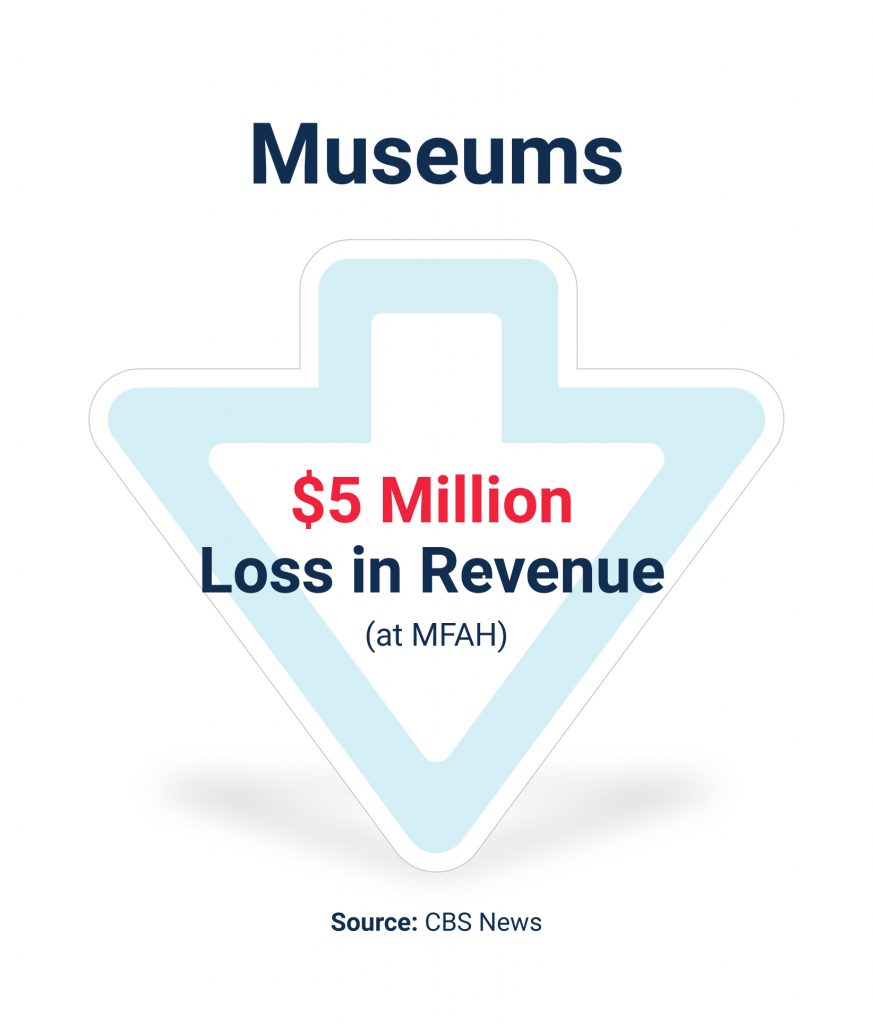
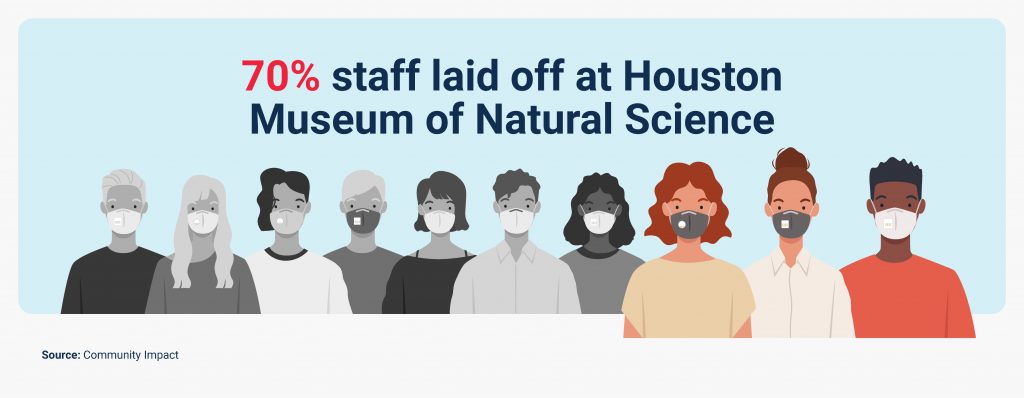
    Museums around Houston shut down from mid-March to May when COVID-19 emerged, which for many also included cancelling visiting speakers and events. To replace the in-person museum experience, many museums offered virtual experiences including films, tours, artist lectures and family activities for children at home, such as the #MFAHatHOME Virtual Experience and the Children’s Museum Daily Virtual Learning. The Fort Bend Museum has even started collecting oral histories from county residents to create a future exhibit about residents during the COVID-19 pandemic. Starting in late May, most museums reopened at 20–25% capacity. However, some museums, such as the Menil Collection, remain closed.

    Theaters

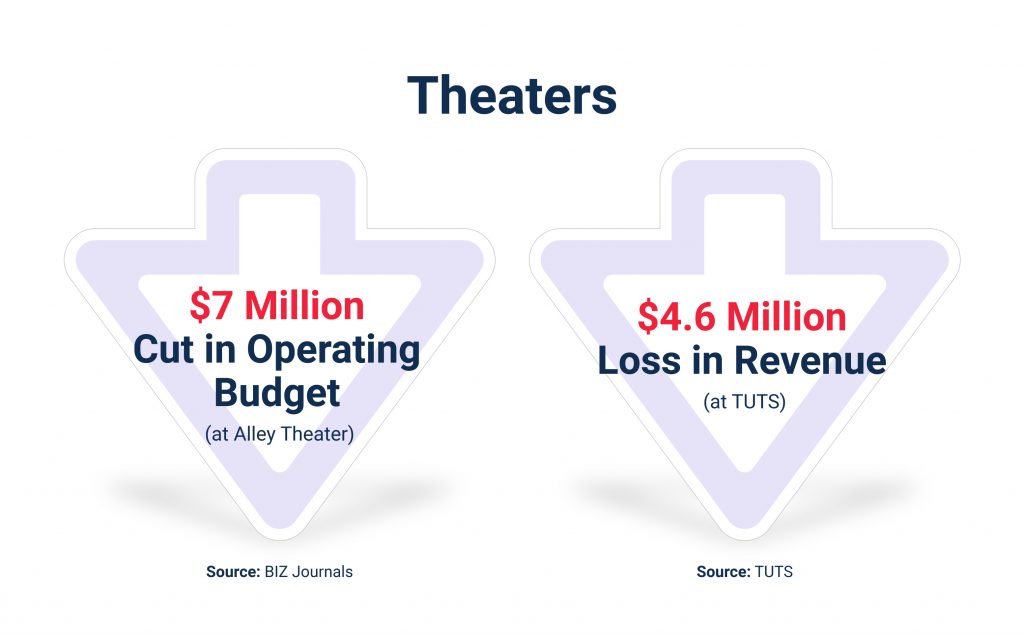
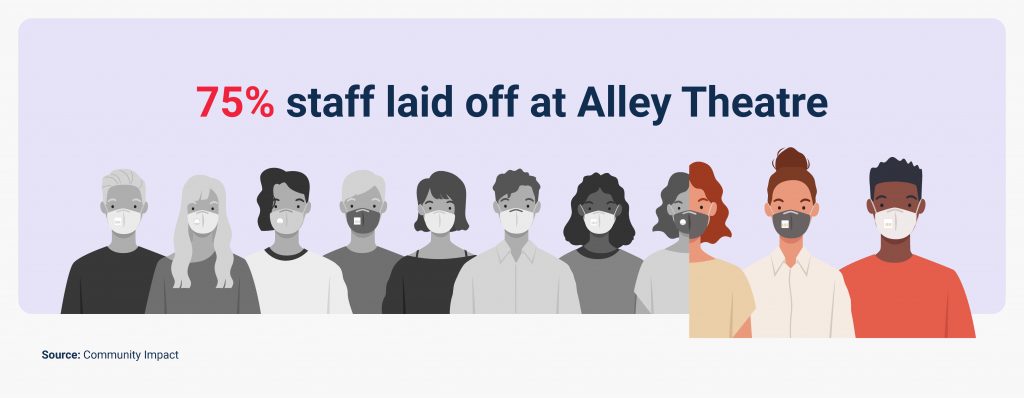
    Theaters around the region began cancelling shows in the middle of March, with some theaters losing more than half of their 2019–20 season. In Montgomery County, the Crighton Theatre, the “Ultimate Venue-outside the Loop” according to the Houston Chronicle, optimistically still has shows scheduled for the middle of August. However, in Harris County, theaters, such as Theatre Under the Stars, are not planning in-person shows until December at the earliest. In the meantime, theaters are posting recordings of previous shows online and conducting summer camps over online platforms.

    Houston Symphony

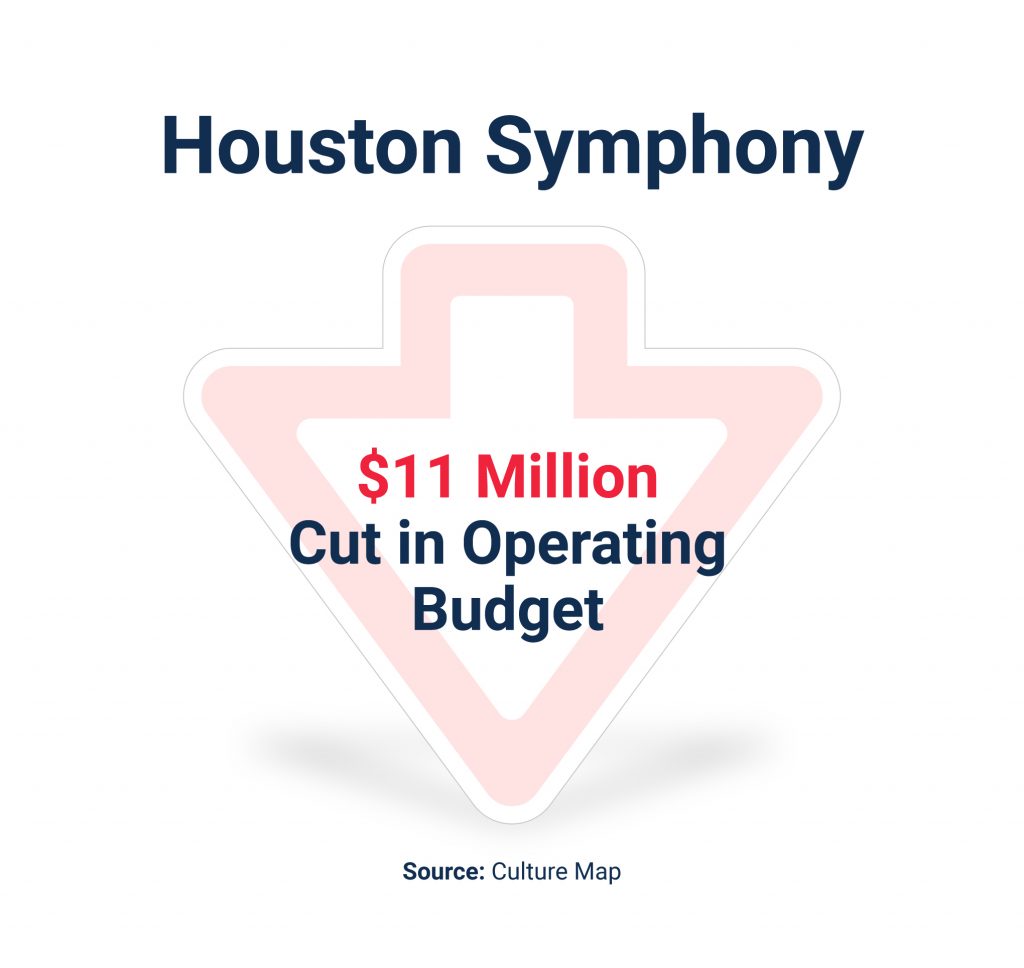
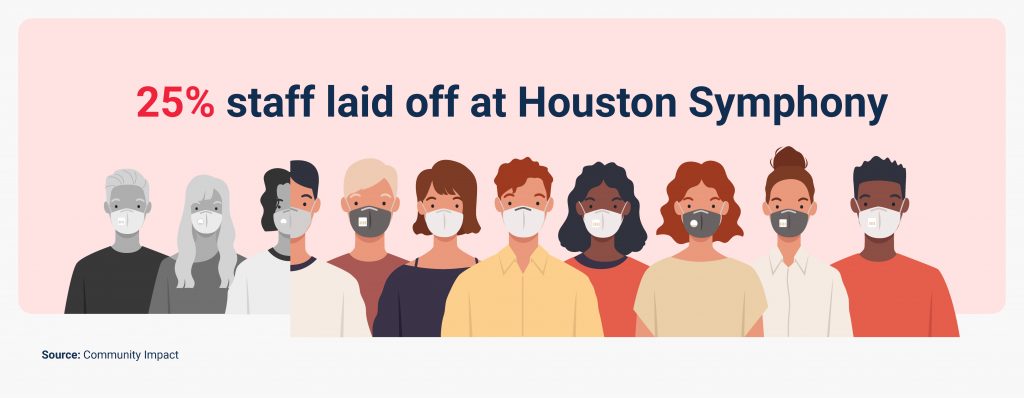
    Houston Symphony started cancelling shows in the middle of March and was eventually forced to cancel the remainder of their 2019–20 season, losing 41 scheduled performances.  During these tough times, they have continued to support Houstonians with a series featuring their musicians playing together from their own homes. In July, they kicked off a new livestream performance series, Live from Jones Hall.

    Houston Grand Opera

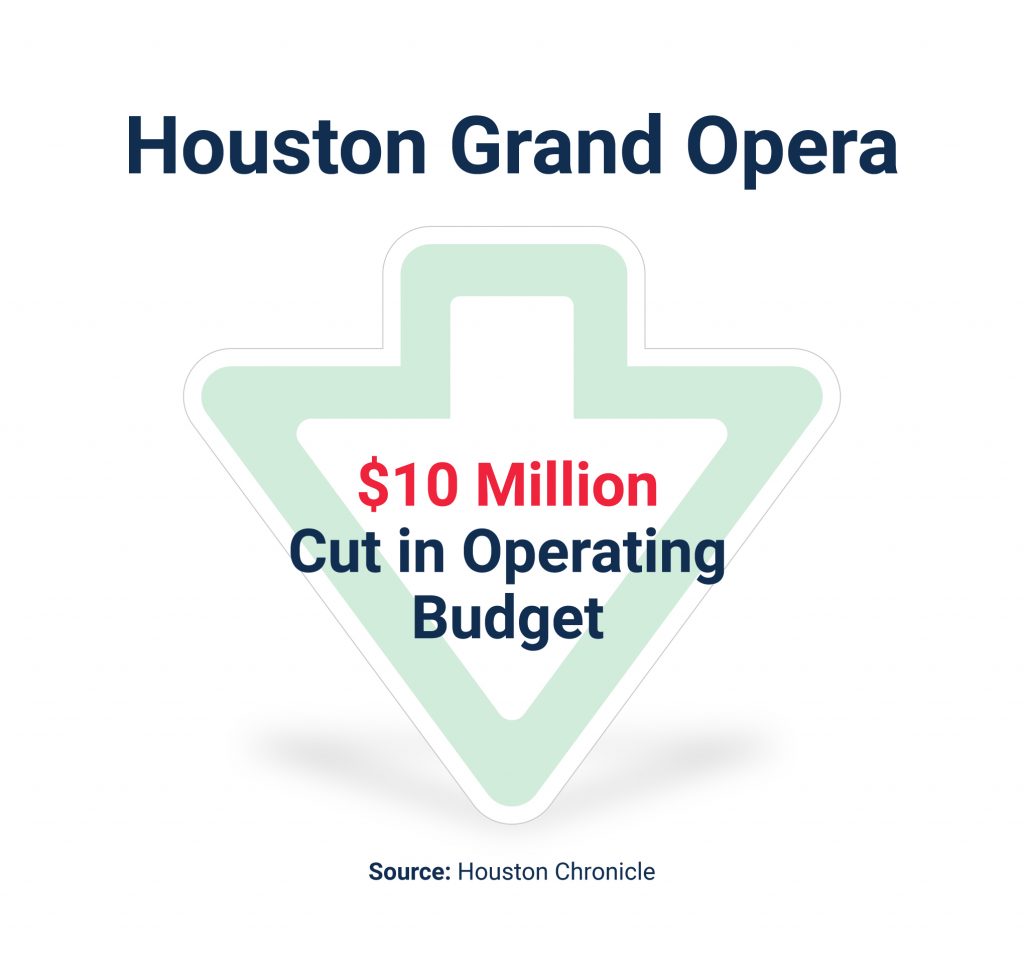
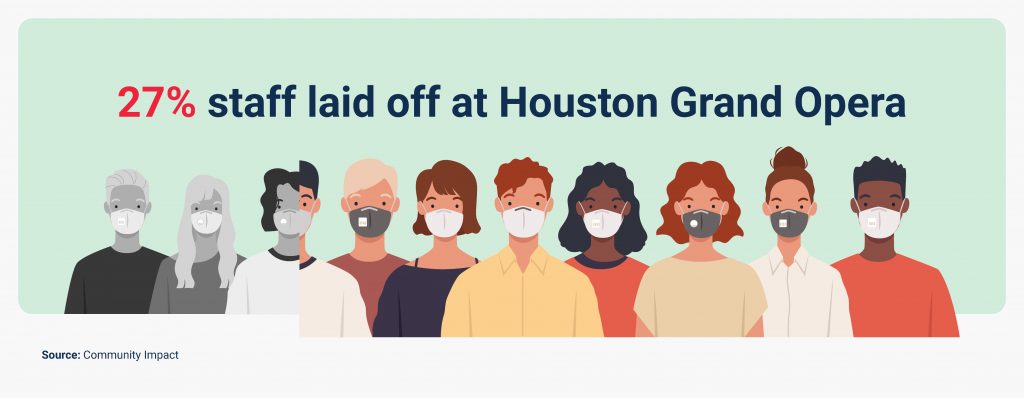
    Starting in the middle of March, Houston Grand Opera was forced to cancel in-person shows until April 2021. This decision called off 33 of their 47 planned performances for this season. Until they are allowed to perform in person, they will continue to release bimonthly online video performances.

    Houston Ballet

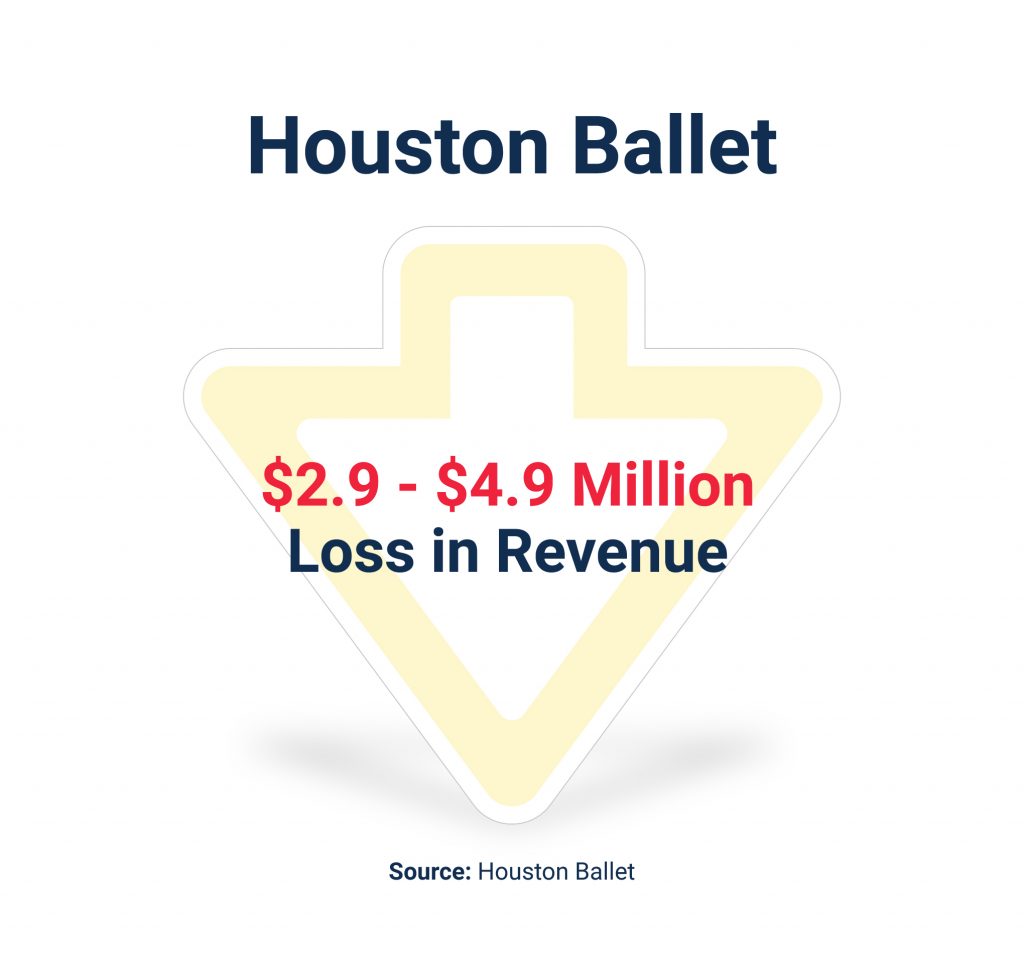
    Houston Ballet made the final call to close for the “foreseeable future” in the beginning of April.  Forced to cancel the remainder of their 2019-20 season, Houston Ballet had to scrap 16 ballets. Additionally, their academy classes transitioned to online instruction with students moving out of dorms, and their summer intensive program has been cancelled. To keep students in practice, the academy faculty create virtual ballet classes for all levels. 

    What can you do to help arts and culture nonprofits in Houston?

    Even prior to COVID-19, many Houston-area artists found themselves in a precarious financial position. With the unprecedented impact COVID-19 has had on arts and culture nonprofits, creative professionals are often facing an increased burden from this global pandemic. Americans for the Arts estimates the financial impact of COVID-19 on national arts and culture organizations is $9.1 billion. While the data paints a grim picture for Houston-area arts and culture nonprofits, there are still ways to help these cherished institutions weather the storm. Here are some of the steps you can take to support our arts and culture nonprofits:

    • Donate to the Greater Houston Area Arts Relief Fund for artists and arts workers: https://charity.gofundme.com/o/en/campaign/ghaarf (organized by the Houston Arts Alliance)
    • Participate in Houston in Action’s Art Votes
    • Check out these ideas for action from United Ways of Texas
    • Email covidresponse@ghcf.org for a list of nonprofits seeking additional funds.
    • Donate directly to your favorite arts and culture nonprofit.
    • Donate your tickets to performances, instead of asking for refunds.
    • Exchange your tickets for tickets to a future performance.
    • Buy tickets to online performances and other virtual experiences.
    • Enroll your children in online art/culture camps.
    • Buy season passes/subscriptions for the 2020-2021 season.
    • Attend online fundraisers for your favorite nonprofits.
    • Learn about more specific, personal ways to help artists by attending the Houston Arts Alliance Arts Town Hall: https://www.houstonartsalliance.com/arts-town-hall