This is a guest blog by BridgeYear, a nonprofit organization that connects youth to careers and educational pathways that provide economic stability and independence. BridgeYear is a 2026 grant partner of Greater Houston Community Foundation.
For many young people, the transition from high school to adulthood begins with a simple question: What’s next?
For Aaliyah, the answer was not immediately clear. She knew she was interested in the medical field, but she was unsure which direction to take or how to find the path that was right for her. Growing up, she had always loved helping people and was inspired by her mother’s career as a radiology technician. She knew she wanted a healthcare career, but she needed support figuring out the best way to get started.
Aaliyah’s experience reflects a broader challenge facing thousands of young people in the greater Houston area. Many young adults leave high school with talent, ambition, and aspirations, yet the path from graduation to a rewarding career is often disconnected and unclear. Navigating the complex landscape of postsecondary options—from workforce training programs and community colleges to four-year universities or entering the workforce directly—can feel overwhelming and unrealistic. As a result, many young people struggle to find a pathway that sparks their interest or moves them toward economic stability.
For the last 10 years, BridgeYear has worked with more than 50,000 students like Aaliyah and others by expanding access and creating pathways to the resources, education, training, opportunities, and support they need to be successful in non-four-year careers.
The Years that Shape Futures
The years between the late teens and early twenties can significantly influence future educational and workforce outcomes. During this period, young people make critical decisions about education, skills training, and employment that have the potential to establish a strong foundation on which to build their future opportunities and earning potential. However, local data illustrate how difficult that transition can be.
Data on Understanding Houston also shows that college enrollment rates are in decline, indicating the widening gaps between high school and postsecondary education. Among students who do enroll in higher education, most don’t finish on time, if at all. Only about 24% of eighth graders in Harris County complete a postsecondary degree or credential within six years of high school graduation. For students who are classified as economically disadvantaged, that rate falls to 16%.
The ultimate measure of whether we are setting our region’s young people up for success is if they can earn a family-sustaining wage. According to Good Reason Houston, only 20% of Houston public school graduates earn a living wage within six years of graduating high school. That figure should concern all of us.
Only 20% of Houston public school graduates earn a living wage within six years of graduating high school.
Young people aged 16 to 24 who were neither in school nor working are known as “disconnected youth” or “opportunity youth and young adults” (OYYA). OYYA who are disconnected from education or employment tend to experience larger negative impacts on their future work and earnings than their more engaged peers. One longitudinal study found that compared to disconnected youth, engaged youth earned $31,000 more annually, 45% more likely to own their home, 42% more likely to be employed, and 52% more likely to report being in better health. Moreover, the longer young people are disconnected, the harder it is for them to re-engage at a later age.
According to a special report from Measure of America, approximately 124,500 disconnected youth in Houston are neither in school nor working. That’s roughly 13% of that age group in the region, the highest rate among the nation’s 25 most populous metropolitan areas. In Harris County, the disconnected youth rate is 14%, and among young people from low-income households, it climbs to 20%—double that of their more economically secure peers.
Greater Houston is home to the highest rate of opportunity youth and young adults (13%) among the nation’s 25 most populous metros.
When young people become disconnected from school or work during these critical years, the consequences can affect their livelihoods for years to come. Houston’s future is also at stake. Remaining a place of opportunity and innovation depends on a highly skilled workforce. We can and must do more to help young people succeed as they enter adulthood—for their future and our region’s.
What Young People Need to Succeed
Many young people struggle to reach living-wage careers not because of a lack of potential, but because they lack access to the information, guidance, and connections required to navigate the pathways available to them.
Trusted Guidance and Relationships
Every young person needs trusted adults who can introduce them to options they may not know exist and then help them navigate the path they choose. Students see this need themselves: in a national ACT survey of high school juniors and seniors, half said they would need help figuring out what resources were available (50%) and knowing when to take certain actions along their journey (52%).
Guidance counselors typically play this role, and most are well versed in two- and four-year college pathways. However, far fewer have the knowledge or resources to guide students toward workforce training or apprenticeships. In a national EdWeek Research Center survey of educators with career and technical education (CTE) responsibilities, nearly half (46%) said their school counselors spend less time on CTE-related counseling than on college counseling. Without the training and industry connections to speak to these options, counselors may leave students unaware of pathways that could lead to well-paying, in-demand careers.
Receiving guidance also carries a larger payoff through the networks it builds. Research by Raj Chetty and colleagues at Opportunity Insights found that distinct measures of social capital are among the strongest predictors of economic mobility. Our larger networks offer guidance and open doors. Yet young people from lower-income households are less likely to have access to close relationships with non-family adults than their more affluent peers.
These gaps fall hardest on students who are the first ones in their family to go to college. Their parents often bring deep encouragement but may have limited firsthand knowledge of college and career systems. In the same ACT survey, approximately two-thirds of students whose caregivers had no college education (64%) needed help knowing whom to talk to, compared to less than half of students whose caregivers had a college degree (43%).
Career-Connected Learning and Experiences
Research from the Brookings Institution underscores the value of career exposure and work-based learning in helping young people connect their interests to real jobs and understand how to pursue them. These experiences are especially important for students exploring pathways beyond a traditional four-year degree. A 2022 survey found that nearly three-quarters of Gen Z youth believe schools should do more to explain education pathways beyond a four-year degree, and 71% want more opportunities to explore careers.
Earn-and-learn programs build on this approach by combining hands-on experience with mentorship and workplace support. Young people develop durable skills, such as communication, time management, and problem-solving, while building relationships with professionals who can offer guidance and open doors to opportunity. By connecting young people to both the skills and relationships needed to navigate their careers, earn-and-learn pathways can help bridge the gap between high school graduation and living-wage employment.
How BridgeYear Creates Pathways
BridgeYear, a Houston-based nonprofit, helps young people from low-income communities identify and pursue education and career pathways that do not require a four-year degree. The BridgeYear model is intentionally built around many of the supports that research and evidence suggest matter most: career navigation, peer support, trusted guidance, employer connections, and earn-and-learn opportunities.
BridgeYear exposes thousands of Houston-area students to various high-growth, high-demand careers through its Career Test Drive® Program, where young people participate in hands-on simulations to get a feel for the work, discover new interests, and imagine possibilities they may not have considered. In follow-up surveys, 93% of students indicated that the Career Test Drive® Fair helped them better understand which careers align—or don’t align—with their interests, giving them valuable information as they design their future.
BridgeYear’s Career Cohorts program, launched in 2023, helps recent high school graduates, a population that is often overlooked within Houston’s workforce-development landscape, move from uncertainty to action. Most critically, BridgeYear connects the various systems of postsecondary education, work-based learning, and workforce to ensure students navigate them successfully. Participants enter peer cohorts, receive mentorship and guidance, enroll in quality short-term certification programs, and connect directly with employer partners.
With support from BridgeYear staff, students receive guidance through the application process and the steps needed to successfully complete their chosen certification or earn-and-learn cohort. BridgeYear vets local training providers thoroughly to ensure programs are high-quality, reputable, and low-cost or free.
“BridgeYear’s opportunities are amazing for our students, especially considering the number of students we serve from low-income backgrounds. The program provides exposure to different careers that many of our students would never otherwise have the opportunity to learn about. Experiences like these help expand their understanding of what’s possible for their future and connect them to pathways that can lead to greater economic mobility.” — Chatney Hines, College and Career Counselor
BridgeYear equips Career Cohort participants with the durable skills needed to succeed in the workplace from day one. Through a BridgeYear-designed program that includes professional communication, time management, problem-solving, and navigating workplace expectations, participants build the confidence and practical skills to transition successfully into employment. This ensures participants are prepared not only to secure employment but also to succeed and grow in their careers.
“I originally planned to become a cosmetologist, but when I learned about the automotive apprenticeship, I realized I could earn money while learning a trade and gaining hands-on experience. It was an opportunity I couldn’t pass up.” — Maximilian M., BridgeYear Career Cohort 2026 Participant, Automotive Technician at Space City Toyota
Recognizing that young adults require support beyond exposure and navigation, BridgeYear also helps students access basic and comprehensive needs. Through philanthropic support, the organization covers the cost of training tuition and removes barriers such as transportation, food insecurity, and job-related supply and equipment purchasing that can derail their progress.
Outcomes and Impact
Early outcomes from the Career Cohorts program are promising. The pilot cohort launched in 2023 with 15 participants. Fourteen completed training and earned industry-recognized certifications, a 93% completion rate, and seven secured employment within nine months. The program expanded to 34 students in 2024, with 85% completing training and earning certifications, and grew again to 69 students in 2025, with 78% employed or continuing their education the following year. In 2026, over 85 students enrolled in the program, with outcomes expected in 2027.
Graduates with professional certifications are three times more likely to earn a living wage six years after high school graduation. Many participants enter Career Cohorts unemployed or underemployed, often earning less than $10,000 annually. Career Cohort pathways are designed to connect participants to careers that pay approximately $18 to $22 per hour, or roughly $37,000 to $45,000 annually, upon entry. Said differently, the Career Cohorts program aims to increase its participants’ annual salary by up to 350%. These gains are not an outlier. Research from Georgetown University’s Center on Education and the Workforce found that associate’s degree holders in health practice occupations can earn nearly $3 million in a lifetime—more than some bachelor’s degree holders.
As BridgeYear continues to scale its Career Cohorts program and employer partnerships, they are partnering with Good Reason Houston to conduct a longer-term evaluation tracking outcomes related to employment, wage growth, and career advancement. Their intention is that the findings could inform the larger workforce development ecosystem.
Employers at the Table
BridgeYear’s employer partnerships, like with The Friedkin Group and Houston Methodist, are a central component of their model as they provide opportunities for mentorship, career exploration, and direct connections to employment.
These partnerships benefit young adults by increasing awareness of career opportunities, gaining the social capital to thrive within industries, and providing exposure to occupations they may not otherwise encounter. At the same time, employers grow and strengthen their own talent pipelines, expand community engagement efforts, and create meaningful volunteer opportunities for employees.
“The technician shortage facing our industry is real. For many dealerships, building a talent pipeline from scratch can be difficult and resource intensive. What makes our partnership with BridgeYear so impactful is that it creates a structured pathway for students to gain real-world experience, develop technical skills, and enter the workforce with confidence. Together, we’re not just filling positions; we’re investing in the next generation of automotive professionals and helping our dealer partners build a stronger future.” — Mike Brennan, Chief Operating Officer & Senior Vice President at Gulf States Toyota
As Houston employers across industries face workforce challenges, supporting young people to transition from high school into high growth careers benefits both businesses and the region overall in the following ways:
- Strengthen a company’s bottom line by building a more skilled, productive, and reliable workforce.
- Increase employee engagement through meaningful opportunities to mentor and support the next generation.
- Build the region’s talent pipeline with skilled, career-ready, motivated young adults.
Building a Stronger Houston Together
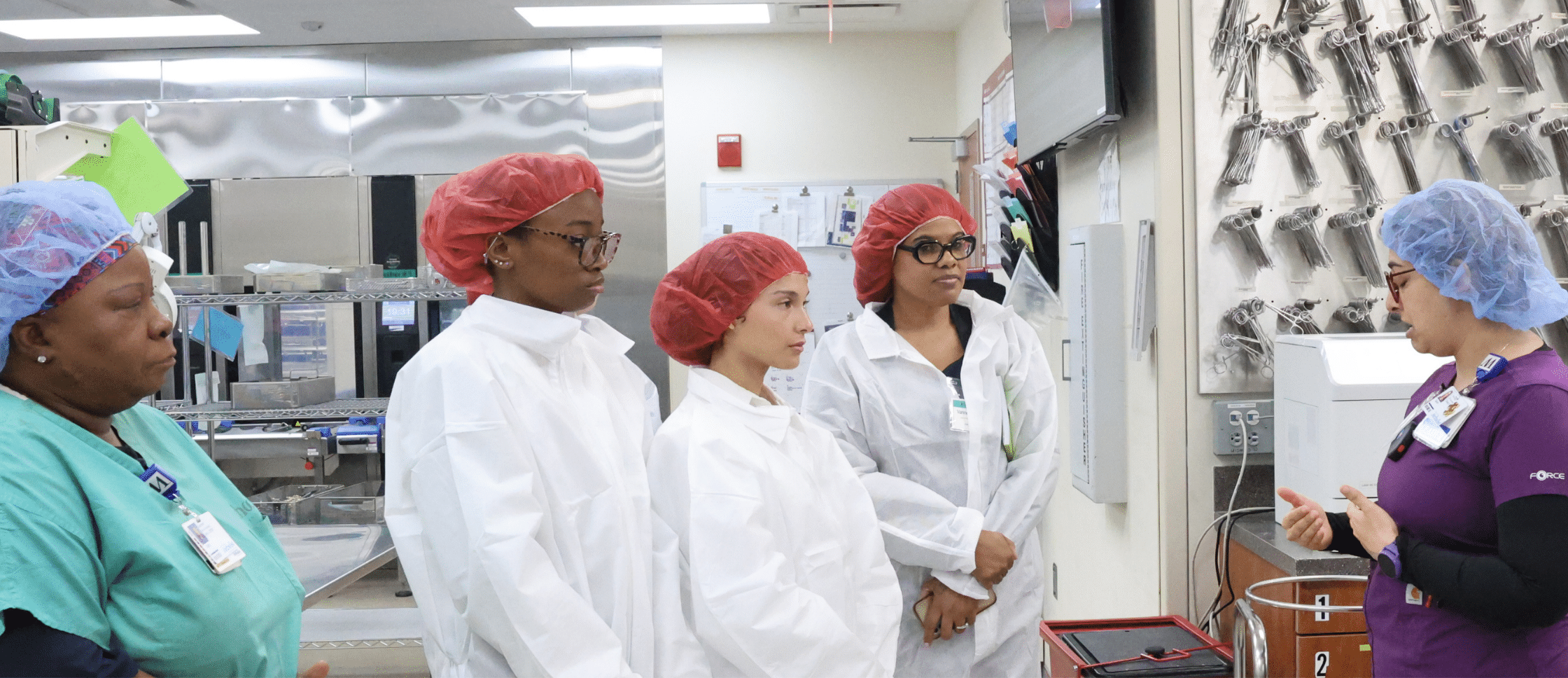
Aaliyah’s experience illustrates how BridgeYear’s model is designed to work: the program enabled her to transform her interest in healthcare into a promising career pathway. After identifying her goal to work in the medical field, Aaliyah joined a Career Cohort that provided peer support, interview preparation, and a pathway into an earn-and-learn program as a Sterile Processing Technician with Houston Methodist Sugar Land while continuing her education at Houston City College—with no tuition fees, thanks to BridgeYear.
Guiding more young people to successfully move from education to employment is not just an individual challenge. Programs like BridgeYear’s Career Cohorts create broader opportunities for the Houston region:
- Opportunity youth and young adults: More young adults gain access to the connections, experiences, and opportunities that help them move from education to economic mobility.
- Employers: Businesses gain a pipeline of motivated, career-ready talent with the industry-specific technical skills and durable workplace skills to fill critical jobs.
- Donors: Philanthropic investment equips young people to turn their potential into opportunity by opening doors to career exploration, mentorship, apprenticeships, and meaningful employment.
Through its High-Impact Grantmaking initiative, Greater Houston Community Foundation is proud to support BridgeYear’s innovative, data-driven solution that expands opportunity for Houston’s young people. By investing in their futures, we are not only improving individual outcomes, we are building a more inclusive and prosperous Houston.
Ensuring More Young People Find their Path
Whether you’re an employer looking to strengthen your industry’s future workforce or a donor interested in expanding access to career opportunities, you can help make these pathways possible.
- Donors: Build on this investment by supporting BridgeYear. Community Foundation fundholders can find BridgeYear (EIN: 81-4848803) in DonorSphere to recommend a grant.
- Employers: Open doors for Houston’s next generation of talent by mentoring students, hosting career experiences, or hiring Career Cohort graduates. Contact Carlee Morgan, Chief Growth and Advancement Officer to learn more.
- All of us: Explore the data behind this story on Understanding Houston, and join our webinar on November 12, 2026 as the Community Foundation engages in conversation with BridgeYear, Good Reason Houston, and San Jacinto College about how we can support more students move from education to high-wage careers with opportunities for growth.
Authors