
This is a guest blog by Texas 2036, a nonpartisan public policy organization committed to building long-term, data-driven strategies to ensure Texas’ prosperity through its bicentennial and beyond. Explore the Future of Texas podcast series and learn more at texas2036.org.
This spring, Texas marked a milestone worth celebrating — its 190th birthday. On March 2, 1836, Texas declared independence from Mexico, setting in motion one of the most consequential chapters in American history. Just months later, on August 30, 1836, the city of Houston was founded on the banks of Buffalo Bayou, named in honor of General Sam Houston, the man who secured that independence at the Battle of San Jacinto.
For nearly two centuries, Texans have built, risked, welcomed, and dreamed. Texas has grown because people believed this was the place where ambition meets opportunity and hard work pays off. That spirit is alive and well in Greater Houston, a region that draws people from across the country and around the world, motivated by job opportunities, high-quality education, and the promise of a better life.
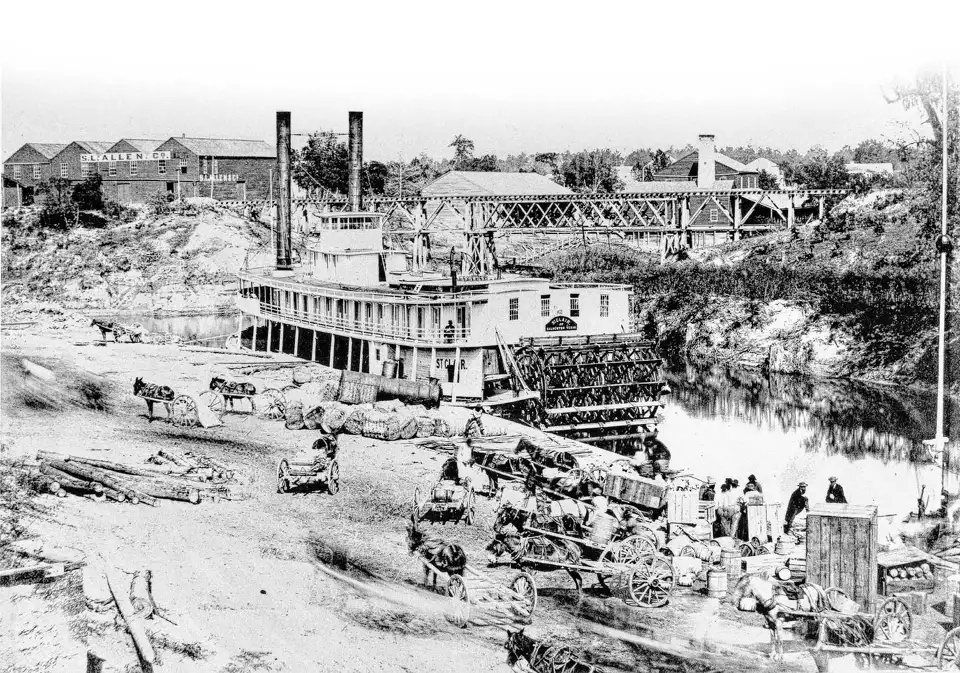
Paddlewheel boat and cotton being loaded at Allen’s Landing in 1868. Credit: Ed Stewart Photography. Retrieved from the Houston Chronicle on 4/8/26
A Decade That Will Shape the Next Century
The data and trendlines tell us Texas will continue to grow. By 2036, Texas could exceed 35 million residents. Our economy already exceeds $2.7 trillion. Nearly one in 10 Americans lives here. But attracting people and employers is only the beginning. Sustaining that growth requires education, job opportunities, and ensuring communities have the infrastructure and resources they need to thrive.
That is the work of Texas 2036, a nonprofit, nonpartisan organization dedicated to improving the lives and opportunities of all Texans through the bicentennial and beyond. It takes strategic, data-driven work guided by a clear central question: What do we want Texas to look like in 2036, and what does it take to get there?
For Houston, that question is anything but abstract — the fourth-largest city in the nation will celebrate its 200th birthday in just ten years.
So when Greater Houston Community Foundation engaged more than 100 community leaders in spring 2023, they started not with problems, but with possibility. Through an appreciative inquiry process — a collaborative, strengths-based approach that focuses on what’s working and how to build on it — participants were asked the same kind of forward-looking question driving Texas 2036’s work: What do you want Houston to look like in 2036?
Their answers envisioned a hopeful, generative vision of our future rooted in community strengths and focused on how to leverage them for a more vibrant, thriving Houston region. Explore the findings in the full report, Appreciation for Houston.
What Houston’s Growth Demands of Us
Houston’s three most populous counties, Harris, Fort Bend, and Montgomery, represents roughly 1 in 5 Texans. Since 2010, this region has added more than 1.5 million residents, a 30% increase since 2010. And, according to the 2025 Kinder Houston Area Survey, about 80% of residents say the Houston area is a better place to live compared to other major metros. People come here for jobs, for family, and for opportunity. It’s no surprise then that Houston’s three-county region is projected to grow to about 7.9 million in 2036.
And that growth is also revealing the gaps we cannot afford to ignore.
According to data from Understanding Houston, an initiative of Greater Houston Community Foundation, over one million households — 44% of the region — either live below the poverty threshold or are ALICE: Asset Limited, Income Constrained, Employed. These are working families who earn above the federal poverty line but cannot consistently afford basic necessities like housing, childcare, and healthcare.
The number of ALICE households in the region grew by 49% between 2010 and 2022, far outpacing even the region’s rapid population growth, driven primarily by rising costs and stagnant wages. These are not abstract statistics, they point to a region that is both thriving while also leaving too many families behind.
The Work Ahead: What Texas 2036 is Tackling
Ahead of the 2027 Texas Legislative Session, Texas 2036 is advancing research and building coalitions to increase economic mobility statewide. Success will be measured in tangible ways: children reading and doing math at grade level, graduates earning credentials that lead to strong wages, and communities supported by reliable water, energy, and transportation systems.
Texas 2036 is focused on policy opportunities that directly impact economic advancement for Houstonians. We are activating data-driven projects that will align career and technical education programs with workforce needs, expand access to high-quality, affordable childcare, strengthen state water planning for long-term growth and drought resilience, and make health care affordable for Texas families and employers. Partners like Greater Houston Community Foundation are essential to translating these projects into policies, action, and opportunity for every Houstonian.
This Is Our Moment
As Texas 2036 President and CEO David Leebron has said, “Texas’ greatest asset isn’t its oil, land, or even the great companies which have been built or chosen to locate here — it’s our people.” That belief resonates deeply here in Greater Houston, a region that has long served as a proving ground for what an inclusive, dynamic American city can look like.
“Texas’ greatest asset isn’t its oil, land, or even the great companies which have been built or chosen to locate here — it’s our people.“
David Leebron, Texas 2036 President and CEO
As Texas celebrates 190 years of independence, and as Houston approaches its own 190th birthday this August, the anniversaries remind us that the state and city we live in were built by people willing to make long-term commitments to something they couldn’t fully see yet. They were betting on a future. So are we.
We have the talent, the resources, and the experience to act. The next 10 years will define what comes next for Texas and for Houston — and that future will be shaped by people who choose to show up.
Here’s how you can be part of it.
- Subscribe to the Texas 2036 and Greater Houston Community Foundation newsletters to stay connected to the data and the decisions that matter. (Subscribe to Understanding Houston’s quarterly newsletter if you haven’t already.)
- Get civically engaged in your city and state. Attend an organizing meeting, know your representatives at the State Capitol and in Congress, and vote in every election.
- And tune in to Texas 2036’s latest podcast series, The Future of Texas, for honest conversations about where we’re headed and what it will take to get there.
Our futures depend on those who are actively engaged in building Texas. This is our moment of opportunity — and we’re glad you’re in it with us.