Whether young or old, rich or poor, it’s highly likely that you benefit from the work of a nonprofit organization. Nonprofits provide vital services for people from all walks of life — from basic necessities like food and housing to enriching cultural experiences and houses of worship. As the third largest sector across the country, employing 11.4 million people, nonprofits provide many essential functions to society. Today, the organizations that enrich our lives and are relied upon during times of great need are also struggling due to COVID-19.
With COVID-19 disrupting financial stability around the world, businesses of all types are struggling to make ends meet, and nonprofits are no exception. In a March survey of 500 nonprofits by Charities Aid Foundation of America, nearly 97% of responding organizations reported negative impacts from COVID-19. Because many of the in-person fundraising events that nonprofits rely on have been cancelled, organizations are having to quickly adapt to raise funds in different ways. Those that generate income through program services are also experiencing massive disruption. More than two-thirds of nonprofits report reductions in funding, with 97% expecting sustained losses over the next 12 months. Additionally, more than 40% of these nonprofits expect funding to decrease by more than one-fifth.
This decrease in funding presents a huge worry to nonprofit employees. In theory, the Paycheck Protection Program (PPP) could be helping these nonprofit organizations. However, a study by the Johnson Center found the number of nonprofit jobs protected by the PPP was approximately 20% less than expected. A recent United Way report found that 1.64 million nonprofit workers nationwide lost their jobs between February through May. Our nonprofits are in dire need of assistance, and yet, they are not receiving the support they need in this pandemic.
How COVID-19 has affected Houston-area nonprofits
Houston-area nonprofits are facing similar challenges. According to a mid-March survey of 76 regional nonprofit partners typically active in disaster response, the Greater Houston Community Foundation (GHCF) found that 85% of organizations expected a significant increase in demand for their services such as food, emergency financial assistance, and information and guidance at the onset of shutdowns. Simultaneously, half of these organizations reported insufficient resources to meet increased community needs.
The visualization below highlights the top needs identified by nonprofits in mid-March, though we know their needs continue to evolve and potentially worsen as the pandemic continues.
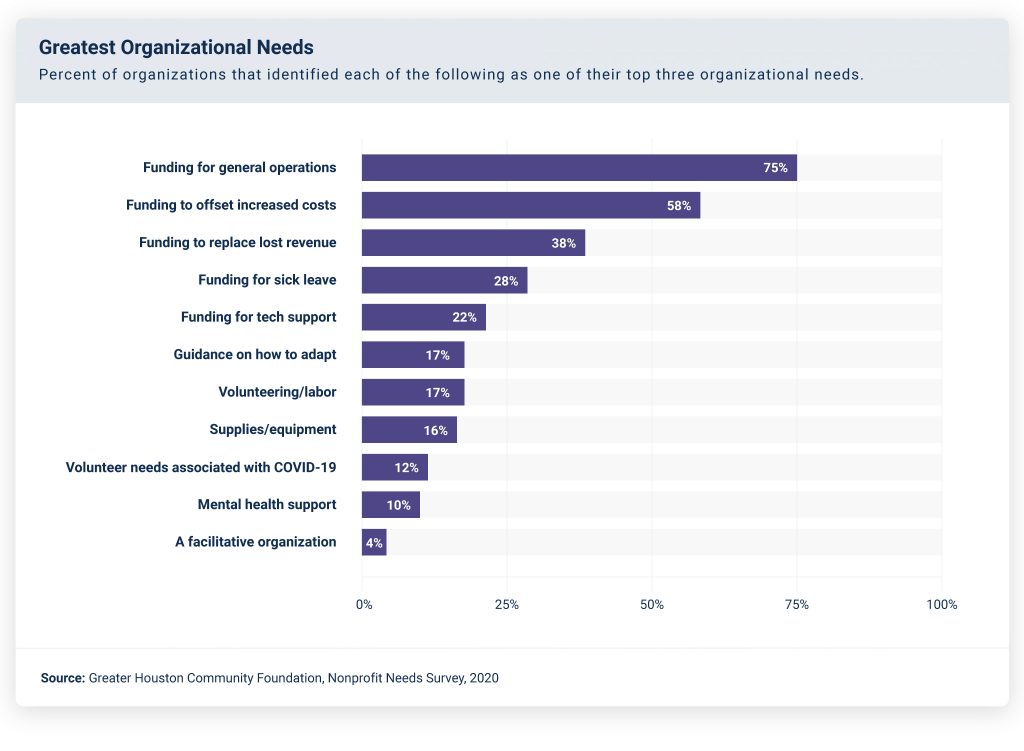
It is no surprise that the top four needs revolve around funding. More than 500 Houston nonprofits flooded the Greater Houston COVID-19 Recovery Fund’s open request process seeking financial support. These requests ranged from organizations that provide wide-ranging services to low-income families and specifically older adults, people with disabilities, and the medically uninsured to arts and cultural organizations seeking assistance to redesign services and support employees. Nonprofit financial needs far outnumber available funds, and fund administrators continue to share fund requests to raise awareness of current needs in our community and to encourage increased philanthropy during this difficult time.
Nonprofits are truly on the front lines in our fight against this pandemic with employees risking their safety to help Houstonians survive, and they need support themselves. Arts and culture organizations in Houston have worked particularly hard to quantify the pandemic’s impact on the industry — one that is typically deprioritized in times of crises — to convey their great need as well.
COVID’s impact on Houston-area Arts and Culture Nonprofits
Greater Houston’s arts and culture nonprofits play a key role in making our region a vibrant place to live, work and play, providing residents with beautiful sights, exciting events and educational activities. Houston’s world-class museums, theaters and ballets attract visitors from around the world. In addition, these 600+ arts and culture nonprofits in the Greater Houston region generate around $1.12 billion in annual economic activity and employ around 30,000 Houstonians. The industry attracts more than 10 million people a year to 22,000 artist events.
However, those statistics reflect a pre-COVID-19 reality. Now, this industry rooted in bringing people together is struggling to survive in the wake of the pandemic. The Houston Arts Alliance found that arts organizations estimate losses of $75 million in earned income from ticket sales, entry fees, etc., $6 million from cancelled programs, and $10 million in donations.
While visual artists rely on digital platforms for the time being, performing artists look to new media to share their talents. With shows cancelled and art exhibits closed, arts organizations and individual artists are in distress. More than a quarter of all Houston artists have lost 100% of their income due to COVID-19, as the graph below demonstrates.
The needs assessment also found over 486 Houston artists have requested local emergency funds through the Greater Houston Area Artist Relief Fund. The following graph illustrates this urgent financial need, displaying artists’ lack of confidence in meeting monthly financial obligations.
An analysis of statewide unemployment insurance claims bears this out. The next graph highlights the huge jump in unemployment claims throughout Texas from people who worked in the arts, entertainment, and recreation industry prior to the COVID-19 outbreak.
The number of unemployment insurance claims per week from the arts, entertainment, and recreation industry grew by more than 700% between the first and last weeks of March — a consequence of shutdowns and social distancing measures prompted by the novel coronavirus. While claims from the arts and culture industry comprise a small percentage of total unemployment claims, the impact on the region is significant, as we describe in the following section.
COVID-19’s Impact on Each Area of the Arts
Museums
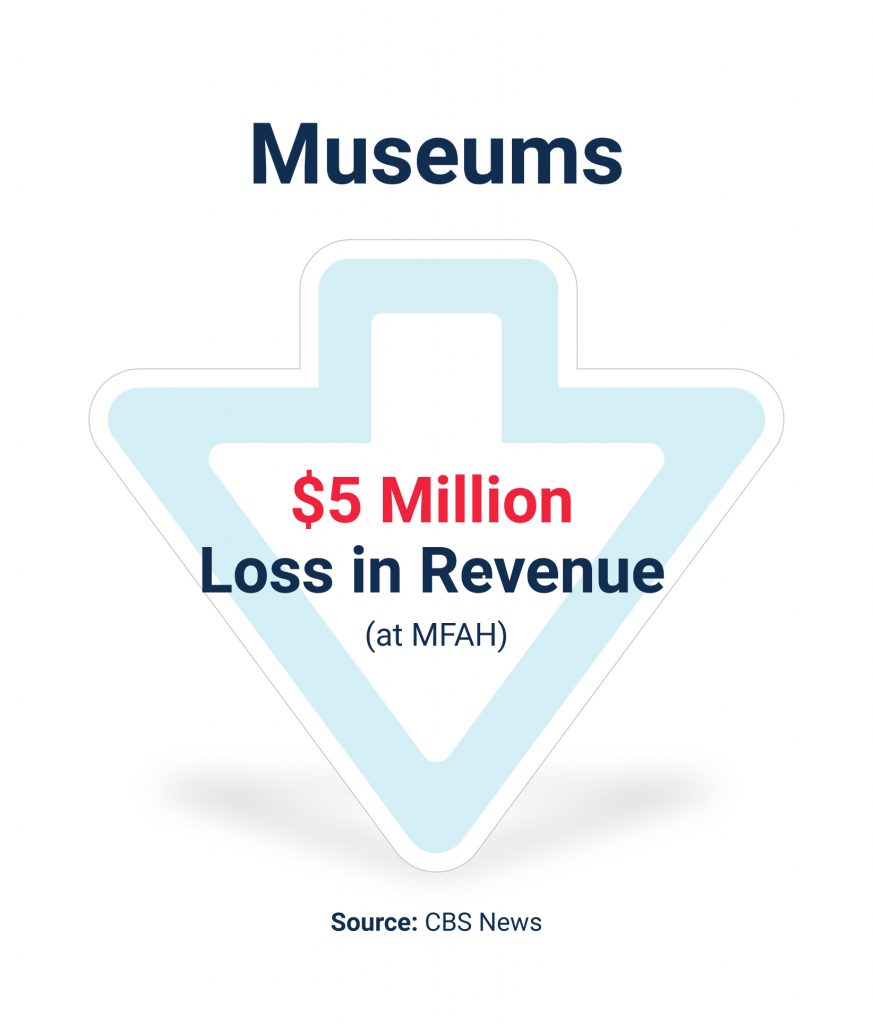
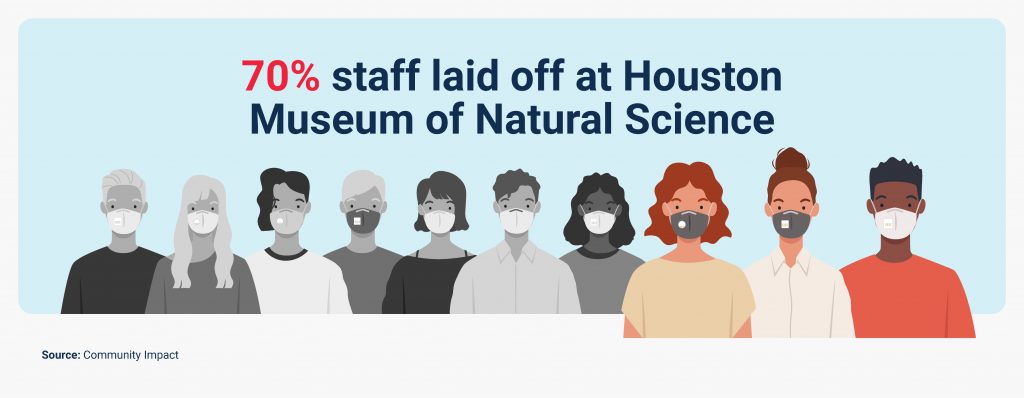
Museums around Houston shut down from mid-March to May when COVID-19 emerged, which for many also included cancelling visiting speakers and events. To replace the in-person museum experience, many museums offered virtual experiences including films, tours, artist lectures and family activities for children at home, such as the #MFAHatHOME Virtual Experience and the Children’s Museum Daily Virtual Learning. The Fort Bend Museum has even started collecting oral histories from county residents to create a future exhibit about residents during the COVID-19 pandemic. Starting in late May, most museums reopened at 20–25% capacity. However, some museums, such as the Menil Collection, remain closed.
Theaters
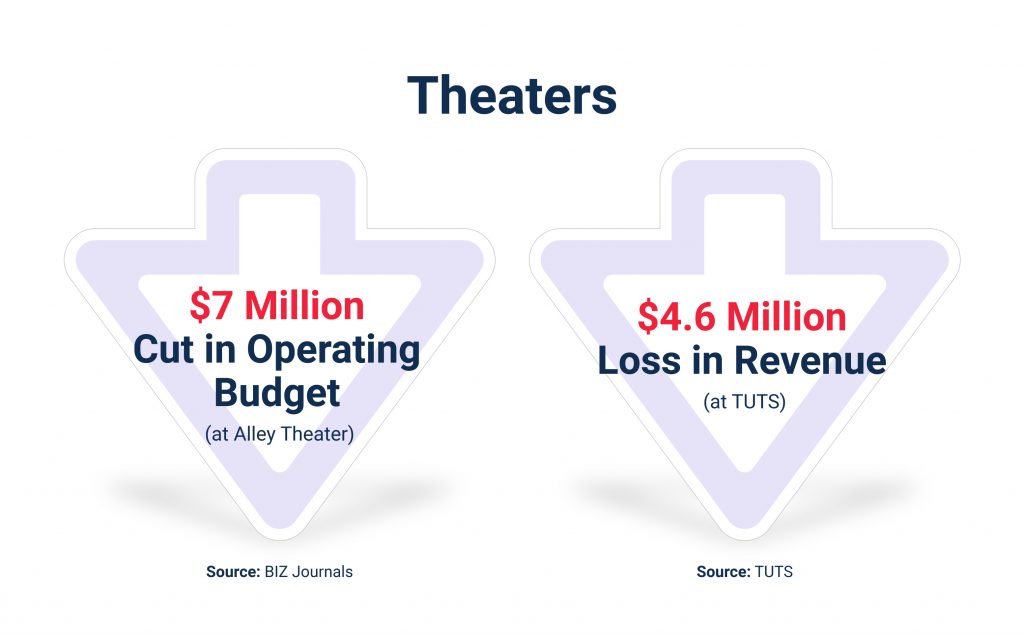
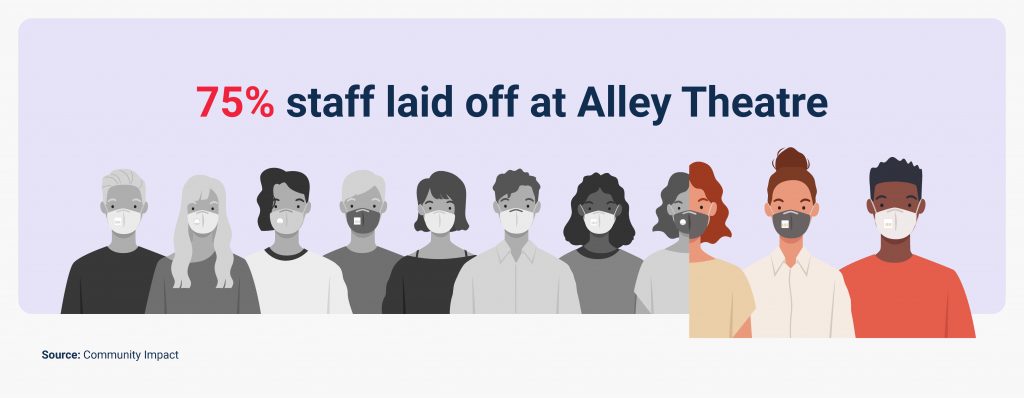
Theaters around the region began cancelling shows in the middle of March, with some theaters losing more than half of their 2019–20 season. In Montgomery County, the Crighton Theatre, the “Ultimate Venue-outside the Loop” according to the Houston Chronicle, optimistically still has shows scheduled for the middle of August. However, in Harris County, theaters, such as Theatre Under the Stars, are not planning in-person shows until December at the earliest. In the meantime, theaters are posting recordings of previous shows online and conducting summer camps over online platforms.
Houston Symphony
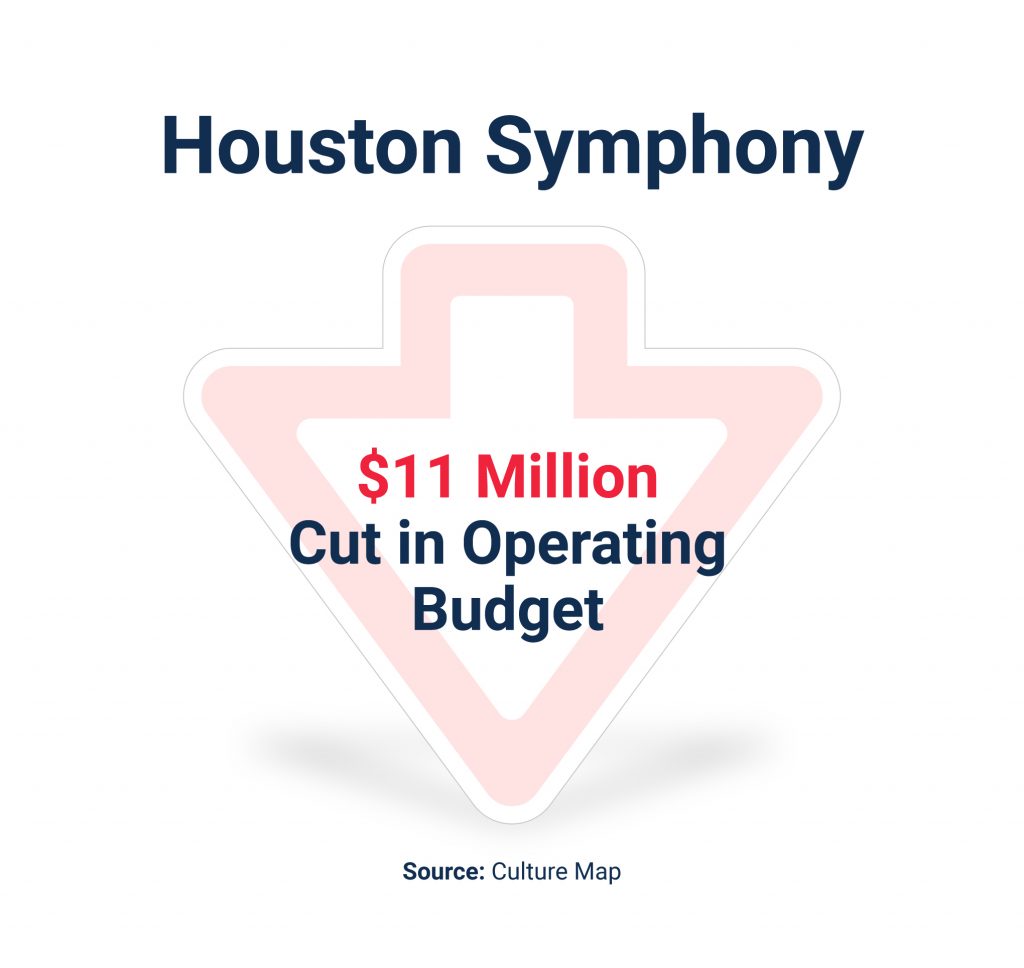
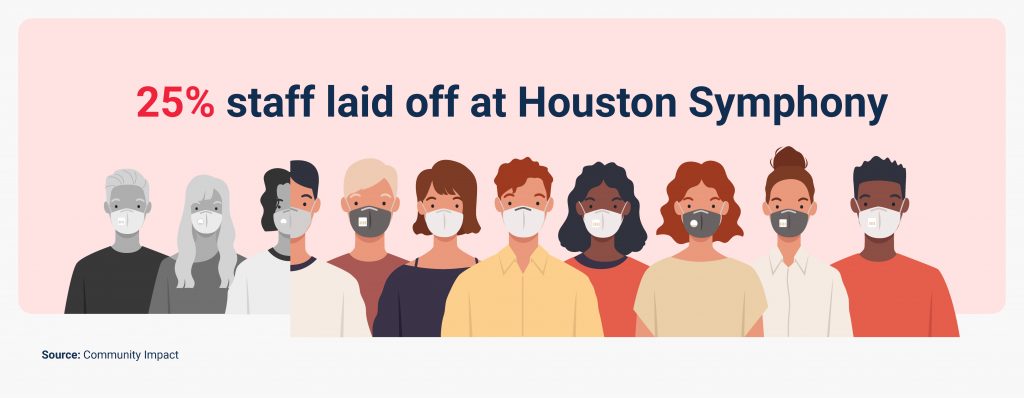
Houston Symphony started cancelling shows in the middle of March and was eventually forced to cancel the remainder of their 2019–20 season, losing 41 scheduled performances. During these tough times, they have continued to support Houstonians with a series featuring their musicians playing together from their own homes. In July, they kicked off a new livestream performance series, Live from Jones Hall.
Houston Grand Opera
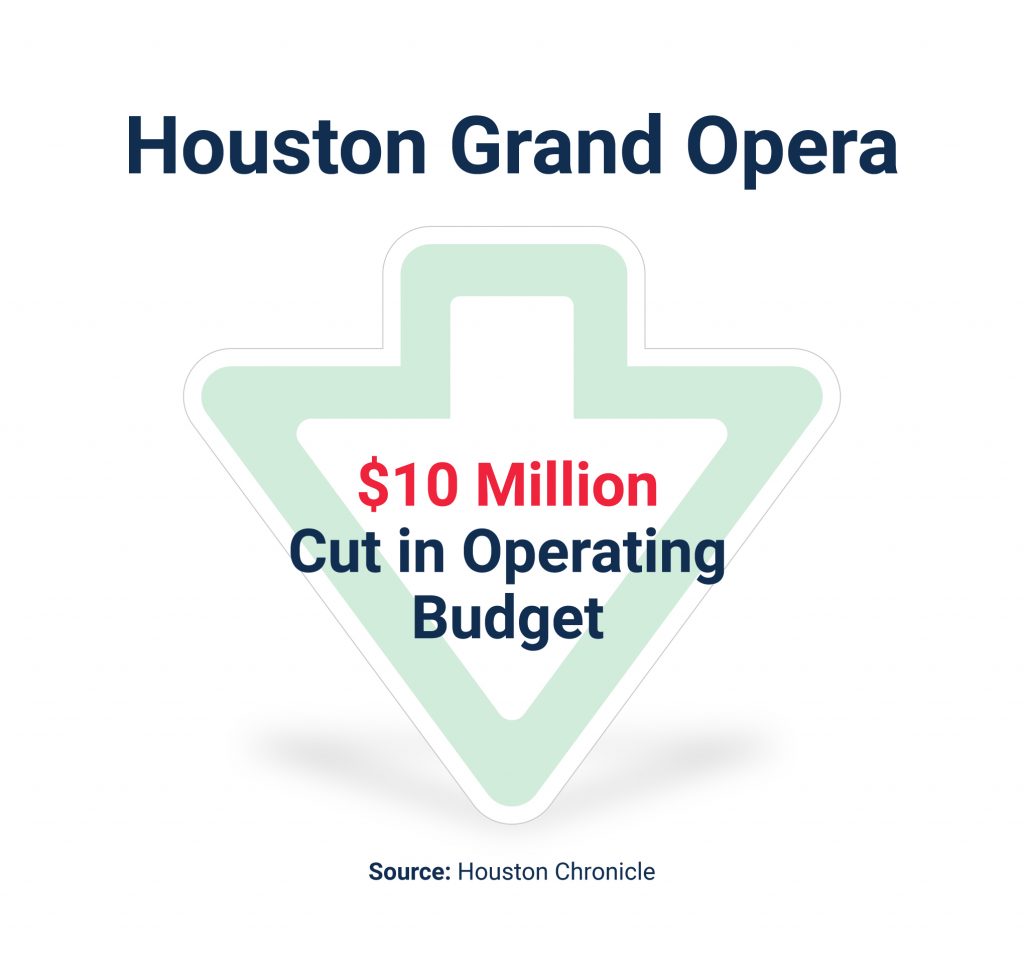
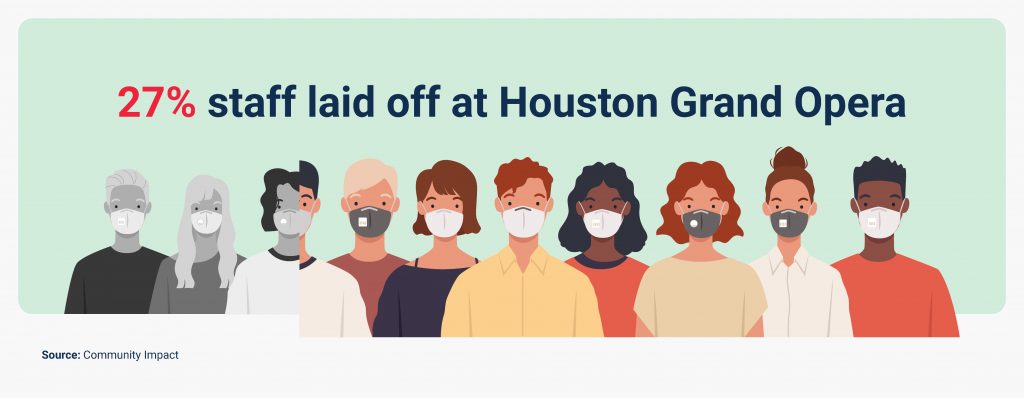
Starting in the middle of March, Houston Grand Opera was forced to cancel in-person shows until April 2021. This decision called off 33 of their 47 planned performances for this season. Until they are allowed to perform in person, they will continue to release bimonthly online video performances.
Houston Ballet
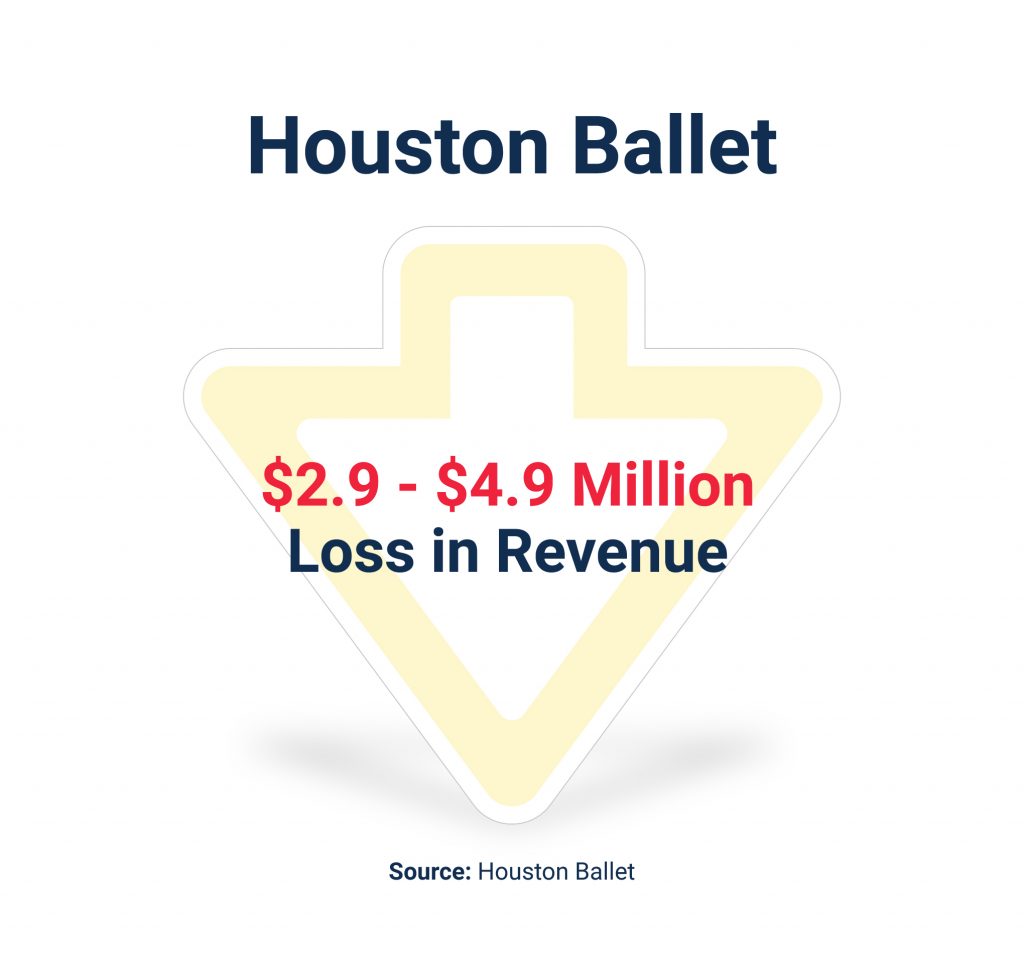
Houston Ballet made the final call to close for the “foreseeable future” in the beginning of April. Forced to cancel the remainder of their 2019-20 season, Houston Ballet had to scrap 16 ballets. Additionally, their academy classes transitioned to online instruction with students moving out of dorms, and their summer intensive program has been cancelled. To keep students in practice, the academy faculty create virtual ballet classes for all levels.
What can you do to help arts and culture nonprofits in Houston?
Even prior to COVID-19, many Houston-area artists found themselves in a precarious financial position. With the unprecedented impact COVID-19 has had on arts and culture nonprofits, creative professionals are often facing an increased burden from this global pandemic. Americans for the Arts estimates the financial impact of COVID-19 on national arts and culture organizations is $9.1 billion. While the data paints a grim picture for Houston-area arts and culture nonprofits, there are still ways to help these cherished institutions weather the storm. Here are some of the steps you can take to support our arts and culture nonprofits:
- Donate to the Greater Houston Area Arts Relief Fund for artists and arts workers: https://charity.gofundme.com/o/en/campaign/ghaarf (organized by the Houston Arts Alliance)
- Participate in Houston in Action’s Art Votes
- Check out these ideas for action from United Ways of Texas
- Email covidresponse@ghcf.org for a list of nonprofits seeking additional funds.
- Donate directly to your favorite arts and culture nonprofit.
- Donate your tickets to performances, instead of asking for refunds.
- Exchange your tickets for tickets to a future performance.
- Buy tickets to online performances and other virtual experiences.
- Enroll your children in online art/culture camps.
- Buy season passes/subscriptions for the 2020-2021 season.
- Attend online fundraisers for your favorite nonprofits.
- Learn about more specific, personal ways to help artists by attending the Houston Arts Alliance Arts Town Hall: https://www.houstonartsalliance.com/arts-town-hall